
Boxed Warning Impact & Risk Estimator
Use this tool to estimate the likelihood that a specific medication carries a Boxed Warning based on current FDA data trends. Select a drug class and typical usage pattern to see how risk profiles vary.
Historical FDA Labeling Changes (2008-2015)
Click on a category below to view detailed statistics from the FDA's tracking period.
New Warnings
29%
32 InstancesMajor Updates
32%
35 InstancesMinor Updates
40%
44 InstancesHave you ever prescribed a medication only to find out later that its risk profile changed significantly? It happens more often than we’d like to admit. The boxed warning is the strongest safety alert mandated by the U.S. Food and Drug Administration (FDA) on prescription drug labeling, designed to highlight serious or life-threatening risks associated with medication use. Also known as a black box warning, it’s not just a visual gimmick; it’s a regulatory hammer that signals critical danger. If you’re in healthcare, understanding how these labels evolve over time isn’t optional-it’s essential for patient safety.
The landscape of drug safety has shifted dramatically since the FDA introduced this format in 1979. What started as a simple black border around cautionary text has evolved into a complex ecosystem of data tracking, rapid response protocols, and digital databases. Today, the median time from drug approval to a major safety action has stretched to 11 years, up from 7 years in the early 2000s. That gap represents thousands of patients exposed to risks that weren't fully understood at launch. Tracking these changes requires more than glancing at a new insert; it demands a systematic approach to monitoring regulatory updates.
Understanding the Anatomy of a Boxed Warning
To track changes effectively, you first need to know what you're looking at. A boxed warning appears at the very beginning of the Prescribing Information section, preceding other safety sections like CONTRAINDICATIONS and WARNINGS AND PRECAUTIONS. According to Code of Federal Regulations (21CFR 201.57(e)), these warnings must present information in bulleted format with a header written in bold uppercase letters. This specific formatting ensures maximum visibility for prescribers who are scanning labels under time pressure.
These warnings typically address three main categories of risk:
- Specific patient populations at risk: For example, elderly patients with reduced renal function may be flagged for higher toxicity.
- Required monitoring parameters: Some drugs require regular blood tests or imaging to detect adverse effects early.
- Absolute contraindications: Situations where the drug should never be used, such as concurrent use with specific enzyme inhibitors.
The language is crafted carefully to balance risk communication without unnecessarily restricting appropriate medication use. However, critics argue that the system can be blunt. Dr. Donald Light, a medical sociologist, noted in multiple publications that boxed warnings often come too late, after significant harm has occurred. Conversely, former FDA Commissioner Dr. Scott Gottlieb defended the system in a 2019 op-ed, stating it remains "the most effective tool we have to communicate serious risks quickly to prescribers." Understanding this tension helps explain why tracking changes is so vital-the bar for adding a warning is high, but once added, it carries immense weight in clinical decision-making.
The Data Behind the Warnings: Trends and Statistics
You might wonder how often these labels actually change. The data suggests it's more frequent than many realize. Between January 2008 and June 2015, the FDA issued 111 boxed warnings. Of those, 29% were entirely new warnings, 32% were major updates to existing ones, and 40% were minor updates. This breakdown tells us something important: a significant portion of safety communication involves refining what we already know, not just discovering new dangers.
| Type of Change | Percentage | Count | Primary Risk Focus |
|---|---|---|---|
| New Warning | 29% | 32 | Death (51%), Cardiovascular Risk (27%) |
| Major Update | 32% | 35 | Death (51%), Cardiovascular Risk (27%) |
| Minor Update | 40% | 44 | Varied, often clarifying language |
Notice the pattern in the primary risk focus. Death and cardiovascular issues dominate new and major updates. This aligns with the fact that 64% of drugs receiving these warnings are intended for chronic use. Long-term exposure increases the likelihood of rare but severe side effects manifesting. Additionally, 58% of these drugs had available alternatives without boxed warnings, suggesting the FDA prioritizes risk communication for medications with long-term exposure potential where the therapeutic benefit must be weighed heavily against cumulative risk.
Where to Find the Latest Updates: The SrLC Database
If you want to track label changes systematically, the FDA’s Drug Safety-related Labeling Changes (SrLC) database is your primary source. Launched in January 2016, this database tracks all safety labeling updates since that date. As of December 2023, it has processed 1,842 safety labeling changes, including 147 new boxed warnings. It’s comprehensive, but navigating it can be tricky if you haven’t done it before.
Here’s how to get the most out of it:
- Search by Active Ingredient: Don’t just search by brand name. Generic names will pull up all formulations and manufacturers, ensuring you don’t miss an update for a specific version of the drug.
- Filter by Labeling Section: Use the filter to select "BOXED WARNING" specifically. This cuts through the noise of contraindication changes or precaution updates that might not impact your prescribing habits as drastically.
- Check the Date Range: Set your date range to the last 6-12 months for routine checks. For older drugs, look back further to understand the history of risk identification.
One challenge users report is the learning curve. A 2019 study from the University of Florida College of Pharmacy found it takes pharmacists approximately 3-5 hours to become proficient in using the database effectively. Academic medical centers often implement monthly review protocols to stay ahead of this. For example, the University of Michigan Health System dedicates 12 pharmacist-hours monthly to reviewing new safety labeling changes. If you’re in a hospital setting, ask if your pharmacy department has an automated alert system. A 2022 survey found that 78% of hospital pharmacies use these systems, though 41% reported they generated excessive false positives. Balancing signal-to-noise ratio is key.

Clinical Impact: How Warnings Change Practice
Tracking the change is one thing; understanding its impact on real-world practice is another. When a boxed warning is added, does it actually change behavior? The evidence says yes, but with nuances.
Consider the fluoroquinolone tendon rupture warning added in July 2008. A 2022 discussion on the physician forum Sermo revealed that 68% of responding physicians reported changing their prescribing habits for these antibiotics. Internists were particularly affected, likely due to their high volume of outpatient antibiotic prescriptions. This shows that when the risk is clear and actionable, clinicians respond.
However, not all warnings have the same staying power. Take Chantix (varenicline). A psychiatric risk warning was added in July 2009, which reportedly decreased prescriptions by approximately 40% according to internal clinic data cited by family physicians. But in 2016, the warning was removed after further analysis showed the risk was lower than initially feared. Prescriptions rebounded. This case highlights the importance of tracking not just additions, but removals and modifications. A warning that comes and goes can create confusion if clinicians aren’t keeping tabs on the full timeline.
Patient education also plays a role. A 2021 study in the Journal of General Internal Medicine found that when boxed warnings were accompanied by Medication Guides (patient-facing documents), patient understanding of risks increased from 42% to 78%. Yet, only 35% of pharmacies consistently provided these guides. If you’re tracking label updates, check if a new Medication Guide was released alongside the warning. It’s a crucial piece of the puzzle for shared decision-making.
Challenges in Monitoring: Fragmentation and Delays
Let’s be honest: the current system isn’t perfect. One of the biggest challenges is fragmentation. Before 2016, you had to check MedWatch archives. After 2016, it’s the SrLC database. For approval history, you still need Drugs@FDA. Dr. Charles Klafehn documented in Hospital Pharmacy (2017) that safety labeling changes must be checked across these three primary sources. This fragmentation means you could easily miss an update if you’re not diligent.
Then there’s the delay factor. The median time from drug approval to safety action is now 11 years. Dr. Thomas J. Moore of the Institute for Safe Medication Practices concluded in his 2012 JAMA Internal Medicine study that "improving postmarket drug safety requires timelier ascertainment of drug risks together with higher quality and better documented scientific evidence." This delay means that for many drugs, the boxed warning arrives well after the initial wave of patients has been treated. To mitigate this, the FDA launched the Sentinel Initiative in 2008 with a $150 million budget. A 2022 Health Affairs analysis showed this initiative detects safety signals 2.3 years faster on average than traditional methods. While that’s progress, it’s still a lag that clinicians must account for.
Documentation quality varies, too. The FDA’s 2020 assessment acknowledged that 22% of recent labeling changes lacked sufficient clinical context for optimal implementation. This is particularly acute for warnings addressing psychiatric adverse events, which often lack specific monitoring protocols. When you see a new warning, ask yourself: Does it tell me exactly what to monitor? If not, you may need to dig deeper into the supporting literature or consult with a specialist.
Future Directions: Modernizing the Warning System
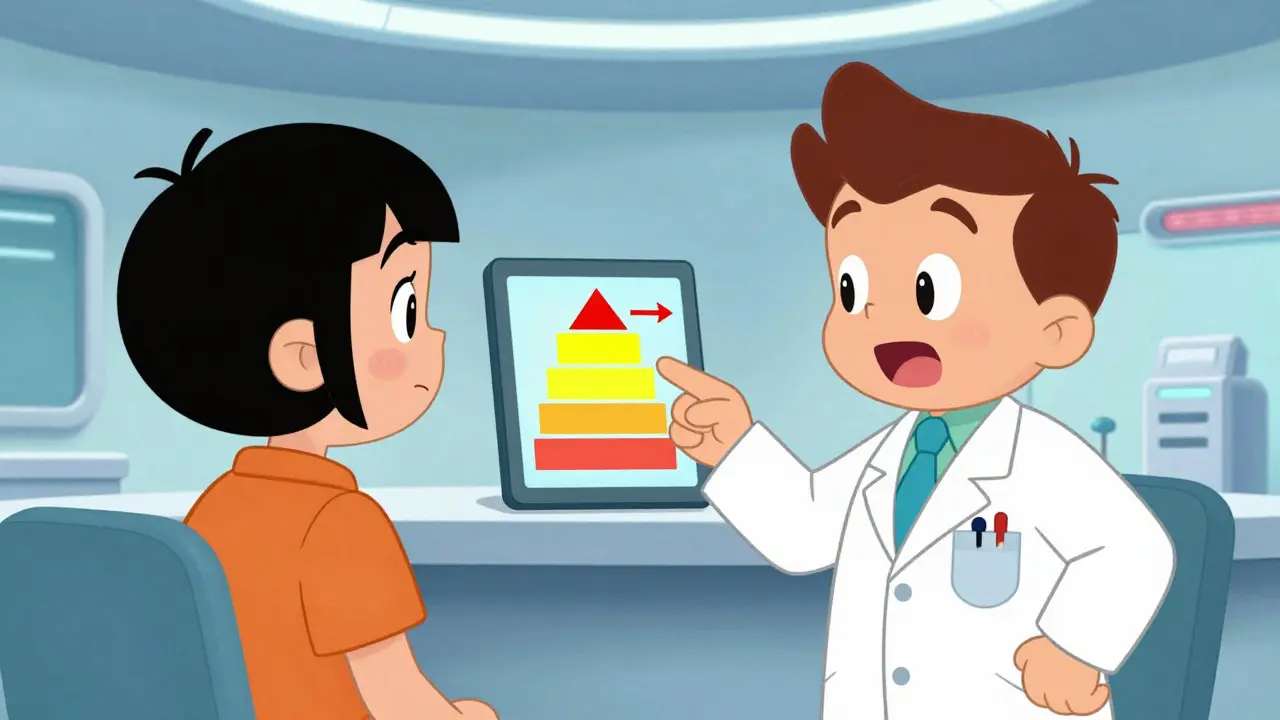
The future of boxed warning tracking looks increasingly digital and integrated. The FDA’s 2023 Strategic Plan for Risk Communication commits to modernizing the boxed warning format to improve clinician comprehension by 2026. Pilot testing of enhanced visual designs began in Q2 2024. These designs aim to make the risk hierarchy clearer, potentially reducing the cognitive load on prescribers.
Industry analysts at Evaluate Pharma project a 15% annual increase in boxed warning issuances through 2028, driven by more sophisticated pharmacovigilance methods. As we collect more real-world data, we’ll likely see more nuanced warnings that differentiate between theoretical risks and documented harm. Dr. Jerry Avorn of Harvard Medical School argued in his 2024 NEJM commentary that "we need a tiered warning system that differentiates between theoretical risks and documented harm." This shift could reduce the "warning fatigue" that some clinicians experience, making each alert more meaningful.
The FDA is also collaborating with the Observational Health Data Sciences and Informatics (OHDSI) consortium, with a $25 million investment through 2025. The goal is to reduce the median time from risk identification to warning implementation from the current 11 years to under 5 years. If achieved, this would be a game-changer for patient safety. It means that when you’re tracking label updates, you’ll be seeing them sooner, giving you more time to adjust your practice before widespread exposure occurs.
Frequently Asked Questions
What is the difference between a boxed warning and a contraindication?
A contraindication is a condition where the drug should not be used at all. A boxed warning highlights a serious risk that requires careful consideration, monitoring, or dose adjustment, but doesn't necessarily mean the drug is banned. You can prescribe a drug with a boxed warning if the benefits outweigh the risks, but you cannot prescribe a drug to a patient with a listed contraindication.
How often should I check for new boxed warnings?
For high-risk medications or those you prescribe frequently, checking monthly is recommended. Many academic medical centers dedicate specific staff hours to this task. If you rely on automated alerts, verify that they are configured to include both new warnings and major updates to existing ones.
Can a boxed warning be removed?
Yes, although it’s less common than adding one. If further studies show the risk was overstated or if safer alternatives become available, the FDA may remove or downgrade the warning. The Chantix psychiatric warning is a notable example of a removal that led to a rebound in prescriptions.
Which drug classes have the most boxed warnings?
Antipsychotics lead the list, with 87% carrying at least one boxed warning. Anticoagulants follow at 78%, and diabetes medications at 63%. These classes often involve narrow therapeutic indices or significant long-term side effect profiles.
Does the European Medicines Agency use boxed warnings?
Not exactly. The EMA uses a 'black triangle' symbol for newly authorized medicines to indicate that additional data collection is required. While similar in spirit, it’s not a formal equivalent to the FDA’s boxed warning, which carries specific regulatory weight regarding serious risks.