
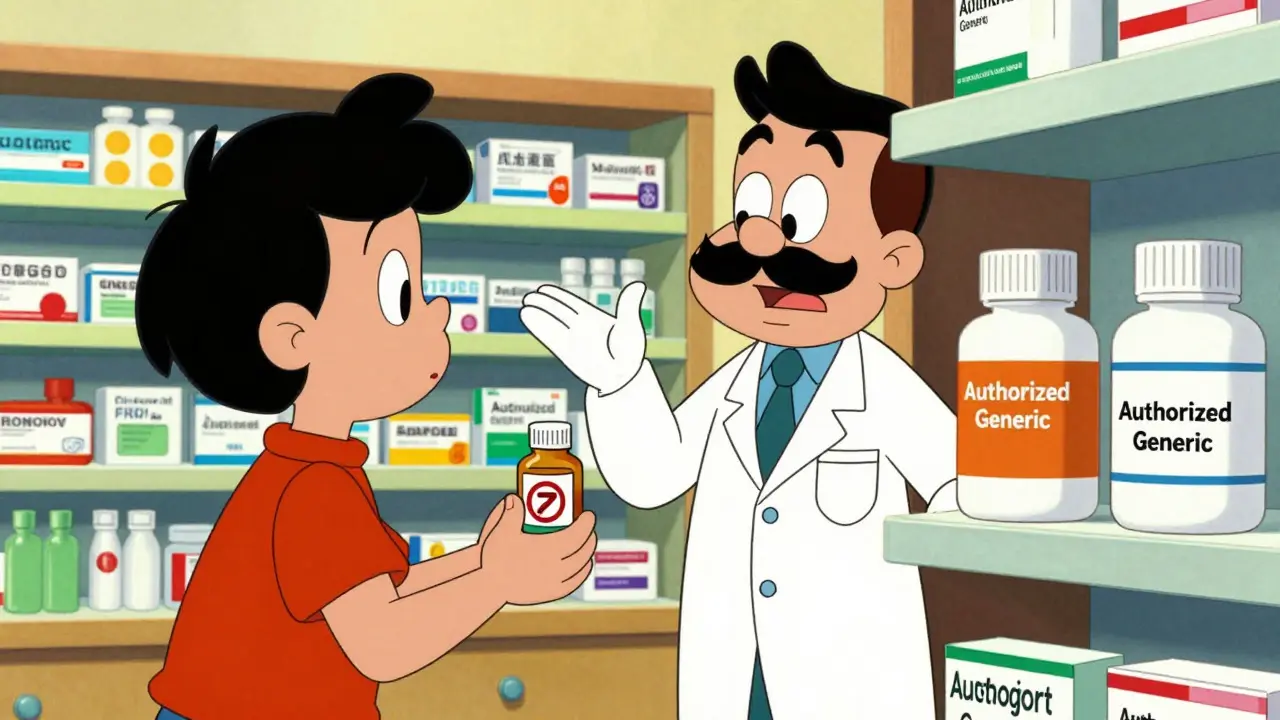
Imagine you’ve been taking a specific brand-name medication for years. Your body responds well to it, your doctor trusts the results, and you’re comfortable with the routine. Then, your insurance plan updates its formulary. Suddenly, that trusted brand is pushed to a higher tier with a steep copay, or worse, requires prior authorization. But there’s a middle ground you might not know about: authorized generics. These drugs are pharmacologically identical to the brand you know but carry a different label and often come with a much lower price tag. Understanding how insurers place these medications on their formularies can save you hundreds of dollars annually while keeping your treatment plan intact.
What Exactly Is an Authorized Generic?
To understand why insurance companies treat these drugs differently, we first need to define what they are. An authorized generic is not a traditional generic drug made by a third-party manufacturer. Instead, it is produced by the same company that makes the original brand-name drug. The key difference lies in the labeling and packaging. According to the Federal Food, Drug, and Cosmetic (FD&C) Act, an authorized generic is a listed drug approved under the original New Drug Application (NDA) but marketed under a different trade name, trademark, or packaging.
This distinction matters because traditional generics must file an Abbreviated New Drug Application (ANDA) and prove bioequivalence to the brand-name drug. Authorized generics bypass this step entirely because they are literally the same product coming from the same factory line. They contain identical active and inactive ingredients. The only change is the box it comes in. For patients, this means no risk of reacting to different fillers or binders that sometimes vary between brand-name drugs and third-party generics. For insurers, it represents a unique opportunity to offer brand-quality medication at a generic price point.
How Insurers Place Authorized Generics on Formularies
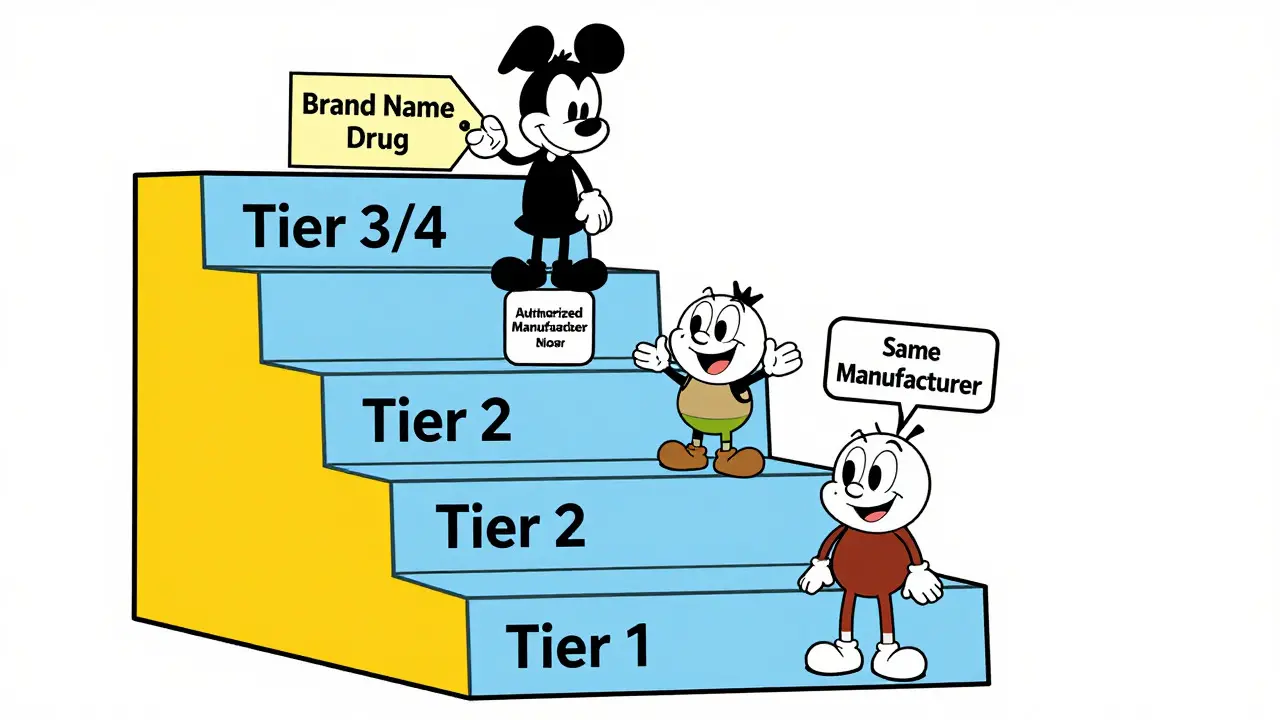
Formulary placement determines your out-of-pocket cost. Most insurance plans use a tiered system: Tier 1 for preferred generics, Tier 2 for non-preferred generics, Tier 3 for brand-name drugs, and Tier 4 for specialty medications. Where does an authorized generic fit? In most cases, it sits comfortably in Tier 2, alongside conventional generics.
A comprehensive study published in Health Affairs analyzed over 1,200 Medicare Part D formularies and found that 87% of plans place authorized generics in the same tier as traditional generics. Only 12% treat them as brand-name products. This placement is strategic. It allows insurers to control costs without forcing patients onto unfamiliar third-party alternatives. If you have a sensitivity to certain inactive ingredients found in standard generics, an authorized generic offers the safety of the brand formulation with the affordability of a generic tier.
| Drug Type | Manufacturer | Regulatory Pathway | Typical Formulary Tier | Cost Savings vs Brand |
|---|---|---|---|---|
| Brand-Name Drug | Original Innovator | New Drug Application (NDA) | Tier 3 or 4 | $0 (Baseline) |
| Traditional Generic | Third-Party Manufacturer | Abbreviated New Drug Application (ANDA) | Tier 1 or 2 | 80-90% |
| Authorized Generic | Original Innovator | Original NDA | Tier 2 | 15-25% |
The table above highlights the structural differences. While traditional generics offer massive savings due to market competition, authorized generics provide a modest discount-typically 15-25% less than the brand price. However, for high-cost medications like those used in cardiovascular care or hormone therapy, even a 20% reduction can translate to significant annual savings for the patient and the insurer.
Why Do Insurers Favor Authorized Generics?
You might wonder why Pharmacy Benefit Managers (PBMs) and insurers are increasingly pushing authorized generics. The answer lies in risk management and therapeutic continuity. Dr. Aaron Kesselheim, a professor at Harvard Medical School, has noted that authorized generics represent a strategic middle ground for payers. They allow insurers to balance cost containment with the need to keep patients on stable regimens.
Consider a patient taking a narrow therapeutic index drug, such as levothyroxine for thyroid conditions. Small variations in absorption can lead to health complications. Traditional generics, while bioequivalent, may have slight variations in inactive ingredients that affect some patients. An authorized generic eliminates this variable. It is the exact same chemical profile as the brand. Insurers recognize this value. A report from Express Scripts showed that 89% of authorized generic claims were approved on the first submission, compared to 76% for brand-name drugs. This efficiency reduces administrative burdens and prevents treatment delays.
Furthermore, the rise of authorized generics helps mitigate the "brand cliff" effect. When a patent expires, some patients panic and refuse to switch to any generic, leading to high out-of-pocket costs and potential non-adherence. By offering an authorized generic at a lower tier, insurers provide a familiar option that eases the transition. This strategy aligns with the goals of the Inflation Reduction Act, which aims to reduce out-of-pocket costs for seniors on Medicare Part D.
Challenges in Identification and Processing
Despite the benefits, navigating authorized generics isn't always smooth. One major hurdle is identification. Unlike traditional generics, authorized generics are not listed in the FDA Orange Book, the primary resource for checking generic availability. This creates confusion for pharmacists and prescribers who rely on standard databases to verify substitutions.
In early implementation phases, pharmacies reported error rates as high as 12% when processing authorized generic claims. Why? Because the National Drug Code (NDC) looks similar to the brand version, and pharmacy software systems weren't initially programmed to recognize the authorized status. To combat this, major PBMs like CVS Caremark and Prime Therapeutics have developed specialized tracking tools. Prime Therapeutics’ AG Tracker, for instance, now covers 98% of available authorized generics, ensuring that claims are processed correctly and patients receive the expected copay.
Patient communication is another challenge. A survey by GoodRx found that 34% of patients felt confused when their pharmacy substituted an authorized generic without explicit notification. Some feared they were receiving a lower-quality product. Education is key here. Pharmacists play a crucial role in explaining that the authorized generic is manufactured by the same company as the brand, simply repackaged. Clear communication prevents unnecessary calls to insurers and reduces claim denials due to misunderstanding.
Market Trends and Future Outlook
The landscape of authorized generics is evolving rapidly. The U.S. authorized generic market reached $4.7 billion in 2022, accounting for roughly 3.2% of the total generic drug market. Projections indicate an 8.4% compound annual growth rate through 2027. This growth is driven by brand manufacturers seeking to maintain market presence after patent expiration. Companies like Greenstone (a Pfizer subsidiary), Prasco, and Patriot Pharmaceuticals dominate this space, controlling nearly two-thirds of production.
However, regulatory scrutiny is increasing. The Federal Trade Commission (FTC) has raised concerns that some brands use authorized generics to delay the entry of true generic competitors. In 22% of studied cases, the introduction of an authorized generic slowed the launch of independent generics. This anti-competitive behavior could impact future coverage policies if enforcement actions intensify. Despite this, the trend toward broader coverage remains strong. Major PBMs like OptumRx have implemented "Authorized Generic First" policies for high-cost medications, signaling a shift in industry standards.
For patients, the outlook is positive. With CMS projecting a 15-20% increase in authorized generic coverage by 2025, more individuals will have access to these cost-effective options. Large employers are also adapting, with 68% planning to differentiate coverage for authorized generics in their 2024 benefit designs. This suggests that authorized generics will become a staple in formulary strategies, offering a reliable bridge between expensive brands and uncertain third-party generics.
Practical Steps for Patients and Providers
If you are considering switching to an authorized generic or want to ensure your insurance covers one, take these steps:
- Check the FDA List: The FDA maintains an updated list of authorized generic drugs. Verify if your medication has an authorized version before discussing it with your doctor.
- Consult Your PBM: Contact your Pharmacy Benefit Manager directly. Ask if they have specific protocols for authorized generic substitution and whether your plan places them in Tier 2.
- Talk to Your Pharmacist: Inform your pharmacist about any sensitivities to inactive ingredients. They can check if an authorized generic is available and explain the substitution process.
- Review Your Formulary: Log into your insurance portal and search for your medication. Look for notes regarding "authorized generic" or "AG" next to the drug name. This indicates special coverage rules.
By staying informed and proactive, you can leverage authorized generics to reduce healthcare costs without compromising on quality or consistency. As the market matures and identification tools improve, these drugs will likely become a more seamless part of everyday pharmacy practice.
Is an authorized generic the same as a brand-name drug?
Yes, an authorized generic contains the exact same active and inactive ingredients as the brand-name drug. It is manufactured by the same company using the same facilities and processes. The only difference is the packaging and labeling; the authorized generic does not carry the brand name.
Do all insurance plans cover authorized generics?
Most commercial and Medicare Part D plans cover authorized generics, typically placing them in Tier 2 (generic tier). However, coverage policies vary by insurer. Approximately 87% of Medicare Part D plans include them in the generic tier, but it is always best to check your specific formulary.
Why are authorized generics cheaper than brand-name drugs?
Authorized generics are priced lower because they do not carry the marketing and branding costs associated with the original brand-name product. They are sold under a different label, allowing the manufacturer to compete on price while maintaining the same quality standards. They typically cost 15-25% less than the brand equivalent.
Can my pharmacist substitute an authorized generic without asking me?
In many states, pharmacists can substitute an authorized generic if state law permits generic substitution and the prescription does not specify "Dispense as Written." However, because authorized generics are less common, pharmacists often notify patients to avoid confusion. Communication with your pharmacist is recommended.
Are authorized generics available for all medications?
No, authorized generics are limited. Currently, only about 15-20% of brand-name drugs have an authorized generic version. They are most common in cardiovascular and hormonal therapies. You can check the FDA's official list of authorized generic drugs to see if your medication is included.
How do I know if a drug I received is an authorized generic?
You can identify an authorized generic by checking the packaging. It will lack the brand name logo and may have a different color or shape. Additionally, the National Drug Code (NDC) on the box will differ from the brand version. Your pharmacist can also confirm the status of the medication during dispensing.
Comments (10)
Morikeoluwa Ayodeji
10 Aug, 2026Yo, this is actually super helpful info for anyone trying to navigate the US healthcare maze without losing their mind or wallet. I've seen so many people panic when their brand name gets bumped up a tier, not realizing there's this middle ground option. The part about authorized generics being the exact same stuff just in a different box is key because so many folks think 'generic' means 'cheap knockoff' which just isn't true here. It’s wild how much money you can save just by knowing these acronyms and checking your formulary before you hit the pharmacy counter. Keep sharing this kind of practical advice, it really cuts through the noise.
Fenton Quinn
11 Aug, 2026The distinction between ANDA and NDA pathways is crucial yet often overlooked by patients who assume all non-brand options are created equal in terms of manufacturing oversight. This creates an interesting ethical dilemma for insurers who prioritize cost containment over patient familiarity with specific inactive ingredients. One must consider whether the modest savings justify the potential confusion caused by the lack of clear labeling standards across different pharmacy systems. The market dynamics described here suggest a slow but inevitable shift toward greater transparency in drug pricing structures.
Lilith Stepanyan
11 Aug, 2026Another day another way for insurance companies to nickel and dime us while pretending they care about our health. They push these authorized generics like they're doing us a favor but really they're just protecting their own bottom line. Don't get me wrong saving money is good but the fact that we have to jump through hoops and learn new jargon just to afford our meds is pathetic. The whole system is designed to confuse you into paying more or giving up entirely. Typical corporate greed disguised as efficiency.
Josh Atkinson
13 Aug, 2026Hey everyone! :) Just wanted to chime in because I've been dealing with this exact issue for my wife's thyroid medication and honestly it's been a nightmare trying to figure out what's covered and what isn't. The article mentions that pharmacists sometimes don't even know if they're dispensing an authorized generic which is terrifying when you're taking something sensitive like levothyroxine. I had to call my PBM three times just to get them to admit they were pushing the AG version instead of the brand we were used to. It's frustrating because you feel like you're fighting against your own insurance provider every single time you refill a prescription. But hey at least we're learning right? :)
Tegan Morey
14 Aug, 2026I never knew there was such a big difference between traditional generics and authorized ones until now. It makes sense why some people would prefer sticking with the original manufacturer even if the price is slightly higher than a third-party generic. Does anyone else feel like the pharmaceutical industry is getting too complicated for the average person to understand? I just want my medicine to work and not cause side effects from random fillers. This article definitely cleared up a lot of confusion for me though thanks for posting it!
charlie student
14 Aug, 2026It's funny how we accept this complexity as normal. We spend years studying complex subjects only to be baffled by our own health coverage. Maybe the real issue isn't the drugs themselves but the bureaucratic layers we've built around accessing them. I suppose there's a certain irony in paying experts to manage costs while simultaneously increasing administrative burdens on patients. Perhaps simplicity is the ultimate sophistication in healthcare design but we seem to be moving in the opposite direction.
Gary Browne
16 Aug, 2026So basically you're saying I should just trust whatever pill pops out of the machine without asking questions? Sounds risky to me. My cousin switched to a generic once and ended up in the ER because his blood pressure spiked. Now I'm wondering if he got one of these authorized generics or just some random third party stuff. Either way it feels like we're being treated like lab rats. Who really benefits from this constant switching game? Probably not the patient.
Christina Thygesen
18 Aug, 2026i totally relate to the confusion part because last year my mom had issues with her heart med and we thought it was the drug itself causing problems but turns out she was getting different batches from different manufacturers. it was so stressful trying to figure out what was going on. reading this made me realize we should have asked about authorized generics sooner. i wish more people knew about this option because it could save so much hassle and money. its crazy how little information is shared by default.
Minal Aditi
18 Aug, 2026Oh wonderful, another layer of bureaucracy to keep us guessing and dependent on their systems. Because clearly what we need is more ways for corporations to control our access to basic necessities. I bet the 'authorized' part sounds reassuring until you realize it's just marketing speak for 'we still own you'. How quaint that they allow us to save a tiny fraction of the cost while keeping the rest locked away in executive bonuses. Truly inspiring stuff.
Diane Nash
19 Aug, 2026This exposition provides a rather illuminating perspective on the nuanced relationship between pharmaceutical manufacturing and insurance formulary strategies. It is quite evident that the distinction between traditional generics and authorized generics holds significant implications for both fiscal responsibility and therapeutic continuity. One might argue that the current regulatory framework fails to adequately communicate these distinctions to the general populace, thereby necessitating greater educational outreach. Indeed, the data presented regarding Medicare Part D formularies suggests a growing acceptance of authorized generics as a viable alternative to brand-name medications. Consequently, it appears prudent for patients to engage proactively with their providers and pharmacists to ensure optimal treatment outcomes.