
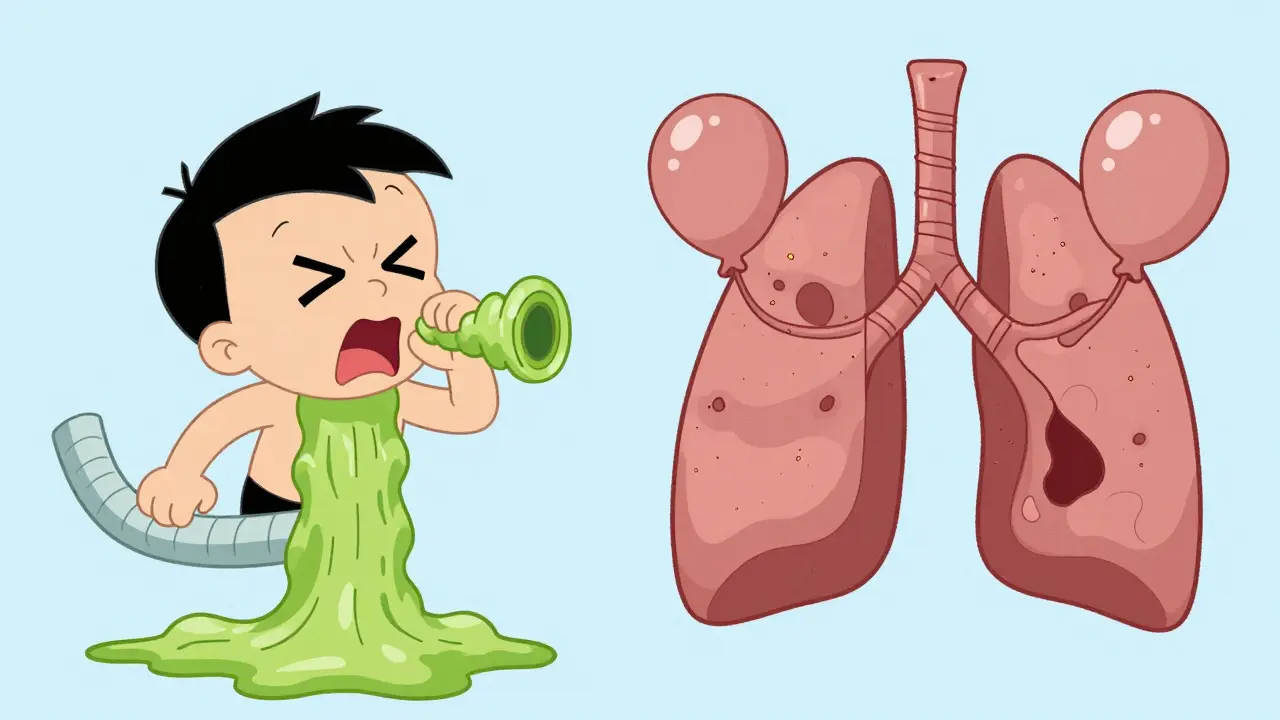
Imagine trying to breathe through a straw that’s clogged with thick slime. Now imagine trying to blow up a balloon made of old, stretched-out rubber that has lost all its snap. Both scenarios make breathing a struggle, but they happen for completely different reasons. This is the reality for millions of people living with Chronic Obstructive Pulmonary Disease, commonly known as COPD. While often treated as one single condition, COPD is actually an umbrella term covering two distinct diseases: chronic bronchitis and emphysema.
You might have likely heard the terms used interchangeably, but confusing them can lead to frustration when treatments don't seem to work. Why? Because your lungs are damaged in different ways depending on which component dominates your diagnosis. Understanding the difference isn't just academic; it changes how you manage your daily life, what medications you take, and even how you talk to your doctor about symptoms like shortness of breath or coughing fits.
The Core Difference: Mucus vs. Air Sacs
To understand these conditions, we need to look at what is physically happening inside your chest. Think of your lungs as a complex tree. The branches are your airways (bronchi), and the leaves at the very ends are tiny air sacs called alveoli where oxygen enters your blood.
| Feature | Chronic Bronchitis | Emphysema |
|---|---|---|
| Primary Damage | Inflammation of airway lining and mucus glands | Destruction of alveolar walls (air sacs) |
| Main Symptom | Persistent productive cough with mucus | Progressive shortness of breath (dyspnea) |
| Oxygen Levels | Often lower (hypoxemia); risk of "blue bloater" phenotype | Often normal until late stages; "pink puffer" phenotype |
| CT Scan Appearance | Thickened airway walls | Holes or large empty spaces in lung tissue |
| Treatment Focus | Clearing mucus, reducing inflammation | Improving airflow, lung volume reduction |
In Chronic Bronchitis, the problem lies in the tubes. Your body produces too much mucus-up to 200 mL a day compared to the normal 10-100 mL-and the cilia (tiny hair-like structures) that usually sweep this mucus out stop working properly. This leads to the classic definition: a cough that produces phlegm for at least three months a year, for two consecutive years.
In Emphysema, the damage is structural. The elastic fibers that help your lungs recoil and push air out are destroyed. The alveoli merge into large, inefficient holes. You can still get air in, but getting it back out becomes nearly impossible because the "balloon" has no elasticity. This traps stale air in your lungs, leaving less room for fresh, oxygen-rich air.
Recognizing the Symptoms: Pink Puffers vs. Blue Bloaters
Historically, doctors used nicknames to describe these phenotypes. While modern medicine recognizes that most patients have a mix of both, these descriptions still help illustrate the dominant symptoms.
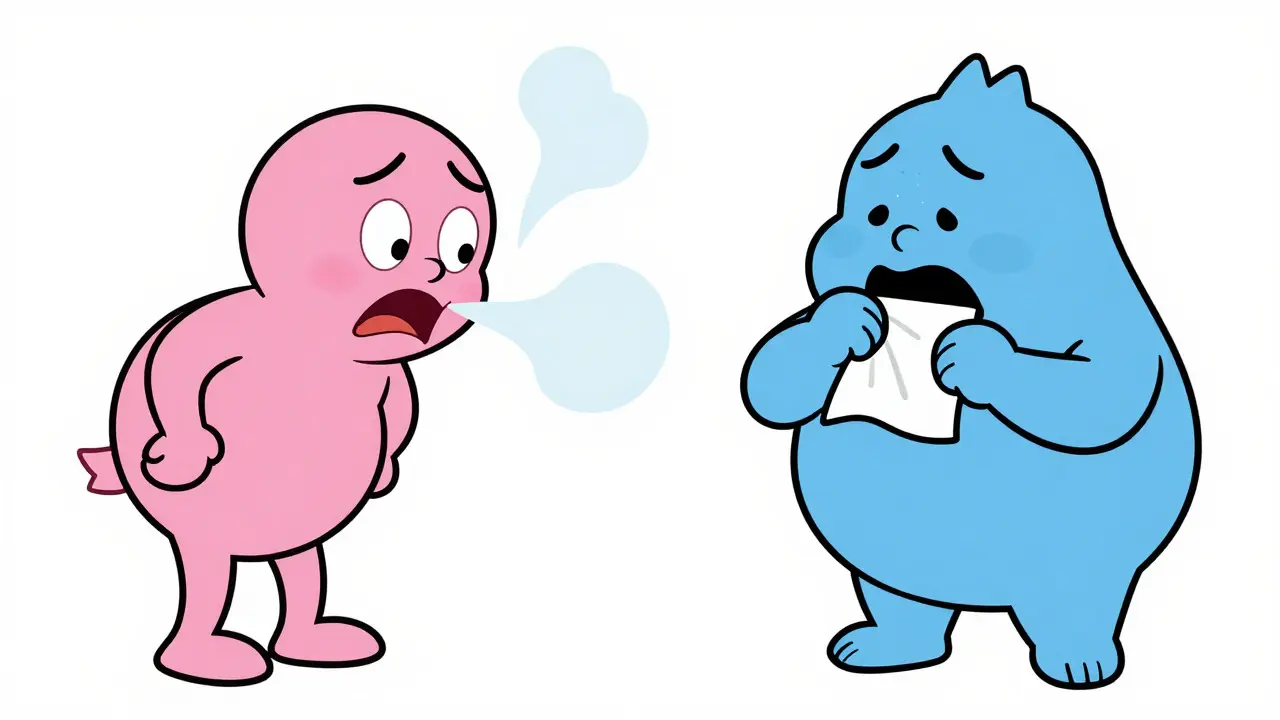
The "Pink Puffer" refers to someone with predominantly emphysema. They tend to maintain near-normal oxygen levels by breathing faster and harder (hyperventilating). They often appear thin because breathing takes so much energy. Their primary complaint is "air hunger"-the feeling that they simply cannot get enough air, especially during activity. A 2022 patient survey noted that many emphysema patients limit themselves to speaking only five or six words per breath due to this severe dyspnea.
The "Blue Bloater" describes someone with predominant chronic bronchitis. The excess mucus blocks airways, leading to lower oxygen levels in the blood (hypoxemia), which can cause a bluish tint to the lips or fingertips (cyanosis). These patients often retain fluid, leading to swelling in the legs (edema) and a tendency to gain weight despite being inactive. Their main battle is clearing the constant mucus production, with 68% reporting symptom flares during winter months.
How Doctors Diagnose Which One You Have
You cannot tell just by looking at someone. Diagnosis requires specific tests that measure how your lungs function structurally and chemically.
- Spirometry (Pulmonary Function Test): This measures how much air you can exhale and how fast. Both conditions show a reduced FEV1/FVC ratio (below 70%). However, spirometry alone doesn't distinguish between the two.
- DLCO Test (Diffusing Capacity of the Lung for Carbon Monoxide): This is the key differentiator. In emphysema, the surface area for gas exchange is destroyed, so DLCO is low (often below 60% of predicted). In chronic bronchitis, the air sacs are intact, so DLCO is usually normal or only slightly reduced.
- High-Resolution CT Scan: This provides a visual map. Emphysema shows up as dark, low-attenuation areas (holes) in the lung tissue. Chronic bronchitis shows thickened walls around the airways.
- Blood Gas Analysis: This checks oxygen and carbon dioxide levels. Chronic bronchitis patients are more likely to show high carbon dioxide retention and low oxygen levels early on.
If you have never had a DLCO test, ask your pulmonologist. Knowing whether your issue is primarily airway inflammation or tissue destruction guides everything from medication choices to surgical options.
Treatment Strategies: Tailoring Therapy to the Component
A 2022 study in the New England Journal of Medicine found that patients receiving component-specific therapy had 27% fewer hospitalizations than those on generic COPD treatment. Here is why customization matters.
For Chronic Bronchitis Dominance: The goal is to thin the mucus and keep the airways open.
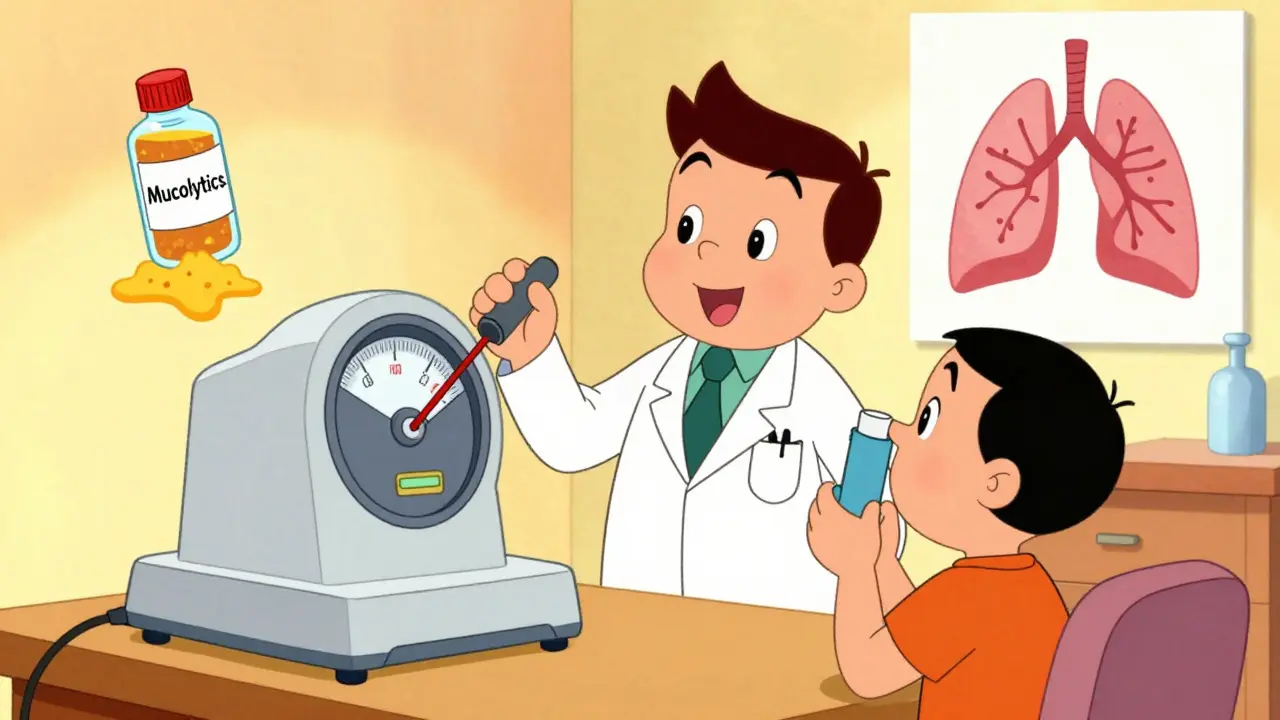
- Mucolytics: Medications like carbocisteine can reduce exacerbation frequency by 22% by breaking down thick mucus.
- LAMA/LABA Combinations: Long-acting muscarinic antagonists and beta-agonists help relax airway muscles. Note: Inhaled corticosteroids carry a higher risk of pneumonia in this group, so they are used cautiously.
- Chest Physiotherapy: Techniques to mechanically loosen mucus are crucial. Many patients report spending 20-30 minutes daily on clearance exercises.
- Roflumilast: For severe cases with frequent flare-ups, this oral medication reduces inflammation and exacerbations by roughly 17%.
For Emphysema Dominance: The goal is to improve airflow efficiency and reduce hyperinflation.
- Lung Volume Reduction Surgery (LVRS): Removing the most damaged parts of the lung allows the healthier tissue to work better. It offers significant benefit for upper-lobe predominant emphysema.
- Endobronchial Valves: These are small devices placed via bronchoscopy to block air from entering the worst-damaged sections, letting them collapse and making room for healthy lung expansion. Trials show a 35% improvement in walking distance for eligible patients.
- Oxygen Therapy: If saturation drops, supplemental oxygen is vital. Portable concentrators allow for mobility, though many users note they still restrict freedom.
- Alpha-1 Antitrypsin Augmentation: If your emphysema is caused by a genetic deficiency (present in 1-2% of cases), weekly infusions of the missing protein can slow progression significantly.
Living With COPD: Practical Daily Adjustments
Medication is only half the battle. How you live impacts your lung function every day. The economic burden of COPD is massive, with severe emphysema costing an average of $38,500 annually per patient, largely due to hospital visits. Preventing these visits starts at home.
Air Quality Control: Both conditions worsen with irritants. For chronic bronchitis, cold air triggers mucus production. Wearing a scarf over your mouth in winter warms the air before it hits your lungs. For emphysema, any pollutant reduces the already limited gas exchange capability. Use HEPA filters indoors and check air quality indexes before going outside.
Energy Conservation: Emphysema patients burn calories just breathing. Plan your day around peak energy times. Sit while showering or shaving. Break tasks into smaller chunks. Chronic bronchitis patients should pace themselves to avoid triggering a coughing fit, which can be exhausting and disrupt sleep (67% report nighttime disruption).
Nutrition: Maintaining muscle mass is critical. Breathing uses muscles. If you lose weight (common in emphysema), your diaphragm weakens. Eat small, frequent meals rather than large ones, as a full stomach pushes up on the diaphragm and makes breathing harder.
The Future of Phenotype-Specific Care
We are moving away from treating COPD as a one-size-fits-all disease. Recent developments highlight this shift:
- New Drugs: Ensitentrine, a dual PDE3/4 inhibitor approved recently, targets inflammation specifically relevant to chronic bronchitis pathways.
- Biomarkers: Researchers are using blood eosinophil counts (>300 cells/μL) to predict who will respond best to biologic therapies, mostly benefiting the chronic bronchitis phenotype.
- Devices: Acoustic mucus-clearing devices launched in Europe in 2024 have shown a 32% reduction in exacerbations for chronic bronchitis patients by vibrating mucus loose.
Dr. James Crapo of National Jewish Health notes that the future lies in precisely targeting component pathologies. This means your treatment plan should evolve as your disease profile evolves. Regular follow-ups with pulmonary function tests ensure your therapy matches your current lung status.
Can you have both chronic bronchitis and emphysema?
Yes, absolutely. In fact, about 85% of severe COPD patients exhibit features of both conditions. The SPIROMICS study found that only 15% of patients had a "pure" phenotype. Most people have a mix, but one component usually dominates their symptoms and dictates the primary treatment approach.
Is chronic bronchitis reversible?
The structural changes, such as gland enlargement and scarring, are generally irreversible. However, the symptoms are highly manageable. Quitting smoking, using mucolytics, and avoiding irritants can significantly reduce mucus production and inflammation, improving quality of life even if the underlying damage remains.
Which is worse: chronic bronchitis or emphysema?
Neither is inherently "worse," but they affect life differently. Emphysema typically causes more profound shortness of breath and physical limitation earlier on. Chronic bronchitis leads to more frequent infections, hospitalizations due to pneumonia, and complications like heart failure (cor pulmonale) due to low oxygen levels. Both are serious progressive diseases requiring medical management.
What does a low DLCO score mean?
A low Diffusing Capacity of the Lung for Carbon Monoxide (DLCO) score indicates that the transfer of oxygen from your lungs into your blood is impaired. This is a hallmark sign of emphysema, where the alveolar walls are destroyed. A normal DLCO with obstructed airflow suggests chronic bronchitis is the dominant issue.
Do I need oxygen therapy?
Oxygen therapy is recommended if your blood oxygen saturation (SpO2) consistently falls below 88-90%. Chronic bronchitis patients often need oxygen earlier in the disease course due to poor gas exchange efficiency, while emphysema patients may maintain normal levels until later stages. Only a doctor can determine this via pulse oximetry or arterial blood gas tests.
Comments (15)
Morikeoluwa Ayodeji
3 Aug, 2026Man, this breakdown is exactly what I needed. My dad has been struggling with the 'blue bloater' symptoms for years and we always thought it was just bad asthma or something simple. The part about the DLCO test being the key differentiator is huge. Most people don't even know that test exists until they are already in deep trouble. It’s wild how much mucus some of these folks produce like 200ml a day is insane compared to normal levels. I really appreciate you explaining the mechanical difference between the airway inflammation and the actual destruction of the alveoli. It makes so much more sense now why his inhalers sometimes feel like they aren't doing enough because if the structure is gone no amount of opening up the tubes will fix the gas exchange issue. Thanks for keeping it real about the daily struggles too.
Fenton Quinn
4 Aug, 2026The distinction between structural damage and inflammatory response is critical yet often overlooked by laypeople.
Lilith Stepanyan
5 Aug, 2026Look at all these people acting like they understand pulmonary mechanics after reading one blog post. You really think knowing the difference between a pink puffer and a blue bloater is going to save your lungs when you’ve been smoking two packs a day since you were sixteen? It’s cute. The article says treatment is tailored but let’s be honest most doctors just throw bronchodilators at everything and hope for the best. And don’t get me started on the 'pink puffer' nickname it’s outdated and frankly offensive to reduce human suffering to a color code based on oxygen saturation levels. We need better data not more pop science simplifications that make patients feel like they’re playing a role in their own demise. Also who decided that speaking five words per breath is a metric worth citing in a survey? Sounds like someone needed a soundbite.
Josh Atkinson
5 Aug, 2026I have to agree with Lilith on the nicknames being a bit harsh but honestly this article is spot on about the treatment differences. :D My uncle had severe emphysema and he literally couldn’t finish a sentence without stopping to breathe. It was heartbreaking to watch him struggle just to eat dinner because his stomach was pushing up on his diaphragm. The tip about eating small frequent meals is gold though. Nobody talks about that enough. People focus so much on the meds and forget that basic physics plays a huge role in how comfortable you feel. If your lungs are basically balloons that lost their elasticity then filling up your belly is like trying to inflate a balloon that’s already tied off tight. It’s just impossible to get good airflow. I wish more pulmonologists spent time explaining the lifestyle adjustments instead of just handing over prescriptions. The cost of COPD care is astronomical and half of it comes from preventable hospitalizations due to poor home management.
Tegan Morey
7 Aug, 2026Hey guys, thanks for sharing your experiences. It really helps to hear from people who are actually living with this. I’m curious about the chest physiotherapy mentioned for chronic bronchitis. Does anyone know if there are specific apps or videos that show you how to do those clearance exercises properly? I feel like doing them wrong could be counterproductive or even painful. Just looking for some reliable resources to help my partner out.
charlie student
8 Aug, 2026It’s interesting how we categorize these diseases into neat little boxes when reality is usually a messy gray area. The SPIROMICS study mentioning that only 15% of patients have a pure phenotype really highlights that. Most of us are somewhere in between. I guess the medical community needs to stop trying to force square pegs into round holes and start treating the individual rather than the label. But then again labels help with insurance coding and billing so maybe they won’t change anytime soon. Funny how capitalism dictates medicine.
Gary Browne
10 Aug, 2026So you’re saying if you have both you just pick whichever one sounds worse? Because that seems to be how most patients interpret it. I’ve seen guys come in claiming they have emphysema because they heard it sounds scarier than bronchitis even though their CT scans show massive airway thickening and zero alveolar destruction. It’s frustrating. Doctors spend twenty minutes explaining the DLCO results and the patient walks out thinking they need surgery when they just need to quit vaping and use their mucolytics. Communication breakdown is the real disease here.
Christina Thygesen
11 Aug, 2026i totally get that frustration gary its so hard to explain complex stuff to people who are scared and tired of being sick. my mom used to cry during appointments because she felt like nobody was listening to her pain they were just looking at charts. i think empathy is missing from modern healthcare not just information. we need doctors who take the time to say hey i see you struggling lets figure this out together instead of just listing stats
Minal Aditi
13 Aug, 2026Oh wow, another sob story about the healthcare system failing us. How original. Meanwhile, I’m over here wondering why nobody mentioned the genetic component of Alpha-1 Antitrypsin deficiency earlier in the thread. Oh wait, it’s buried in paragraph four under emphysema treatments. Typical. People skim read everything these days. They want the quick fix not the nuanced truth. And don’t get me started on the 'future of care' section. Ensitentrine? Really? Another drug with a side effect profile that reads like a horror novel. Sure, it reduces exacerbations by a few percent but at what cost to your liver? You people are so eager to swallow whatever Big Pharma throws at you. It’s pathetic.
Diane Nash
14 Aug, 2026While the previous comment displays a certain level of cynicism, it is important to acknowledge the rigorous clinical trials required for such approvals. The reduction in exacerbations is statistically significant and clinically relevant for many patients. Dismissing advancements in pharmacology as mere corporate greed overlooks the genuine relief provided to thousands of individuals suffering from debilitating respiratory distress. One must consider the broader context of medical progress and the collaborative effort between researchers and pharmaceutical entities to improve patient outcomes.
Alli Crumley
14 Aug, 2026Exactly! :P The pathophysiological mechanisms targeted by PDE3/4 inhibitors are crucial for mitigating the neutrophilic inflammation prevalent in chronic bronchitis phenotypes. Ignoring the biomarker-driven approach to therapy is akin to practicing medieval medicine. Eosinophil counts >300 cells/μL are predictive of steroid responsiveness, which is a fundamental concept in precision pulmonology. If clinicians fail to utilize these diagnostic tools, they are essentially guessing. It’s not rocket science, it’s basic evidence-based medicine. #COPDAwareness #PrecisionMedicine
Marc H
16 Aug, 2026Oh, spare me the jargon-filled lecture, Alli. You sound like a textbook that’s been left out in the rain. 'Neutrophilic inflammation'? Please. What it means is that your lungs are angry and swollen, and you need help. Not everyone wants a chemistry lesson when they’re trying to catch their breath. And Diane, calm down with the formalities. This is Reddit, not a parliamentary session. We’re here to talk about breathing, not write dissertations. Minal’s right about the skepticism though. New drugs are great, but they don’t replace the fact that you still can’t run for a bus without feeling like you’re drowning. That’s the reality no pill fixes completely.
Chris McQuaid
17 Aug, 2026You guys are missing the forest for the trees. The real issue isn’t the drug names or the fancy tests. It’s the environmental factors. Air quality indexes matter more than any inhaler. If you live in a city with high particulate matter, you’re fighting a losing battle regardless of your phenotype. The article mentions HEPA filters but doesn’t emphasize enough that outdoor pollution is the silent killer. Emphysema patients are walking bio-monitors for urban decay. Every time they wheeze, it’s a testament to our collective failure to regulate emissions. So yeah, take your meds, but also vote for policies that clean the air. Otherwise, you’re just putting a band-aid on a gunshot wound.
sam howard
19 Aug, 2026stop preaching chris we all know air is bad but you cant move out of the city overnight. plus genetics play a huge role too remember alpha-1 antitrypsin? its not just pollution its biology. keep it real man.
Samuel Hershberger
19 Aug, 2026Great points everyone. It’s clear that managing COPD requires a multi-faceted approach combining medical intervention, lifestyle adjustments, and environmental awareness. For those asking about resources, the American Lung Association has excellent guides on chest physiotherapy techniques. Also, remember that support groups can be incredibly valuable for sharing practical tips and emotional support. You’re not alone in this journey. Keep advocating for yourself and your loved ones. Knowledge is power, especially when it comes to understanding your own body. Let’s keep the conversation going and help each other navigate these challenges.