
The Balancing Act of Emergency Medicine Storage
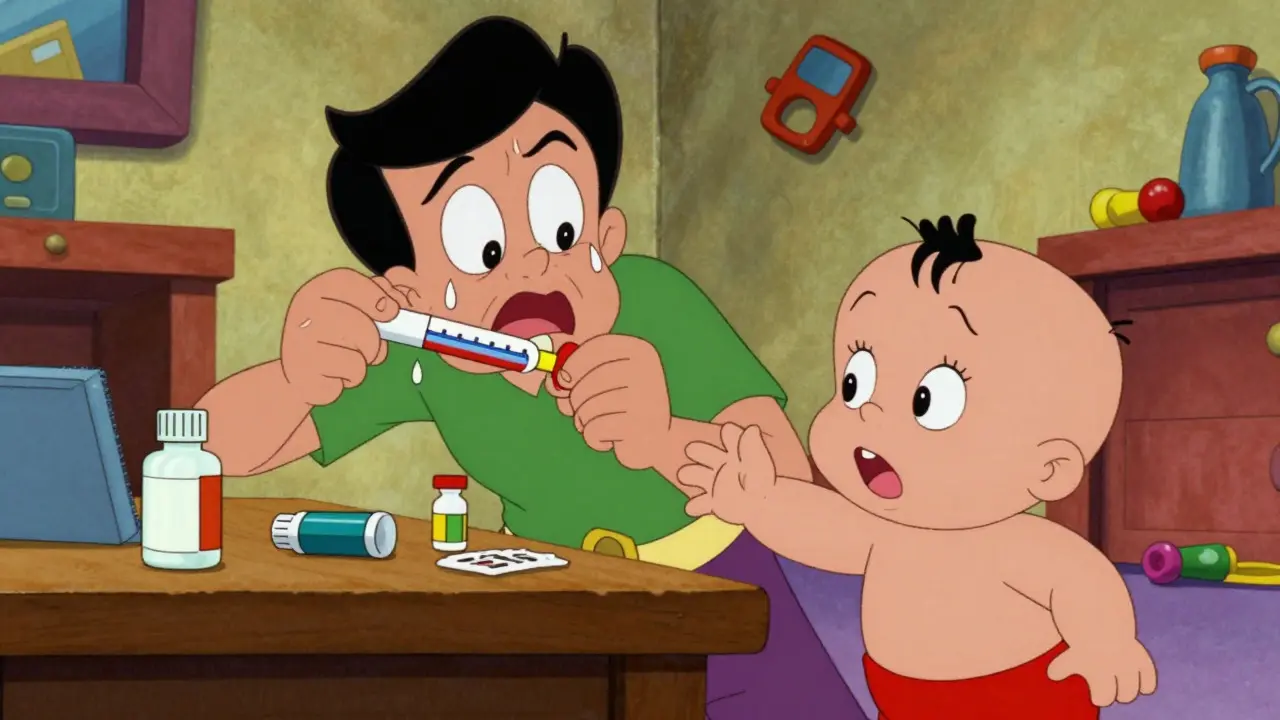
Imagine this scenario: your child is choking on a peanut, or someone in your home goes into cardiac arrest. Seconds matter. You reach for the epinephrine auto-injector or the nitroglycerin, but it’s locked behind three layers of security codes you can’t remember while panicking. Now flip the script: you leave those same life-saving drugs on the kitchen counter for easy access, and a curious toddler swallows them before you can blink.
This is the daily dilemma for anyone managing emergency medications at home or in small care settings. We need these drugs to be instantly available during a crisis, yet we must keep them completely out of reach of children, pets, and unauthorized users. It feels like an impossible tightrope walk, but with the right setup, you can have both speed and safety.
The goal isn't just to hide pills; it's about creating a system that respects the urgency of medical emergencies without compromising household security. Let's break down how to build that system, starting with where these medications actually live.
Where Does Your Medicine Live? Context Matters
First, let's look at where you are storing these items. The rules change depending on whether you're in a hospital, an ambulance, or your living room. Understanding these differences helps us borrow the best ideas for home use.
| Setting | Security Level | Accessibility Focus | Key Requirement |
|---|---|---|---|
| Hospital (ICU/ER) | High (Tamper-evident locks) | Immediate staff access | Line-of-sight monitoring by licensed personnel |
| EMS Vehicles | Very High (Lockable cabinets) | Rapid deployment by paramedics | Keys/codes restricted to designated practitioners |
| Childcare Facilities | Moderate (Locked areas for routine meds) | Staff access, child exclusion | Allergy meds accessible to staff but out of child reach |
| Home Environment | Variable (Safes, high shelves) | Caregiver access, child/pet safety | Balance between quick retrieval and physical barrier |
In hospitals, the Joint Commission requires medications to be stored securely to prevent theft or tampering, but they also allow "code drugs" to be kept in plain sight if a nurse is watching them. In EMS vehicles, the stakes are different. The Nevada EMS guidelines from May 2024 mandate lockable cabinets that stay secured when not in use, because paramedics might be driving through unpredictable environments. For homes, the EPA recommends locked cabinets or safes, acknowledging that a simple high shelf isn't enough for determined toddlers or teenagers.
The lesson here? There is no single "right" way. Your storage method must match your specific risks. If you have a newborn, security trumps convenience. If you live alone with a heart condition, accessibility might take priority, provided you trust your environment.
Choosing the Right Physical Security Solution
So, what does "secure" actually look like in your house? It’s not just about buying a fancy box. It’s about choosing a mechanism that fits your lifestyle and your risk profile.
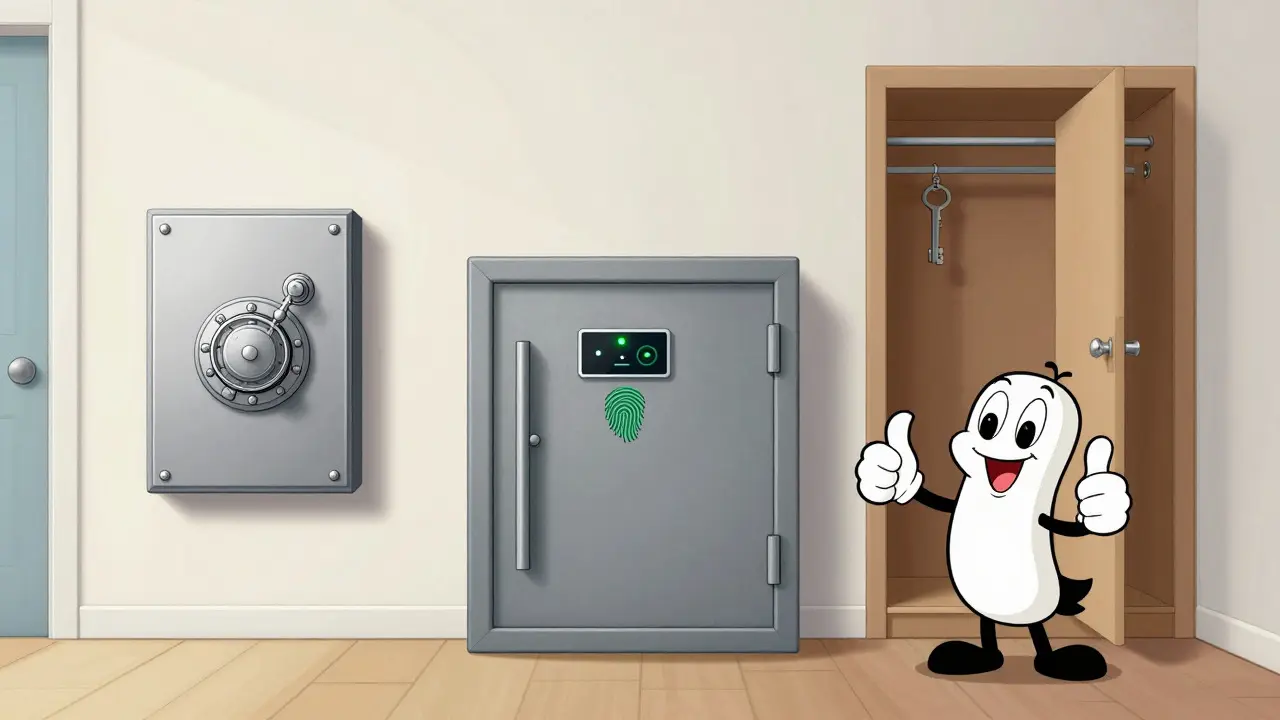
- Mechanical Combination Locks: These are great because you don’t need batteries or keys that can get lost. However, if you’re shaking from adrenaline during an emergency, dialing a combination can be frustrating. Practice makes perfect here.
- Biometric Fingerprint Safes: These offer the fastest access-literally seconds. They are excellent for caregivers who might forget passwords under stress. The downside? If your finger is dirty or wet, it might not read. Always have a backup code.
- Smart Lock Boxes: Connected to your phone, these allow remote unlocking. This is useful if a babysitter needs access but doesn’t know the code. Just ensure the Wi-Fi signal is strong where the box is located.
- Traditional Keys: Simple and reliable, but risky. If a key is left in the lock or found by a child, the security is gone. If you use keys, store them separately from the medicine, perhaps in a jewelry box or a different room.
A pro tip from safety experts: Don’t put the safe in the obvious place. Most people check the bathroom medicine cabinet first. Consider mounting a secure box in a closet, inside a drawer that looks empty, or even in a bedroom nightstand that has a hidden compartment. The goal is to create a "cognitive barrier" for intruders or curious kids-they shouldn't even think to look there.
Temperature Control: The Silent Killer of Efficacy
You’ve locked the medicine away safely, but is it still working? Many people overlook temperature, assuming that as long as the drug is in the bottle, it’s good. That’s a dangerous myth. Pharmaceutical integrity depends heavily on stable temperatures.
According to updated guidelines from NVERS in 2024, refrigerated storage must maintain a strict range of 2°C-8°C (36°F-46°F). Controlled room temperature should be between 20°C-25°C (68°F-77°F), with allowable excursions up to 30°C (86°F). Anything above 40°C (104°F) is considered excessive heat and can degrade many medications.
Here is where home storage gets tricky. Where do you put the safe?
- Not in the Bathroom: Showers and baths create humidity and temperature spikes. This is the worst place for most meds.
- Not in the Car: Even in mild weather, a car interior can exceed 100°F (38°C) within minutes. Never leave emergency meds in a vehicle unless it’s actively being used for transport.
- Refrigerator Risks: If your med needs refrigeration, don’t put it near the door (where temps fluctuate) or next to the ice maker. Use a dedicated bin.
For those worried about power outages or fridge failures, consider portable temperature monitoring devices. Systems like the FDA-approved TempTraq can alert you via smartphone if your medication leaves its safe zone. It’s a small investment that ensures your $300 epinephrine pen hasn’t turned into expensive water.
Special Considerations for Specific Medications
Not all emergency meds are created equal. Some require stricter handling due to their potency or sensitivity.
Epinephrine Auto-Injectors (EpiPens): These are critical for severe allergic reactions. The American Heart Association recommends storing them at room temperature. Avoid freezing them, as extreme cold can damage the mechanism. Keep them in their original case to protect from light and accidental discharge. Many parents carry one on their person and keep a spare in a secure, known location at home.
Naloxone (Narcan): Used for opioid overdoses, naloxone is often recommended to be kept in an easily accessible place for households with addiction history. The CDC’s PROTECT Initiative emphasizes that while safety is key, the immediacy of saving a life means these should not be buried in a complex safe. A clear, labeled container in a common area, but out of direct child reach (like a high shelf), is often the best balance.
Nitroglycerin: This heart medication is sensitive to light and air. It should be kept in its original glass bottle, tightly closed. Do not transfer it to plastic bags or pill organizers. Store it at room temperature, away from moisture.
Creating a Family Emergency Protocol
Having the right box and the right temperature isn't enough if no one knows where things are. You need a plan.
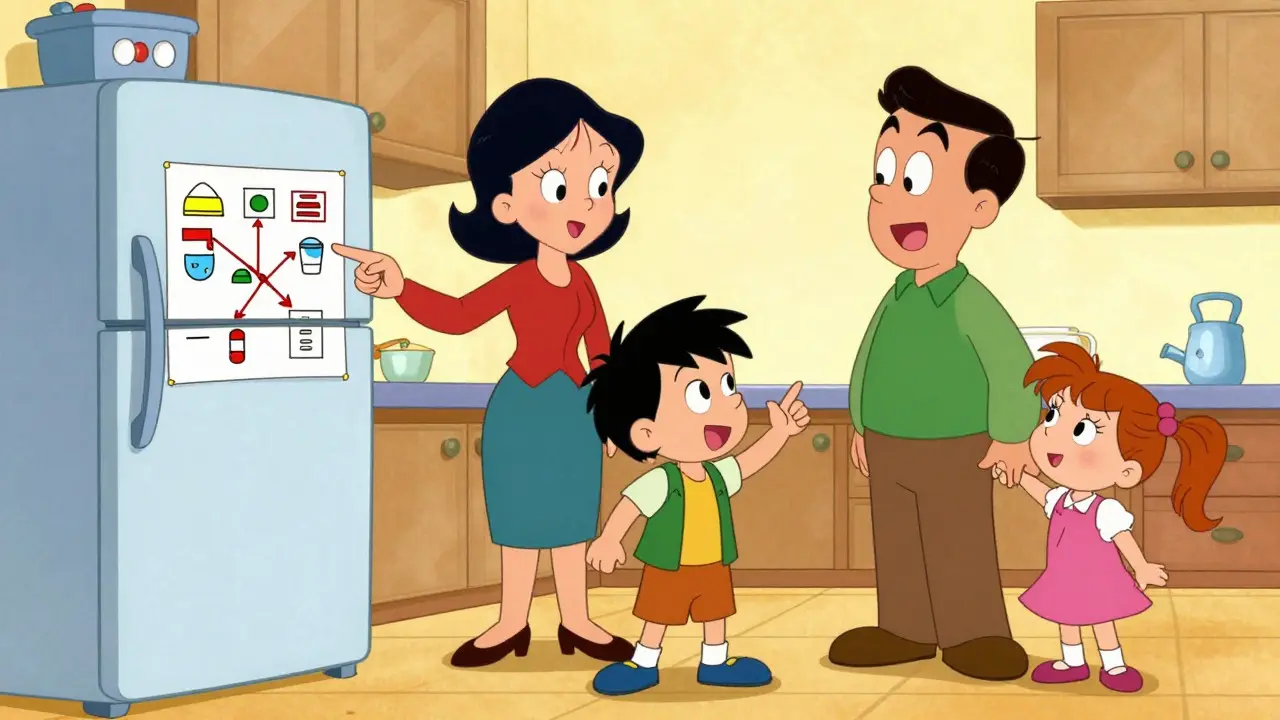
- Map It Out: Create a simple visual map of where all emergency meds are stored. Post this map on the refrigerator or inside a family binder. Include photos of the safe and how to open it.
- Train Everyone: If you have teenage children, babysitters, or elderly relatives living with you, teach them how to open the secure storage. Run drills. "If I call 911, where do you go to get the epi-pen?" Make it automatic.
- Check Expirations Monthly: Set a recurring calendar reminder. Expired emergency meds can lose potency. When you replace them, dispose of the old ones properly (see below).
- Update After Moves: Did you move houses? Did you renovate the kitchen? Reassess your storage locations. What was secure last year might be exposed now.
Dr. Jane Smith, Chief Medical Officer at Johns Hopkins Hospital, noted in a 2023 commentary that the optimal system balances preventing diversion with ensuring immediate availability. This balance is achieved through practice, not just hardware.
Safe Disposal: Closing the Loop
Eventually, medications expire, or prescriptions change. How you throw them away matters. Flushing them can contaminate water supplies, but leaving them in the trash invites scavenging by kids or pets.
The DEA and EPA recommend using Drug Take-Back programs. Check for local collection sites at pharmacies or police stations. If no program is available:
- Mix the medication with an unappealing substance like dirt, cat litter, or used coffee grounds.
- Place the mixture in a sealed container or plastic bag.
- Throw the container in the household trash.
- Scratch out personal information on the prescription label before discarding the empty bottle.
Some medications, like fentanyl patches, may need specific instructions due to high potency. Always check the patient insert for disposal directions.
Can I store emergency medications in my car?
Only temporarily. Cars act like ovens in summer and freezers in winter. Extreme temperatures can degrade medications like epinephrine or insulin. If you must keep them in the car, use an insulated bag and retrieve them immediately upon reaching a stable indoor environment. Never leave them in a parked car for extended periods.
Is a fingerprint safe better than a combination lock for emergency meds?
Fingerprint safes are faster and eliminate the stress of remembering codes during panic. However, they rely on batteries and can fail if sensors are dirty. A combination lock is more reliable mechanically but slower to open. For most families, a biometric safe with a backup code offers the best balance of speed and reliability.
Where is the safest place to hide a medicine safe at home?
Avoid obvious spots like bathroom cabinets or kitchen counters. Good options include inside a bedroom closet, mounted behind a false panel, or inside a drawer that appears empty. The key is to choose a spot that is familiar to caregivers but non-obvious to children or guests.
Do all emergency medications need to be refrigerated?
No. Most emergency medications, including epinephrine auto-injectors and naloxone, are designed for room temperature storage (20°C-25°C). Refrigeration is only required for specific drugs like certain insulins or liquid antibiotics. Always check the label. Storing room-temp meds in the fridge can sometimes cause them to freeze or become less effective.
How often should I check my emergency medication supply?
You should check expiration dates monthly. Additionally, inspect the packaging for damage, such as cracked vials or bent auto-injectors. Set a recurring calendar reminder to coincide with other household maintenance tasks, like changing smoke detector batteries.