
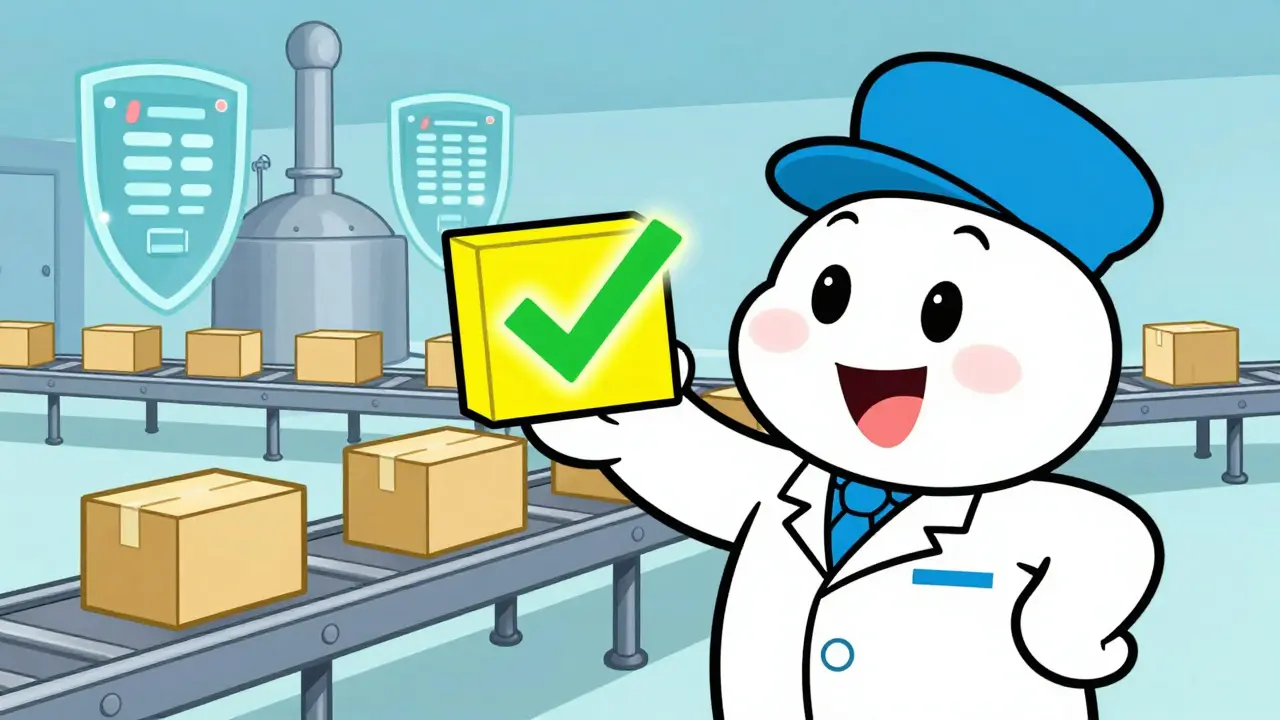
Imagine buying a life-saving medication, only to find out it contains chalk or worse, toxic chemicals instead of the active ingredient. This isn't just a scary movie plot; it is a real risk that threatens millions of patients every year. But how do we know the pill in your hand is safe? The answer lies in a complex, invisible web of technology and regulation known as supply chain security, which ensures that legitimate drugs are protected from counterfeiting, diversion, and contamination.
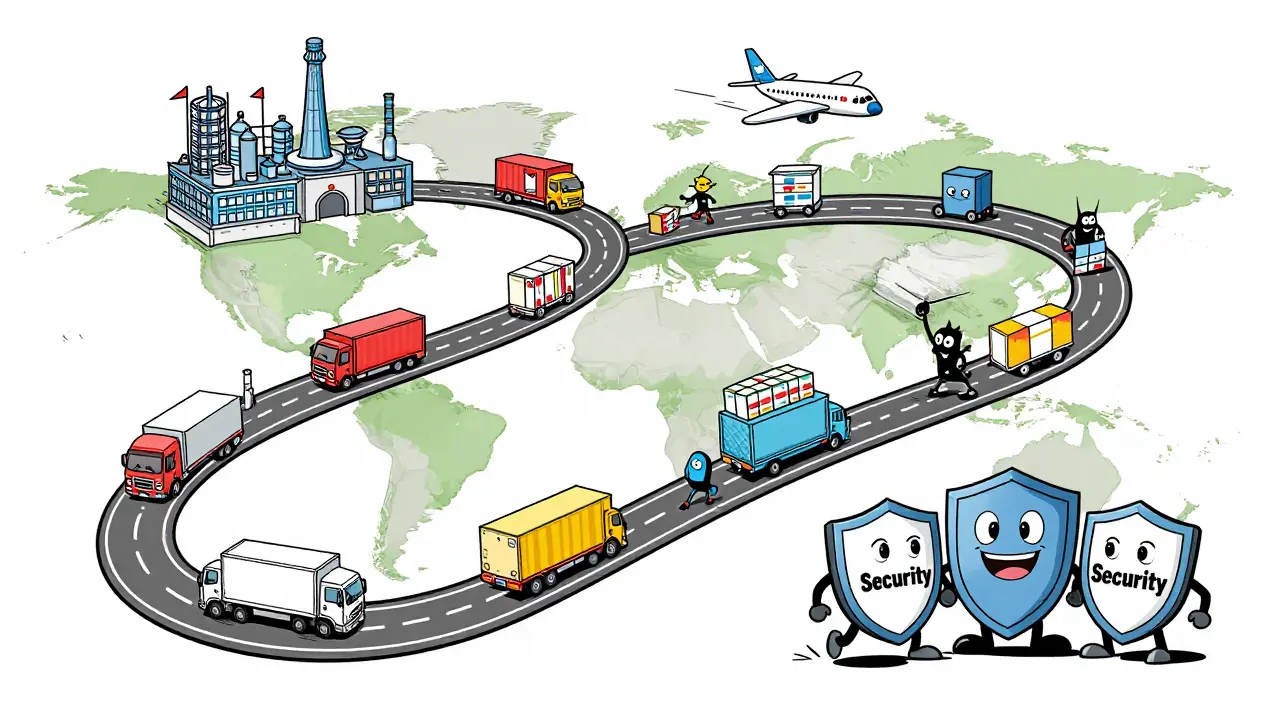
The journey of a prescription drug is long and fraught with potential vulnerabilities. From the manufacturing floor to the pharmacy shelf, every step offers an opportunity for bad actors to insert fake products. To combat this, governments and industry leaders have built sophisticated frameworks. In the United States, this system is anchored by the Drug Supply Chain Security Act (DSCSA), signed into law in 2013. Its goal is simple but ambitious: prevent harmful drugs from entering the supply chain, detect them if they do enter, and enable rapid removal. This protects approximately 5.8 billion prescription drug packages distributed annually.
The Core Mechanism: Serialization and Unique Identifiers
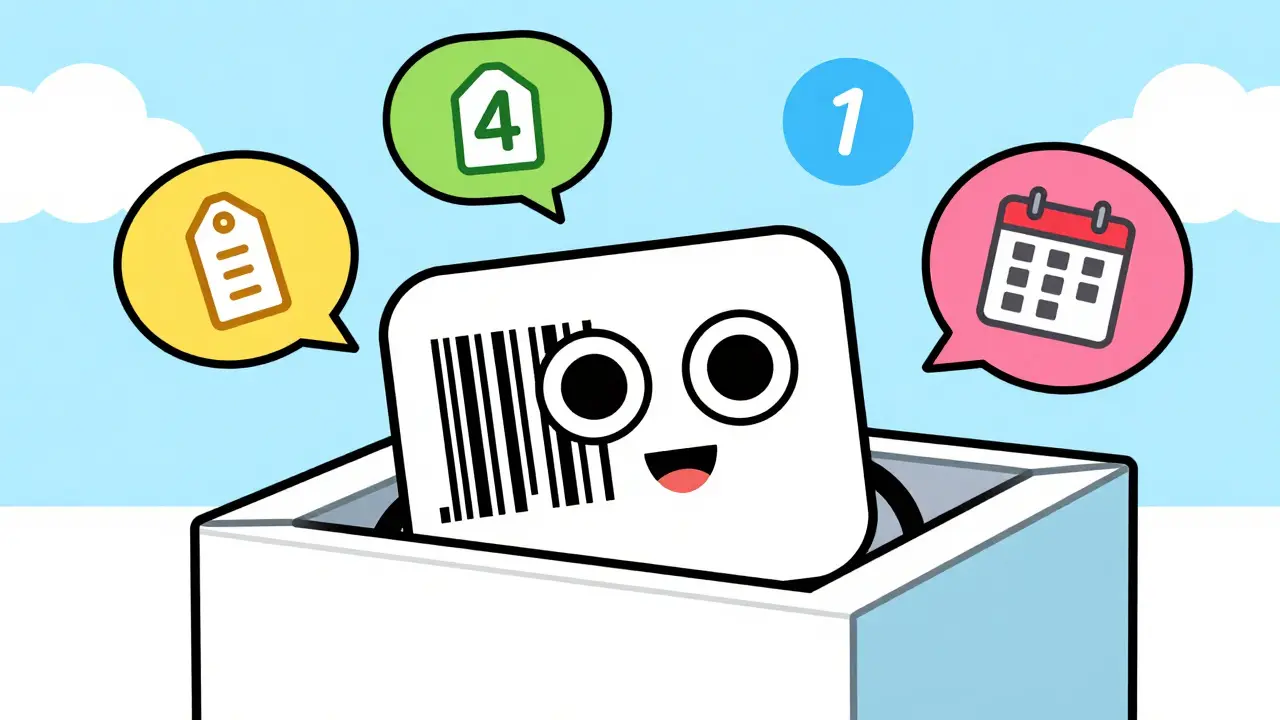
At the heart of modern pharmaceutical security is a concept called serialization. Think of it like giving every single box of medicine its own unique social security number. Under current regulations, every prescription drug package must carry a Unique Product Identifier (UPI). This identifier is embedded within a 2D Data Matrix barcode-a tiny, square code you might see on the side of your medicine box.
This barcode isn't just a label; it contains critical data points:
- National Drug Code (NDC): Identifies the specific drug product.
- Serial Number: A unique alphanumeric string for that specific package.
- Lot Number: Tracks the batch during manufacturing.
- Expiration Date: Ensures the drug hasn't passed its shelf life.
In the U.S. supply chain alone, this system generates roughly 1.2 million unique identifiers per day. When a wholesaler receives a shipment, they scan these codes. If a serial number has already been scanned elsewhere, or if it doesn't match the manufacturer's records, the system flags it immediately. This creates a digital trail that makes it nearly impossible for counterfeiters to blend fake drugs into the legitimate stream without detection.
Data Interoperability: Speaking the Same Language
Having unique IDs is useless if different companies can't share information about them. This is where Electronic Product Code Information Services (EPCIS) comes in. Developed by GS1, EPCIS is the standardized language that allows manufacturers, wholesalers, repackagers, and pharmacies to exchange transaction data electronically.
Before interoperability standards were fully enforced, Company A might use one software format while Company B used another, creating blind spots. Now, the requirement is clear: all trading partners must exchange product tracing information using compatible systems. As of recent updates, the industry is moving toward EPCIS 2.0 with JSON format, replacing older XML structures to improve speed and accuracy. This system processes over 15 million daily transactions with 99.95% accuracy, according to FDA compliance reports. It ensures that when a pharmacy scans a box, they can instantly verify its history against the manufacturer's database.
| Feature | U.S. DSCSA | EU Falsified Medicines Directive (FMD) |
|---|---|---|
| Centralized System | No (Decentralized peer-to-peer exchange) | Yes (European Medicines Verification System - EMVS) |
| Serialization Format | 20-character alphanumeric | 20-digit numeric |
| Verification Point | Throughout the chain (wholesalers, dispensers) | Mandatory decommissioning at pharmacy dispensing |
| Primary Goal | Traceability and interoperability | Prevention of falsified medicines via central repository |
It is worth noting that the European Union takes a slightly different approach through the Falsified Medicines Directive (FMD). While the U.S. relies on decentralized electronic exchange between partners, the EU uses a centralized repository model. All stakeholders connect to national verification organizations, and product codes are permanently "decommissioned" when dispensed to a patient. Both systems aim for the same result-patient safety-but they achieve it through different technical architectures.
Authorized Trading Partners: Vetting the Network
Technology alone cannot stop fraud if the people running the system are compromised. This is why Authorized Trading Partner (ATP) requirements are so strict. Every entity in the supply chain-from the factory to the local pharmacy-must be verified.
Before doing business, companies must confirm that their partners are legitimate. Systems like the FDA's DSCSA ATP Verification Router Service process over 50,000 daily verification requests. This prevents rogue distributors from selling fake drugs under the guise of legitimacy. However, experts note challenges here. Dr. Amir Attaran of the University of Ottawa pointed out in a 2023 analysis that enforcement gaps remain, with some wholesale distributors failing to conduct required verifications. Despite this, the ATP framework remains a critical layer of defense, ensuring that only vetted entities participate in the distribution network.
Real-World Impact: Detecting Suspect Products
What happens when something goes wrong? The system is designed for rapid response. If a trader identifies a suspect product-perhaps due to a broken seal, unusual packaging, or a failed serial number check-they must initiate an investigation within 24 hours. This includes verifying the serial number against manufacturer databases and conducting forensic testing if necessary.
This protocol prevented approximately 12,000 suspect product incidents from reaching patients annually in recent years. During the 2022 infant formula crisis, the traceability infrastructure allowed implicated batches to be traced and removed from shelves within 72 hours, compared to the previous average of 14 days. Similarly, during the COVID-19 vaccine rollout, the electronic track-and-trace infrastructure enabled real-time verification of 98.7% of shipments, ensuring that vaccines were authentic and stored correctly throughout their journey.
Challenges and Costs for Stakeholders
While the benefits are clear, implementing this level of security is not easy or cheap. For large pharmaceutical companies, the investment is manageable. TraceLink, SAP, and Movilitas dominate the market with solutions costing millions. However, smaller players struggle. Independent pharmacies report annual compliance costs of around $18,500 in software and hardware, representing a significant portion of their net profit.
Common challenges include:
- Legacy System Integration: Many older warehouse management systems cannot easily handle high-speed scanning of 2D barcodes.
- Barcode Readability: Field tests show that 12.7% of packages have readability issues, leading to manual overrides and potential errors.
- Cybersecurity Risks: The reliance on digital systems introduces new vulnerabilities. The 2023 Change Healthcare cyberattack disrupted verification services for 72 hours, affecting 35% of U.S. pharmacies.
To mitigate these risks, companies are increasingly adopting AI for anomaly detection and IoT sensors for monitoring temperature and condition in cold-chain shipments. These technologies add layers of protection beyond simple serialization.
Future Outlook: Global Harmonization
As we move toward 2027, the final deadline for full electronic interoperability in the U.S., the focus is shifting toward global harmonization. Currently, multinational companies face a nightmare of complying with different standards-the U.S. DSCSA, EU FMD, China's mandatory serialization, and Brazil's RDC regulations. This complexity results in 22% higher compliance costs for global firms compared to domestic ones.
The International Council for Harmonisation (ICH) is working on draft guidance to align serialization standards across more than 60 countries by 2026. The goal is a unified system where a drug manufactured in Japan can be seamlessly tracked and verified in Europe or North America without manual re-entry of data. By 2030, experts predict this infrastructure will evolve into a predictive analytics platform, potentially reducing counterfeit incidents by 95% while generating billions in efficiency savings.
What is the Drug Supply Chain Security Act (DSCSA)?
The DSCSA is a U.S. federal law enacted in 2013 to protect consumers from counterfeit, stolen, contaminated, or otherwise intentionally adulterated products that may cause harm or death. It requires all parties in the pharmaceutical supply chain to implement serialization, traceability, and verification protocols to ensure drug authenticity.
How can I tell if my medication has been tampered with?
Look for the 2D Data Matrix barcode on the package. While you cannot scan it with a standard phone camera to verify authenticity directly, the presence of this code indicates the drug is part of the secure supply chain. Additionally, check for physical signs of tampering such as broken seals, damaged packaging, or unusual discoloration of the pills themselves.
Why is serialization important for drug safety?
Serialization assigns a unique identifier to each individual package of medication. This allows every stakeholder in the supply chain to verify the product's origin and history. If a counterfeit drug enters the system, its unique ID will not match the manufacturer's records, allowing it to be identified and removed before reaching the patient.
What is the difference between the U.S. and EU drug tracking systems?
The U.S. DSCSA uses a decentralized model where trading partners exchange data directly with each other using EPCIS standards. The EU's Falsified Medicines Directive uses a centralized model where all verifications go through a central repository (EMVS), and product codes are permanently deactivated once dispensed to a patient.
Who is responsible for enforcing supply chain security?
In the United States, the Food and Drug Administration (FDA) oversees enforcement. However, the responsibility is shared among all trading partners, including manufacturers, wholesalers, repackagers, and dispensers, who must maintain compliant systems and conduct regular audits and verifications.
Comments (11)
Guy Birtwhistle
9 May, 2026Oh great, another layer of bureaucracy wrapped in tech jargon 🙄
Kenny Pines
9 May, 2026The sarcasm is thick but the point stands regarding complexity 😅 Honestly though, if it stops chalk pills from reaching kids, I am all for it. The EU model with decommissioning seems way tighter than our decentralized mess here. Why do we always choose the harder path? 🤷♂️
Liz and Nick
10 May, 2026people are so naive thinking this stops anything big pharma just moves the goalposts and charges us more for compliance costs which get passed on to us poor souls anyway its all a scam really
Brian Fibelkorn
10 May, 2026Your cynicism is noted but factually incorrect regarding the ATP verification protocols. The DSCSA mandates rigorous vetting of trading partners which actually creates a significant barrier to entry for bad actors. The Change Healthcare incident was an anomaly not a systemic failure of the serialization architecture itself. We need to appreciate the cryptographic security measures being implemented rather than dismissing them as corporate greed.
David Rangkhal
11 May, 2026let's keep the discussion civil please 🙏 the technology is promising but implementation is key especially for smaller pharmacies who might struggle with the legacy system integration mentioned in the post
Chelsea Grdina
11 May, 2026In Canada we have seen similar initiatives roll out over the last decade and it has been quite a journey for everyone involved from manufacturers down to the community pharmacists who are doing the final scans. What is interesting is how the cultural shift happens within organizations where staff initially resist the extra steps but eventually realize that the data transparency protects their own liability and reputation immensely. I hope the US transition is smoother given the scale of your market and perhaps learning from the European centralized repository model could help streamline some of the peer-to-peer friction points you are currently experiencing.
Sarah Kwiatkowski
12 May, 2026This gives me so much hope for patient safety! Knowing that there is a digital trail makes me feel much safer picking up my prescriptions. I love that the system can flag suspect products so quickly. Keep up the good work explaining these complex systems!
Brian LeClercq
14 May, 2026Typical American inefficiency at its finest. We build a sprawling, decentralized nightmare while Europe simply connects to a central hub and gets it done. Our obsession with 'peer-to-peer' freedom in drug tracking is just an excuse for regulatory capture by Big Pharma lobbyists who don't want a government database they can't control. Meanwhile, our citizens pay higher prices for inferior security architecture. It's pathetic.
Frances Kendall
16 May, 2026I would argue that the decentralized approach allows for greater resilience against single-point-of-failure attacks. If the central EMVS server goes down or is compromised, the entire EU supply chain halts. In the US, individual nodes can still operate and verify locally even if broader network connectivity is spotty. Both models have merit but the US prioritizes operational continuity during cyber incidents which is a valid strategic choice given our history with healthcare IT vulnerabilities.
Natali Brown
17 May, 2026It really warms my heart to see such detailed analysis of something that affects us all so personally. I often worry about what is actually in the medicine I take for my chronic conditions so reading about the forensic testing and rapid response protocols gives me immense comfort. Thank you for sharing this perspective because it helps demystify the process and shows that people are genuinely working hard to protect public health despite the challenges.
Kelsey Thomas
18 May, 2026Just chilling here reading this 👀 The AI anomaly detection part is super cool though. Imagine if those sensors could also track temperature in real-time for insulin users. That would be a game changer for diabetics traveling abroad.