
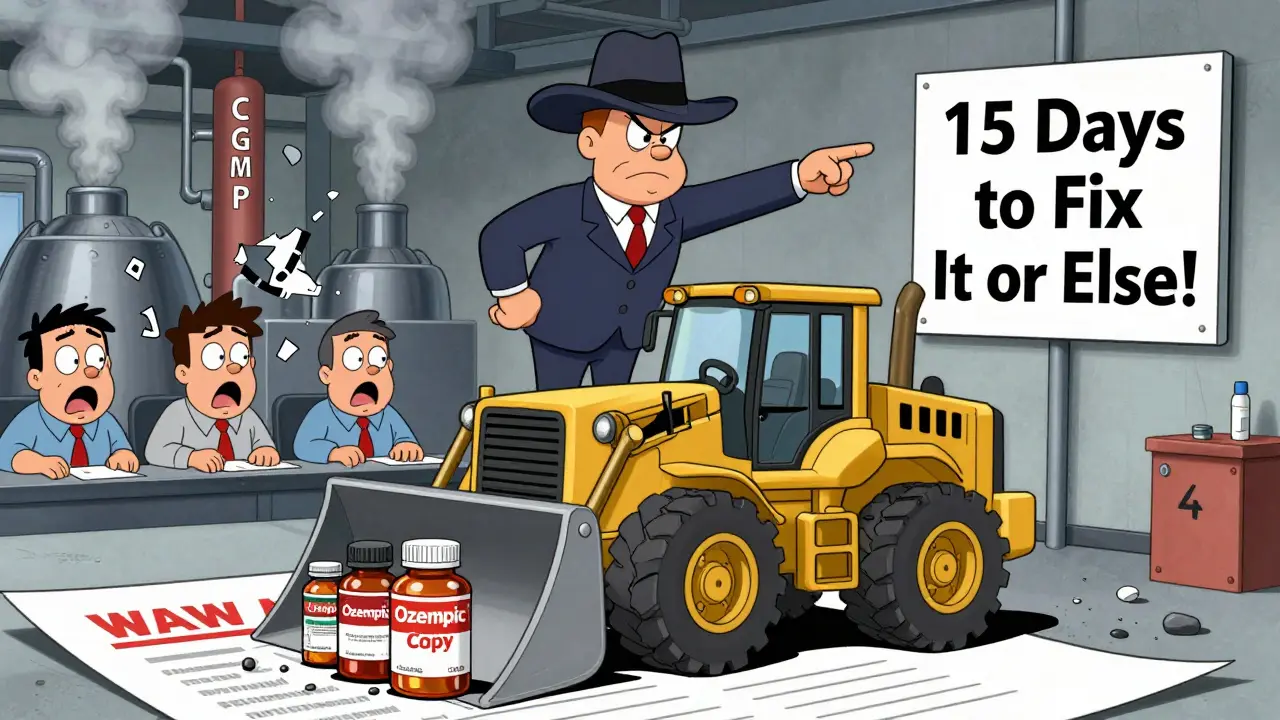
The U.S. Food and Drug Administration (FDA) doesn’t just set rules - it enforces them. And when manufacturers cross the line, the FDA doesn’t wait. In 2025, the agency issued over 800 formal warning letters targeting companies that made, sold, or distributed products without meeting basic safety and quality standards. These aren’t gentle reminders. They’re legal notices that can lead to seized shipments, criminal charges, or even the permanent removal of a product from the market.
What Is an FDA Warning Letter?
An FDA Warning Letter is the agency’s most common formal step to stop unsafe or illegal products from reaching consumers. It’s not a suggestion. It’s a documented alert that a company has violated federal law under the Federal Food, Drug, and Cosmetic Act (FDCA). The letter lists every specific problem - from dirty equipment to false marketing claims - and gives the company 15 business days to respond with a plan to fix it.
These letters are issued by top officials, not mid-level inspectors. Since early 2023, under Commissioner Robert Califf, the FDA has returned to a 1990s-style enforcement model: more letters, faster action, and higher stakes. Warning Letters now carry the signature of the Director of the Center for Drug Evaluation and Research (CDER) or the Center for Biologics Evaluation and Research (CBER), not junior staff. That shift means the agency is treating these as serious regulatory actions, not paperwork.
How the FDA Catches Violations
The FDA doesn’t guess. It inspects. Every year, thousands of facilities - from drug factories in India to food plants in Iowa - get visited by FDA inspectors. During these unannounced checks, inspectors document problems on FDA Form 483. This isn’t a final decision. It’s a snapshot of what went wrong on-site.
If the issues are serious enough, the FDA follows up with a Warning Letter. Common violations include:
- Failure to follow Current Good Manufacturing Practices (cGMP)
- False or misleading claims about a product’s benefits
- Using unapproved ingredients or untested processes
- Refusing access during inspections
- Marketing unapproved drugs - especially compounded versions of popular medications like semaglutide
For example, in the first half of 2025 alone, the FDA issued 58 Warning Letters to telehealth companies and compounding pharmacies that were selling compounded GLP-1 drugs as if they were FDA-approved. These weren’t just minor labeling errors. These companies were advertising weight-loss drugs with claims that mimicked FDA-approved brands, putting patients at risk.
What Happens After a Warning Letter?
Receiving a Warning Letter isn’t the end - but ignoring it is. Companies have 15 business days to reply. That reply must include:
- A clear list of steps taken to fix each violation
- Deadlines for completing each fix
- Proof that systems are now in place to prevent future problems
If the FDA finds the response inadequate, things get worse fast. The agency can:
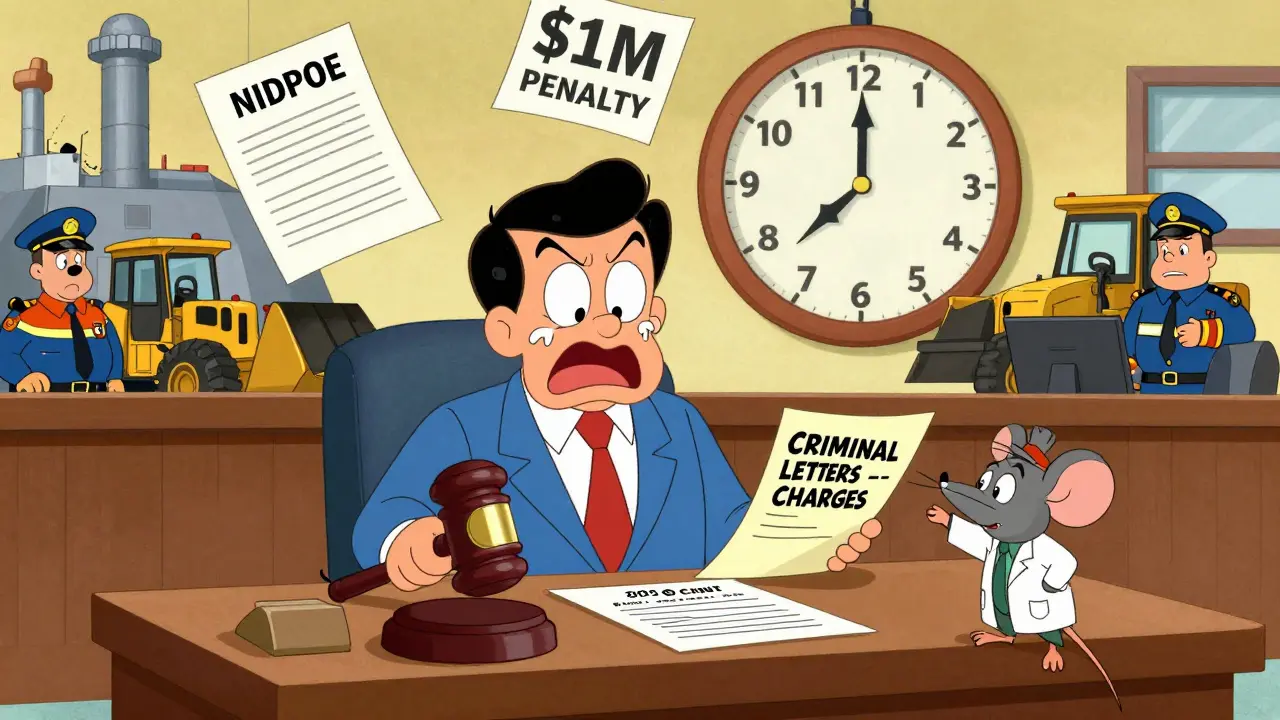
- Issue a Notice of Initiation of Disqualification Proceedings and Opportunity to Explain (NIDPOE) - this can bar a facility from supplying products to the U.S. market
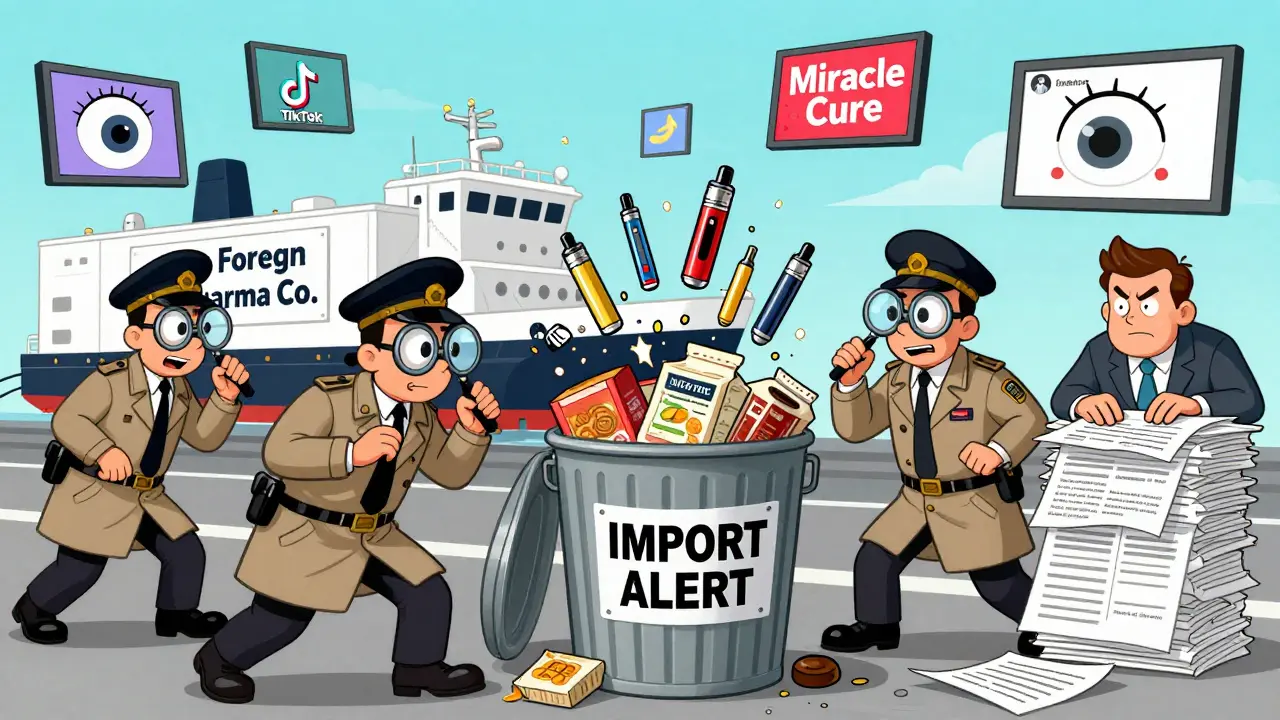
- Issue an Import Alert - meaning every future shipment from that company gets automatically detained at the border
- Start a recall - either voluntary or mandatory
- Seek Civil Monetary Penalties - up to $1 million per violation
- Push for criminal prosecution - especially if a company delays or hides records during an inspection
One company in 2024 was fined over $2 million after ignoring a Warning Letter about contamination in its insulin manufacturing line. The FDA found that the firm had known about the issue for months but didn’t tell regulators or recall the product. That’s how serious this gets.
Targeted Enforcement: Food, Drugs, and Tobacco
The FDA doesn’t treat all industries the same. Enforcement priorities vary by product type.
Food Manufacturers
In 2024, the FDA issued 149 Warning Letters to human food facilities and 37 to animal food facilities. Most of these were for failing to follow the Food Safety Modernization Act (FSMA) rules - especially around Preventive Controls. This means companies didn’t properly assess risks like cross-contamination, allergen mixing, or improper storage. One facility in Texas was cited for storing raw chicken next to ready-to-eat meals. The FDA didn’t just warn them - they issued an Import Alert that blocked all future shipments.
Pharmaceuticals and Compounding
Compounding pharmacies that turn prescription drugs into custom doses are under heavy scrutiny. In 2025, over half of all FDA Warning Letters to drugmakers targeted companies selling compounded versions of GLP-1 drugs - like semaglutide - with claims that sounded just like Ozempic or Mounjaro. These companies weren’t licensed to make these products. They weren’t tested for safety. But they were marketing them aggressively online. The FDA’s response? A wave of letters and a public list of companies to avoid.
Tobacco Products
The FDA has issued more than 700 Warning Letters since 2021 targeting unauthorized vaping products and flavored tobacco. Many of these were sold in convenience stores or online with packaging that appealed to teens. The agency is now using AI tools to scan social media for illegal ads. One company in California was shut down after the FDA found its e-cigarette ads targeted high school students using TikTok influencers. The company’s owner now faces criminal charges.
What You Need to Do If You’re a Manufacturer
If your company makes drugs, food, or medical devices for sale in the U.S., here’s what you must do:
- Train your team on cGMP and FSMA rules - every year
- Keep detailed records of every batch, test, and inspection
- Never assume FDA won’t show up - unannounced inspections are now the norm
- Don’t respond to a Warning Letter with excuses. Respond with action
- Get legal counsel familiar with FDA enforcement - don’t rely on general lawyers
Companies that treat Warning Letters as a bureaucratic nuisance often end up in court. Those that treat them as emergencies - assembling a team of quality control, legal, and compliance staff within 24 hours - usually avoid bigger penalties.
What’s Next for FDA Enforcement?
The FDA’s 2026 budget includes $50 million to hire more inspectors and expand unannounced checks on foreign facilities. The agency plans to increase these inspections by 300% over the next two years. That means more companies overseas - especially in China, India, and Mexico - will be under the microscope.
Also, the FDA is now monitoring online ads and social media more closely. If your website or Instagram post makes a health claim that isn’t approved, you’ll get a letter - even if you’re a small business. The agency is using automated tools to scan for keywords like “miracle cure,” “FDA-approved alternative,” or “better than Ozempic.”
Expect more criminal referrals too. In 2025, the FDA referred 17 cases to the Department of Justice for criminal investigation - up from just 4 in 2022. Delaying inspections or shredding records can now lead to jail time.
Bottom Line
The FDA isn’t bluffing. Warning Letters are no longer just paperwork. They’re the first step in a legal process that can shut down your business, seize your inventory, and put your leadership in legal jeopardy. If you’re manufacturing anything for the U.S. market, compliance isn’t optional. It’s your lifeline.
Read every letter carefully. Fix every issue. Document everything. And never ignore a notice from the FDA - because they’re watching, and they’re ready to act.
What happens if I ignore an FDA Warning Letter?
Ignoring an FDA Warning Letter almost guarantees escalation. The agency may issue an Import Alert, which blocks all future shipments from your facility. It can also impose civil penalties of up to $1 million per violation. In serious cases, the FDA can initiate criminal proceedings, especially if you delayed or obstructed an inspection. Many companies that ignore these letters end up losing their ability to sell products in the U.S. permanently.
Can the FDA inspect foreign manufacturers without warning?
Yes. Since 2023, the FDA has expanded its unannounced inspection program for foreign facilities. Inspectors can show up at any time - no notice, no invitation. These inspections are now routine for manufacturers of drugs, medical devices, and food products sold in the U.S. Refusing access or delaying inspections can lead to criminal charges under Section 303(f) of the FDCA.
Are Warning Letters public information?
Yes. All FDA Warning Letters are posted on the agency’s public website within days of being sent. They’re searchable by company name, product type, or date. Investors, customers, and competitors regularly monitor these lists. A single letter can damage a company’s reputation, even before any legal action is taken.
How long do I have to respond to a Warning Letter?
You typically have 15 business days to respond. The FDA may extend or shorten this deadline based on the severity of the violation. For example, if a product poses an immediate health risk, the agency may demand a response in 7 days. Your reply must include a detailed corrective action plan, timelines, and proof that the root cause has been addressed.
Can the FDA shut down my facility?
The FDA cannot directly shut down a facility - but it can effectively do so. By issuing an Import Alert, withdrawing product approval, or initiating a mandatory recall, the agency can make it impossible for your products to enter or remain in the U.S. market. In extreme cases, the agency can also pursue a court order to halt operations. Many companies shut down voluntarily after receiving multiple Warning Letters because they can no longer meet regulatory requirements.
Comments (8)
Scott Conner
11 Feb, 2026So the FDA's just gonna slap a letter on every small compounding shop that dares sell semaglutide? Feels like they're punishing the little guys while the big pharma giants get a free pass. I mean, come on. Same drug, same effect, but one's 'FDA-approved' and the other's 'illegal'? Sounds like a monopoly play to me.
John Watts
13 Feb, 2026Honestly? This is long overdue. I've seen too many people buy 'miracle' weight-loss stuff off Instagram that's basically sugar water with a fancy label. The FDA stepping up? Yes. Please. More inspections. More teeth. I work in pharma logistics - I've seen the messes. Half these companies don't even know what cGMP stands for. If you're selling something that touches human bodies, you owe it to people to do it right. No excuses.
Randy Harkins
14 Feb, 2026I just want to say thank you to the FDA inspectors. 🙏 They’re the unsung heroes showing up at 6 a.m. in some factory in Hyderabad, wearing PPE, documenting every tiny flaw. It’s not glamorous. It’s not viral. But it’s saving lives. I have a cousin who was on a contaminated supplement - ended up in the hospital. That’s why this matters. Keep doing the hard work. We see you.
Chima Ifeanyi
15 Feb, 2026Let’s deconstruct the regulatory architecture here. The FDCA’s statutory authority under Section 501(a)(2)(B) is being weaponized as a de facto administrative enforcement mechanism. The issuance of Warning Letters has become a proxy for prosecutorial discretion, circumventing due process. The 15-day response window is functionally coercive - it creates a perverse incentive for overcorrection and strategic compliance theater. Moreover, the public posting of these letters constitutes an extrajudicial reputational sanction that violates principles of proportionality. This isn’t enforcement. It’s regulatory performative justice.
Tori Thenazi
15 Feb, 2026Okay, but what if... what if the FDA is actually working with Big Pharma to kill off the compounding pharmacies? I mean, think about it. Ozempic costs $1,000 a month. The compounded version? $50. Who benefits? Not you. Not me. The FDA says 'unsafe' - but they never test the compounded versions themselves. They just rely on what Big Pharma tells them. And then they post the letters online so everyone panics. I bet they’re even using AI to scan for keywords because they know people are searching for cheaper options. They want you dependent. They want you broke. 🤔💸
Elan Ricarte
17 Feb, 2026This whole thing is a circus. You’ve got some guy in Ohio running a kitchen-table compounding shop because his neighbor’s diabetic and can’t afford the $900 script. FDA shows up, slaps a letter on him, and now he’s a criminal. Meanwhile, the same FDA lets a billion-dollar pharma company ship out insulin with a 12% potency variation and calls it 'within tolerance.' That’s not regulation. That’s class warfare dressed up in lab coats. And don’t even get me started on how they ignore the Chinese factories making fake vape pens that look like Fortnite merch. Double standards? More like triple standards with a side of hypocrisy.
Angie Datuin
18 Feb, 2026I just read through all of this. It’s overwhelming. But honestly? I’m glad someone’s watching. My mom took a supplement last year that made her dizzy for weeks. We never knew it wasn’t regulated. I’m not angry - I’m just grateful there are people doing the boring, hard work so stuff like that doesn’t keep happening. Thanks for being thorough.
Camille Hall
19 Feb, 2026This is why I always tell my students: compliance isn’t about fear. It’s about care. Every warning letter is a chance to fix something before someone gets hurt. I’ve worked with small manufacturers who thought the FDA was the enemy - until they saw how the inspectors helped them redesign their process to be safer. It’s not about punishment. It’s about partnership. If you’re reading this and you’re a small biz owner - reach out. There are resources. You don’t have to do this alone.