
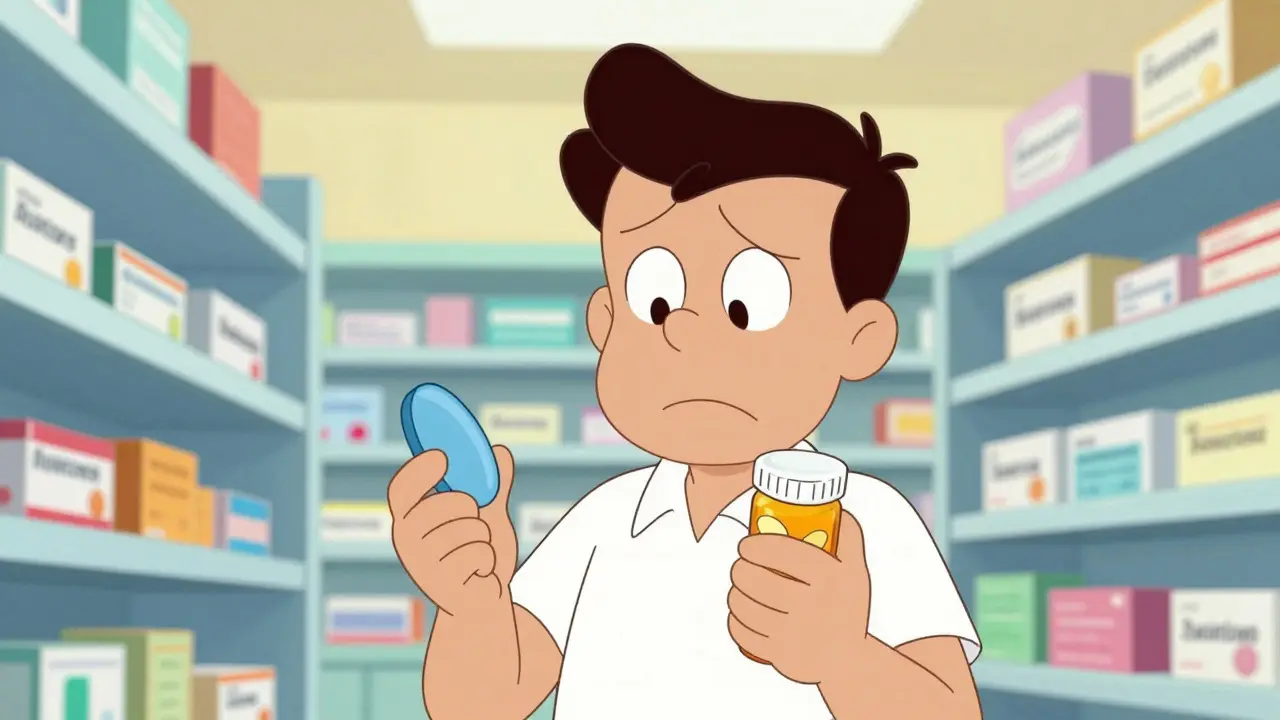
Imagine walking into a pharmacy and being handed a pill that looks completely different from the one you’ve taken for years. It’s smaller, a different color, maybe even a different shape. Your heart skips a beat. Is it really the same medicine? Did the doctor make a mistake? This is a daily reality for millions of people, not because generics are bad, but because we haven’t done enough to explain them clearly.
Health literacy is the degree to which an individual has the capacity to obtain, communicate, process, and understand basic health information and services to make appropriate health decisions. When applied to prescriptions, it becomes a specific skill set: reading labels, understanding dosage, and trusting the regulatory process. Yet, for many, this trust erodes the moment a brand-name drug is swapped for a generic alternative.
The gap isn't just about confusion; it's about consequences. Patients with low health literacy are 2.5 times more likely to experience medication errors. They are also 32% more likely to be hospitalized due to misunderstandings about their meds. If we want to close these knowledge gaps, we need to look at how we talk about generics, who needs help most, and what actually works to build confidence in these life-saving drugs.
Why the Confusion Around Generics Persists
You might think that if a drug is approved by the FDA, everyone knows it’s safe. But data tells a different story. Approximately 68% of patients express concerns about the effectiveness of generic medications, compared to only 29% for brand-name drugs. Why such a huge disparity?
The answer lies in Brand psychology, which is the study of how consumer perceptions and emotional connections influence purchasing and usage decisions. For decades, pharmaceutical companies have built powerful brands. The blue pill, the white oval tablet-these images are etched in our minds. A generic version breaks that visual contract. Even though the active ingredient is identical, the inactive ingredients (like dyes or fillers) can differ, changing the appearance. To a patient without deep medical training, "different looking" often equals "different working."
This is where Bioequivalence comes in. It is a measure of the rate and extent to which the active ingredient in a generic drug reaches the bloodstream compared to the brand-name reference product. The FDA requires generics to fall within a 90% confidence interval of 80-125% relative to the brand. In plain English, this means they work almost exactly the same way. But do patients know this? Most don't. They see a different pill and assume the science changed. That assumption leads to non-adherence, where people stop taking their meds or go back to the expensive brand out of fear.
The Real Cost of Low Health Literacy
Let’s talk numbers, because they paint a stark picture. Only 12% of U.S. adults possess proficient health literacy skills. That means nearly nine out of ten people struggle with some aspect of understanding their healthcare. When it comes to medication labels, the problem gets worse. Studies show that 63% of patients with low health literacy cannot correctly identify the active ingredient on a generic label, compared to 28% for brand-name labels.
What does this mean for your wallet and your health? The inability to understand generic medication information costs employers and health plans approximately $1.2 billion annually. This waste comes from unnecessary brand-name prescriptions and complications that could have been prevented. For individuals, the stakes are personal. People who receive clear explanations about generics are 83% more likely to stick to their medication regimens. Those who don’t get those explanations are far more likely to end up in the emergency room. One estimate suggests that when patients receive health-literate educational materials, they are 14% less likely to visit the ER for medication issues, saving an average of $675 per person every year.
Vulnerable populations face the steepest climb here. Immigrants, elderly patients, and those with lower socioeconomic status are disproportionately affected. Limited English proficient speakers are 3.2 times more likely to misunderstand generic medication information. For them, the barrier isn't just scientific; it's linguistic and cultural. If the explanation isn't in their language or doesn't account for their cultural views on medicine, the knowledge gap widens further.
How Pharmacists Can Bridge the Gap
Pharmacists are often the last line of defense before a patient takes a new pill. But time is short. On average, a pharmacist spends 4.2 minutes explaining generic alternatives. However, when dealing with a patient who has low health literacy, that time jumps to 9.7 minutes. It’s a tough ask, but effective communication makes all the difference.
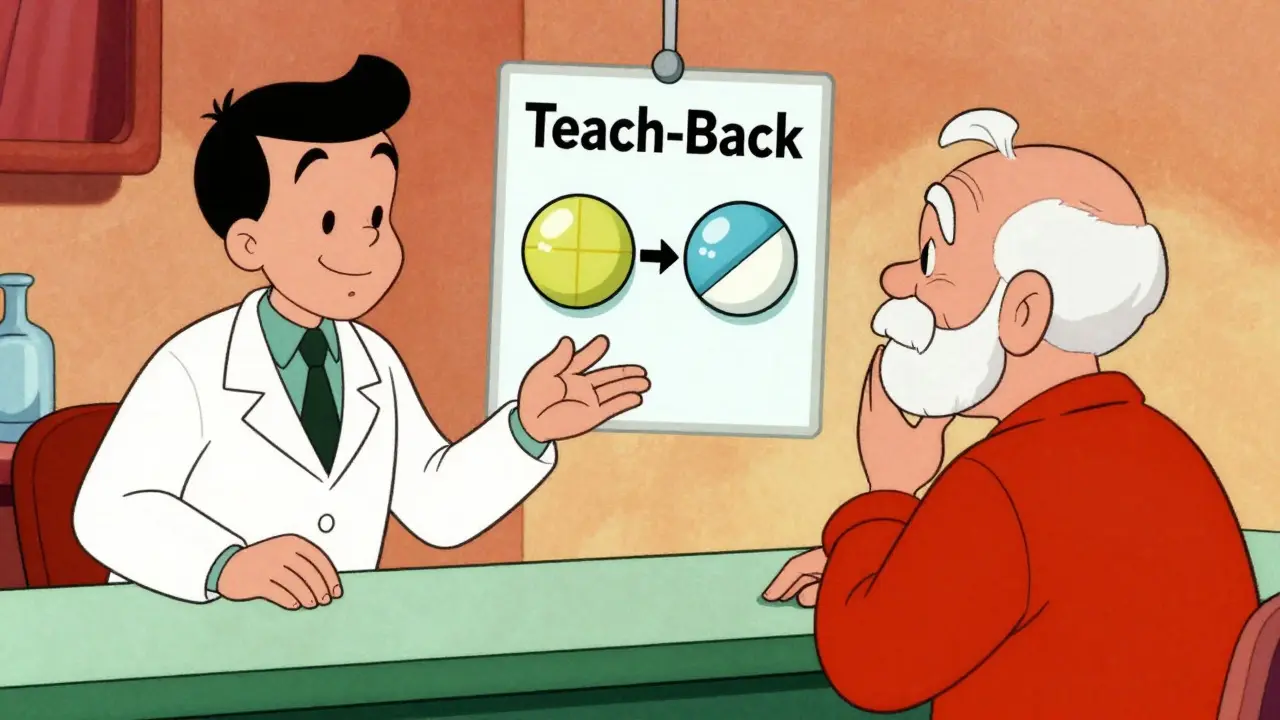
One technique that stands out is the Teach-Back Method, which is a communication strategy where the provider asks the patient to repeat back instructions in their own words to confirm understanding. Instead of asking, "Do you understand?" (which usually results in a polite nod), the pharmacist asks, "So, to make sure I explained it well, can you tell me what you'll do with this new pill?" This method has been documented to reduce misunderstandings by 42%. It turns a monologue into a dialogue and catches confusion before it leaves the counter.
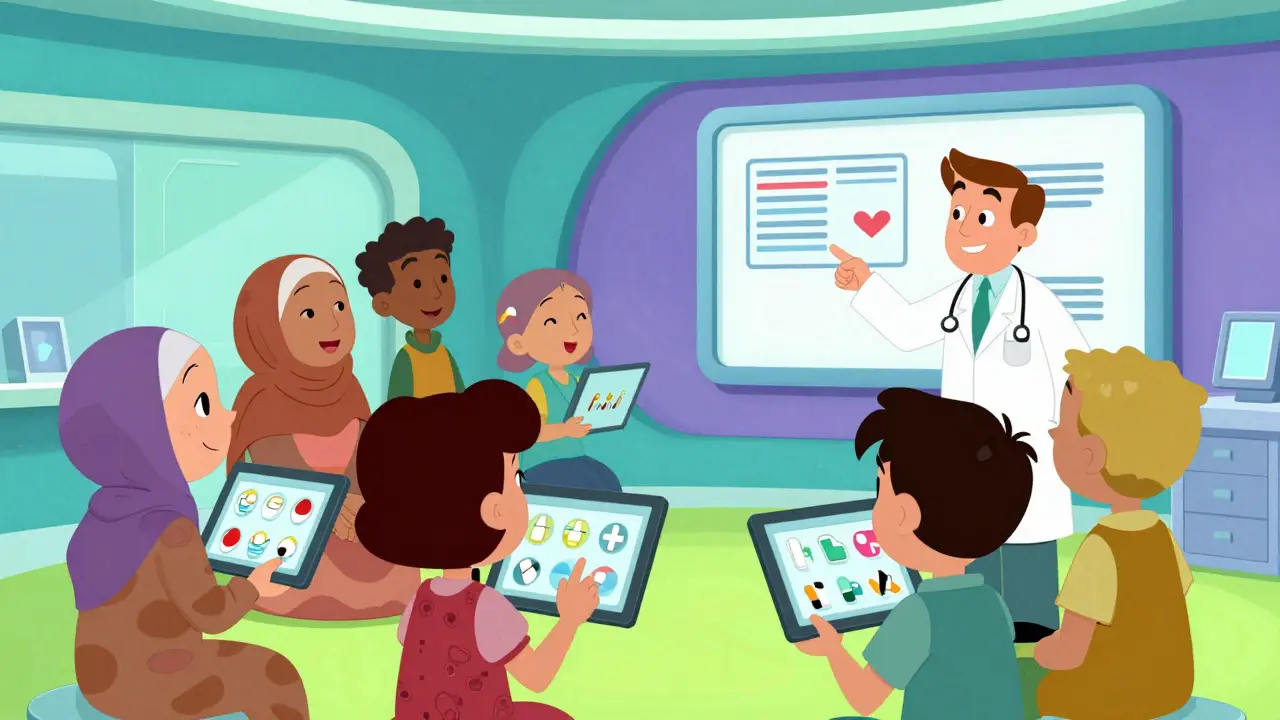
Visual aids also play a crucial role. Showing a side-by-side comparison of the brand and generic pills, highlighting that the core ingredient is the same, helps demystify the switch. Digital tools are stepping in too. A recent study found that patients using an app with visual pill identifiers for generics demonstrated 35% better recognition and understanding compared to standard counseling alone. Technology can reinforce the message long after the patient leaves the pharmacy.
Practical Strategies for Patients and Providers
Closing the knowledge gap isn't just the job of doctors and pharmacists. Patients can take active steps to improve their medication literacy. Here is how you can make sense of your prescriptions:
- Ask about the active ingredient: Don't just look at the name on the box. Ask your pharmacist, "What is the main ingredient in this pill?" If it matches your previous prescription, you're on the right track.
- Ignore the look, focus on the function: Remind yourself that color and shape are determined by inactive ingredients like dyes and binders. They don't change how the drug works in your body.
- Use the Teach-Back method on yourself: After your consultation, try to explain the dosing schedule to a family member or friend. If you stumble, ask the provider to clarify before you leave.
- Leverage digital resources: Use reputable apps or websites to scan your prescription and read plain-language summaries. Avoid relying solely on social media forums for medical advice.
For providers, the approach needs to shift from assuming understanding to verifying it. Simplifying instructions is key. Organizations that simplified generic medication instructions saw a 29% reduction in medication errors and a 22% increase in adherence rates. Plain language isn't dumbing down; it's meeting people where they are. It means avoiding jargon like "bioequivalent" unless you immediately follow it with a simple analogy.
| Feature | Brand-Name Drug | Generic Drug |
|---|---|---|
| Active Ingredient | Identical | Identical |
| Inactive Ingredients | Specific formulation | May vary (dyes, fillers) |
| Appearance | Distinctive trademarked look | Often different color/shape |
| Patient Trust Level | Higher (71% confident) | Lower (32% confident) |
| Cost Impact | High (77% of Rx spending) | Low (23% of Rx spending) |
Future Directions and Systemic Changes
We are moving toward a system where health literacy is built into the infrastructure. The Centers for Medicare & Medicaid Services (CMS) now require health literacy assessments as part of Medicare Part D plan evaluations. This signals a shift from treating literacy as an afterthought to making it a core component of care quality.
Electronic health records (EHRs) are starting to play a role too. Pilot programs that integrate health literacy scores into EHRs trigger targeted education modules. If a patient is flagged as having low literacy, the system prompts the provider to use simplified materials or extra time. Early results show a 31% improvement in patient understanding in these pilot zones.
Regulators are also stepping up. The FDA launched a "Generics Awareness Campaign" in 2023, focusing on plain language materials and pharmacist training. The goal is simple: make the case for generics undeniable to the average person. By combining policy changes, technological tools, and better communication habits, we can turn the tide against the distrust of generic medications.
Frequently Asked Questions
Are generic medications really the same as brand-name drugs?
Yes, in terms of active ingredients and therapeutic effect. The FDA requires generics to demonstrate bioequivalence, meaning they release the same amount of the active drug into the bloodstream at the same rate as the brand-name version. Differences may exist in inactive ingredients, which affect appearance and taste but not efficacy.
Why do my generic pills look different from my old ones?
The appearance of a pill is determined by its inactive ingredients, such as dyes, coatings, and fillers. Since generic manufacturers don't need to replicate the exact trade dress of the brand, they often use different colors and shapes. This visual difference does not indicate a change in the medicinal strength or quality.
What is the Teach-Back method and why is it useful?
The Teach-Back method involves asking a patient to explain their medication instructions back to the provider in their own words. It confirms true understanding rather than assumed compliance. It is particularly effective for complex regimens or when switching to generic alternatives, reducing errors significantly.
How does low health literacy affect medication adherence?
Individuals with low health literacy are less likely to understand dosage schedules and the importance of consistency. They may stop taking a generic medication because it looks unfamiliar or misinterpret warning labels. This leads to higher rates of hospitalization and poor health outcomes compared to those with high health literacy.
What can I do if I'm unsure about a generic substitution?
Talk to your pharmacist before stopping your medication. Ask them to compare the active ingredients of both versions. If you still feel anxious, request a brief demonstration of how the generic works similarly to the brand. Keeping a list of questions ready can make this conversation more productive and reassuring.