
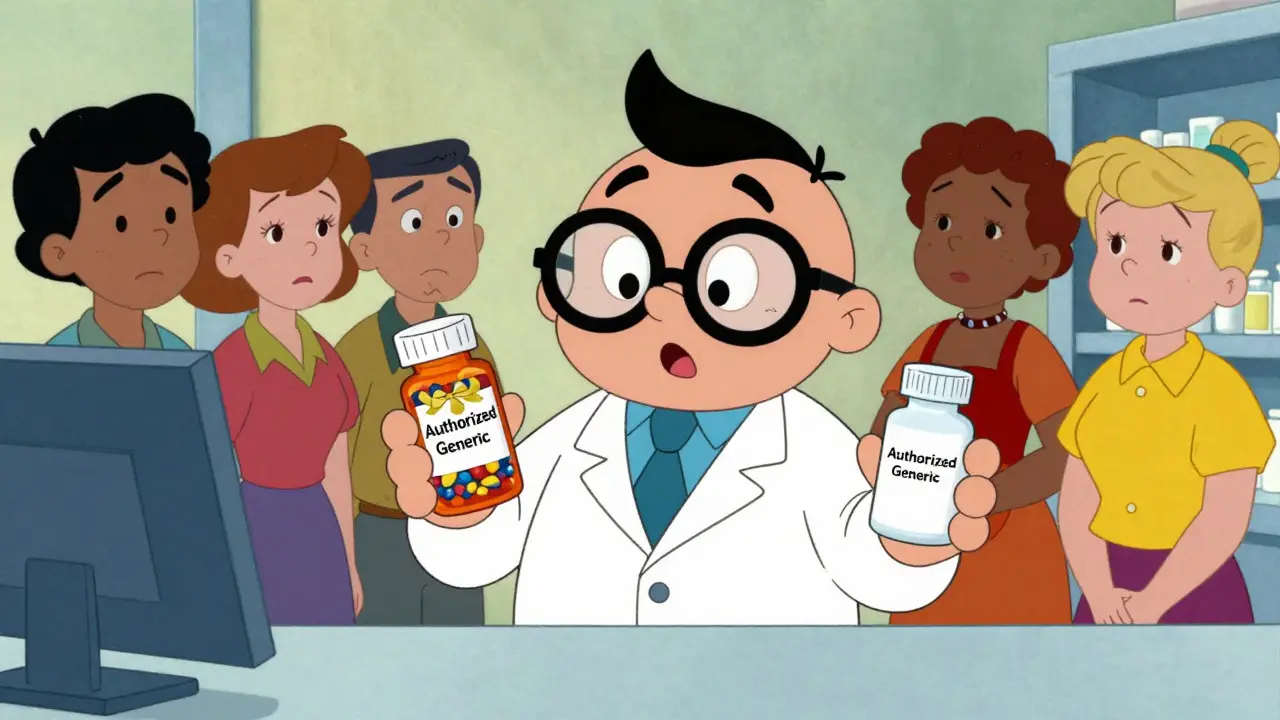
You know the drill. A patient walks in with a prescription for a high-cost brand-name medication. You check your system, and there’s a generic available. Usually, you just swap it out, save them money, and move on. But what if that patient has a sensitive stomach? Or what if they’re on a critical drug where even a tiny shift in absorption could be dangerous? This is where authorized generics come into play.
Most pharmacists think of generics as a single category-cheaper copies made by third-party manufacturers. But authorized generics are different. They are the exact same product as the brand-name drug, made by the same company, often in the same facility, but sold under a different label or without the brand name. For the right patient, at the right time, recommending an authorized generic isn’t just about saving money; it’s about clinical safety and adherence.
What Exactly Is an Authorized Generic?
To recommend them confidently, you first need to understand what you’re dealing with. An authorized generic is defined by the FDA as a listed drug marketed directly or indirectly by the brand-name manufacturer (or their licensee) with labeling that differs from the brand product. Think of it this way: if Brand X makes a pill, and then decides to sell that exact same pill in a plain white box without the "Brand X" logo, that’s an authorized generic.
This is distinct from traditional generics. Traditional generics require an Abbreviated New Drug Application (ANDA) to prove bioequivalence. They must have the same active ingredient, but they can-and often do-have different inactive ingredients like fillers, dyes, or binders. Authorized generics skip the ANDA process because they are identical to the brand. They share the same active and inactive ingredients. The only things that might change are the color, shape, or markings of the tablet itself.
Why does this distinction matter? Because for many patients, the "inactive" part of a drug is anything but inactive. If a patient tolerates the brand but reacts poorly to a standard generic due to a dye or filler, the authorized generic becomes a critical bridge. It offers the cost savings of a generic with the formulation consistency of the brand.
Three Clinical Scenarios Where You Should Recommend Them
Not every patient needs an authorized generic. In fact, most don’t. Standard generics are safe and effective for the vast majority of people. However, there are three specific scenarios where your recommendation of an authorized generic can prevent adverse events or treatment failure.
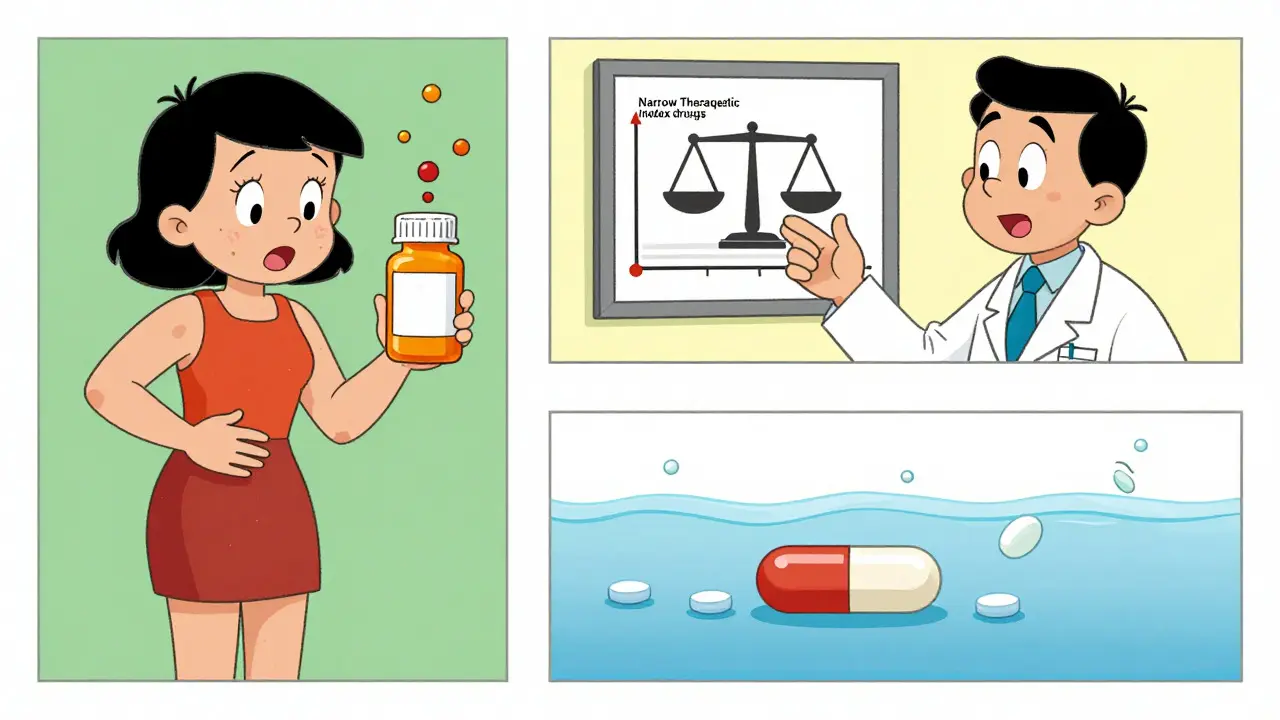
1. Sensitivities to Inactive Ingredients
This is the most common reason I see patients struggle with standard generics. A patient might be perfectly fine on the brand-name version of their blood pressure medication but develop hives, bloating, or headaches when switched to a competitor’s generic. Why? Often, it’s not the drug molecule causing the issue, but the lactose, gluten, gelatin, or specific dyes used in the generic formulation.
Since authorized generics contain the identical inactive ingredient profile as the brand-name product, they provide a safe alternative for patients with celiac disease, dairy allergies, or religious dietary restrictions (like avoiding pork-derived gelatin). If a patient tells you, "The brand works, but the cheap one makes me sick," ask specifically about the inactive ingredients. If the brand is compatible, the authorized generic likely will be too.
2. Narrow Therapeutic Index (NTI) Drugs
Some medications have a very small window between being effective and being toxic. These are called Narrow Therapeutic Index (NTI) drugs. Examples include warfarin, levothyroxine, phenytoin, and lithium. With these drugs, even minor variations in bioavailability-how much of the drug actually gets into the bloodstream-can lead to serious clinical consequences.
While standard generics are required to meet strict bioequivalence standards, real-world data shows that switching brands can cause therapeutic problems in 3-5% of patients taking NTI drugs. Some clinicians prefer to keep patients on a consistent source. An authorized generic guarantees that the manufacturing process and formulation are identical to the brand-name product the prescriber originally intended. It reduces the variable of "different manufacturer, different result."
3. Modified-Release Formulations
Extended-release or modified-release tablets use complex mechanisms to release medication slowly over time. Bioequivalence studies for standard generics ensure the total amount absorbed is similar, but they don’t always capture subtle differences in the release rate profile. For some patients, a standard generic might release the drug too quickly or too slowly compared to the brand, leading to breakthrough symptoms or side effects.
Because authorized generics are the brand product, they maintain the precise release mechanism designed by the original developer. If a patient reports fluctuating efficacy after switching to a standard generic extended-release product, an authorized generic is a logical next step before going back to the full-price brand.
How to Identify and Verify Authorized Generics
You can’t recommend what you can’t find. Unlike standard generics, which are everywhere, authorized generics are less common. As of late 2023, there were only about 257 authorized generic products on the market, representing roughly 5% of all brand-name drugs with generic alternatives.
Here is how you spot them:
- Check the FDA List: The FDA maintains a quarterly updated list of authorized generic drugs. This is your primary resource. It lists the trade name, the brand manufacturer, and the market entry date.
- Look at the NDC Labeler Code: When you pull up the National Drug Code (NDC) directory, look at the labeler code. For an authorized generic, this code will belong to the brand manufacturer (e.g., Pfizer, Merck) or an authorized licensee (like Prasco or Greenstone), rather than a typical generic house.
- Compare Packaging: Be prepared for visual differences. The pill might be a different color or shape than the brand, even though the contents are identical. This is a key counseling point we’ll cover later.
A quick tip: About 75% of authorized generics launch after the first traditional generic enters the market. Brands often use them as a strategic tool to compete with lower-priced generics. So, if you see a new generic option appearing alongside established ones, check if it’s an authorized version.
Navigating Insurance and PBM Hurdles
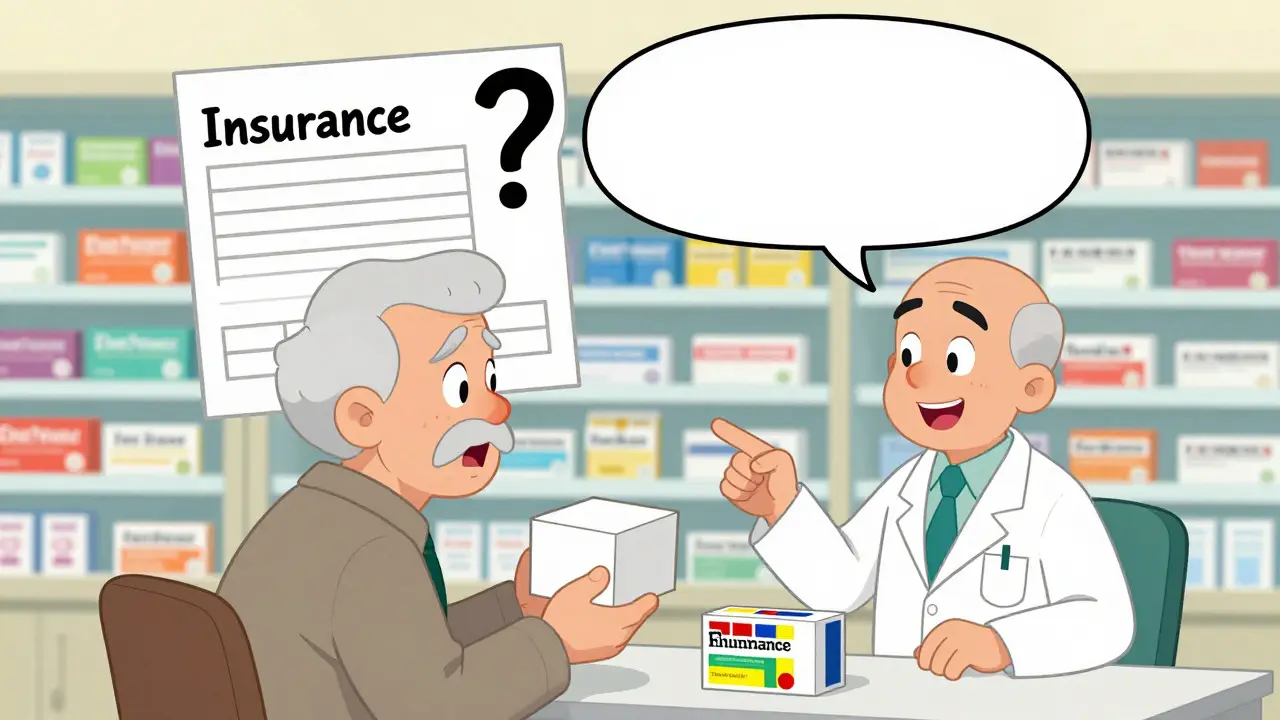
Here is the tricky part. Even if an authorized generic is clinically perfect for your patient, it might not be financially optimal. Pharmacy Benefit Managers (PBMs) and insurance plans don’t always treat authorized generics as "generics."
In many formularies, authorized generics are categorized under the brand-name tier rather than the generic tier. Why? Because they are produced by the brand company. This means a patient might pay a higher copay for an authorized generic than they would for a standard generic, even though the authorized generic costs the pharmacy less than the brand.
Data suggests that around 63% of PBM formularies treat authorized generics as brand-name products for reimbursement. Before you recommend one, run a benefit check. Compare the patient’s out-of-pocket cost for:
- The Brand Name Drug
- The Standard Generic
- The Authorized Generic
If the authorized generic falls into a middle ground-cheaper than the brand but more expensive than the standard generic-it’s still worth considering if the clinical benefits (avoiding allergic reactions or NTI instability) outweigh the extra $10-$20 copay. Always explain this trade-off clearly to the patient.
Patient Counseling: Managing Expectations
Switching a patient to an authorized generic requires clear communication. The biggest risk isn’t clinical; it’s confusion. A patient used to a distinctive blue oval pill might panic when they receive a white round pill, assuming they got the wrong medication.
Studies show that unexpected appearance changes contribute to significant medication non-adherence. Here is how to handle the conversation:
"You’re getting the same medicine, just in a different package." Explain that the authorized generic is made by the same company as the brand. Emphasize that the active ingredient and the fillers are identical. The only difference is the look of the pill and the box.
Highlight the Savings. Remind them that while it might not be the cheapest option on the shelf, it is significantly cheaper than the brand name (typically 20-80% less). Frame it as a smart compromise: brand-level quality at a discount price.
Document the Substitution. Make sure your dispensing software records the substitution correctly. Use the appropriate modifier codes (like 'DA' for drug substitution) and note the therapeutic equivalence. In some states, you may need to notify the prescriber, especially for high-risk medications. Check your local board of pharmacy regulations, as laws vary by state.
Limitations to Keep in Mind
Authorized generics aren’t a silver bullet. They aren’t available for every drug. If a brand company hasn’t chosen to license an authorized generic, you won’t find one. Additionally, distribution can be spotty. Unlike major generic manufacturers that supply every wholesaler, authorized generics might only be available through specific distributors like AmerisourceBergen or Cardinal Health.
Also, remember that while they are identical to the brand, they don’t undergo separate bioequivalence testing like standard generics do. They rely on the brand’s existing approval. This is generally safe, but it means there is no independent verification of the generic version itself. Stick to reputable sources and verify the FDA listing regularly.
Are authorized generics safer than regular generics?
They are not necessarily "safer" for everyone, but they are more consistent for specific patients. Regular generics are rigorously tested for bioequivalence and are safe for the vast majority of users. However, authorized generics are identical to the brand-name product in both active and inactive ingredients. This makes them safer for patients who have sensitivities to fillers or dyes found in standard generics, or for those taking narrow therapeutic index drugs where formulation consistency is critical.
Do I need prescriber approval to substitute an authorized generic?
It depends on your state laws. In many states, authorized generics can be substituted automatically if the prescriber did not write "Dispense as Written" or "No Substitution." However, 18 states mandate prescriber notification for all generic substitutions, including authorized generics. Always check your local Board of Pharmacy regulations. For high-risk medications like warfarin, it is best practice to call the prescriber regardless of the law.
Why does my insurance charge more for an authorized generic than a regular generic?
Many Pharmacy Benefit Managers (PBMs) categorize authorized generics under the "brand" tier rather than the "generic" tier in their formularies. This is because authorized generics are produced by the brand-name manufacturer. As a result, the patient’s copay may be higher than for a standard generic, even though the medication itself is chemically identical to the brand. Always run a benefit check to compare out-of-pocket costs.
How can I tell if a generic is an authorized generic?
You can identify authorized generics by checking the FDA’s quarterly list of authorized generic drugs. Additionally, look at the National Drug Code (NDC) labeler code. If the labeler code belongs to the brand-name manufacturer (e.g., Pfizer, Merck) or an authorized licensee (like Prasco), rather than a typical generic manufacturer, it is likely an authorized generic. The packaging may also lack the brand name but contain the same active and inactive ingredients.
Are authorized generics available for all brand-name drugs?
No, authorized generics are relatively rare. As of late 2023, there were approximately 257 authorized generic products, representing only about 5% of all brand-name drugs with generic alternatives. They are most common in oral solid dosage forms like tablets and capsules. Availability is determined by the brand-name manufacturer’s strategy, so they are not guaranteed for every medication.