
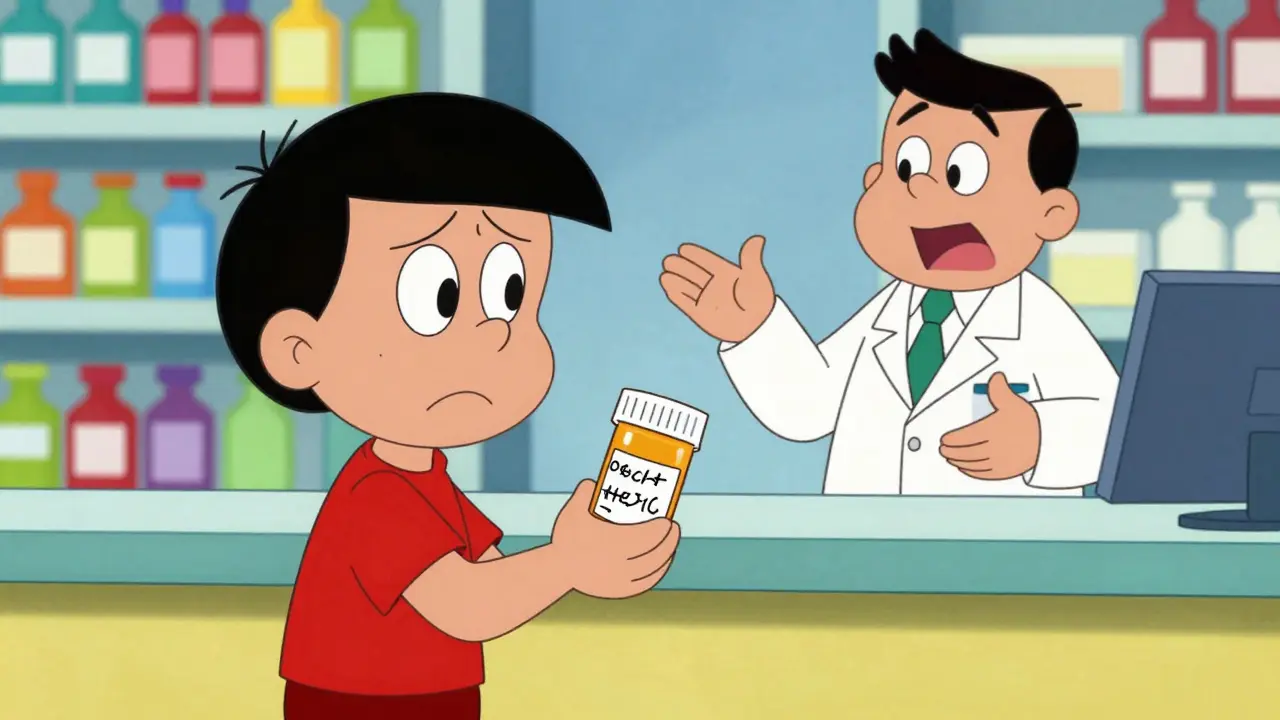
Imagine picking up a prescription that could save your life, only to realize the instructions are in a language you don’t speak. For millions of people, this isn't a hypothetical nightmare-it's their reality. When language barriers meet critical medication instructions, the stakes are incredibly high. Misunderstanding dosage, timing, or side effects can lead to hospitalization or worse. You have rights, tools, and specific strategies to ensure you get the care you need safely.
This guide cuts through the confusion. We’ll look at why these errors happen, what the law says about your right to understand your care, and exactly how to bridge the gap between you and your provider. Whether you are a patient, a family member helping someone navigate the system, or a caregiver, knowing these steps can prevent dangerous mistakes.
The Real Cost of Miscommunication
It’s easy to think that if a doctor writes it down, you’re safe. But when language is involved, "written" doesn't always mean "understood." The data on this is stark. A 2023 survey by KFF found that half of adults with Limited English Proficiency (LEP) face at least one language barrier in healthcare within three years. That’s not just an inconvenience; it’s a safety hazard.
Consider children. A 2022 study published in Pediatrics by researchers at the Children's Hospital of Philadelphia showed that adverse drug events occur at twice the rate for children whose families have LEP compared to those who speak English fluently (17.7% vs. 9.6%). Why? Because parents might misinterpret "take once daily" as "take every time they eat," or confuse milligrams with milliliters.
The financial impact is also massive. A 2017 analysis by Quality Health estimated $1.7 billion in losses from irreparable patient harm due to communication failures. But beyond the money, there’s the human cost: anxiety, mistrust, and physical harm. Dr. Glenn Flores, a leading researcher in this field, noted that language barriers lead to detectable physical harm in nearly half of affected patients. This isn't about grammar; it's about survival.
Your Legal Right to Understand
Here is the most important thing to remember: You are legally entitled to free interpretation services. This isn't a favor hospitals do for you; it’s the law.
Title VI of the Civil Rights Act of 1964 mandates that any healthcare organization receiving federal funds-which includes almost all hospitals and clinics-must provide meaningful access to people with limited English proficiency. If a clinic refuses to provide an interpreter or tries to charge you for one, they are violating federal law. Penalties for non-compliance can reach $100,000 per violation.
Despite this, many patients don't know their rights. In 2023, the University of Michigan Medicine found that 29% of hospitals still didn't offer access to online language services, even as digital health grew. And 68% of hospitals admitted they couldn't identify LEP patients before arrival, meaning the burden often falls on you to ask for help.
If you feel ignored, you have recourse. You can file a complaint with the Office for Civil Rights (OCR). But first, let’s talk about how to get the help you need in the moment.
Who Should Interpret for You?
When you’re in a pharmacy or doctor’s office, who translates for you matters more than you might think. There are three main options, and they vary wildly in safety.
| Method | Safety Level | Common Risks | Best For |
|---|---|---|---|
| Professional Interpreter (Phone/Video/In-person) |
High | Minimal risk; trained in medical terminology and neutrality. | All clinical encounters, especially complex medication plans. |
| Family/Friends | Low | Up to 25% error rate; may omit bad news or add personal opinions. | Emotional support only, never for medical instructions. |
| Translation Apps (e.g., Google Translate) |
Very Low | Misinterprets context, slang, and medical terms (e.g., "dropperful"). | Simple directions like "restroom" or "water," never prescriptions. |
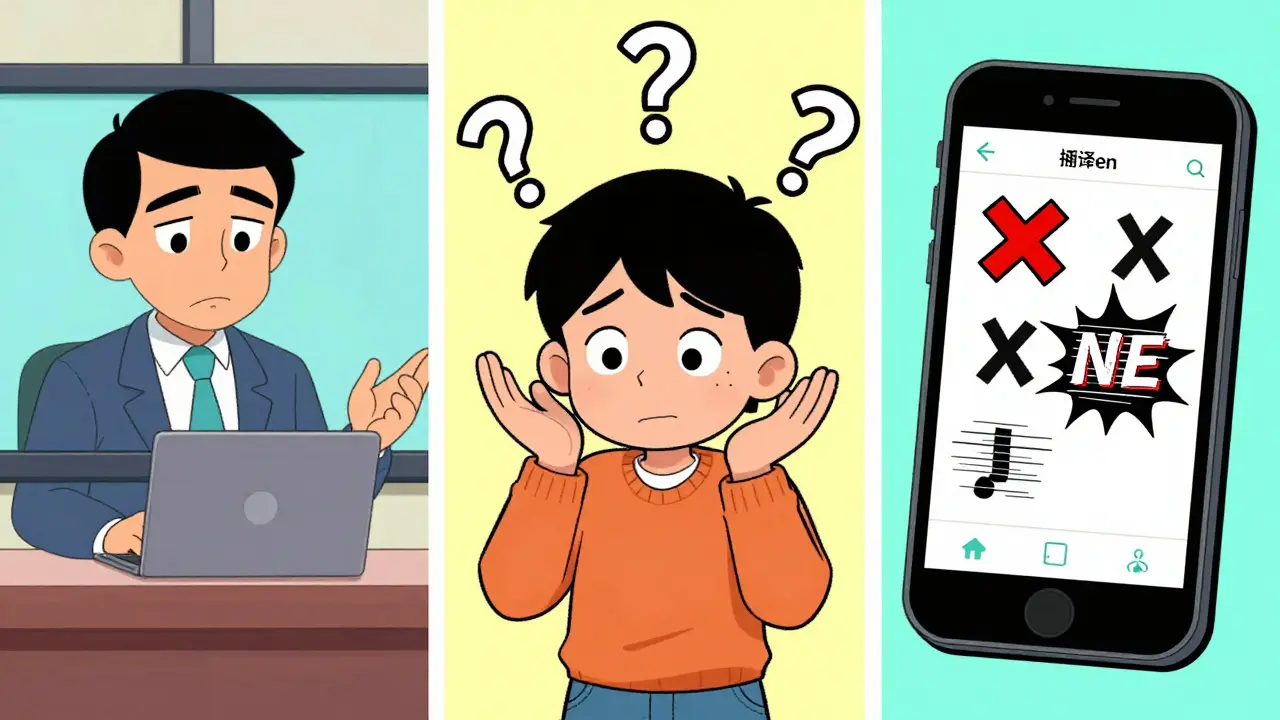
Professional interpreters reduce medical error rates by up to 50%. They are trained to translate exactly what is said, without adding, subtracting, or judging. Family members, while well-meaning, often lack the medical vocabulary. Worse, they might filter information out of embarrassment or fear. Imagine a teenager telling their parent that a relative has cancer-they might soften the blow, which destroys the accuracy of the diagnosis.
Apps are tempting because they’re free and instant. But a Reddit user shared a harrowing story where their Spanish-speaking mother was hospitalized after a pharmacy used Google Translate for insulin dosing. The app failed to capture the nuance of the dosage change. Never rely on apps for medication instructions.
Practical Steps to Ensure Safety
Knowing your rights is step one. Taking action is step two. Here is how to navigate your next healthcare visit safely.
- Ask for an Interpreter Immediately: Don’t wait until you’re confused. At check-in, say, "I need a professional interpreter for [Language]." Most major systems like LanguageLine Solutions (which holds 35% market share) offer phone and video interpretation within minutes.
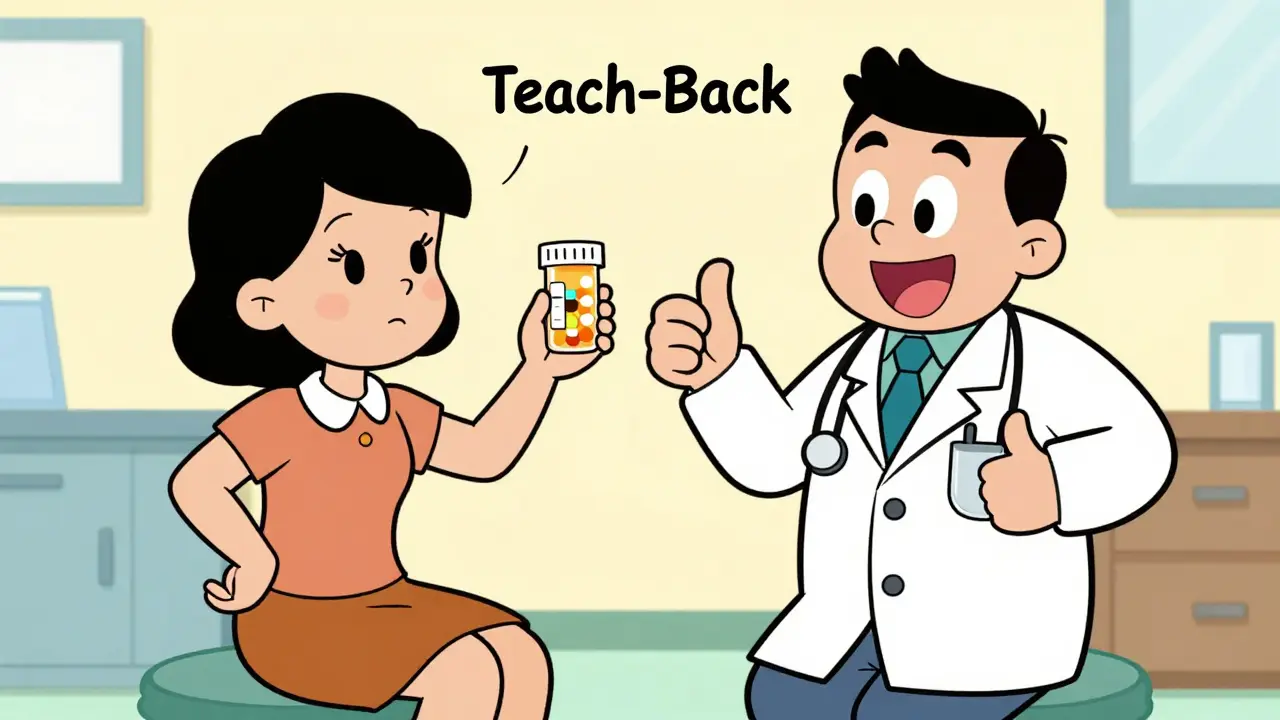
- Use the "Teach-Back" Method: This is a gold-standard technique. After the provider explains your medication, repeat it back in your own words. Say, "So I understand correctly, I should take one pill every morning before breakfast, right?" If the provider corrects you, keep going until you get it right. It’s not a test; it’s a safety check.
- Request Written Instructions in Your Language: Under Title VI, providers should offer translated materials. If they don’t have them, ask if they can email you a translated version or use a certified translation service. Note that some pharmacy systems still struggle to print labels in other languages-a 2021 report found 31% of Bronx pharmacies couldn’t print Spanish labels despite high demand.
- Directly Observed Dosing (For High-Risk Meds): If you’re starting a new, complex medication, ask if a nurse or pharmacist can watch you take the first dose. A 2017 study in the Journal of General Internal Medicine showed this dramatically improves accuracy, even when language barriers exist.
Navigating Pharmacy Challenges
The pharmacy is often where things go wrong. Pharmacists are busy, and the counter is loud. If you don’t speak the language, you’re vulnerable.
A systematic review published in PMC found that 34.7% of non-local language speakers struggled to understand medication usage instructions. Common pitfalls include:
- Dosage Units: Confusing mg (milligrams) with mL (milliliters).
- Frequency: Misunderstanding "q8h" (every 8 hours) vs. "tid" (three times a day).
- Administration: Not knowing if a pill should be crushed, taken with food, or avoided with grapefruit juice.
Pro Tip: Take a photo of the prescription label with your phone. Then, use a professional interpreter later at home to go over it line by line. Or, better yet, bring the interpreter with you via video call while you’re at the pharmacy. Many services allow you to connect directly from your smartphone.
What If No Interpreter Is Available?
It happens. Rural areas or less common languages might face delays. Here’s how to handle it:
- Reschedule: If it’s not an emergency, ask to reschedule when an interpreter is available. Your safety is worth the wait.
- Use Video Remote Interpretation (VRI): VRI is growing rapidly. It allows you to see facial expressions and gestures, which helps clarify meaning. It’s more effective than phone-only for complex discussions.
- Community Resources: Local community health centers often have bilingual staff or volunteer networks. Organizations like the National Council on Interpreting in Health Care can sometimes direct you to local resources.
Don’t settle for "good enough" communication. If you leave the appointment feeling unsure, you haven’t received safe care.
Advocating for Systemic Change
While individual actions matter, systemic issues persist. Only 37% of LEP adults report having frequent visits with a language-concordant provider (someone who speaks their language). Hospitals cite cost and staffing as barriers, but the cost of errors far outweighs the cost of interpretation ($50-$100/hour for in-person, ~$4/min for remote).
As a patient, you can advocate by:
- Filling out patient satisfaction surveys and specifically mentioning language access.
- Joining patient advisory councils if your hospital has one.
- Supporting policies that expand Medicare reimbursement for telehealth interpretation, which expanded in 2023.
The demographic shift is undeniable. By 2030, 25% of the U.S. population will speak a language other than English at home. Healthcare systems must adapt. Until they do, you must be your own strongest advocate.
Is it illegal for a hospital to charge me for an interpreter?
Yes. Under Title VI of the Civil Rights Act, federally funded healthcare providers must provide free interpretation services to patients with Limited English Proficiency. Charging you for this service is a violation of federal law.
Can I use my child to interpret for me at the doctor?
It is strongly discouraged. Children may lack the medical vocabulary, and they might feel uncomfortable translating sensitive health information. Studies show up to 25% of interpretations by family members contain errors. Always request a professional interpreter.
What should I do if the pharmacy won't give me instructions in my language?
First, ask if they can email or fax translated materials. If not, take a photo of the label and consult a professional interpreter later. You can also file a complaint with the pharmacy’s corporate office or the Office for Civil Rights if they consistently fail to provide reasonable accommodations.
How much does professional interpretation cost the hospital?
Costs vary. In-person interpreters typically cost $50-$100 per hour. Telephone services like LanguageLine charge around $3.50-$5.00 per minute. Video remote interpretation averages $4.00-$6.00 per minute. These costs are significantly lower than the potential liability from medical errors.
What is the "Teach-Back" method?
Teach-back is a communication tool where you repeat instructions in your own words to confirm understanding. For example, you might say, "Just to make sure I got it right, I take this pill with food every night." The provider then confirms or corrects you. It ensures clarity regardless of language proficiency.
Are translation apps safe for medication instructions?
No. Translation apps often misinterpret medical jargon, context, and dosage units. They are not certified for clinical use and have been linked to serious medication errors. Use them only for basic navigation needs like finding the restroom.
What if I speak a less common language?
Major interpretation services like LanguageLine cover hundreds of languages and dialects. While wait times might be slightly longer for rare languages, they should still be able to connect you with a qualified interpreter via phone or video. Do not accept "we don't have anyone" as a final answer; ask them to search their national network.