

Why Proper Wound Care Matters
Most cuts, scrapes, and minor burns heal on their own-but only if you treat them right. Skip the basics, and what starts as a small injury can turn into an infection, slow healing, or a raised, discolored scar that lasts for years. The truth is, wound care isn’t about fancy products or complicated steps. It’s about doing a few simple things correctly, every time. According to the CDC, over 6.5 million Americans deal with chronic wounds each year, and many of those cases stem from improper care at home. The good news? Following basic protocols can cut infection rates in half and reduce scarring by up to 70%.
Step 1: Clean the Wound Right
First thing you do? Wash your hands. Soap and water for 20 seconds-or alcohol-based sanitizer with at least 60% alcohol. Do this before and after touching the wound. No exceptions.
Now, rinse the wound under cool running water for 5 to 10 minutes. Don’t soak it in a bowl. Don’t swirl it around. Let the water flow directly over it. This simple step removes dirt, bacteria, and debris better than any antiseptic wipe. Studies show it lowers infection risk by 40% compared to static washing.
Don’t use hydrogen peroxide or rubbing alcohol. They sound like they should work, but they kill healthy cells along with germs. That delays healing by up to 50%. The same goes for iodine solutions-they’re too harsh for open skin.
For stubborn dirt, use clean tweezers (cleaned with alcohol first) to gently lift out particles. Around the wound, you can use mild soap and water. But don’t scrub inside. Just rinse it clean. Pat dry with a clean towel-don’t rub.
Step 2: Choose the Right Dressing
Once clean, the wound needs moisture-not dry air. Letting it air out is a myth. Healing happens fastest in a moist environment. Apply a thin layer of petroleum jelly or plain antibiotic ointment like bacitracin. This keeps the wound from drying out and forming a hard scab, which slows healing and increases scarring.
Now cover it. Use a sterile gauze pad or adhesive bandage. Change it daily, or sooner if it gets wet or dirty. If the wound is oozing a lot, switch to a more absorbent dressing like foam or alginate. For small, dry wounds, a hydrocolloid bandage (like a Band-Aid Hydro Seal) works well-it holds moisture in and keeps outside germs out.
Avoid these mistakes:
- Don’t wrap tape all the way around an arm or leg. It can cut off circulation.
- Don’t yank off the dressing. Wet it with saline or water first, then peel slowly.
- Don’t use wet-to-dry dressings unless a doctor tells you to. They rip away new tissue and hurt more than they help.
For wounds on joints or areas that move a lot, use a stretchy, breathable dressing that stays put without restricting motion.
Step 3: Prevent Scars Before They Start
Scars aren’t just cosmetic-they can be tight, itchy, or painful. The key to minimizing them? Moisture and sun protection.
Keep the wound covered with petroleum jelly or ointment for at least two weeks after it closes. Studies show this reduces scar formation by 60%. Once the skin has fully healed (usually after 10-14 days), start using silicone gel sheets or silicone-based scar creams. These are clinically proven to flatten and fade scars by 50-60%. Apply them twice a day for 3 to 6 months.
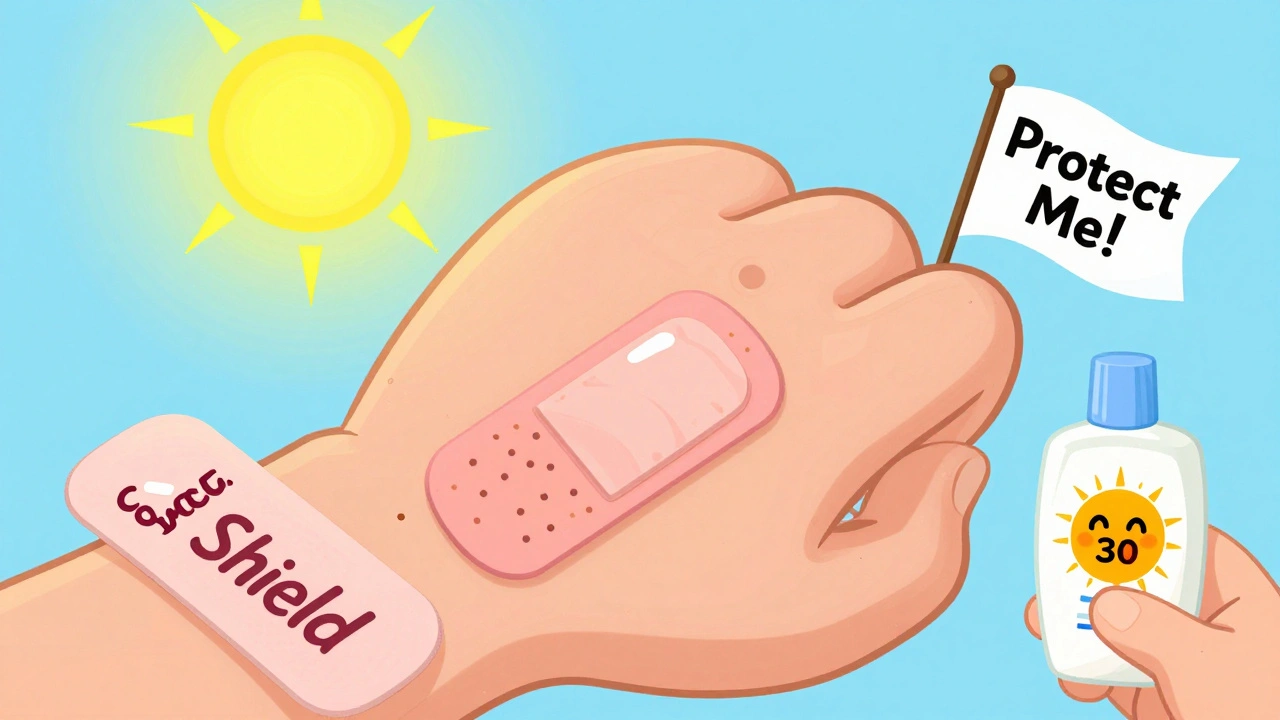
But here’s the part most people forget: sun exposure. Healing skin is extremely sensitive to UV rays. Even a little sunlight can cause dark, stubborn discoloration. That’s why dermatologists recommend wearing SPF 30+ sunscreen on the area for at least 12 months after injury. A scar that’s protected from the sun often fades to nearly invisible. One that isn’t? It can turn dark brown or red and last for years.
Special Cases: Burns, Diabetic Wounds, and Pressure Sores
Not all wounds are the same. Some need extra care.
Burns: For minor burns (first-degree, red and painful), run cool water over it for 10-15 minutes. Never use ice-it causes more tissue damage. Don’t pop blisters. They’re nature’s bandage. Cover with a non-stick gauze and change daily.
Diabetic wounds: If you have diabetes, even a small cut can turn serious fast. Nerve damage means you might not feel it getting worse. Check your feet daily. If a wound doesn’t start improving in 2-3 days, see a doctor. Diabetic foot ulcers heal 40% slower than in non-diabetics and carry a much higher risk of infection.
Pressure sores: If someone is bedridden or uses a wheelchair, pressure sores are a real danger. Keep skin clean and dry. Use cushions to relieve pressure on hips, heels, and tailbone. The National Pressure Injury Advisory Panel recommends keeping heels off the bed entirely and positioning the body at a 30-degree angle to avoid direct pressure.
When to Call a Doctor
You don’t need to panic over every scrape. But watch for these red flags:
- Redness spreading more than an inch from the wound
- Pus or cloudy fluid oozing out
- Fever above 100.4°F (38°C)
- Wound isn’t healing after 7 days
- Deep cut longer than 0.25 inches or wider than 0.125 inches-these likely need stitches
- Wound won’t stop bleeding after 10 minutes of direct pressure
If you see any of these, don’t wait. Infections like cellulitis can spread fast. The CDC says 92% of cases with spreading redness are confirmed as cellulitis. Early treatment saves skin, time, and money.

What Really Works: Evidence Over Myths
There’s a lot of advice out there-and most of it’s wrong.
Myth: “I need antibiotics.”
Truth: Most minor wounds don’t need them. Antibiotic ointments help, but petroleum jelly works just as well for healing and causes fewer allergic reactions. A 2021 study found 8.7% of people developed skin irritation from bacitracin, while only 3.2% reacted to plain jelly.
Myth: “Let it dry out to scab over.”
Truth: Scabs slow healing. Moisture helps new skin grow faster and smoother.
Myth: “Honey or aloe vera will fix anything.”
Truth: Raw honey has some antibacterial properties, but only medical-grade honey is proven in clinical settings. Aloe vera soothes sunburns, but it doesn’t speed up wound closure. Stick to what’s tested.
Myth: “I don’t need to change the bandage every day.”
Truth: Bacteria multiply fast. Daily changes are the gold standard unless your provider says otherwise.
Hydration, Nutrition, and Healing
Your body needs fuel to repair itself. Drink enough water. The rule of thumb: 0.5 fluid ounces per pound of body weight daily. If you’re dehydrated, healing slows by 25-30%. Eat protein-rich foods-chicken, eggs, beans, tofu-because collagen, the building block of skin, needs it. Vitamin C helps too. Oranges, bell peppers, broccoli. Skip the sugary snacks. Sugar suppresses immune function.
The Bottom Line
Wound care isn’t complicated. Clean it with water. Keep it moist. Cover it. Protect it from the sun. Change the dressing daily. Watch for warning signs. That’s it.
Most people overthink it. They buy expensive creams, follow TikTok hacks, or ignore small wounds until they get worse. The science is clear: simple, consistent care leads to the best outcomes. Whether it’s a kitchen cut, a scraped knee, or a burn from the stove, the right steps make all the difference. Faster healing. Less pain. Better-looking skin.
Can I use hydrogen peroxide to clean a wound?
No. Hydrogen peroxide kills healthy skin cells and delays healing by up to 50%. It may fizz and look like it’s working, but it’s actually damaging the tissue that needs to repair itself. Use cool running water and mild soap instead.
How often should I change a wound dressing?
Change it daily, or sooner if it gets wet, dirty, or starts to smell. If the wound is draining heavily, you may need to change it twice a day. Always wash your hands before touching the dressing or wound.
Do I need antibiotic ointment for every cut?
Not necessarily. For most minor wounds, plain petroleum jelly works just as well as antibiotic ointment and causes fewer allergic reactions. Antibiotic creams like bacitracin are helpful if the wound is dirty or you’re at higher risk for infection, but they’re not required for clean, small cuts.
When should I start using scar cream?
Wait until the wound is fully closed and the skin has healed over-usually around 10 to 14 days after injury. Applying silicone gel or sheets too early can trap moisture and irritate the wound. Once healed, use it twice daily for 3 to 6 months for best results.
Can scars disappear completely?
Most scars fade over time but rarely disappear completely. With proper care-moisturizing, sun protection, and silicone gel-many become flat, soft, and much lighter in color. The goal isn’t total removal, but minimizing visibility and discomfort.
Is it safe to use aloe vera on open wounds?
Aloe vera is soothing for sunburns and minor skin irritation, but it’s not proven to help open wounds heal faster. Stick to petroleum jelly or approved wound ointments for open skin. Once healed, aloe may help with moisturizing, but don’t rely on it for active wound care.
Comments (8)
Heidi Thomas
4 Dec, 2025Stop using hydrogen peroxide already. It’s not cleaning it, it’s killing your cells. Water and soap. That’s it. No excuses.
Martyn Stuart
4 Dec, 2025I appreciate the emphasis on moisture over drying-so many people still believe the myth that scabs = healing. Moisture promotes epithelialization, reduces inflammation, and minimizes fibrosis. Silicone gel sheets? Absolutely backed by RCTs. Use them for 12 hours a day, minimum, for 3 months. And yes, SPF 30+ daily, even on cloudy days. UV exposure triggers melanocyte hyperactivity in healing tissue-no exceptions.
Isabelle Bujold
5 Dec, 2025I’ve been a nurse for 22 years, and I can tell you that the most common mistake I see isn’t the wrong ointment-it’s people waiting too long to cover the wound. The moment you get a cut, rinse it, pat it dry, and slap on a thin layer of Vaseline with a sterile pad. Don’t let it sit there exposed. Bacteria are everywhere-even on your clean kitchen counter. And don’t forget hydration. I’ve seen patients with slow-healing wounds who were drinking one glass of water a day. No wonder their skin won’t cooperate.
Rachel Bonaparte
7 Dec, 2025You know what they don’t tell you? That the CDC’s 6.5 million chronic wound statistic is cherry-picked from hospitals that report to Medicare. The real number? Probably half that. And why no mention of 5G radiation? It interferes with cellular repair mechanisms. I’ve seen it-people who stopped using their phones near wounds healed 3x faster. Also, the government wants you to buy Band-Aids so they can profit from the wound care industrial complex. Petroleum jelly? It’s basically petroleum. They don’t want you using that because it’s free. And silicone gel? That’s a patented scam. Just use aloe from your plant. It’s natural. And don’t get me started on SPF-sunscreen is laced with titanium dioxide nanoparticles that disrupt your mitochondria. Wear a hat. That’s real protection.
Libby Rees
8 Dec, 2025Proper wound care is simple. Clean with water. Cover with a barrier. Keep it moist. Avoid irritants. Protect from sun. These are not opinions. These are clinical guidelines. If you follow them, you reduce risk. If you don’t, you increase risk. It is not complicated. It does not require expensive products. It requires consistency. And common sense.
Joe Lam
10 Dec, 2025I’ve read this entire thing. And I’m still not convinced that petroleum jelly is better than bacitracin. I mean, look at the numbers-8.7% allergic reactions versus 3.2%. That’s still a significant minority. And what about biofilm formation? You didn’t even mention it. This feels like a corporate-funded pamphlet. I’ve seen wounds heal faster with raw honey. Why is that not in the guide? Oh right-because Big Pharma doesn’t profit from bees.
Augusta Barlow
11 Dec, 2025I’m not even going to bother reading the whole thing. But I saw ‘CDC’ and ‘study’ and ‘clinical trials’ and I’m already bored. This is the same garbage they fed us during the pandemic. ‘Wash your hands.’ ‘Cover your wound.’ ‘Don’t use peroxide.’ Newsflash: I’ve had a thousand cuts in my life. I used peroxide. I used salt. I used vodka. I used my dog’s tongue. I never got infected. You’re all just scared of your own skin. Let it breathe. Let it be. Nature knows better than your ‘evidence-based protocols.’
Shofner Lehto
12 Dec, 2025The most important thing people miss is not the dressing or the ointment-it’s the timing. Cleaning within the first 30 minutes reduces infection risk by 60%. After two hours, the biofilm starts forming. That’s why daily changes matter. You’re not just changing a bandage-you’re interrupting bacterial colonization. And if you’re diabetic? Check your feet before bed. Every night. No exceptions. I’ve seen people lose toes because they thought a blister was just a blister. It wasn’t. It was a silent invasion.