
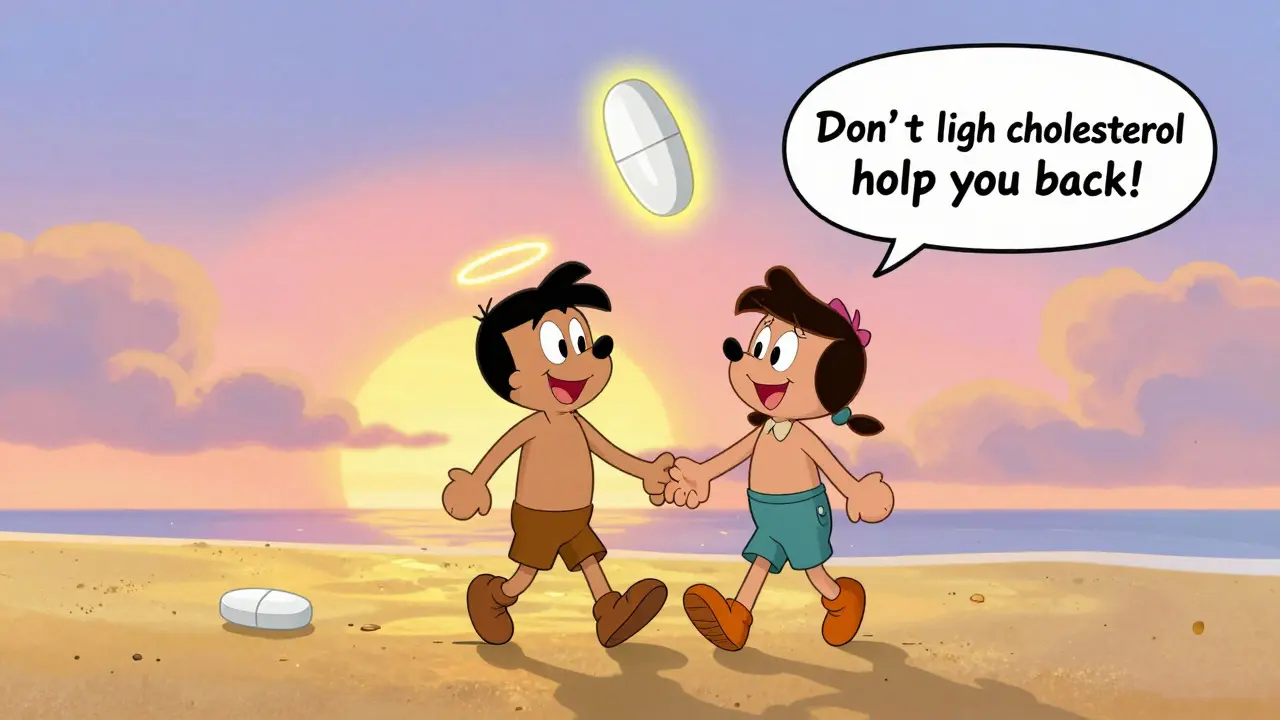
When you see a TV ad for a new cholesterol drug, the visuals are calming: sunsets over golf courses, happy couples walking on beaches, people laughing in kitchens. The voiceover says, "Don’t let high cholesterol hold you back." But it never says, "There’s a cheaper version that works just as well." That’s not an accident. It’s by design.
Advertising Doesn’t Just Sell Drugs - It Rewires Expectations
In the U.S. and New Zealand, pharmaceutical companies are legally allowed to advertise prescription drugs directly to patients. No other country permits this. Since 1997, when the FDA formalized rules for broadcast ads, spending on these campaigns has exploded - from $550 million in 1996 to over $6.5 billion in 2020. That’s more than a tenfold increase. And what’s the result? Patients start asking for specific brand names - even when a generic version exists. The problem isn’t that generics are less effective. They’re chemically identical. But advertising creates an emotional association with branded drugs. The visuals, the music, the actors - they signal quality, trust, innovation. Generics? They show up as plain white pills in a bottle with no story behind them. No ads. No celebrities. No beachside scenes. So patients assume they’re inferior.Spillover Effects: Ads Boost Generic Use, But Not Preference
Here’s the twist: advertising for branded drugs actually increases the use of generics too - but not because people want them. It’s called the "spillover effect." When someone sees an ad for Lipitor and asks their doctor for it, the doctor might say, "We can prescribe the generic version - at a fraction of the cost." The patient agrees, not because they believe in the generic, but because they’re open to any version of the drug they just heard about. Research from the Wharton School found that a 10% increase in advertising exposure led to a 5% rise in prescriptions. But 70% of that increase came from new patients starting treatment, not from people sticking with their meds. And here’s the catch: those new patients were less likely to keep taking their medication long-term. Their adherence was lower than those who started treatment without advertising influence. So advertising doesn’t just drive sales - it drives *initiation*, not *commitment*. It gets people to start a drug, but not to stick with it. And when they do stick with it, they’re more likely to stick with the branded version - even if it costs 10 times more.Doctors Are Pressured, Not Informed
Physicians aren’t immune to this pressure. A national survey found that 69% of doctors reported filling patient requests for treatments they believed were inappropriate - often because the patient had seen an ad. In one study, standardized patients were trained to ask for specific brand-name antidepressants. When they did, doctors prescribed them 80% of the time. When they didn’t ask, the prescription rate dropped to 20%. It’s not that doctors don’t know generics are just as effective. They do. But they’re caught between clinical judgment and patient demand. And when patients are armed with brand names from TV, it’s easier to give in than to explain why a $3 generic is better than a $300 brand.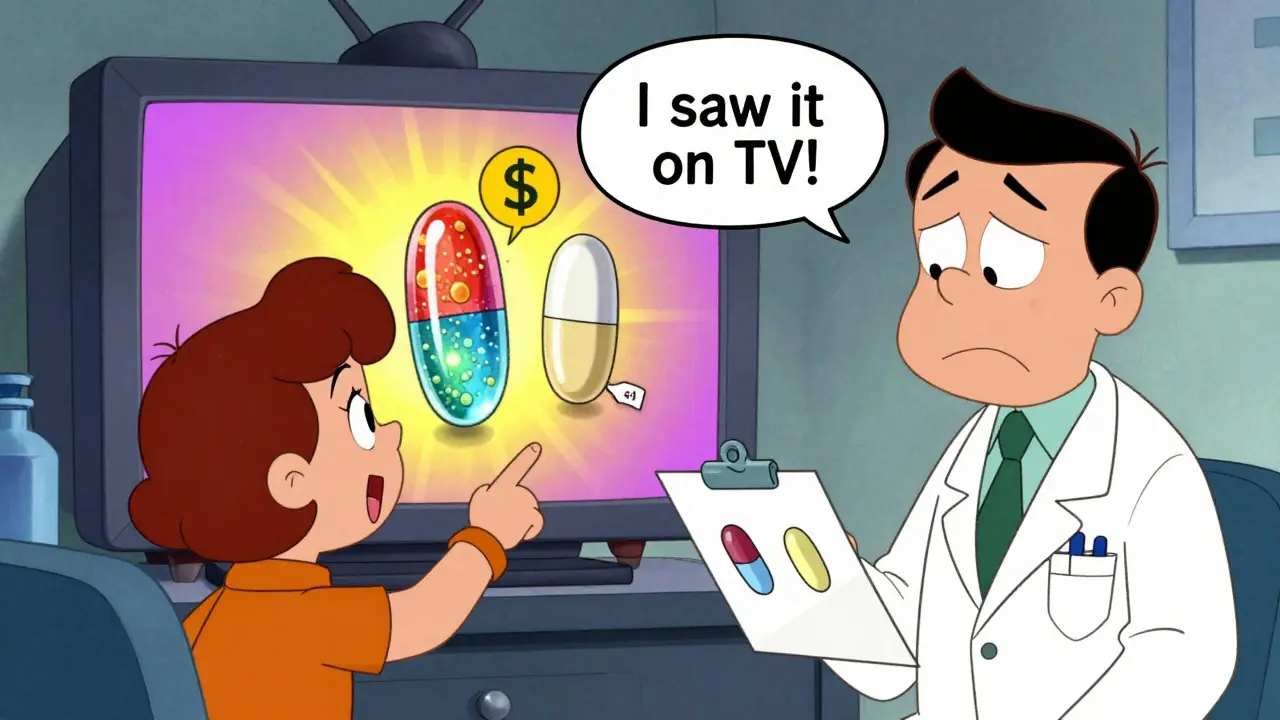
Ads Hide the Risks - And the Alternatives
FDA research from 2018 showed something troubling: even after seeing an ad four times, most people still didn’t remember the risks. Benefit information stuck better than risk information - and generic alternatives? They weren’t mentioned at all. The ads focus on the miracle cure, not the fine print. One analysis of 230 pharmaceutical ads found that scenes with outdoor imagery, smiling people, and slow-motion movements lasted longer than any mention of side effects. The average time spent on risk information? Less than two seconds. Meanwhile, the branded drug was shown for 15 to 20 seconds - always in vibrant color, always with a name you’ll remember. Generics don’t get this treatment. They’re invisible in advertising. So when patients hear "Lipitor" and think "better heart health," they don’t think "atorvastatin, the generic version, works the same way and costs $4 a month."The Cost Isn’t Just Financial - It’s Psychological
This isn’t just about money. It’s about perception. When you believe a branded drug is superior, you’re more likely to trust it. You feel safer. You think you’re getting something premium. That’s not based on science - it’s based on marketing. Pharmaceutical companies know this. They spend $4 for every $1 they invest in advertising because it works. They’re not trying to educate you about your options. They’re trying to make you feel like you’re missing out if you don’t take their version. And the result? Higher drug costs across the board. More people on medication, but not necessarily healthier. More prescriptions written, but not necessarily better outcomes.
What Can You Do?
You don’t have to accept this as normal. Here’s what actually helps:- Ask your doctor: "Is there a generic version of this?" Not "Can I get the one from the ad?"
- Check the active ingredient: The generic name is always listed on the prescription label. Look it up online - you’ll see it’s the same chemical as the brand.
- Ask about cost: Many pharmacies offer generics for under $10 a month. That’s cheaper than your co-pay on the branded version.
- Don’t assume more expensive = better: The FDA requires generics to meet the same standards as brands. Same purity. Same effectiveness. Same safety.
Why This Matters Beyond Your Wallet
When people choose branded drugs over generics because of advertising, it doesn’t just hurt their bank account. It strains the whole healthcare system. Insurance premiums go up. Public health programs spend more. And the money that could go toward real care - mental health services, preventive screenings, nutrition support - gets diverted to paying for ads. The truth is simple: advertising doesn’t make drugs better. It makes them seem better. And that’s a dangerous distinction.Is There Any Hope for Change?
Some countries have banned direct-to-consumer ads entirely - and their drug costs are far lower. The U.S. and New Zealand are outliers. But awareness is growing. Researchers are calling for stricter rules: mandatory inclusion of generic names in ads, clearer risk disclosures, limits on emotional manipulation. Until then, the power lies with you. You don’t need to believe what you see on TV. You don’t need to ask for a name you heard in a commercial. You just need to ask your doctor one question: "What’s the most effective, affordable option?" The answer might surprise you - and save you hundreds, even thousands, a year.Are generic drugs really as effective as brand-name drugs?
Yes. The FDA requires generic drugs to have the same active ingredient, strength, dosage form, and route of administration as the brand-name version. They must also meet the same strict standards for purity, stability, and performance. In fact, many generics are made in the same factories as the brand-name drugs. The only differences are in color, shape, or inactive ingredients - none of which affect how well the drug works.
Why do doctors prescribe brand-name drugs when generics are available?
Sometimes, it’s because the patient asked for it - often after seeing an ad. Studies show that when patients request a specific brand, doctors are far more likely to prescribe it, even if they believe a generic would work just as well. Other times, it’s due to habit, lack of time to explain alternatives, or pressure from pharmaceutical reps. But it’s rarely because the brand is medically superior.
Do direct-to-consumer ads improve patient health?
The evidence is mixed. Ads do increase the number of people who start taking medication, which can help in cases of under-treated conditions. But they also lead to more prescriptions for people who don’t need them, and lower adherence rates among those who start treatment because of an ad. Research shows that while advertising boosts drug sales, it doesn’t significantly improve health outcomes - and often increases overall healthcare costs without better results.
Why aren’t generic drugs advertised like brand-name ones?
Generic manufacturers don’t advertise because it’s not profitable. Once a drug goes generic, multiple companies can sell it. There’s no single brand to build loyalty around. Advertising would just raise costs for everyone without giving any one company a clear advantage. So instead, they compete on price - which is great for consumers, but invisible on TV.
Can advertising make me take a drug I don’t need?
Yes. Ads often portray normal life experiences - like occasional forgetfulness or mild fatigue - as medical conditions needing treatment. This creates demand for drugs that may not be appropriate. Studies show that up to 70% of patient requests driven by advertising are for treatments doctors consider unnecessary. The goal of these ads isn’t to treat disease - it’s to create a market.
Comments (14)
mukesh matav
20 Dec, 2025Been on generics for years. Same pills, same results. Saved me $200 a month. No magic beach sunsets needed.
John Hay
22 Dec, 2025This is why the system is broken. Pharma spends billions convincing people they need something expensive when a $3 pill does the exact same thing. Doctors know it. Patients don’t. And that’s by design.
Sandy Crux
23 Dec, 2025It’s not just advertising-it’s the entire neoliberal infrastructure of medicalization… the commodification of bodily autonomy… the hyper-saturated visual rhetoric of pharmaceutical capitalism… it’s all a meticulously engineered illusion designed to extract surplus value from vulnerable populations…
Hannah Taylor
24 Dec, 2025they dont want you to know this but the fda is in bed with big pharma. generics are made in the same factories but they change the color so you think its fake. its all a scam. i saw a doc on youtube that said the fillers in generics cause anxiety. i dont trust any pill anymore.
Stacey Smith
26 Dec, 2025Why are we letting foreign companies control our health? This is why America needs to ban these ads and make our own meds. We’re paying for their ads, not our health.
Ben Warren
27 Dec, 2025It is an incontrovertible fact that the direct-to-consumer advertising paradigm, as currently constituted, constitutes a profound moral hazard within the American healthcare ecosystem. The conflation of aesthetic appeal with therapeutic efficacy represents not merely a commercial strategy, but a systemic erosion of evidence-based medicine, wherein patient autonomy is subordinated to corporate profit maximization under the guise of informed choice.
Peggy Adams
27 Dec, 2025i used to take the brand name and then one day i switched to generic and nothing changed. my doctor was like ‘duh’ and i felt dumb. why do we let ads make us feel stupid?
Sarah Williams
28 Dec, 2025Good post. Seriously, just ask your doctor for the generic. They’ll appreciate you being informed. And you’ll save money. Win-win.
Theo Newbold
30 Dec, 2025They don’t advertise generics because they don’t need to. The market does the work for them. The brand name creates the demand, then generics undercut it. It’s capitalism at its most efficient-and most manipulative.
Jay lawch
31 Dec, 2025You think this is just about pills? This is the same system that tells you to buy expensive sneakers, luxury cars, organic kale-everything is manufactured desire. The pharmaceutical industry is just the latest temple in the cathedral of consumerism. We’ve been trained to equate price with worth, and the state lets them get away with it because they own the politicians. Wake up.
Christina Weber
1 Jan, 2026It’s worth noting that the FDA’s bioequivalence standards require generics to be within 80–125% of the brand’s AUC and Cmax. This is a 45% variance-technically permissible. While most generics are safe, the assumption that they are identical is misleading. Precision matters in pharmacokinetics.
Cara C
2 Jan, 2026I used to be scared of generics too-until my grandma switched and her blood pressure stabilized. She said, ‘Honey, if it was bad, they wouldn’t let me buy it for $5.’ Sometimes the simplest truth is the right one.
Michael Ochieng
2 Jan, 2026Living in Kenya, we don’t have these ads. People get generics, use them, and live fine. The problem isn’t the medicine-it’s the marketing machine. We don’t need fancy ads to be healthy.
Grace Rehman
4 Jan, 2026So we’re supposed to be grateful that the system lets us choose between a $300 lie and a $3 truth… and the lie has better lighting