
Drug Causality Assessment Tool
Case Details
1. Temporal Relationship
Did the symptoms appear within a reasonable timeframe after starting the medication?
2. Biological Plausibility
Does it make scientific sense for this specific drug to cause these specific symptoms?
3. Dechallenge Outcome
When the drug was stopped, did the symptoms improve or disappear?
4. Rechallenge Outcome
Was the drug restarted? If so, did the symptoms return?
Causality Assessment Result
Analysis:
Select options above to generate an assessment.
Have you ever stopped taking a medication because it made you feel sick, only to realize the symptoms went away? Or perhaps your doctor suggested trying a different pill, then bringing back the original one to see if the problem returned? If so, you have personally experienced two of the most powerful tools doctors use to figure out what is causing your health issues. These processes are called dechallenge and rechallenge.
Understanding these terms isn't just for medical professionals. It helps you advocate for yourself when dealing with confusing side effects. When a new symptom pops up after starting a prescription, it can be hard to tell if it's the drug, an underlying illness, or just bad luck. Dechallenge and rechallenge provide a clear, scientific way to separate coincidence from cause.
What Is Dechallenge?
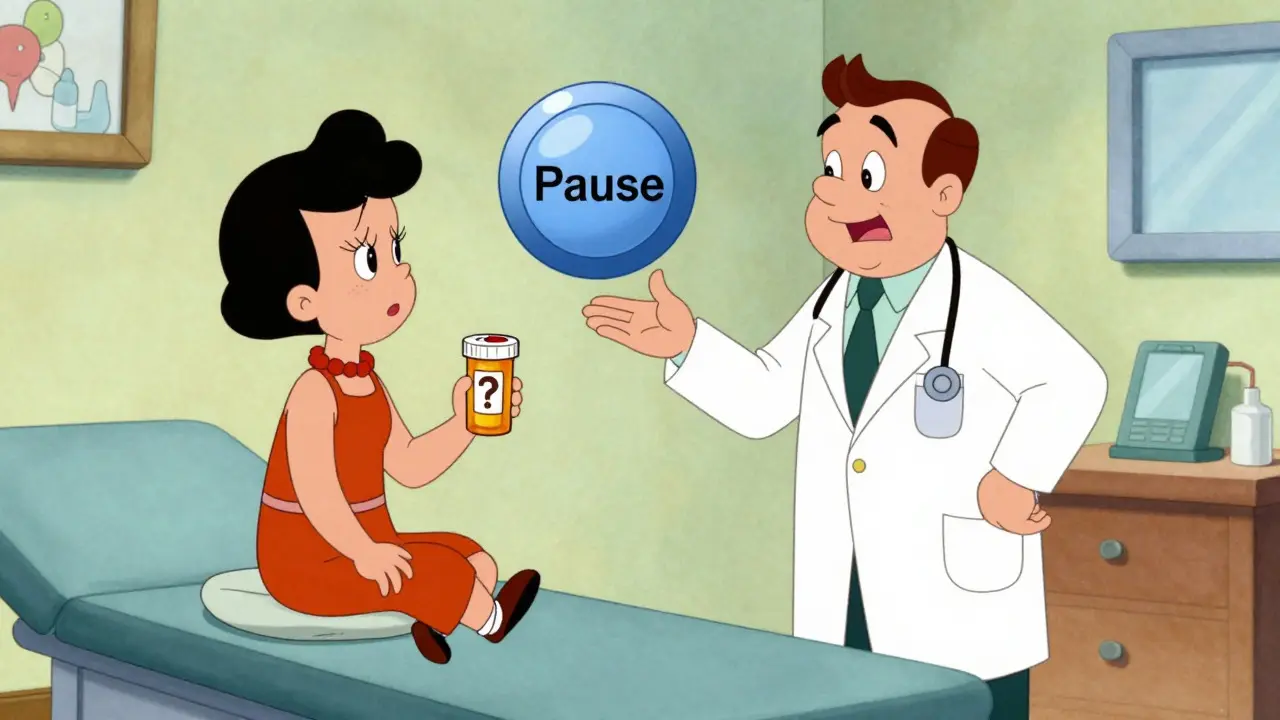
Dechallenge is the process of stopping a suspected medication to see if an adverse reaction improves or disappears. Think of it as hitting the "pause" button on a potential culprit. If you start a new antibiotic and develop a rash, your doctor might tell you to stop the antibiotic. If the rash fades within a few days, that is considered a "positive dechallenge."
A positive result suggests a strong link between the drug and the side effect. However, it doesn't prove it 100%. Sometimes, symptoms go away on their own regardless of whether you keep taking the medicine. This is why timing matters. The improvement needs to happen within a timeframe that makes sense for how long the drug stays in your body (its half-life).
If you stop the drug and the symptoms stay exactly the same, or get worse, that is a "negative dechallenge." This usually means the drug probably isn't the cause, or the damage done by the reaction is irreversible. For example, if a drug causes permanent liver scarring, stopping the drug won't fix the scarring, even if the drug caused it in the first place.
What Is Rechallenge?
Rechallenge involves deliberately giving the suspected drug again to see if the adverse reaction returns. This is the ultimate test for proving causality. If you stop a drug, your symptoms vanish, and then you take the drug again-and those exact same symptoms come back-it is nearly impossible to argue that anything else is responsible.
In the world of pharmacovigilance (the science of monitoring drug safety), a successful rechallenge provides the strongest possible evidence. According to data from the World Health Organization's Uppsala Monitoring Centre, a confirmed rechallenge elevates a case to "definite" causality in the vast majority of assessments.
However, rechallenge is not something you do at home. It is rarely performed unless absolutely necessary because it carries risk. Why would anyone want to make themselves sick on purpose? Usually, it happens when there are no good alternative treatments available, or in controlled research settings where the benefits of knowing the truth outweigh the risks of getting sick again.
The Four Pillars of Determining Cause
Doctors don't rely on dechallenge and rechallenge alone. They look at four main factors to decide if a drug is to blame:
- Temporal Relationship: Did the side effect happen after you started the drug? If you took a pill yesterday and broke your leg today, the timing might suggest a link, but logic says otherwise. The reaction must occur within a reasonable window after exposure.
- Biological Plausibility: Does it make sense scientifically? If a known allergy-causing drug triggers hives, that is biologically plausible. If a blood pressure pill suddenly gives you super strength, that is not.
- Dechallenge Outcome: Did the symptoms improve when the drug was stopped?
- Rechallenge Outcome: Did the symptoms return when the drug was restarted?
When all four align, the conclusion is solid. But often, we only have partial information. That is where professional judgment comes in.
Why Isn't Everyone Rechallenged?
You might wonder why doctors don't just rechallenge every patient to be sure. The answer is ethics and safety. Deliberately exposing someone to a harmful substance is tricky.
For mild side effects like a headache or nausea, a doctor might cautiously reintroduce a drug if it is the best option for treating a serious condition. But for severe reactions, such as Stevens-Johnson Syndrome (a life-threatening skin condition) or drug-induced liver failure, rechallenging could be fatal. In these cases, a negative dechallenge (symptoms not improving) or even a positive one is enough to ban the drug permanently for that patient.
Data from the FDA indicates that deliberate rechallenge is approved in less than 1% of serious adverse event investigations. Most of the time, doctors rely on the dechallenge phase combined with other clinical clues to make their decision.
| Feature | Dechallenge | Rechallenge |
|---|---|---|
| Action | Stop the drug | Restart the drug |
| Goal | See if symptoms improve | See if symptoms return |
| Evidence Strength | Moderate (suggests link) | High (confirms link) |
| Risk Level | Low (usually safe to stop) | Variable (can trigger severe reaction) |
| Frequency of Use | Very Common | Rare (due to ethical concerns) |
Real-World Examples
Let's look at a concrete scenario. Imagine a patient named Sarah who starts taking metronidazole, an antibiotic used for infections. Two days later, she develops a fixed-drug eruption-a red, circular patch on her arm.
Step 1: Dechallenge. Her doctor stops the metronidazole. Over the next week, the red patch fades away completely. This is a positive dechallenge. It suggests the antibiotic caused the rash.
Step 2: Time Passes. Six months later, Sarah gets another infection. The doctor considers prescribing metronidazole again because it is highly effective for this specific bug. Before doing so, they discuss the previous rash.
Step 3: Rechallenge (Hypothetical). If the doctor decides the benefit outweighs the risk, they might prescribe it again under close supervision. If the rash appears in the exact same spot within 48 hours, the causality is confirmed. In reality, the doctor would likely choose a different antibiotic to avoid this risk entirely, relying on the positive dechallenge as sufficient proof.
Challenges in Practice
While the theory is simple, real life is messy. One major issue is polypharmacy-when patients take multiple medications. If you are taking five different pills and develop a side effect, which one do you stop? Stopping all of them confuses the results. Stopping one might not help if another drug is the culprit.
Another challenge is patient behavior. Many people stop their medication without telling their doctor because they feel worse. This unmonitored "self-dechallenge" makes it hard for researchers and regulators to track true side effect rates. Proper documentation requires precise timelines: when did you start the drug? When did symptoms begin? When did you stop? How long until relief?
Additionally, some conditions resolve on their own. A viral fever might break at the same time you stop a painkiller, making it look like the painkiller was keeping the fever going, when really the virus was just running its course. This is why biological plausibility remains a key filter.
The Future of Drug Safety Testing
Technology is changing how we assess these reactions. Wearable devices can now monitor physiological changes in real-time during a dechallenge period, providing objective data rather than relying solely on patient memory. Researchers are also developing lab tests, such as lymphocyte toxicity assays, that can predict if a person will react badly to a drug before they even take it. These innovations aim to reduce the need for risky rechallenges while maintaining high accuracy in identifying dangerous side effects.
As regulatory bodies like the WHO and FDA update their guidelines, the focus remains on structured reporting. Electronic health records are increasingly designed to capture dechallenge outcomes specifically, ensuring that this critical data contributes to global drug safety databases.
Is dechallenge always safe?
Generally, yes. Stopping a drug is safer than continuing one that causes harm. However, abruptly stopping certain medications (like steroids or antidepressants) can cause withdrawal symptoms. Always consult a doctor before discontinuing any prescription to ensure a safe tapering schedule if needed.
How long does it take for symptoms to resolve after dechallenge?
It depends on the drug's half-life and the type of reaction. Mild side effects like nausea may resolve within hours or a day. Skin rashes might take several days to weeks to fade. Serious organ damage may not resolve fully, leading to a negative dechallenge despite the drug being the cause.
Can I rechallenge myself at home?
No, never rechallenge yourself without medical advice. Some reactions, such as anaphylaxis (severe allergic reaction), can be life-threatening upon re-exposure. Doctors perform rechallenges only when necessary, under strict supervision, and with emergency equipment ready.
What if I am taking multiple drugs?
This complicates assessment. Doctors typically prioritize stopping the most recently added medication or the one most likely to cause the specific symptom. Sequential dechallenge-stopping one drug at a time with a washout period in between-is the standard approach to isolate the culprit.
Does a negative dechallenge mean the drug is safe?
Not necessarily. A negative dechallenge means symptoms didn't improve after stopping the drug. This could mean the drug wasn't the cause, OR that the damage caused by the drug is permanent or slow to heal. Further investigation is often required.