
Rosuvastatin Side Effect Risk Calculator
This tool helps you understand your risk of side effects from rosuvastatin based on your specific health factors. It provides recommendations for monitoring and when to speak with your doctor.
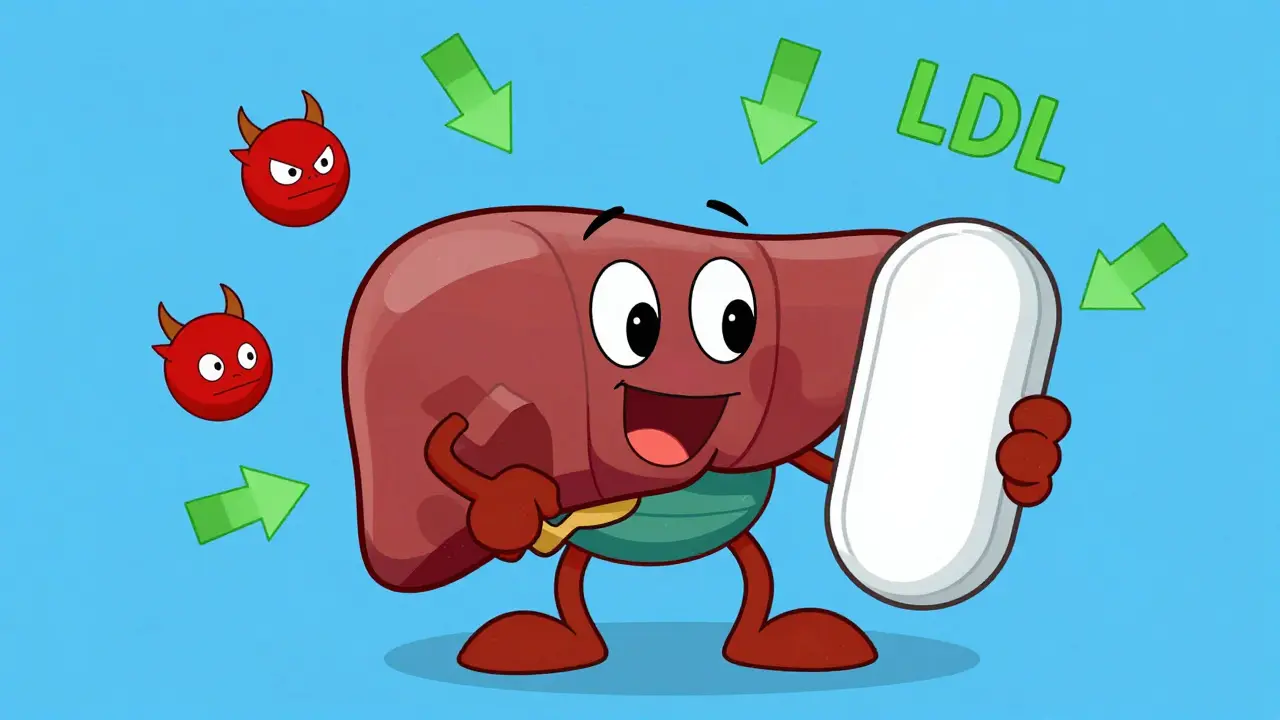
When you’re prescribed rosuvastatin, you’re getting one of the strongest statins available. It’s not just another cholesterol pill-it’s designed to slash LDL cholesterol by up to 63% at the highest dose. That’s more than most other statins can do. But with that power comes responsibility. You need to know what to watch for, when to get tested, and when to speak up about side effects. This isn’t about fear. It’s about staying in control.
Why Rosuvastatin Stands Out
Rosuvastatin, sold as Crestor and in generic form, works by blocking the enzyme your liver uses to make cholesterol. It’s not just effective-it’s precise. At 20 mg, it lowers LDL by about 55%. Compare that to atorvastatin 20 mg, which drops LDL by around 40%, or simvastatin 40 mg, which only gets you about 30%. That difference matters if your LDL is above 190 or you’ve had a heart attack. Rosuvastatin gets you to target faster.
It’s also more predictable. Unlike simvastatin or lovastatin, which are broken down by liver enzymes that interact with grapefruit, antibiotics, or antifungals, rosuvastatin is mostly cleared by the kidneys. Only 10% is processed by the liver. That means fewer dangerous drug interactions. If you’re on multiple medications, that’s a big plus.
The Real Side Effects: What Actually Happens
People hear "statin" and think muscle pain. And yes, it happens. About 5 to 10% of users report mild muscle aches-often in the thighs or shoulders. These usually fade after a few weeks. But here’s what you shouldn’t ignore: unexplained muscle weakness, especially if it’s paired with fever, dark urine, or extreme fatigue. That’s not normal. It could be early signs of rhabdomyolysis, a rare but serious condition where muscle tissue breaks down and can damage your kidneys.
One user on Reddit shared: "I was fine on 10 mg for two years. At 20 mg, my legs felt like concrete. Stopped it. Two weeks later, back to normal." That’s not rare. In fact, muscle symptoms are the #1 reason people quit rosuvastatin. But here’s the truth: severe cases like rhabdomyolysis occur in fewer than 1 in 5,000 users. The risk is low, but the warning signs are clear.
Another side effect you might not expect: elevated blood sugar. Rosuvastatin doesn’t cause diabetes, but it can nudge your HbA1c up by 0.1 to 0.3%. That’s small-but if you’re prediabetic, it matters. Your doctor should check your fasting glucose or HbA1c before starting and again at 3 to 6 months. If you’re already managing blood sugar, this might mean adjusting your diabetes meds.
And then there’s proteinuria. At 40 mg, rosuvastatin carries a 2.3 times higher risk of protein in the urine compared to 10 mg. That doesn’t mean kidney damage-it means your kidneys are filtering more protein than usual. It’s often harmless, but it’s a signal. If you’re on the 40 mg dose and have any kidney issues, your doctor should reconsider.
What You Must Monitor-And When
Forget routine monthly blood tests. Modern guidelines say you don’t need them unless you have symptoms. But you do need a few key checks at the right times.
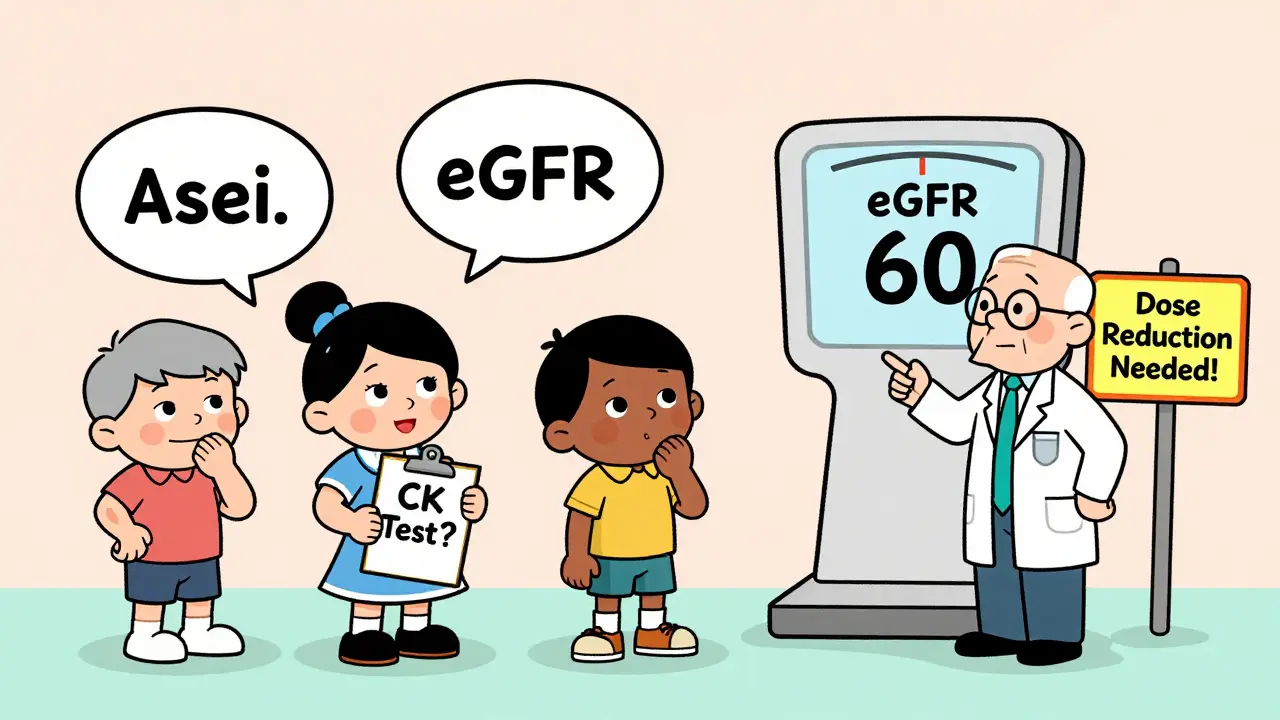
- Before starting: Get a baseline blood test for ALT, AST (liver enzymes), CK (muscle enzyme), eGFR (kidney function), and HbA1c (blood sugar). This gives you a reference point.
- 3 months after starting or increasing dose: Repeat liver enzymes and eGFR. If your ALT or AST is more than 3 times the normal limit, your doctor may stop the drug. But if it’s only slightly up and you feel fine? Don’t panic. Many people have mild, harmless spikes.
- Annually: Check eGFR and HbA1c. If your kidney function drops below 60 mL/min/1.73m², your dose should be reduced to 10 mg or less. At 40 mg, it’s outright banned if your eGFR is below 30.
- Only if you have muscle symptoms: Get a CK test. If it’s over 1,000 U/L (5x the upper limit), stop the drug immediately. No waiting. No "wait and see."
Don’t get a CK test just because you’re worried. Most people with mild aches have normal CK levels. Testing unnecessarily causes more anxiety than help.
Who Should Avoid Rosuvastatin
Not everyone is a candidate. You should not take rosuvastatin if:
- Your eGFR is below 30 mL/min/1.73m² (severe kidney failure)
- You’re pregnant or breastfeeding
- You have active liver disease or unexplained, persistent liver enzyme elevations
- You’ve had a previous severe reaction to any statin
If you’re over 70, have a small body frame, or are Asian (especially East Asian), your body may process rosuvastatin slower. Your doctor might start you on 5 mg instead of 10 mg. That’s not weakness-it’s precision.
What to Do If You Have Side Effects
If you notice muscle pain, weakness, or dark urine, don’t wait. Call your doctor. Don’t stop the drug on your own unless symptoms are severe. Abruptly stopping statins can raise your heart attack risk. Instead, work with your provider. Maybe you switch to a lower dose. Maybe you switch to pravastatin, which is gentler on the kidneys. Maybe you try ezetimibe or a PCSK9 inhibitor if you need even more LDL lowering without the side effects.
One common mistake: blaming every ache on the pill. If you’ve started a new exercise routine, changed your diet, or are under stress, those can cause muscle soreness too. Keep a symptom journal: when it happens, how bad it is, what you were doing. That helps your doctor tell if it’s the drug or something else.
The Bigger Picture: Is It Worth It?
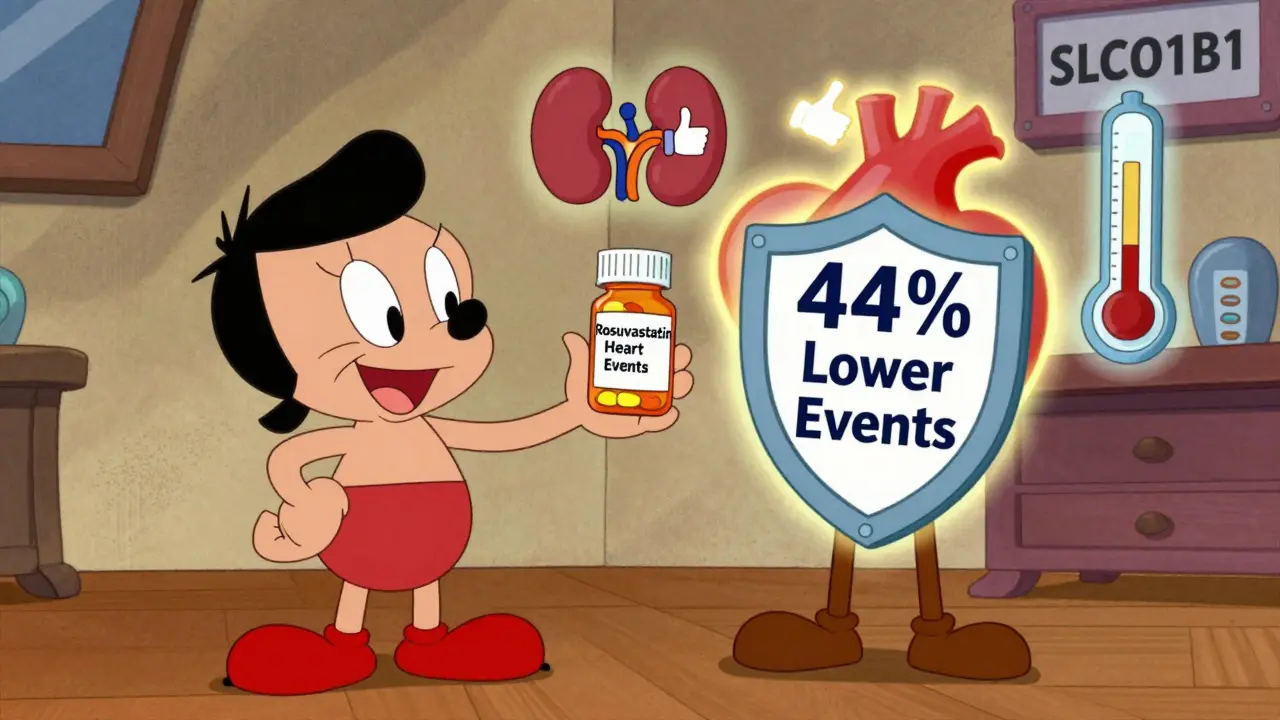
Let’s be real. You’re not taking rosuvastatin because you like pills. You’re taking it because your risk of heart attack or stroke is too high to ignore. In the JUPITER trial, people with normal LDL but high inflammation (CRP) had a 44% drop in heart events just by taking rosuvastatin. That’s not a small win. It’s life-changing.
For someone with a history of heart disease, the benefit outweighs the risk by about 10 to 1. Even if you have mild side effects, the chance of avoiding a heart attack is far greater than the chance of developing serious muscle damage.
And here’s something most people don’t know: you don’t always need the highest dose. Many patients do just fine on 5 or 10 mg. The goal isn’t to take the biggest pill possible-it’s to reach your LDL target safely. For many, that’s under 70 mg/dL. For others, under 55. Your doctor should set a clear goal with you.
What’s New in 2025
Testing for the SLCO1B1 gene is starting to show up in lipid clinics. This gene affects how your body absorbs rosuvastatin. If you have a certain variant, you’re at higher risk of muscle side effects-even at low doses. It’s not routine yet, but if you’ve had trouble with statins before, ask about it. It could save you from trial and error.
Also, more doctors are now asking patients to rate their muscle symptoms on a scale of 1 to 10, instead of just waiting for blood tests. That’s because many people feel pain before CK levels rise. Your voice matters as much as your lab results.
Generic rosuvastatin is now widely available and costs less than $10 a month in the U.S. That means cost shouldn’t be a barrier to taking it. But it also means more people are on it-and more people are reporting side effects. That’s why monitoring isn’t optional. It’s part of the treatment plan.
Can rosuvastatin cause memory loss or brain fog?
Some people report memory issues, but studies show it’s rare-about 1 to 2% of users. These symptoms are usually mild and go away within 2 to 3 weeks after stopping the drug. The FDA has noted this as a possible side effect, but large trials haven’t found a clear link to long-term cognitive decline. If you notice confusion or memory lapses, talk to your doctor. Don’t assume it’s the pill-stress, sleep, or other meds could be involved.
Is it safe to take rosuvastatin with other heart medications?
Yes, in most cases. Rosuvastatin has fewer drug interactions than other statins because it’s not heavily processed by liver enzymes. It’s generally safe with blood pressure meds, aspirin, and even some anti-inflammatories. But avoid it with cyclosporine, gemfibrozil, or certain HIV drugs without close supervision. Always give your pharmacist your full medication list.
Why do some people gain weight on rosuvastatin?
Weight gain isn’t a direct side effect of rosuvastatin. But some people feel better after starting it-less anxiety about cholesterol-and may relax their diet or exercise habits. Others report increased appetite, though this isn’t proven in studies. If you’ve gained weight, look at your overall lifestyle, not just the pill. Talk to your doctor about nutrition and activity, not just dosage.
Can I take rosuvastatin every other day?
Some people with mild side effects or lower risk may do well on alternate-day dosing, especially at lower doses (5 or 10 mg). Studies show LDL reduction stays around 40-50% with this approach. But it’s not FDA-approved for this use. Only try it under your doctor’s supervision. Never self-adjust your dose.
What’s the best time of day to take rosuvastatin?
Unlike older statins, rosuvastatin’s long half-life (about 19 hours) means timing doesn’t matter much. You can take it morning or night, with or without food. Pick a time that fits your routine and stick with it. Consistency matters more than timing.
Next Steps: What to Do Today
If you’re on rosuvastatin:
- Check your last blood test results. Do you know your eGFR and HbA1c?
- Write down any muscle aches, fatigue, or unusual symptoms-when they started, how often, and what makes them better or worse.
- Call your doctor. Ask: "Is my current dose still right for me? Should I check my kidney or sugar levels soon?"
- Don’t stop the pill unless you have severe symptoms. Talk first.
If you’re considering starting rosuvastatin:
- Ask your doctor: "What’s my LDL goal? What dose do you recommend and why?"
- Find out if you have kidney issues or diabetes risk factors.
- Request a baseline blood panel before you start.
- Understand that side effects are rare-but knowing the signs keeps you safe.
High cholesterol doesn’t have to be a life sentence. Rosuvastatin is one of the most powerful tools we have to prevent heart attacks and strokes. But like any strong tool, it needs careful handling. Monitor. Communicate. Stay informed. You’re not just taking a pill-you’re taking charge of your health.
Comments (10)
Tony Du bled
21 Dec, 2025Rosuvastatin’s a beast, no doubt. I’ve been on it for three years now. Mild leg tightness at first, but it faded. Now I barely notice it. The real win? My LDL dropped from 198 to 62. Worth every penny and every minor ache.
Kiranjit Kaur
23 Dec, 2025My mom started this after her stent and now she’s running marathons again 🏃♀️💪. I didn’t believe the hype until I saw it. Also, she takes it at bedtime because that’s when she remembers - turns out timing doesn’t matter. Genius.
Art Van Gelder
25 Dec, 2025Let’s not sugarcoat this - statins are pharmaceutical power tools, and rosuvastatin is the cordless 20V model that can rip through concrete. But here’s the kicker: we treat cholesterol like it’s the enemy, when really it’s just a messenger. The real issue? Chronic inflammation, insulin resistance, and sedentary lifestyles. Rosuvastatin doesn’t fix those. It just mutes the alarm. I’ve seen patients go from 10 mg to 40 mg because their doctor panicked over a 10-point LDL jump, not because they had a clinical indication. We’ve turned prevention into pharmacological overkill. And don’t get me started on how the industry markets this as a ‘lifestyle upgrade’ when it’s really a Band-Aid on a bullet wound.
Kathryn Weymouth
25 Dec, 2025I appreciate the detailed monitoring guidelines, but I’d like to clarify one thing: the recommendation to check eGFR annually is supported by the 2022 AHA/ACC guidelines, not just ‘modern’ standards. Also, proteinuria at 40 mg is dose-dependent and reversible upon dose reduction - it’s not a sign of structural damage, but rather a marker of glomerular hyperfiltration. For patients with baseline CKD, starting at 5 mg is not just prudent - it’s evidence-based. Thank you for emphasizing patient voice over lab numbers alone.
Herman Rousseau
26 Dec, 2025Biggest mistake people make? Thinking side effects = failure. I had muscle cramps at 10 mg. Switched to 5 mg. Still hit my LDL target. No rhabdo. No panic. Just smart adjustments. Also - yes, the 2025 SLCO1B1 gene test is coming, but don’t wait for it. Talk to your doc now. You’ve got more control than you think.
Aliyu Sani
27 Dec, 2025man i been on this drug since 2020 n my creatine levels been up but doc say its fine. i think they just wanna keep us on pills. they dont care if we feel like zombies. but hey, at least the pill cost 8 bucks a month so i guess its a deal? 😅
Sam Black
28 Dec, 2025I’ve been a pharmacist for 18 years, and I’ve watched statin prescriptions explode. What’s missing in most discussions is the psychological shift: patients start taking rosuvastatin, feel ‘protected,’ and slowly abandon their diet, their walks, their sleep hygiene. The drug becomes a moral license to ignore lifestyle. I’ve had patients tell me, ‘I don’t need to eat salad anymore - I’ve got my pill.’ That’s not medicine. That’s magical thinking. Rosuvastatin isn’t a cure - it’s a bridge. And bridges need foundations.
Sai Keerthan Reddy Proddatoori
30 Dec, 2025Why is this even legal? Big Pharma paid off the FDA. My cousin died from rhabdo on this. They hide the stats. They don’t tell you that 1 in 200 get kidney damage. And now they want us to take it for ‘prevention’? What a scam. We’re being turned into lab rats for profit. Stop the poison.
Vikrant Sura
30 Dec, 2025TL;DR: It works. But you’ll probably quit it anyway because you’re lazy and don’t want to track your labs. Also, your doctor doesn’t care.
Candy Cotton
30 Dec, 2025While the article presents a commendable overview of clinical parameters, it is regrettably lacking in formal citation of peer-reviewed meta-analyses, particularly those published in the Journal of the American College of Cardiology and The Lancet. Furthermore, the casual tone undermines the gravity of pharmacovigilance. A patient’s right to informed consent requires not only symptom awareness but also full disclosure of the 2016 FDA black box warning regarding myopathy risk in Asian populations - a detail conspicuously absent from this otherwise superficial exposition.