
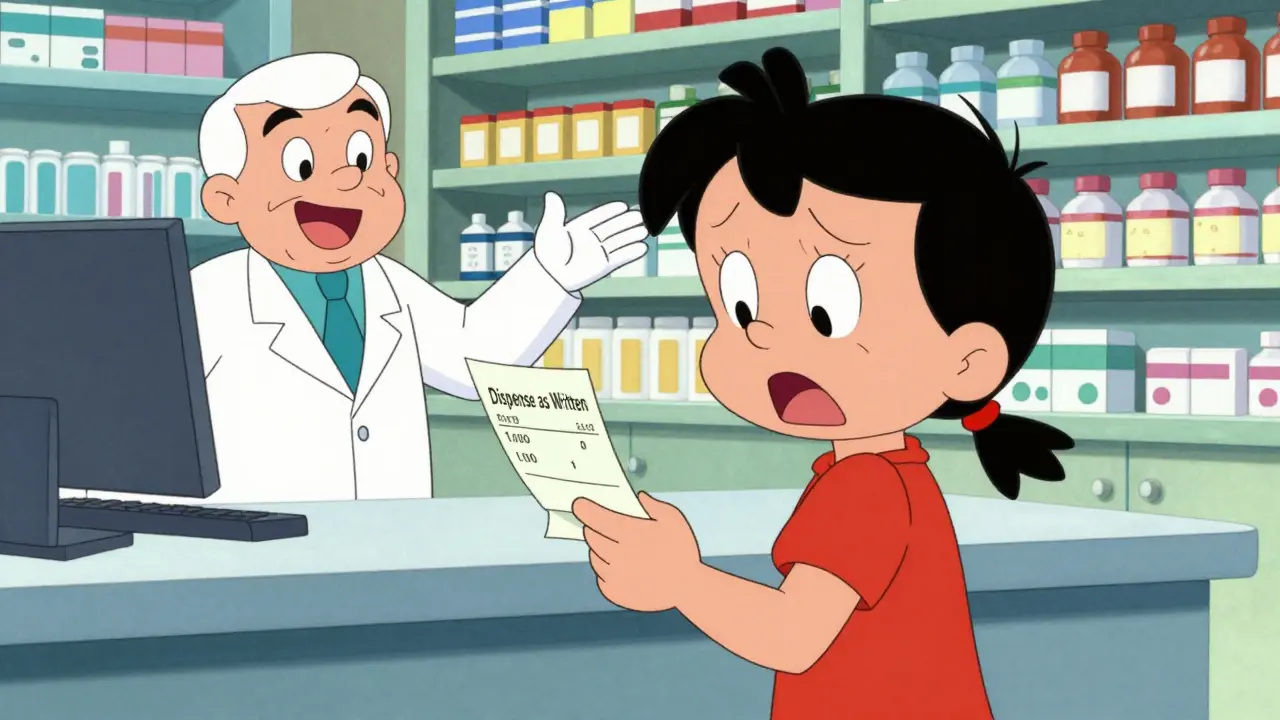
Have you ever picked up a prescription only to be hit with a shockingly high copay? You look at the receipt and see a note that says "Dispense as Written" or "Do Not Substitute." Suddenly, your $10 generic pill costs $85. It’s frustrating, confusing, and it makes you wonder: did my doctor really need me to take the expensive brand-name drug, or is this just how the system works?
The short answer is yes, sometimes doctors do require specific brand drugs for serious medical reasons. But more often than not, these directives are used unnecessarily, costing patients and insurers billions of dollars annually. Understanding when a do not substitute prescription is medically necessary versus when it is simply a habit or an oversight can save you money and keep you healthier.
What Is a "Do Not Substitute" Prescription?
A "Do Not Substitute" (DNS) prescription, often labeled as "Dispense as Written" (DAW), is a legal directive from a healthcare provider. It tells the pharmacist that they cannot swap the prescribed brand-name medication for a cheaper generic equivalent. This practice stems from the Drug Price Competition and Patent Term Restoration Act of 1984, commonly known as the Hatch-Waxman Act. This law created the framework for approving generic drugs while protecting brand-name patents.
In the United States, all 50 states have laws governing generic substitution. In most cases, pharmacists are legally allowed-and often encouraged-to dispense generics because they are bioequivalent to their brand counterparts. Bioequivalence means the generic drug delivers the same amount of active ingredient into your bloodstream in the same amount of time as the brand name. However, when a doctor marks a script as DNS, they override this default permission.
According to data from the American Medical Association, about 8-12% of all prescriptions in 2022 contained these designations. That might sound small, but given the volume of prescriptions written daily, it translates to millions of scripts where patients pay significantly more without always understanding why.
When Is a Brand-Name Drug Actually Necessary?
There are legitimate clinical scenarios where switching between brands and generics can cause problems. The FDA requires generic drugs to have bioavailability within 80-125% of the brand name. For most medications, this range is safe and effective. But for certain drugs, even a small difference matters.
The primary category where DNS is justified involves Narrow Therapeutic Index Drugs (NTIDs). These are medications where the difference between a helpful dose and a toxic dose is very small. Examples include warfarin (a blood thinner), levothyroxine (for thyroid conditions), and phenytoin (an anti-seizure medication). For patients taking NTIDs, staying on the exact same manufacturer's product-whether brand or generic-is crucial. Switching manufacturers can lead to fluctuations in blood levels, causing adverse effects or treatment failure. A study in the New England Journal of Medicine noted that for sensitive patients on levothyroxine, even minor variations can cause clinical instability in 5-7% of cases.
Another valid reason for a DNS designation is a documented patient reaction to inactive ingredients. Generic drugs contain the same active ingredient as the brand, but they may use different fillers, dyes, or binders. If a patient has an allergy to a specific dye or suffers from gastrointestinal issues due to a particular filler found in a generic version, the doctor must specify the brand name to avoid that reaction.
Complex delivery systems also warrant caution. Some medications come in prefilled pens or specialized inhalers. If the device mechanism differs between the brand and a potential alternative, substitution could affect how the drug is delivered into the body. As of 2023, 43 states prohibit substitution for combination products and prefilled devices due to these mechanical differences.
The Hidden Cost of "Dispense as Written"
While there are medical reasons for DNS prescriptions, the financial impact is staggering. A 2022 study published in Health Affairs found that DNS designations increase prescription costs by an average of 237% compared to generic equivalents. On average, a brand-name drug costs $487 per prescription, while the generic counterpart costs just $144.
This price gap creates a significant burden on patients. A survey by the Kaiser Family Foundation revealed that 68% of patients receiving DNS prescriptions were unaware of the cost difference until they reached the checkout counter. Of those, 42% said they would have requested a generic alternative if they had been informed beforehand. This lack of transparency leaves patients paying out of pocket for no added benefit in many cases.
For insurers and Medicare Part D plans, the impact is equally large. Medicare scripts show a 12.7% DNS rate compared to 8.3% for commercial insurance. With the U.S. prescription drug market valued at $1.8 trillion, inappropriate DNS usage contributes to an estimated $15.7 billion in avoidable annual healthcare costs, according to the American College of Physicians.
| Feature | Brand-Name Drug | Generic Drug |
|---|---|---|
| Average Cost Per Prescription | $487 | $144 |
| Bioequivalence Standard | Reference Product | 80-125% of Brand |
| Substitution Rate | Low (when DNS marked) | High (~90% of eligible scripts) |
| Common Use Case | Narrow Therapeutic Index, Allergies | Most chronic conditions, acute care |
Why Do Doctors Mark Prescriptions as "Do Not Substitute"?
If generics are safe and cheaper, why do so many doctors still mark them as DNS? The reasons vary widely. Sometimes, it’s purely clinical, as discussed with NTIDs and allergies. Other times, it’s about convenience or habit.
Electronic Health Record (EHR) systems play a big role here. Many EHR platforms, such as Epic Systems, have default settings that may prompt providers to select "Dispense as Written" or fail to highlight the cost difference clearly during prescribing. A report from Epic indicated that 32% of DNS designations required manual overrides because the system defaulted to generic substitution settings, suggesting friction in the workflow rather than deliberate clinical choice.
Additionally, some experts argue that pharmaceutical marketing influences prescribing habits. Dr. Aaron Kesselheim from Harvard Medical School has pointed out that in some therapeutic classes where therapeutic equivalence is well-established, DNS rates reach 25-30%, far higher than the clinically appropriate 10-15%. This suggests that brand promotion may subtly influence doctors to prefer familiar brand names over generics.
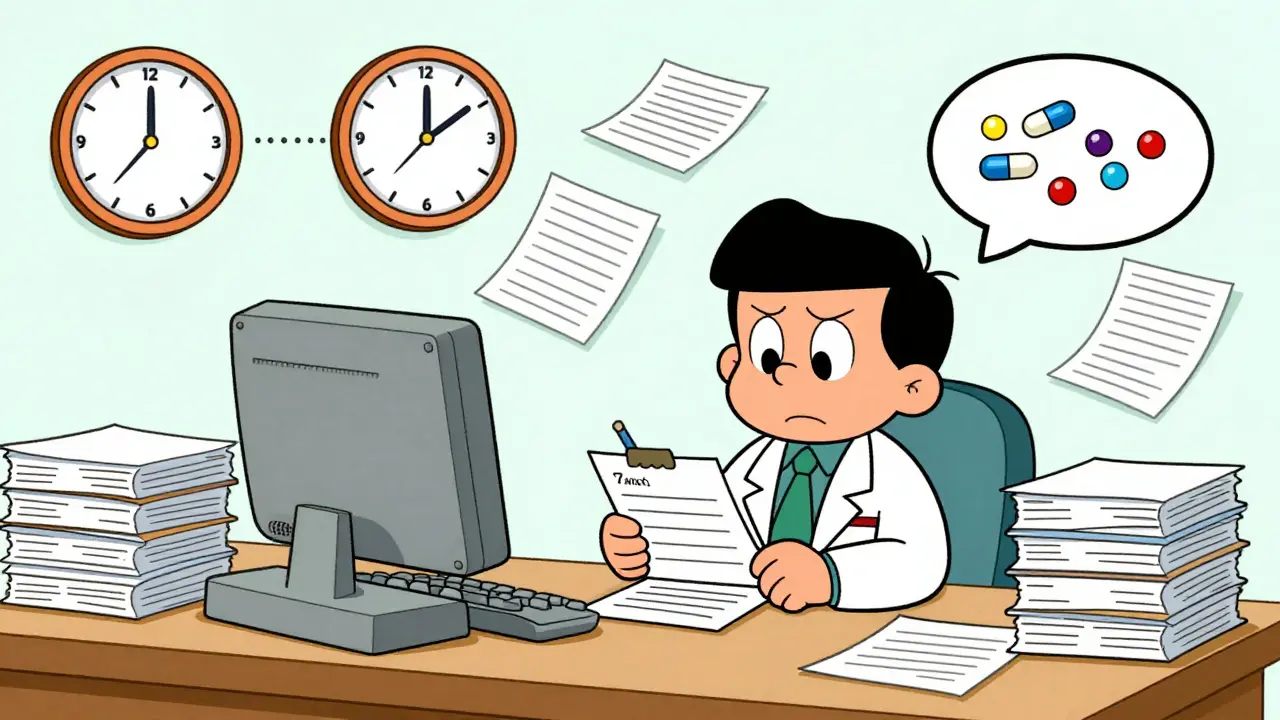
Furthermore, documentation is a hurdle. Properly documenting the justification for a DNS designation takes time. A Johns Hopkins University study found it takes an average of 2.3 minutes per prescription to document the reason correctly. In a busy clinic seeing 50 patients a day, that adds nearly two hours of administrative work, discouraging thorough justification.
State Laws and Pharmacy Regulations
The rules around substitution aren’t uniform across the country. Each state has its own statutes governing how pharmacists handle DNS requests. For example, Arizona Revised Statute 32-1963.01(E) requires prescribers to write specific phrases like "medically necessary" or "dispense as written" on the prescription form. Thirty-eight states go further, requiring additional authentication, such as the prescriber’s initials or electronic verification, to prevent fraud or error.
New York mandates the exact phrase "Dispense as Written" along with personal initials, while California allows electronic checkboxes but still requires prescriber authentication. These variations mean that a prescription honored in one state might face scrutiny in another if the notation doesn’t meet local legal standards.
For biological products, the rules are even stricter. The Biologics Price Competition and Innovation Act of 2009 established a separate "interchangeable" designation for biosimilars. Unlike small-molecule generics, which number in the thousands, only 12 biosimilars had achieved interchangeable status as of late 2023. Consequently, DNS designations appear on 65% of biologic prescriptions compared to just 10% for small-molecule drugs.
What Can Patients Do?
You don’t have to accept a high copay blindly. Here are practical steps to take if you receive a "Do Not Substitute" prescription:
- Ask Your Pharmacist: Pharmacists are medication experts. Ask them if a generic is available and if there is a specific medical reason the doctor blocked substitution. They can often contact the doctor’s office directly to clarify.
- Talk to Your Doctor: Call your provider’s office. Ask, "Is there a specific medical reason I need the brand name, or can I take the generic?" Most doctors are open to switching if they know the cost burden.
- Check for Allergies: If you’ve had reactions to generics in the past, make sure your medical record notes the specific inactive ingredient you’re allergic to. This helps future prescribers understand why a DNS might be needed.
- Review Insurance Coverage: Some insurance plans cover generics fully but charge a high tier for brand names. Understanding your plan’s formulary can help you advocate for the most cost-effective option.
Being proactive can save you hundreds of dollars a year. Remember, the goal of healthcare is effective treatment, not unnecessary expense. By asking questions, you ensure you’re getting the right medication at the right price.
The Future of Generic Substitution
Regulatory trends suggest a shift toward tighter controls on DNS usage. Eighteen states introduced legislation in 2023 to limit DNS designations to clinically justified cases only. Seven states have implemented prior authorization requirements, meaning doctors must get approval from insurers before using a brand name when a generic exists.
The FDA is also investing in research. The Generic Drug User Fee Amendments V (2023-2027) includes $50 million specifically for Narrow Therapeutic Index Drug bioequivalence research. This investment aims to provide clearer data on when generics are truly equivalent, potentially reducing the need for DNS designations by 25% over the next five years.
As evidence accumulates, industry analysts predict DNS rates for small-molecule drugs will decline to 5-7% by 2027. However, for biologics, DNS rates may remain above 50% due to the complexity of these larger molecules and their delivery mechanisms.
What does "DAW" mean on a prescription?
DAW stands for "Dispense As Written." It is a code or notation used by prescribers to instruct pharmacists to give the patient the exact brand-name drug prescribed, rather than substituting a generic equivalent. This is often done for clinical reasons, such as sensitivity to inactive ingredients or the need for consistent dosing in narrow therapeutic index drugs.
Can a pharmacist ignore a "Do Not Substitute" order?
Generally, no. Pharmacists are legally bound to follow the prescriber's instructions unless there is a clear error or safety concern. However, pharmacists can contact the doctor to discuss alternatives if the cost is prohibitive or if they believe a generic is appropriate. In some states, if the DNS notation lacks proper authentication (like initials), the pharmacist may have discretion to substitute.
Are generic drugs always just as effective as brand names?
For the vast majority of medications, yes. The FDA requires generics to be bioequivalent, meaning they deliver the same amount of active ingredient into your bloodstream. However, for Narrow Therapeutic Index Drugs (NTIDs) like warfarin or levothyroxine, even small differences can matter. In these specific cases, sticking to one manufacturer (brand or generic) is recommended to maintain stable blood levels.
Why is my brand-name prescription so much more expensive?
Brand-name drugs carry higher prices because the original manufacturer recoups research and development costs and holds patent protections. Generics are cheaper because multiple companies compete to produce the same molecule once patents expire. Studies show brand-name drugs can cost up to 237% more than generics on average, leading to significant out-of-pocket expenses for patients.
How can I request a generic instead of a brand name?
You can ask your doctor to remove the "Do Not Substitute" or "Dispense as Written" notation from your prescription. You can also ask your pharmacist to call the doctor on your behalf to verify if a generic is acceptable. Most doctors are willing to switch if they understand the cost implications for you.