

What is Kava?
Kava is a plant native to the South Pacific islands (Piper methysticum). Traditional preparations use the root to make a ceremonial beverage. The active compounds, kavalactones, include kavain, dihydrokavain, methysticin, and yangonin, which account for 96% of total kavalactones in traditional water-based extracts. These compounds produce calming effects, which is why Pacific Islanders have used kava for centuries in social and spiritual gatherings. However, when combined with sedative medications, these same compounds can cause dangerous health risks.
Liver Toxicity Risks
FDA issued a warning on March 25, 2002, after reports of severe liver injury in multiple countries. Since then, over 25 international adverse event reports have documented cases where kava caused hepatitis, cirrhosis, or liver failure requiring transplantation. The LiverTox database confirms 11 documented cases of severe liver injury linked to kava use. A Sacramento County case study in 2023 found two patients who developed acute liver failure after combining kava with prescription sedatives. One 42-year-old had ALT levels of 2,840 U/L (normal is under 40) and jaundice after taking 300 mg daily kava with 2 mg alprazolam. Another 56-year-old needed hospitalization for coagulopathy (INR 4.2) after mixing 250 mg kava with diazepam.
Despite these risks, kava remains available as a dietary supplement in the U.S. under the Dietary Supplement Health and Education Act of 1994. The global kava market was valued at $117.4 million in 2022, with 68% of U.S. sales happening online without professional consultation. This lack of oversight means consumers often don’t know how much kavalactones they’re actually consuming. Water-extracted traditional kava contains 150-250 mg per serving, while alcohol-based commercial supplements can pack up to 300 mg per dose-a critical difference when it comes to liver strain.
Sedation Risks with Medications
Benzodiazepines (like Xanax, Valium, and Ativan) are prescription sedatives commonly used for anxiety and sleep. When combined with kava, they can lead to excessive sedation and respiratory depression. WebMD rates this interaction as “Major” because kava increases midazolam plasma concentrations by 27% through CYP3A4 enzyme inhibition. This means even standard doses become dangerously strong. A Reddit user shared how taking kava with lorazepam left them unable to stand for 8 hours with confused speech-a pattern seen in 19 similar Erowid.org reports.
Kavalactones cross the blood-brain barrier within 15 minutes and affect GABA receptors, which are also targeted by sedative drugs. This dual effect amplifies sedation. Studies show kava increases slow-wave sleep while decreasing REM sleep, disrupting normal sleep cycles. The FDA’s Adverse Event Reporting System recorded 37 sedation-related incidents between 2019 and 2023, with 12 requiring medical intervention. These aren’t isolated incidents-they’re part of a clear pattern showing how dangerous this combination can be.
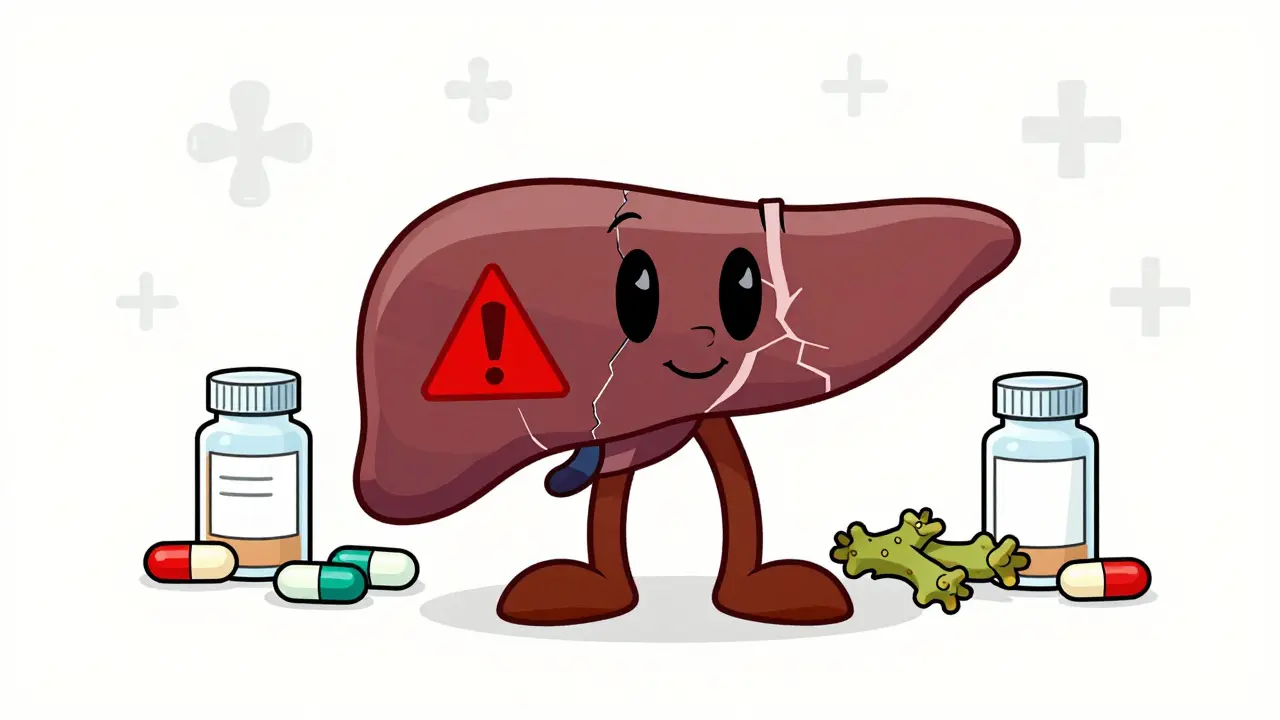
How Kava Interferes with Liver Metabolism
CYP450 enzymes are a family of proteins in the liver responsible for metabolizing many drugs. Kava inhibits key enzymes like CYP2D6, CYP2C9, and CYP3A4, which can cause sedative medications to build up to dangerous levels in the bloodstream. The California Department of Public Health confirmed in 2024 that this enzyme interference is a primary reason behind heightened risks. For example, CYP3A4 processes about half of all prescription drugs, including common sedatives. When kava blocks this enzyme, even small amounts of medication can become toxic.
Traditional water-based kava preparations have lower risk than alcohol-extracted commercial supplements. However, the European Food Safety Authority’s 2024 re-evaluation states that “no safe level of kava consumption can be established for individuals taking concomitant medications metabolized by CYP2D6, CYP2C9, or CYP3A4.” This means even if you’re taking medications like antidepressants, blood thinners, or heart drugs, kava can disrupt their metabolism. The World Health Organization’s 2023 Monograph notes that traditional water-prepared kava shows “significantly lower incidence of adverse events (0.8 per 100,000 servings) compared to commercial extracts (7.3 per 100,000 servings)”-but the risk remains when combined with sedatives.
Real-World Cases
The FDA’s Adverse Event Reporting System contains 37 reports of sedation-related incidents involving kava from 2019-2023. Twelve of these cases required medical intervention. One patient in California developed severe drowsiness after taking kava with hydrocodone, while another in New York needed emergency care for respiratory depression after mixing kava with oxycodone. These cases highlight how dangerous this combination can be-even when using common medications.
On Drugs.com, kava received a 6.3/10 average rating from 142 reviews, with 37% reporting “severe drowsiness” when combined with alcohol. Reddit’s r/Herbology community saw 63% of 427 comments report no liver issues with moderate kava use, but 12% described mild symptoms like fatigue or nausea. The reality is that liver damage often develops silently-many patients don’t notice symptoms until it’s too late. Sacramento County researchers found only 22% of patients voluntarily disclosed kava use when presenting with liver symptoms. This lack of disclosure makes diagnosis harder and treatment less effective.

What to Do If You Take Both
If you’re using kava alongside sedative medications, stop immediately. Talk to your doctor about safer alternatives. The American Association for the Study of Liver Diseases recommends stopping kava if your liver enzymes rise above three times the normal level. Most mild cases resolve within 60 days of discontinuation. Always inform your healthcare provider about any herbal supplements you take. Many patients don’t volunteer this information-only 22% do when presenting with liver symptoms. Your doctor needs to know to avoid dangerous interactions.
- Stop taking kava right away if you’re using sedatives
- Ask your doctor about non-interacting anxiety treatments like cognitive behavioral therapy
- Get regular liver function tests if you’ve used kava in the past
- Never mix kava with alcohol or opioids-this combination is especially dangerous
Frequently Asked Questions
Can I take kava with my anxiety medication?
No. Combining kava with anxiety medications like benzodiazepines or barbiturates can cause severe liver damage and excessive sedation. The FDA warns against this interaction, and multiple case studies confirm the risks. Always consult your doctor before mixing any herbal supplements with prescription drugs.
What are the signs of liver damage from kava?
Early signs include fatigue, nausea, and dark urine. As it progresses, you may notice jaundice (yellowing of skin or eyes), abdominal pain, and swelling in the legs. If you experience these symptoms while taking kava, stop immediately and seek medical help. LiverTox data shows that 89% of cases start with fatigue, followed by nausea in 76% of cases.
How long does it take for kava to affect the liver?
Liver damage can occur within weeks to months of regular use. Sacramento County researchers found symptoms appearing 1-4 months after starting kava. However, combining it with sedative medications can accelerate this process. There’s no safe timeframe-any use with sedatives is risky.
Are all kava products equally risky?
No. Traditional water-based preparations from noble kava varieties (like those used in Pacific cultures) have lower risk than commercial alcohol-extracted supplements. However, the European Food Safety Authority states that no safe level of kava can be established for those taking medications metabolized by CYP enzymes. Even natural forms can still pose dangers when combined with sedatives.
What should I tell my doctor about kava use?
Be honest about all supplements you take, including kava. Many patients don’t mention herbal products when discussing liver issues-only 22% do. Your doctor needs this information to avoid dangerous interactions. Mention the dosage, frequency, and any symptoms you’ve experienced. This helps them assess risks and adjust your treatment plan safely.
Comments (8)
Jennifer Aronson
6 Feb, 2026Kava has deep roots in Pacific Islander cultures, traditionally used in ceremonies and social gatherings. However, when combined with sedative medications, the risks become severe. The FDA issued a warning in 2002 due to liver toxicity cases, and recent studies continue to confirm these dangers. For example, a Sacramento County case study in 2023 documented acute liver failure in two patients who mixed kava with alprazolam and diazepam. The kavalactones in kava inhibit CYP450 enzymes, which are crucial for metabolizing many drugs. This inhibition can cause sedatives to accumulate to toxic levels in the bloodstream. Even traditional water-based extracts carry risks when mixed with medications, though commercial alcohol-based supplements are more dangerous. The European Food Safety Authority states there's no safe level of kava for those taking medications metabolized by CYP2D6, CYP2C9, or CYP3A4. It's alarming that the U.S. market lacks oversight, with 68% of sales happening online without professional consultation. Many consumers don't realize the dosage they're taking, leading to unintentional overdoses. Liver damage often develops silently, with symptoms only appearing when it's too late. Regular liver function tests are essential for those who have used kava in the past. Always consult a healthcare provider before using any herbal supplement alongside prescription drugs. The American Association for the Study of Liver Diseases recommends stopping kava immediately if liver enzymes are elevated. Awareness and education are critical to preventing further harm.
Kate Gile
7 Feb, 2026Great points from Jennifer. It's vital we spread awareness about these interactions. Many people don't realize herbal supplements can interact dangerously with medications. I've seen firsthand how crucial it is to consult healthcare providers before mixing substances. Sharing this information helps protect others and promotes safer health practices. Let's keep the conversation going to ensure everyone stays informed and safe.
Gregory Rodriguez
8 Feb, 2026Wow, another 'natural wonder' that's actually a ticking time bomb. Kava's 'traditional use' is great until you mix it with meds and end up in the ER. Seriously, it's shocking how many people get liver damage before we stop pretending supplements are harmless. /s But seriously, this info is crucial. Let's hope people actually read it instead of just scrolling past.
Johanna Pan
9 Feb, 2026Thanks for the info Kate. I've always been fascinated by how kava is used in Pacific cultures, but it's clear the risks with meds are real. It's important to educate people about this. Many dont know about the enzyme interactions. Maybe more public health campaigns could help. We need to make sure folks know to talk to their doctors before trying anything new. Stay safe everyone.
Jenna Elliott
10 Feb, 2026Kava with sedatives is life-threatening.
Elliot Alejo
12 Feb, 2026I agree completely. It's essential to avoid combining kava with sedatives. Many people don't realize the risks, so spreading awareness is crucial. Always consult a healthcare professional before taking any supplements.
Bella Cullen
14 Feb, 2026Kava and sedatives together are dangerous.
Sam Salameh
14 Feb, 2026As an American, I think we need to protect our health. Kava with sedatives is risky. Always check with your doctor.