

Have you ever caught yourself holding a phone further away just to read the text? Or maybe you’ve found yourself squinting at a menu in a dimly lit restaurant, wondering if your eyes are finally giving up on you? If you’re over 40, you’re likely experiencing presbyopia, a natural, universal change in how your eyes focus. It’s not a disease, and it’s not something you did wrong. It’s simply biology doing its thing as you age.
By age 45, most people start noticing that near objects aren’t as crisp as they used to be. By 65, nearly everyone needs some form of help to see close-up details clearly. With 1.8 billion people currently affected worldwide, presbyopia is one of the most common health conditions on the planet. The good news? There are plenty of ways to manage it, from simple reading glasses to advanced surgical options. Let’s break down what’s happening in your eyes and how to choose the right solution for your lifestyle.
What Is Presbyopia and Why Does It Happen?
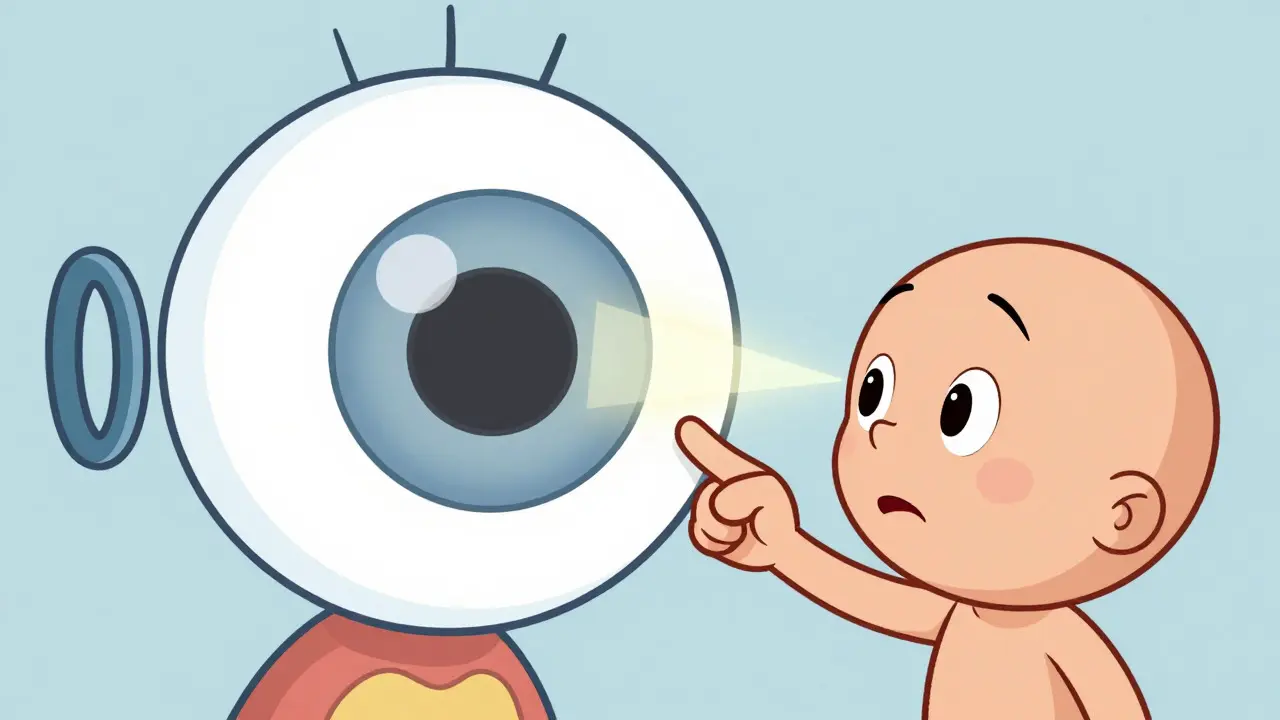
Presbyopia is an age-related refractive error caused by the hardening of the eye's natural lens, reducing its ability to change shape for near focus. To understand this, think of the lens in your eye like a camera lens. When you look at something close, your eye muscles squeeze the lens to make it rounder, helping it bend light correctly onto the retina. This process is called accommodation.
As we age, the lens loses its flexibility. It becomes harder and less elastic, much like an old rubber band that doesn’t stretch back into place as easily. Because the lens can’t change shape as effectively, it struggles to focus light from nearby objects. This isn’t the same as farsightedness (hyperopia), which is caused by the physical shape of the eyeball. Presbyopia is strictly about the lens’s lost elasticity.
The progression is predictable. At age 10, your eye has an amplitude of accommodation of about 14 diopters. By age 60, that drops to just 0.5 diopters. Most people need +1.00 diopter correction around age 45, and by age 65, that requirement often climbs to +2.50 or +3.00 diopters. Dr. Emily Chew from the National Eye Institute puts it bluntly: “No amount of eye exercises or dietary changes can prevent presbyopia-it’s as inevitable as gray hair.”
Recognizing the Symptoms: When to Worry
Presbyopia creeps up slowly, so you might not notice it until it interferes with daily tasks. Here are the classic signs that your eyes are asking for help:
- Arm’s length reading: You find yourself holding books, phones, or menus farther away to see them clearly.
- Difficulty in low light: Reading in dim lighting becomes a struggle because the pupil dilates, making focusing even harder.
- Eye strain and headaches: After staring at screens or small print for too long, your eyes feel tired, or you get tension headaches.
- Blurred near vision: Objects within 25-30 cm (10-12 inches) appear fuzzy, while distance vision remains sharp.
If you’re noticing these changes, don’t panic. It’s normal. However, it’s a signal that it’s time to talk to an eye care professional. The American Optometric Association recommends comprehensive eye exams starting at age 40 to monitor for presbyopia and other age-related conditions like cataracts or glaucoma.
Your Options: From Readers to Surgery
Once diagnosed, you have several paths forward. Each option has trade-offs in cost, convenience, and visual quality. Here’s a breakdown of the most common solutions:
| Method | Cost Range (USD) | Adaptation Time | Best For | Key Drawback |
|---|---|---|---|---|
| Over-the-Counter Readers | $5 - $20 | None | Occasional reading | One-size-fits-all; may cause headaches if strength is wrong |
| Prescription Reading Glasses | $150 - $400 | Minimal | Daily near work | Must remove for distance viewing |
| Bifocal Lenses | $200 - $350 | 1-2 weeks | Clear separation of near/far zones | Visible line; limited intermediate zone |
| Progressive Lenses | $250 - $450+ | 2-4 weeks | Seamless transition from far to near | Peripheral distortion; requires head movement retraining |
| Contact Lenses (Monovision) | $100 - $300/year | 1-2 weeks | Active lifestyles; no glasses | Reduced depth perception in 15% of users |
| Surgery (LASIK/RLE) | $2,000 - $5,000/eye | 1-2 weeks recovery | Permanent correction | Risks of dry eyes, halos; potential retreatment |
Choosing the Right Lens: A Practical Guide
If you’re new to corrective lenses, where do you start? Many people reach for off-the-shelf readers first. They’re cheap and convenient, but there’s a catch. According to 2023 research from Optometry Times, 35% of users buy the wrong strength. If your prescription is actually +1.50 but you buy +1.00 readers, you’ll still struggle. If you buy +2.00 when you only need +1.00, you’ll get headaches and eye strain.
For a more tailored approach, prescription reading glasses are a solid middle ground. They’re custom-made for your specific needs and frame preference. But if you hate swapping between two pairs of glasses, progressive lenses are the game-changer. These lenses have no visible lines and provide a smooth gradient of power from top (distance) to bottom (near).
However, progressives take getting used to. You’ll need to learn to move your head slightly to find the optimal viewing zone. Expect an adaptation period of 2 to 4 weeks. During this time, you might experience slight peripheral blurring or distortion, which is normal. Tip: Start by wearing them for short periods during the day and gradually increase usage. Avoid looking directly through the extreme edges of the lens.
When Glasses Aren’t Enough: Surgical Alternatives
For those who want to ditch glasses entirely, surgery offers permanent solutions. Two main procedures stand out:
- LASIK Monovision: This procedure corrects one eye for distance and the other for near vision. Your brain learns to blend the images. About 85% of patients report high satisfaction, but 10-15% may need retreatment within five years. Dry eyes are a common side effect, affecting about 35% of patients initially.
- Refractive Lens Exchange (RLE): Similar to cataract surgery, RLE replaces your natural lens with a multifocal intraocular lens (IOL). This offers permanent correction for both near and far vision. Costs range from $3,500 to $5,000 per eye. While effective, it carries risks like endophthalmitis (a rare infection) and reduced contrast sensitivity in about 15% of patients.
Surgery is a big decision. Talk to a cornea specialist like Dr. Paul Ajamian at Mount Sinai, who notes that presbyopia is “not a disease but a natural consequence of the lens aging process.” Make sure you understand the long-term implications before cutting into your eyes.
Emerging Technologies and Future Trends
The field of presbyopia correction is evolving fast. In 2023, Johnson & Johnson received FDA approval for Acuvue Oasys Multifocal contacts with “Enhanced Near Technology,” showing 89% success in clinical trials. EssilorLuxottica launched Eyezen Progressive 2.0, featuring a 30% wider near zone based on data from 10,000 wearers.
On the surgical front, Presbia’s Flexivue Microlens, a corneal inlay, received CE mark approval in 2022. It achieved 20/25 near vision in 78% of patients at 12 months. Even pharmacological approaches are being explored. Phase 1 trials of VP-025, a topical miotic drop, showed improvements in near vision for up to six hours. While these innovations are promising, optical solutions remain the dominant choice through 2035 due to their safety and accessibility.
Frequently Asked Questions
Can I prevent presbyopia with eye exercises?
No. Presbyopia is caused by the physical hardening of the lens, which is a biological aging process. No exercise, diet, or supplement can reverse this. The best you can do is manage it with corrective lenses or surgery.
At what age does presbyopia typically start?
Most people begin to notice symptoms between ages 40 and 45. By age 65, nearly everyone will require some form of near-vision correction. The exact timing varies based on genetics and individual eye health.
Are over-the-counter reading glasses safe?
They are generally safe for occasional use, but they carry a risk of improper correction. Since they come in fixed strengths, they may not match your actual prescription, potentially causing eye strain or headaches. An optometrist can determine your precise needs.
How long does it take to adjust to progressive lenses?
Most people adapt within 2 to 4 weeks. During this period, you may experience mild peripheral distortion or dizziness. Consistent wear helps your brain learn to locate the different focal zones within the lens.
Is LASIK monovision a good option for presbyopia?
It can be a good option for many, with 85% patient satisfaction rates. However, it involves risks like dry eyes and reduced depth perception. It’s best suited for individuals who prioritize freedom from glasses and are willing to accept a trade-off in binocular vision quality.