

That itchy, red ring on your arm isn’t a worm. It’s a fungus. Despite the name ringworm, which sounds like a parasitic infestation, this condition is actually a superficial fungal infection known medically as tinea or dermatophytosis. It affects millions of people worldwide, causing everything from mild irritation to significant social embarrassment. The good news? You can treat it effectively with over-the-counter antifungal creams if you catch it early and use them correctly.
We often dismiss these rashes as minor annoyances, but ignoring them leads to spread-both across your own body and to others. Whether it’s between your toes, on your scalp, or in your groin area, understanding what causes these infections and how to stop them is crucial for maintaining healthy skin.
What Is Ringworm and Why Does It Look Like That?
Ringworm is caused by mold-like fungi called dermatophytes. These microscopic organisms feed on keratin, a protein found in your skin, hair, and nails. The three main genera responsible are Trichophyton, Microsporum, and Epidermophyton.
The classic "ring" shape happens because the fungus spreads outward from the center of the infection. As it moves, your immune system attacks the leading edge, creating a raised, red, scaly border. Meanwhile, the center often clears up or becomes flaky, leaving that distinctive donut-shaped appearance. This process usually takes place over an incubation period of 4 to 14 days after initial exposure.
It’s important to note that this is highly contagious. According to data from the Centers for Disease Control and Prevention (CDC), approximately 60% of cases come from direct skin-to-skin contact, while another 30% result from touching contaminated surfaces like towels, bedding, or shower floors. Animal transmission accounts for about 10%, particularly from cats, dogs, and rodents.
Types of Tinea Infections and Where They Hide
Fungal infections aren’t one-size-fits-all. The type of tinea you get depends entirely on where the fungus lands. Recognizing the specific variant helps you choose the right treatment approach.
- Tinea Corporis (Body Ringworm): This appears on any exposed skin. Lesions start small (0.5-1.0 cm) but can expand to 3-5 cm quickly. They are intensely itchy and have clear centers.
- Tinea Pedis (Athlete’s Foot): Affecting roughly 15% of all ringworm cases, this thrives between toes. Symptoms include peeling, blistering, stinging, and sometimes a foul odor due to secondary bacterial growth.
- Tinea Capitis (Scalp Ringworm): Common in children, this causes itchy, red patches and bald spots. In severe cases, it forms a pus-filled mass called a kerion, which requires immediate medical attention to prevent permanent scarring.
- Tinea Cruris (Jock Itch): Found in the groin and inner thighs, accounting for about 20% of adult cases. Warm, moist environments under clothing make this area prime real estate for fungi.
- Tinea Unguium (Onychomycosis/Nail Fungus): Toenails are affected three times more often than fingernails. The nails become thickened (2-3 times normal thickness), discolored yellow or brown, and brittle.
Who Is at Risk? Understanding Transmission Factors
You might wonder why some people get ringworm repeatedly while others never do. It comes down to environment and behavior. Dermatophytes thrive in warm, moist conditions-specifically temperatures between 25-30°C (77-86°F) with humidity above 70%. This explains why locker rooms, public showers, and swimming pools are hotspots.
Certain groups face higher risks:
- Contact Athletes: Wrestlers and martial artists have a prevalence rate of up to 84% during seasons due to skin-to-skin contact.
- People with Hyperhidrosis: Excessive sweating affects 3% of the population and creates the damp environment fungi love.
- Animal Handlers: Veterinarians and pet owners risk zoonotic transmission, especially from kittens with visible hair loss.
- Immunocompromised Individuals: Those with weakened immune systems experience treatment failure rates 3.5 times higher than the general population.
Even simple habits matter. Wearing tight shoes and socks for long periods traps moisture. Sharing towels increases transmission risk by 30%. Not wearing protective footwear in public showers raises your risk by 45%, according to the Colorado Department of Public Health.
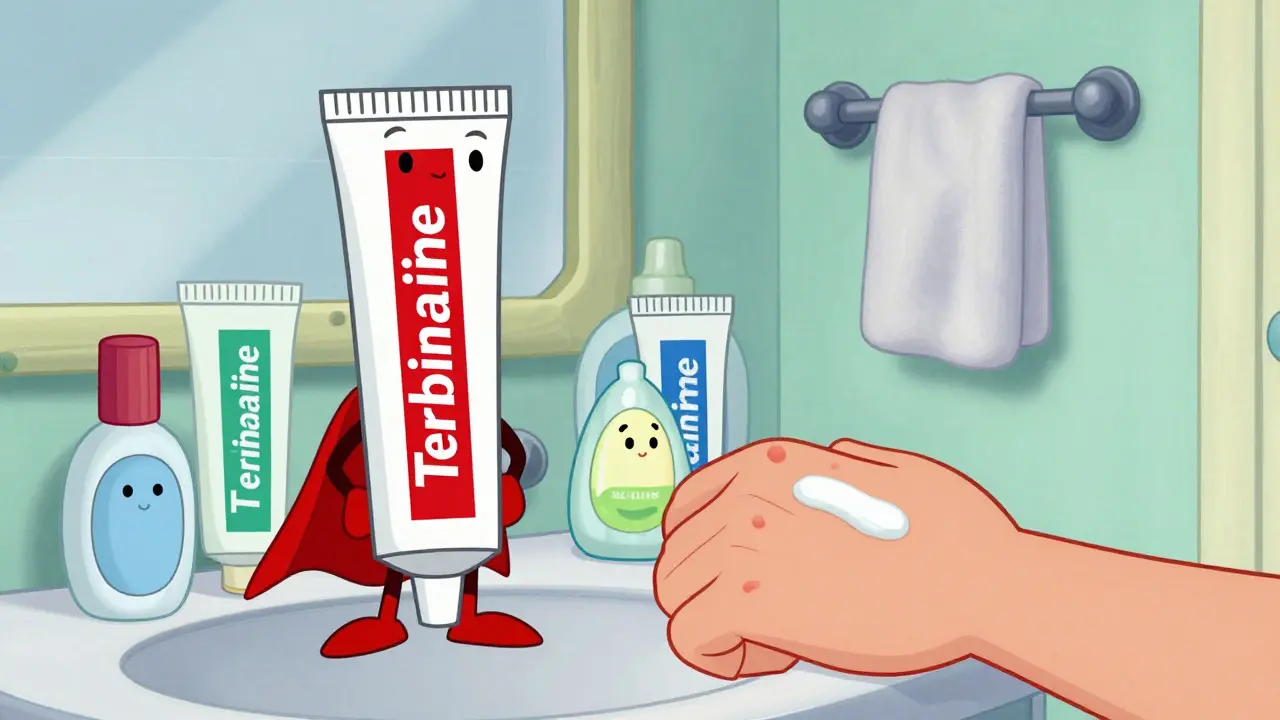
Antifungal Creams: Ingredients and Efficacy
For most cutaneous (skin-only) infections, topical treatments are the first line of defense. You don’t always need a prescription. Over-the-counter options contain active ingredients that disrupt the fungal cell membrane, killing the organism. Here is how the common options compare:
| Active Ingredient | Concentration | Efficacy Rate | Typical Treatment Duration |
|---|---|---|---|
| Clotrimazole | 1% | 70-80% | 2-4 weeks (twice daily) |
| Miconazole | 2% | 65-75% | 2-4 weeks (twice daily) |
| Terbinafine | 1% | 80-90% | 1-2 weeks (once or twice daily) |
| Ketoconazole | 2% | 75-85% | 2-4 weeks (twice daily) |
Terbinafine (often sold as Lamisil AT) tends to be the most effective and fastest-acting option for many users. Clinical data shows visible improvement in just 3-5 days, compared to 7-10 days for clotrimazole. However, individual responses vary. Some users report skin irritation with stronger agents, so patch testing a small area first is wise.
Remember, cream alone won’t fix nail infections or scalp issues. Tinea capitis and severe tinea unguium require oral antifungals like terbinafine tablets (250mg daily for 2-6 weeks). Only a doctor can prescribe these, and they monitor liver function due to potential side effects.
How to Apply Antifungal Cream Correctly
Buying the right cream is only half the battle. How you use it determines success. Many people fail because they stop too soon. Here is the proper protocol:
- Clean and Dry: Wash the affected area with mild soap and water. Pat it completely dry. Moisture is the enemy here.
- Apply Generously: Spread the cream over the entire rash AND at least 1-2 inches beyond the visible border. Fungi live in the surrounding skin even if you can’t see them yet.
- Stick to the Schedule: Apply twice daily unless directed otherwise. Set a phone reminder if needed.
- Don’t Stop Early: This is the biggest mistake. Even if the itch stops and the ring fades, continue treatment for the full recommended duration (usually 2-4 weeks). Stopping prematurely leads to recurrence in 45% of cases, based on patient forum data.
- Hygiene Matters: Change socks and underwear daily. If you sweat heavily, change twice daily. Wash towels and bedding in hot water to kill lingering spores.
If you’re treating athlete’s foot, apply powder to your shoes to keep them dry. Rotate pairs so each has 24 hours to air out before reuse.

When to See a Doctor
Most ringworm clears up with OTC care. But some situations demand professional help. Consult a dermatologist if:
- The infection covers a large area of your body.
- You have no improvement after 2 weeks of consistent topical treatment.
- The rash is on your scalp or nails.
- You develop fever, swelling, or pus (signs of bacterial superinfection).
- You are immunocompromised (e.g., HIV, chemotherapy patients).
Dr. Adam Friedman, Professor of Dermatology at George Washington University, notes that starting treatment at the first sign can reduce healing time by 5-7 days. Delaying care allows the fungus to spread to 30-50% more skin surface area within two weeks.
Prevention: Keeping Fungi at Bay
Prevention is cheaper and easier than treatment. Adopt these habits to lower your risk:
- Wear Flip-Flops: Always wear sandals in public showers, pool decks, and gym locker rooms.
- Avoid Sharing: Never share towels, razors, combs, or athletic gear.
- Keep Skin Dry: After bathing, dry thoroughly, especially between toes and in skin folds.
- Pet Care: If your pet has patchy hair loss, see a vet immediately. Treat the animal and disinfect its living area.
- Breathable Clothing: Wear loose-fitting cotton clothes instead of synthetic fabrics that trap heat and sweat.
School outbreaks are common, affecting 15-20% of elementary schools annually. Parents should check children’s scalps and bodies regularly during sports seasons.
Natural Remedies: Do They Work?
You’ll find plenty of advice online about tea tree oil, garlic, or vinegar. While some natural substances have mild antifungal properties, they lack robust clinical backing. A 2021 Cochrane Review found insufficient evidence for tea tree oil efficacy, showing only 40-50% clearance rates compared to 70-90% for pharmaceutical antifungals. Relying solely on home remedies can delay proper treatment, allowing the infection to worsen. Use them as supplements, not replacements, and always consult your doctor first.
Is ringworm contagious to other parts of my body?
Yes, absolutely. Ringworm is highly autoinoculative, meaning you can spread it from one part of your body to another through touch. For example, scratching your foot (athlete’s foot) and then touching your groin can cause jock itch. Always wash your hands thoroughly after applying cream or touching the infected area.
Can pets give me ringworm?
Yes, animals like cats, dogs, and rodents can carry dermatophytes. Kittens are particularly common carriers. If your pet has circular patches of missing hair, take them to a vet. Humans contract this via direct contact with the animal’s fur or skin scales.
How long does ringworm last without treatment?
Untreated ringworm rarely goes away on its own quickly. It can persist for months, spreading larger and becoming more inflamed. In some cases, the body’s immune response eventually contains it, but this is unpredictable. Early treatment reduces healing time significantly.
Why did my ringworm come back after I finished the cream?
Recurrence usually happens for two reasons: stopping treatment too early (before the fungus is fully dead) or re-exposure to the source. Check if your shoes, towels, or pets are still harboring the fungus. Also, ensure you applied the cream beyond the visible border of the rash.
Is there resistance to antifungal creams?
Emerging data suggests yes. A 2022 study noted a 12% rise in terbinafine-resistant Trichophyton isolates between 2018 and 2022. This means standard creams might work slower or less effectively for some strains. If OTC treatments fail, see a doctor for alternative prescriptions or oral medication.