
When a drug triggers a serious allergic reaction, the immediate instinct is to avoid it forever. But what if that drug is the only one that can save your life? For patients with confirmed drug allergies-especially those needing chemotherapy, antibiotics, or biologic therapies-drug desensitization is not just an option. It’s often the only path forward. This isn’t guesswork. It’s a precise, medically supervised process that has helped thousands of people continue life-saving treatments they were told they could never take again.
What Drug Desensitization Really Means
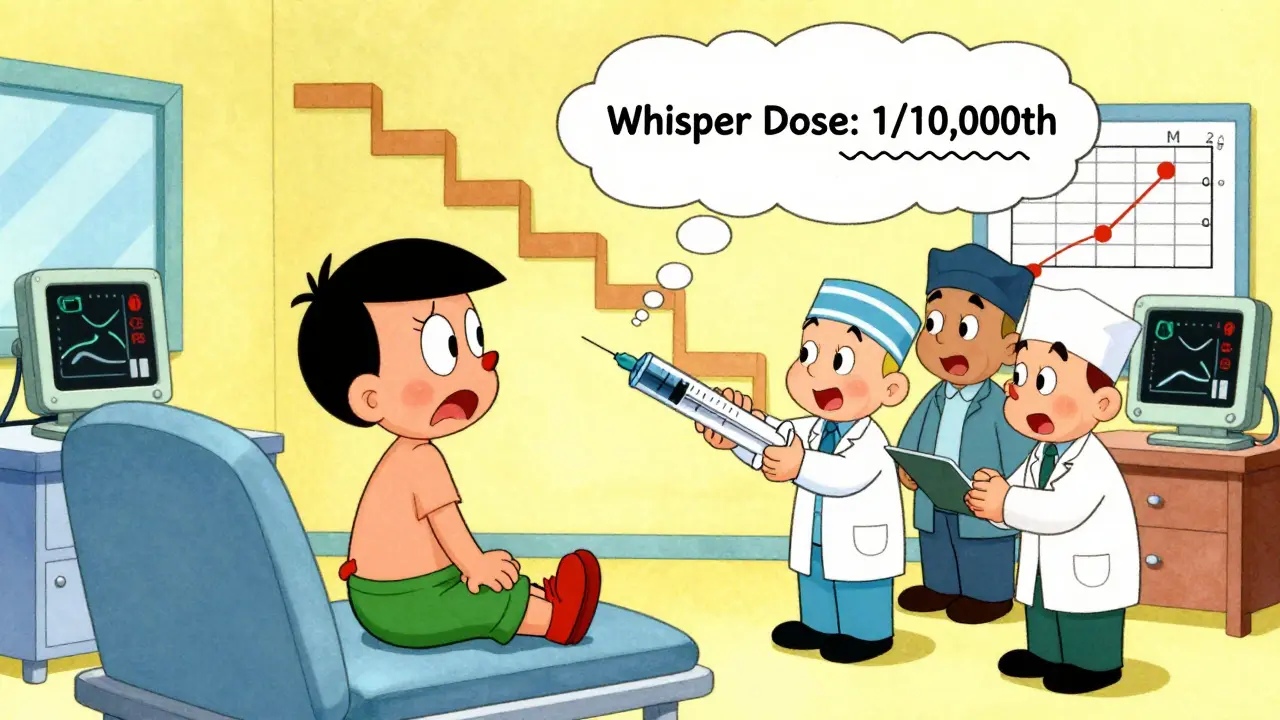
Drug desensitization isn’t about curing your allergy. It’s about temporarily tricking your immune system into tolerating a drug you’re allergic to. Think of it like slowly turning up the volume on a speaker that’s too loud. You start with a whisper-so small it doesn’t trigger a reaction-and gradually increase the dose until you reach the full therapeutic amount. At that point, your body doesn’t react. But here’s the catch: this tolerance only lasts as long as you keep taking the drug daily. Stop it for more than a day or two, and the allergy comes back. This technique works best for IgE-mediated reactions-those that cause hives, swelling, low blood pressure, or anaphylaxis. It’s also used for non-IgE reactions, like those caused by aspirin or NSAIDs that trigger asthma or skin rashes. But it doesn’t work for every type of reaction. If you’ve ever had Stevens-Johnson syndrome, toxic epidermal necrolysis, or any condition with blistering skin, desensitization is off the table. Same goes for severe liver or kidney damage caused by the drug.How It’s Done: The Step-by-Step Process
Every desensitization is custom-built. There’s no one-size-fits-all protocol. But most follow a similar structure, especially for intravenous drugs like antibiotics or chemotherapy.- The patient is monitored continuously: blood pressure, oxygen levels, heart rate, and breathing are checked every 5 to 10 minutes.
- The first dose is tiny-often 1/10,000th of the full therapeutic dose.
- Each next dose doubles the previous one, given every 20 to 30 minutes.
- For IV drugs, the full dose is usually reached in 5 to 6 hours.
- For oral drugs like aspirin, the process takes longer: doses are spaced at least one hour apart, and the full protocol can take days.
Who Benefits the Most?
This isn’t just for people with mild rashes. It’s for those who have no other choices.- Cancer patients who react to paclitaxel, cisplatin, or monoclonal antibodies like rituximab or cetuximab. Without desensitization, their treatment stops. With it, they can complete therapy and improve survival.
- Rheumatoid arthritis or Crohn’s disease patients who need biologics like infliximab or tocilizumab but developed an allergic reaction after one dose.
- Cystic fibrosis patients who need daily antibiotics like vancomycin or aztreonam but are allergic. These drugs are often the only ones that work against their stubborn lung infections.
- People with aspirin sensitivity who need it for heart disease or stroke prevention. Aspirin desensitization can take days but allows lifelong use.
- Those allergic to local anesthetics who need surgery. Desensitization can make dental work or emergency procedures possible.
Why It Only Works Under Supervision
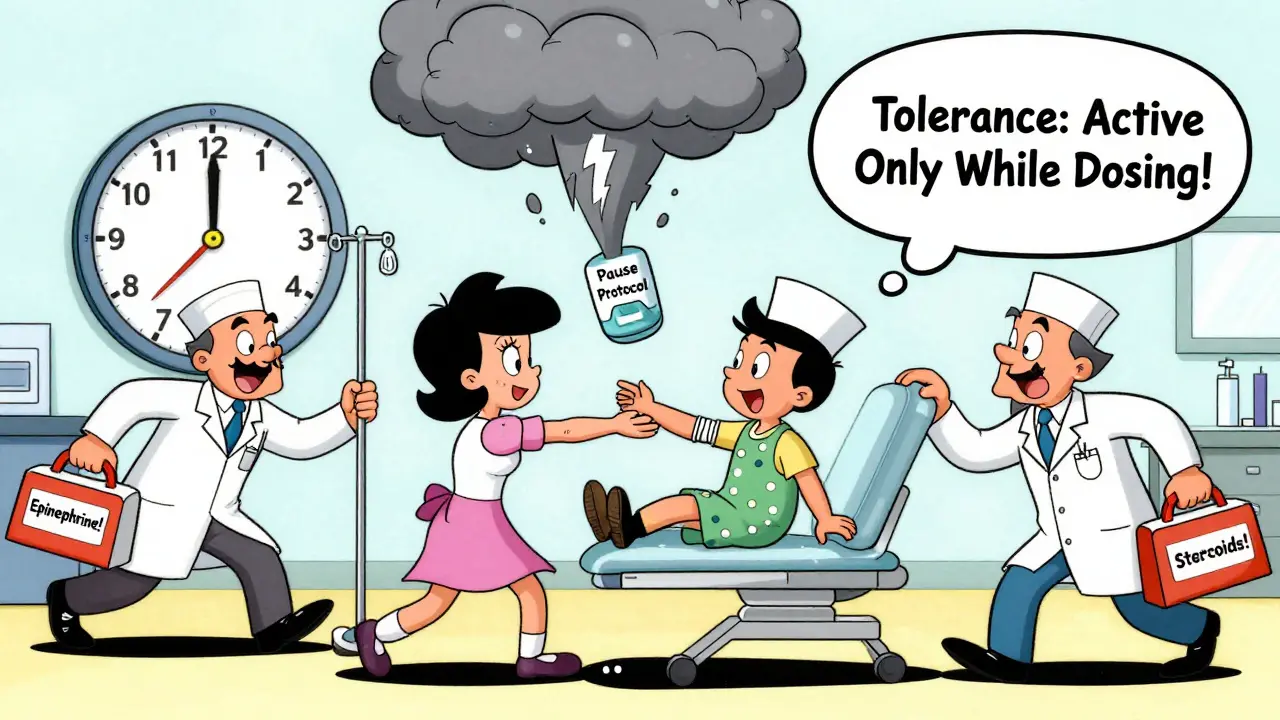
This isn’t something you can do at home. Or in a general clinic. Or with a nurse who’s never seen it before. The risk of a severe reaction is real. If a patient’s blood pressure crashes or their airway swells, every second counts. Only teams trained in advanced allergy management know how to respond instantly. They’ve practiced these protocols. They’ve seen reactions. They know how to adjust on the fly. A written protocol is prepared for each patient and each drug. It’s reviewed by an allergist and a pharmacist. The facility must have emergency equipment on hand. No exceptions. That’s why desensitization is only offered at major academic medical centers-like Brigham and Women’s Hospital, where the technique was refined over decades.What Happens After?
Once you’ve completed desensitization and reached the full dose, you’re not done. You must keep taking the drug every day. Skip a dose, and your tolerance can vanish within hours. That’s why this isn’t a cure-it’s a bridge. A carefully managed bridge. For chronic conditions like rheumatoid arthritis or cancer maintenance therapy, patients may stay on the drug for months or years. For acute infections, like a life-threatening pneumonia, the desensitization is done once, the full course is given, and then the drug is stopped. The allergy returns, but that’s okay. The goal was to get through the crisis.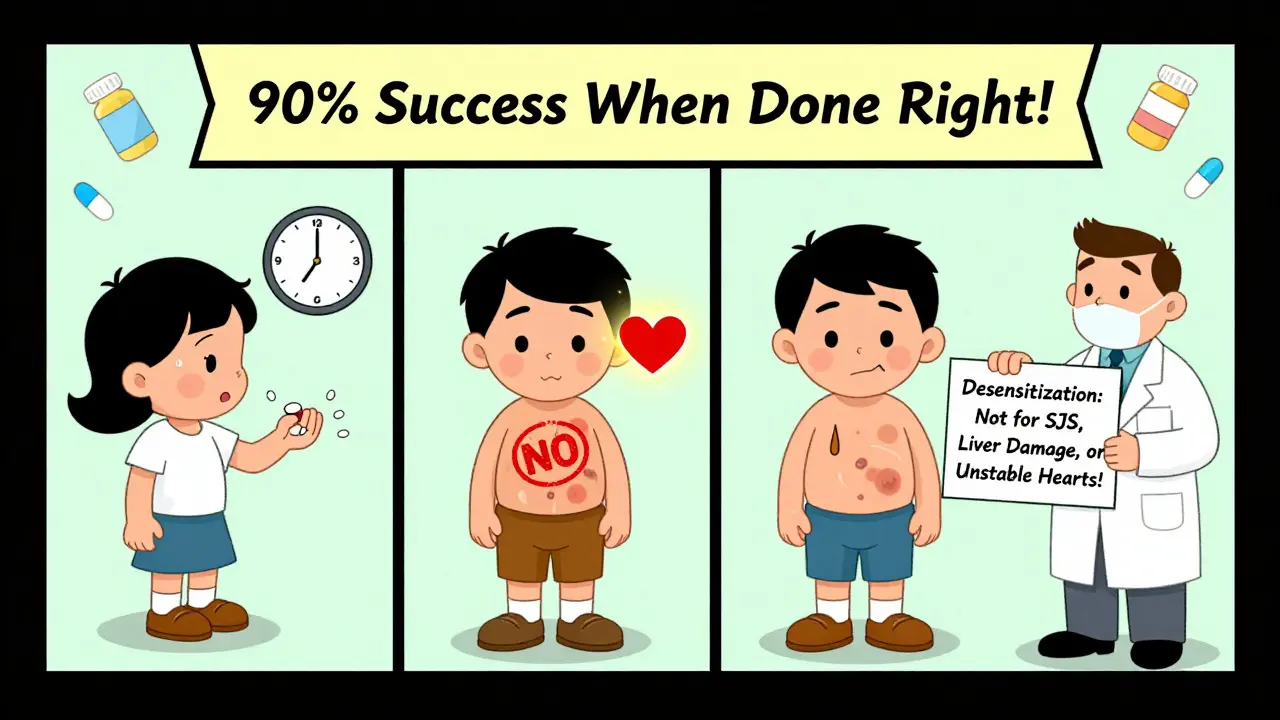
When It Doesn’t Work
Not every reaction can be desensitized. And not every patient is a candidate.- Severe skin reactions (SJS, TEN) - absolutely not.
- Drug-induced hepatitis or nephritis - too risky.
- Reactions that involve organ damage - the body may not recover.
- Patients with unstable asthma or uncontrolled heart disease - the stress of the procedure could trigger a crisis.
The Future of Drug Desensitization
As medicine moves toward more targeted therapies-like tyrosine kinase inhibitors and immune checkpoint inhibitors-the need for desensitization is growing. These drugs are powerful, but they’re also more likely to cause allergic reactions. More patients are being referred for this procedure than ever before. The American Academy of Allergy, Asthma & Immunology updated its guidelines in 2022 to reflect this trend. They now explicitly support desensitization for biologics and newer cancer drugs. Research shows success rates over 90% when performed by experienced teams. But access remains limited. Only a handful of centers worldwide have the expertise. If you think you might need this, ask your doctor to refer you to an allergy-immunology specialist with experience in drug desensitization. Don’t wait until you’re in crisis.Key Takeaways
- Drug desensitization allows allergic patients to safely receive essential medications through gradual, supervised dosing.
- It works for IgE-mediated reactions (anaphylaxis, hives) and non-IgE reactions (aspirin asthma, NSAID rashes).
- It’s temporary-tolerance fades if you stop the drug for more than a day or two.
- It’s only done in specialized centers with emergency support and trained teams.
- It’s not safe for patients with blistering skin reactions, organ damage, or unstable health.
- Success rates exceed 90% when protocols are followed correctly.
Can I try drug desensitization at home?
No. Drug desensitization must be done in a hospital or specialized allergy clinic under direct supervision. The risk of a life-threatening reaction is too high to attempt outside a controlled medical environment. Emergency medications like epinephrine must be immediately available, and staff must be trained to respond within seconds.
How long does a drug desensitization take?
For intravenous drugs like antibiotics or chemotherapy, the process usually takes 5 to 6 hours. For oral drugs like aspirin, it can take several days because doses are spaced at least one hour apart. The timeline depends on the drug, the severity of your past reaction, and how your body responds during the procedure.
Is drug desensitization a cure for my allergy?
No. It creates temporary tolerance, not permanent immunity. If you stop taking the drug for more than 48 hours, your allergy is likely to return. That’s why patients on long-term therapy-like cancer treatment or biologics for autoimmune disease-must take the drug daily without interruption.
What if I have a reaction during the procedure?
The medical team will immediately stop the dose and treat the reaction with medications like epinephrine or steroids. Then they’ll adjust the protocol-maybe go back to the last safe dose, extend the time between doses, or use smaller increases. The procedure is flexible and designed to adapt to your body’s response.
Are there any drugs that can’t be desensitized?
Yes. Desensitization is not used for drugs that cause severe skin conditions like Stevens-Johnson syndrome or toxic epidermal necrolysis. It’s also avoided if the drug caused liver failure, kidney damage, or serum sickness. These reactions involve organ damage, not just immune overreaction, and the risks outweigh the benefits.
Who performs drug desensitization?
Allergist-immunologists with specialized training in drug hypersensitivity. The procedure is typically done in a hospital setting with a team that includes nurses, pharmacists, and sometimes oncologists or infectious disease specialists. Experience matters-teams that perform this regularly have much higher success rates.
Comments (15)
Kenneth Jones
25 Mar, 2026This is exactly why we need more allergists in hospitals. I had a patient on chemo who reacted to paclitaxel. They wrote her off. We did the desensitization protocol and she’s been in remission for 3 years now. No magic cure. Just smart medicine.
Mihir Patel
26 Mar, 2026omg this is wild i had no idea this was even a thing. my aunt got allergic to vancomycin and they said she'd never get antibiotics again. turns out they just didn't know how to do this. she's alive bc of this. thanks for sharing
Kevin Y.
28 Mar, 2026Thank you for this incredibly detailed and well-structured overview. As a healthcare professional, I appreciate the clarity with which you've outlined the clinical protocols, contraindications, and operational requirements. This is precisely the kind of resource that should be shared with primary care providers to improve patient referrals.
Rachele Tycksen
30 Mar, 2026so wait... you're telling me i could've taken my asthma meds after i had that reaction if i just went to a fancy hospital? lmao my doctor just told me to 'avoid all NSAIDs forever' like i'm a toddler
Anil Arekar
30 Mar, 2026In India, access to such specialized care remains a challenge. Most patients are either denied the procedure due to cost or lack of trained personnel. This protocol, while scientifically sound, must be adapted for low-resource settings with standardized training modules and tele-supervision. We must not let geography determine survival.
Elaine Parra
1 Apr, 2026Of course it works in fancy Boston hospitals. But let’s be real - most people don’t live near a medical center with a team that’s done this 200 times. You’re basically saying ‘if you’re rich enough to be near a top 5 hospital, you live. If not, you die.’
Natasha Rodríguez Lara
2 Apr, 2026I’ve seen this firsthand in oncology. One of my patients had a severe reaction to cetuximab. We paused treatment. Consulted the allergy team. Did the full 6-hour desensitization. She’s now 18 months NED. The emotional weight of being told you can’t get the drug that might save you - then being given a path back - it’s profound.
peter vencken
4 Apr, 2026i had a friend do this for aztreonam. took 3 days. had to stay in the hospital the whole time. nurses were amazing. but the worst part? telling her mom she had to keep taking it every single day or she'd be allergic again. like, no cure. just a daily ritual. wild.
Linda Foster
4 Apr, 2026The procedural rigor described here is commendable. However, I would like to emphasize the importance of documented informed consent, multidisciplinary review boards, and institutional protocols that align with the 2022 AAAAI guidelines. These are not optional safeguards - they are ethical imperatives.
Rama Rish
4 Apr, 2026My sister did this for aspirin. Took 4 days. Now she takes it daily for her heart. No more strokes. Just a pill. Every. Single. Day.
Kevin Siewe
4 Apr, 2026I’ve been on infliximab for Crohn’s for 8 years. First time I got the infusion, I broke out in hives. They wanted to stop. I asked about desensitization. Took 7 hours. Now I’m stable. It’s not glamorous. But it’s life.
Darlene Gomez
6 Apr, 2026It’s fascinating how medicine keeps finding ways to outsmart biology. We don’t cure allergies. We don’t erase them. We just learn how to walk right through them - one tiny, terrifying dose at a time. There’s something deeply human about that. We don’t accept limits. We negotiate them.
Danielle Arnold
7 Apr, 2026So let me get this straight. You’re paying $20k for a 6-hour hospital stay so you can take a drug you’re allergic to... so you can keep taking it forever? Why not just find a different drug?
James Moreau
9 Apr, 2026This is a really thoughtful breakdown. I’ve referred several patients to our allergy team for this, and the success rate is astonishing. The fact that it’s not more widely known is the real tragedy.
J. Murphy
9 Apr, 2026They do this in hospitals? I thought this was just a myth like detox tea or chelation therapy. So this is real? And you have to take it every day? That’s wild. I’m just here for the drama