
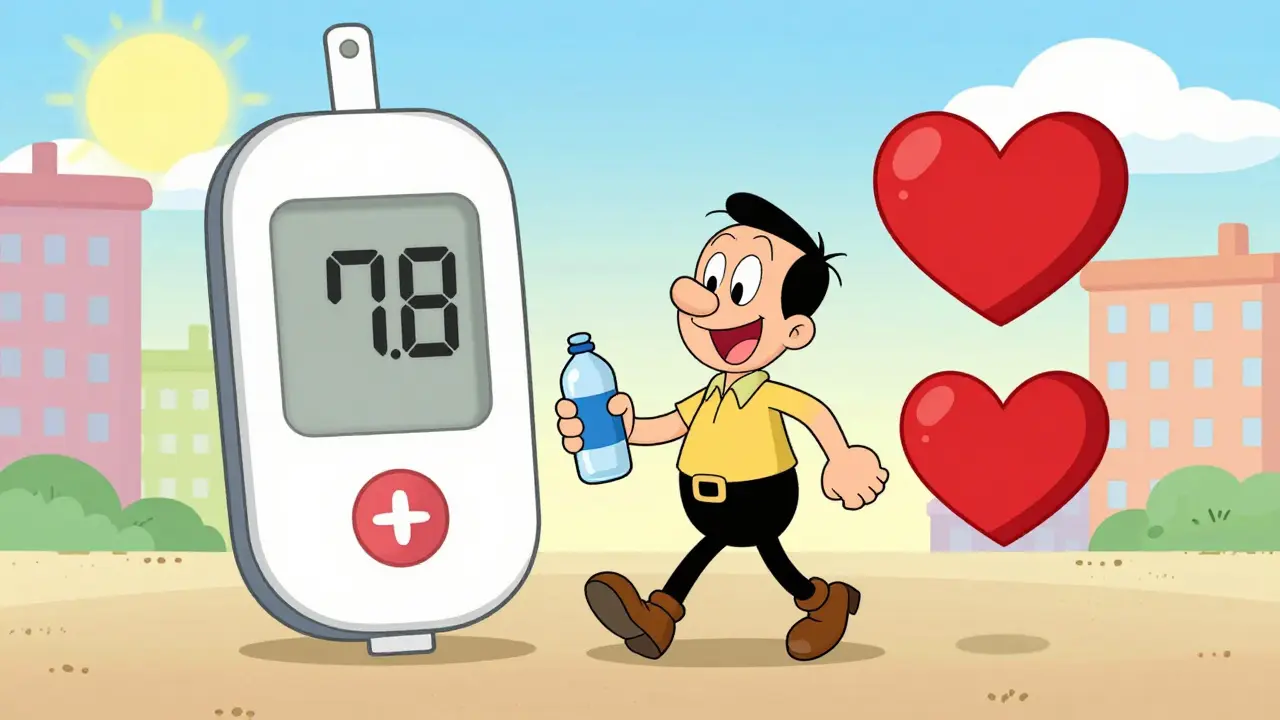
If you have type 2 diabetes, your risk of heart disease isn’t just higher-it’s the biggest threat to your life. About 65% of people with diabetes die from heart-related problems, according to the American Heart Association. That’s not a distant possibility. It’s the reality for many. But here’s the good news: you don’t have to accept that fate. The right mix of medications and lifestyle changes can slash your risk-sometimes by more than half.
Why Diabetes and Heart Disease Are So Tightly Linked
Diabetes doesn’t just mean high blood sugar. It means your whole metabolism is out of balance. High glucose damages blood vessels over time. It makes your blood stickier, raises your blood pressure, and pushes up bad cholesterol while lowering the good kind. All of this strains your heart and arteries. Add in common side effects like obesity and inactivity, and you’ve got a perfect storm.
The 2017 guidelines from the American College of Cardiology and the American Heart Association made it official: diabetes is a major heart disease risk factor. That means if you have diabetes, your doctor should treat your heart health like a top priority-not an afterthought.
The Medication Breakthrough: GLP-1 RAs Are Changing the Game
For years, metformin was the go-to drug for diabetes. It helps with blood sugar, but its heart benefits are modest. That changed with the rise of GLP-1 receptor agonists-medications like semaglutide (Wegovy, Ozempic) and tirzepatide (Mounjaro, Zepbound).
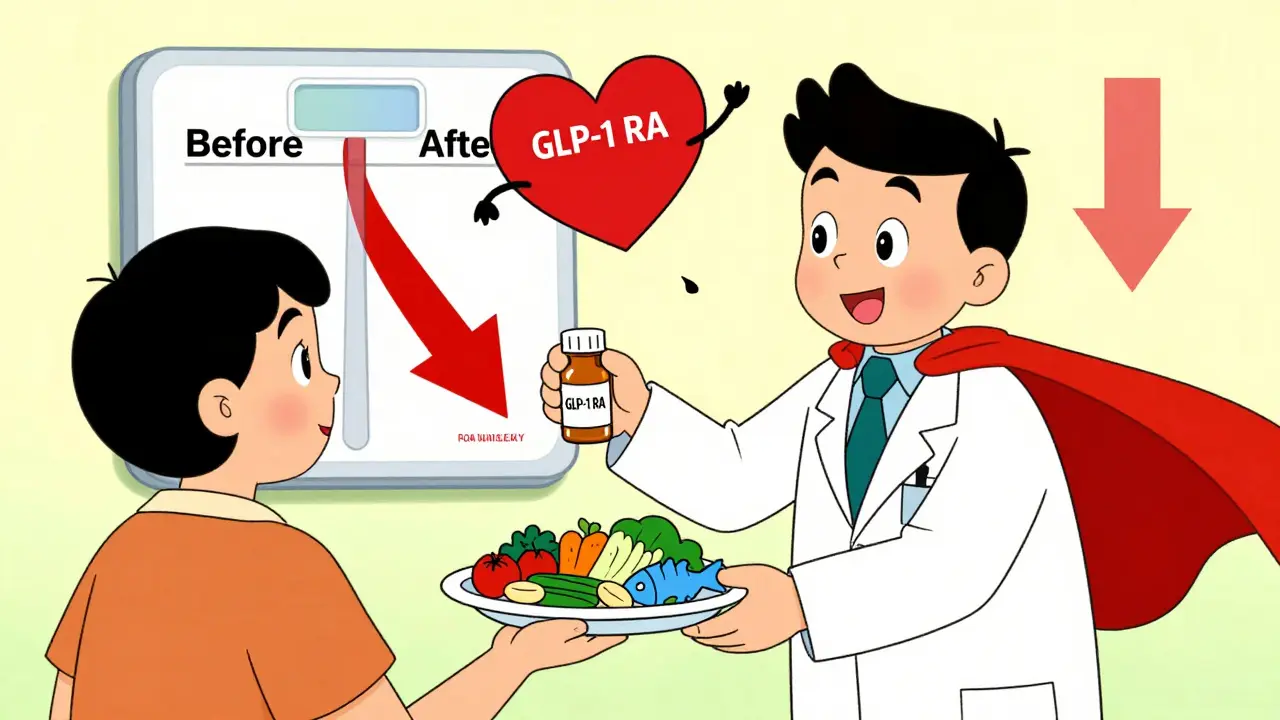
These aren’t just diabetes drugs. They’re heart protectors. In the LEADER trial, liraglutide-a GLP-1 RA-cut major heart events by 13% compared to placebo. But the real game-changer came with semaglutide. The STEP 1 trial showed patients lost nearly 15% of their body weight on a 2.4 mg weekly dose. The SURMOUNT-1 trial with tirzepatide showed even more: up to 22.5% weight loss. That’s not just weight loss. That’s reversing the strain on your heart.
In 2023, the FDA approved Wegovy specifically to reduce heart attack, stroke, and death in adults with heart disease and overweight or obesity. This was the first time a weight-loss drug got that approval. It’s not just helping with weight-it’s directly protecting your heart.
Lifestyle Changes: The Non-Negotiable Foundation
Medications are powerful, but they’re not magic. The FDA requires that Wegovy be used in addition to a reduced-calorie diet and increased physical activity. That’s not a footnote. It’s the rule.
The American Diabetes Association doesn’t push one diet. Instead, it recommends proven patterns: Mediterranean, DASH, or other plant-focused eating. That means more vegetables, beans, nuts, whole grains, and fish. Less processed food, sugar, and saturated fat. You don’t need to go vegan. You just need to shift your plate.
Exercise isn’t optional. The CDC and American Diabetes Association agree: aim for at least 150 minutes a week of moderate activity. That’s 30 minutes, five days a week. You can break it into 10-minute walks if that’s easier. The goal is movement. Studies show that regular physical activity reduces heart-related death by 27% in people recovering from heart events.
Other habits matter too. Quitting smoking cuts heart risk fast. Getting enough sleep helps regulate blood sugar and stress hormones. Managing stress-through mindfulness, walking, or talking to someone-lowers inflammation. Even small social connections reduce your risk. Each healthy habit stacks up. The more you adopt, the better your outcome.
The Power of Combining Both
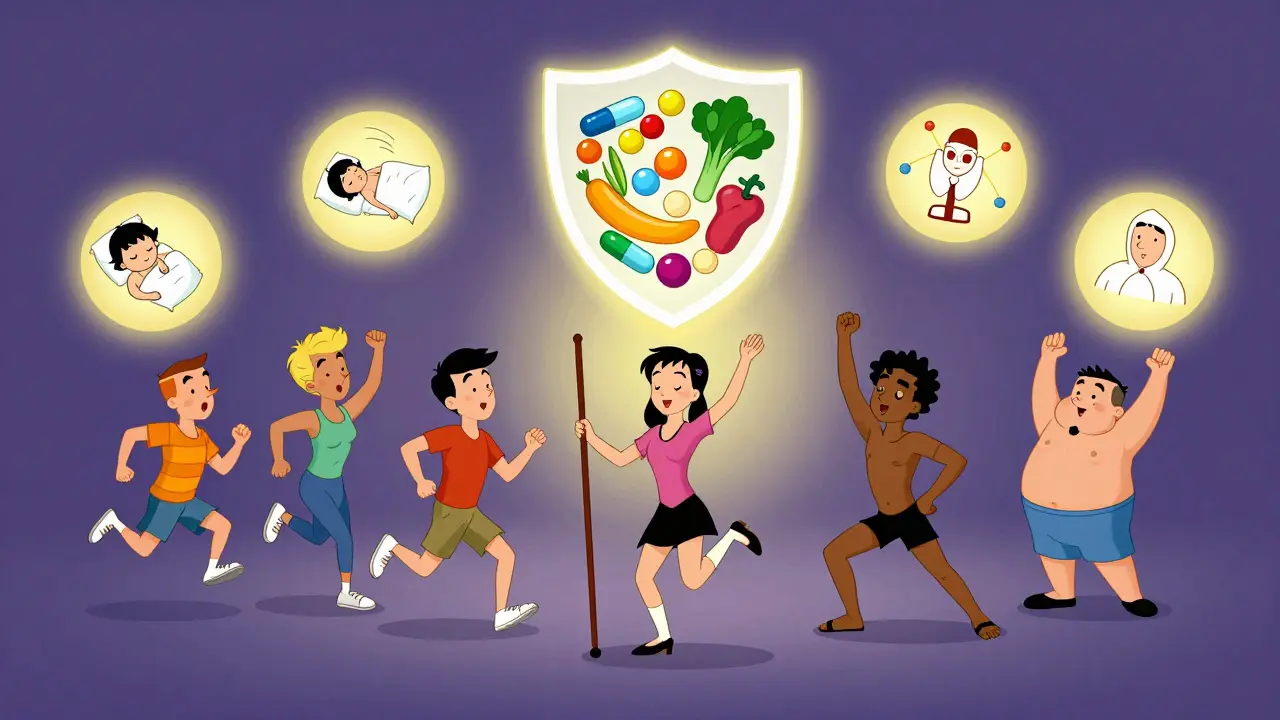
Here’s what the data shows: taking a GLP-1 RA alone lowers your risk of a major heart event by about 20%. But if you combine it with eight healthy lifestyle habits-eating well, moving daily, not smoking, managing stress, sleeping well, limiting alcohol, maintaining a healthy weight, and staying socially connected-your risk drops by 63%.
A study from the Department of Veterans Affairs followed thousands of veterans with type 2 diabetes. Those who used GLP-1 RAs and followed at least five healthy habits had far fewer heart attacks, strokes, and deaths than those who only took the medication. The synergy is real. The drug helps you lose weight and control blood sugar. Lifestyle changes fix the underlying habits that made you vulnerable in the first place.
And here’s the kicker: lifestyle changes improve things medications can’t touch-like sleep quality, mental health, and daily energy. You feel better. You move more. You sleep deeper. That’s not just about your heart. It’s about your life.
What About Traditional Advice? The Rules Have Changed
Five years ago, doctors told patients to try diet and exercise for six months before considering medication. That’s outdated. The American College of Cardiology’s June 2025 guidance says: don’t make people fail first. If you have diabetes and heart risk factors, start the medication and the lifestyle plan at the same time.
Why? Because obesity is a chronic disease. Waiting for someone to lose 10 pounds on their own before helping them with medication is like waiting for a broken leg to heal without a cast. GLP-1 RAs help you lose 10-22% of your body weight. Lifestyle alone usually gets you 3-5%. That difference isn’t just about appearance. It’s about survival.
That said, medication alone isn’t enough. The ACC is clear: lifestyle changes should always be offered alongside these drugs. Not as a backup. Not as a test. As a partner.
What You Can Do Right Now
You don’t need to overhaul everything tomorrow. Start small.
- Swap one sugary drink for water each day.
- Take a 10-minute walk after dinner.
- Ask your doctor if a GLP-1 RA is right for you-especially if you’re overweight and have heart disease or high blood pressure.
- Track your blood pressure at home. Target is under 130/80 mm Hg.
- Get your A1C checked every 3-6 months. Aim for under 7%.
These aren’t just goals. They’re tools. Each one reduces your risk. And together, they build a shield.
The Bigger Picture
Over 1 billion people worldwide live with obesity. In the U.S., about 70% of adults are overweight or obese. That’s not just a personal issue-it’s a public health crisis. Diabetes and heart disease are the direct result. But we’re at a turning point.
GLP-1 RAs are now prescribed 317% more than in 2021. Sales for semaglutide are projected to hit $10 billion a year by 2025. That’s because people are seeing results. Lives are being saved.
The future isn’t just about more pills. It’s about smarter, personalized care. Researchers are building algorithms to match the right drug and lifestyle plan to the right person. By 2030, these combined approaches could reduce diabetes-related heart deaths by up to 15%.
You don’t have to wait for the future. You can start today. Medication gives you the edge. Lifestyle gives you the foundation. Together, they don’t just manage diabetes. They protect your heart-and your future.
Comments (9)
John Ross
4 Jan, 2026GLP-1 RAs are a paradigm shift-finally, we’re treating metabolic syndrome as a cardiovascular disease with a pharmacologic backbone. The LEADER and SURMOUNT trials aren’t just statistically significant-they’re clinically transformative. Weight loss isn’t cosmetic; it’s anti-inflammatory, anti-atherogenic, and hemodynamically stabilizing. This isn’t diet culture. It’s pathophysiology corrected.
Brendan F. Cochran
5 Jan, 2026they let big pharma sell us weight loss like its a miracle cure but dont fix the real problem-processed food is poison and no pill fixes that. they just make you thinner while the system keeps selling you crap. wake up. this is a scam wrapped in a clinical trial.
Stephen Craig
6 Jan, 2026Medication without behavior change is like putting a bandage on a broken leg. The synergy is real, and it’s measurable.
Charlotte N
7 Jan, 2026i love that they said 'shift your plate' not 'go keto or starve'... but why is everyone still ignoring sleep? i lost 12lbs just by fixing my sleep schedule and now my a1c dropped without even touching meds... just saying...
Roshan Aryal
8 Jan, 2026Western medicine keeps pretending drugs can override centuries of evolutionary biology. You think a 22% weight loss from tirzepatide is a victory? It’s a temporary fix on a system engineered for scarcity, not constant sugar floods. Your insulin resistance didn’t appear because you were lazy-it appeared because your ancestors survived famines and your environment betrayed them. No pill reverses ecological trauma.
mark etang
9 Jan, 2026As a clinical educator with over 18 years in endocrinology, I can confirm that the integration of GLP-1 receptor agonists with structured lifestyle interventions represents the most significant advancement in type 2 diabetes management since the introduction of metformin. The data is unequivocal: adherence to both modalities reduces cardiovascular mortality by more than 60%. This is not anecdotal. This is evidence-based medicine at its highest standard. Patients who engage in multidisciplinary care-including dietitians, behavioral therapists, and exercise physiologists-demonstrate sustained improvements in HbA1c, lipid profiles, and blood pressure. The future of diabetes care is holistic, personalized, and proactive-not reactive.
Jack Wernet
10 Jan, 2026Thank you for highlighting the importance of combining pharmacotherapy with lifestyle. Too often, patients are left to navigate this alone. In my practice, I’ve seen patients who started on semaglutide but didn’t receive nutritional counseling-they lost weight, but regained it within months. The real win is when care teams work together. A doctor, a dietitian, and a mental health counselor-each piece matters.
Oluwapelumi Yakubu
11 Jan, 2026Bro, in Nigeria we don’t even have access to these fancy drugs, but we still live longer than y’all-why? Because we eat real food: yam, plantain, beans, palm oil, and we walk everywhere. No gym needed. Your problem ain’t the diabetes-it’s the processed food and sitting like a statue all day. The pills are just a Band-Aid on a culture that forgot how to move. We didn’t need Ozempic to survive. You just forgot how to live.
Ethan Purser
12 Jan, 2026Everyone’s acting like this is some miracle breakthrough… but what about the people who can’t afford these drugs? $1000 a month? And don’t even get me started on the insurance battles. Meanwhile, the same doctors who push these pills told me to ‘just eat less and move more’ for years. Now they’re selling the same advice as a $10K-a-year drug. It’s not progress-it’s profit. And the people who need help the most? They’re still waiting. This isn’t science. It’s capitalism with a stethoscope.