
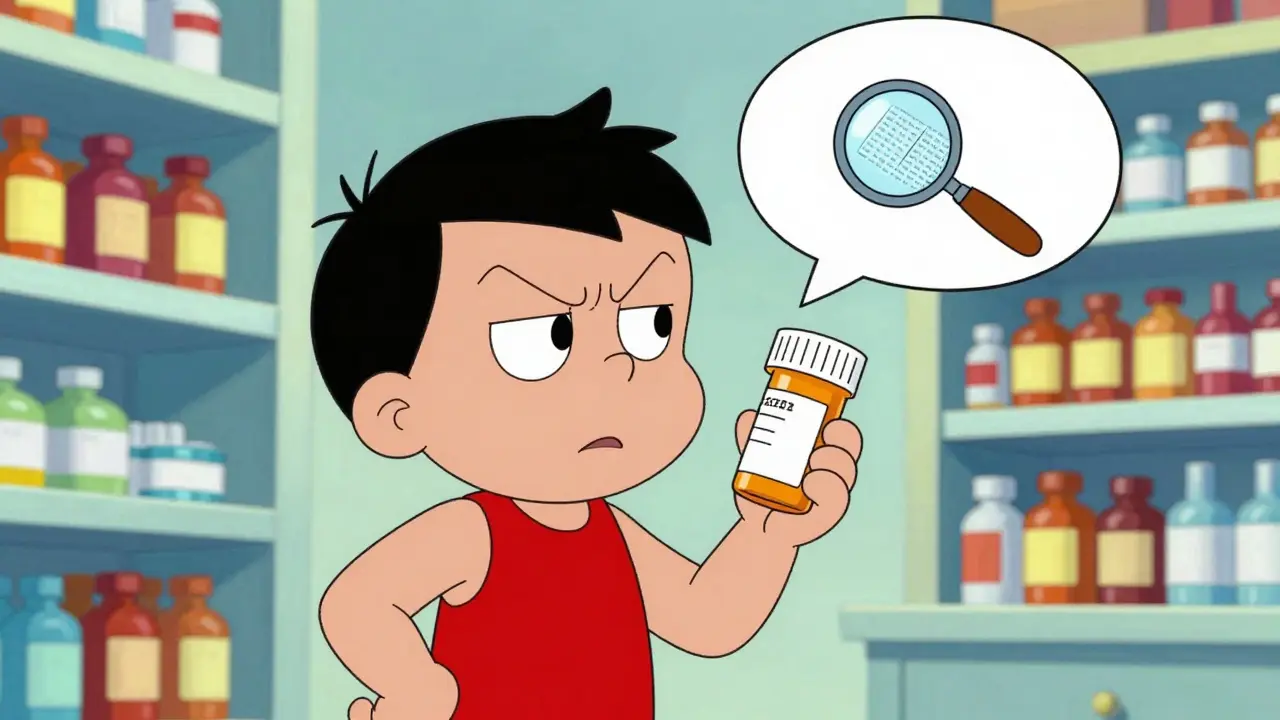
Imagine picking up your prescription from the pharmacy. You glance at the label, see the drug name, and head home. It feels routine. But what if that pill contains a hidden trigger? For millions of people with allergies, this simple act carries real risk. Unlike food packaging, which has strict laws forcing companies to shout about peanuts or milk, medicine labels often whisper-or stay silent-about what’s inside beyond the active drug.
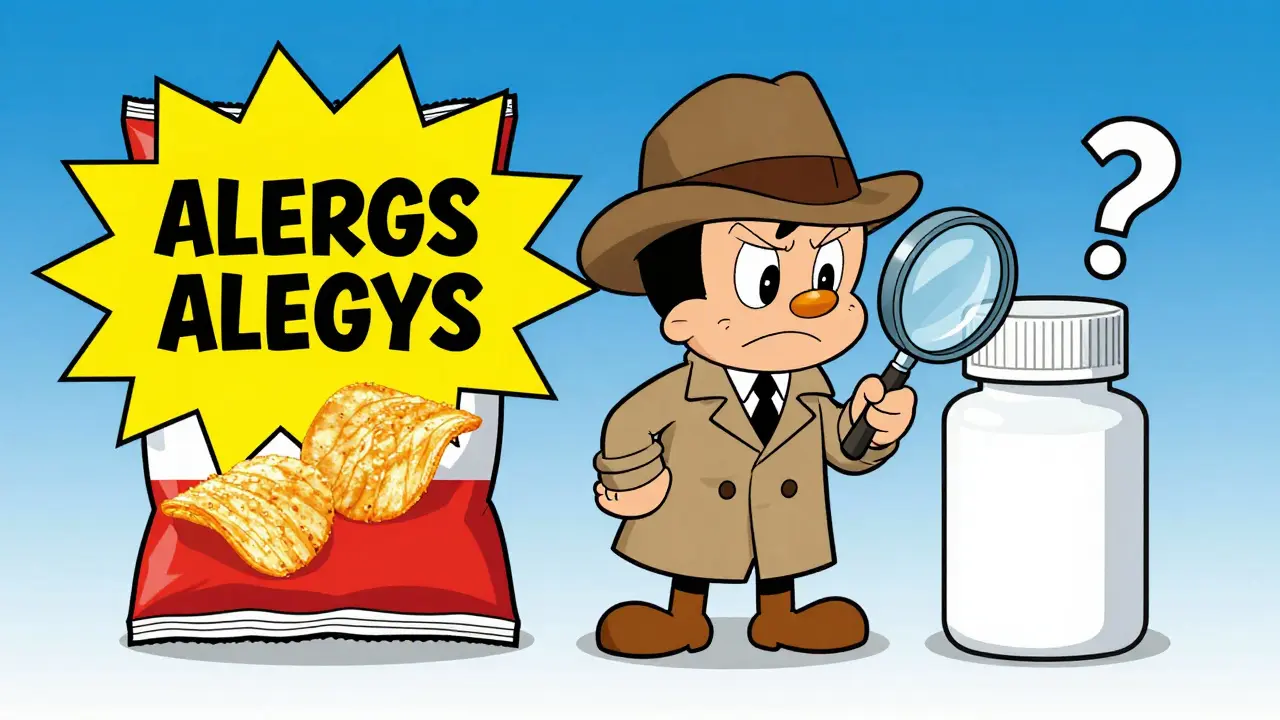
The gap between food safety regulations and pharmaceutical labeling is wide and dangerous. While you can trust that a bag of chips will clearly state if it contains soy, a bottle of generic pills might hide lactose (a milk derivative) or gluten in its inactive ingredients without any bold warning. This article breaks down exactly how to navigate these labels, where to find the hidden information, and who to ask when the label isn’t enough. We’ll focus specifically on prescription labels and the critical steps needed to keep allergy sufferers safe.
Why Medicine Labels Are Different From Food Labels
To understand why checking medicine labels requires extra effort, you first need to know how they are regulated compared to food. The United States has robust laws for food, specifically the Food Allergen Labeling and Consumer Protection Act (FALCPA). Updated by the FASTER Act in 2021, these laws require manufacturers to clearly declare nine major allergens: milk, eggs, fish, crustacean shellfish, tree nuts, peanuts, wheat, soy, and sesame. If a cookie contains almond flour, the label must say so, either in parentheses next to the ingredient or in a separate "Contains" statement.
Medications do not have this same standardized requirement. The FDA regulates drugs under different guidelines. While the active ingredient-the part that treats your condition-is always listed, the inactive ingredients are not subject to the same strict allergen declaration rules. According to data from Consumer Med Safety in 2025, there is no standardized system for declaring allergens in medications. This means a tablet might contain peanut oil as a lubricant or lactose as a filler, and neither may appear prominently on the small sticker attached to your bottle.
This regulatory difference creates a unique challenge. Approximately 4% of American adults have medication allergies, yet the tools available to identify those risks are fragmented. You cannot rely on a quick scan of the bottle label alone. You must dig deeper into the prescribing information or consult a professional.
Decoding the Prescription Bottle Label
When you receive a prescription, the label printed by the pharmacy is your first point of reference. However, it is often incomplete regarding allergens. Here is what you typically see and what it misses:
- Drug Name and Strength: This tells you the active ingredient (e.g., Ibuprofen 200mg).
- Directions: How to take the medication.
- Manufacturer/NDC Number: The National Drug Code identifies the specific manufacturer and product formulation.
- Warnings: General cautions like "May cause drowsiness."
What is usually missing? A detailed list of inactive ingredients. Some pharmacies may include a line saying "See package insert for full information," but this is rarely helpful for someone standing in their kitchen trying to check for a milk allergy. The NDC number is your key here. It allows you to look up the exact formulation used by that specific manufacturer. Remember, generic drugs can vary significantly in their inactive ingredients depending on who makes them. One brand of metformin might use corn starch, while another uses lactose.
| Ingredient Category | Specific Examples | Potential Allergen Source |
|---|---|---|
| Sugars/Fillers | Lactose, Dextrose | Milk (Lactose), Corn/Wheat (Dextrose) |
| Binders/Coatings | Talc, Stearic Acid | Vegetable oils (Palm, Soy), Animal fats |
| Dyes/Colorants | Tartrazine (Yellow #5), Erythrosine | Synthetic origins, but potential cross-contamination risks |
| Lubricants | Magnesium Stearate | Vegetable oils (Soy, Palm) or Animal tallow |
Where to Find the Full Ingredient List
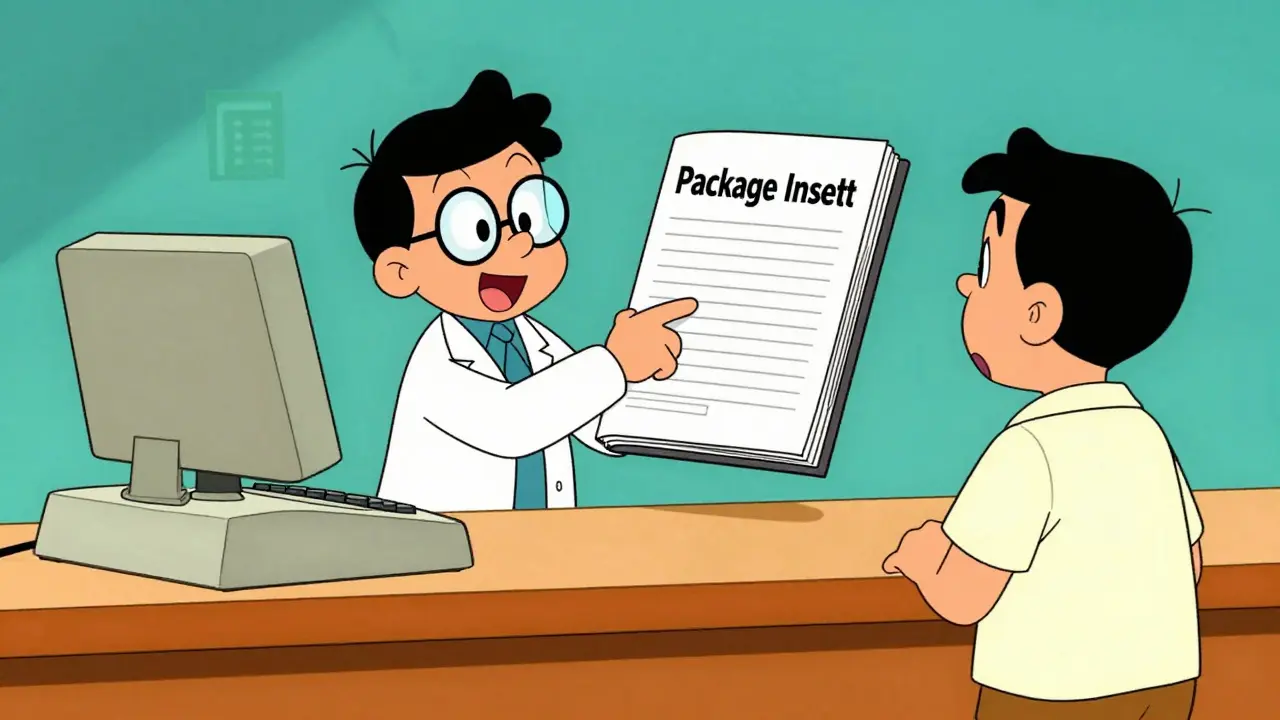
If the bottle label doesn’t give you the answers, you need to go to the source. The most reliable document is the Prescribing Information, also known as the package insert. This is the detailed medical document provided by the drug manufacturer. It includes a section titled "Dosage and Administration" or "Description" that lists every single component of the drug, both active and inactive.
You can find this information online through several reputable sources:
- DailyMed: A U.S. government website maintained by the National Library of Medicine. Search by drug name or NDC number to get the official labeling.
- FDA Drugs@FDA Database: Provides comprehensive data on approved drugs, including inactive ingredients.
- Manufacturer Websites: Many pharmaceutical companies post patient-friendly versions of their labeling online.
Once you locate the document, scroll to the "Inactive Ingredients" section. Look for terms that signal potential allergens. For example, if you have a dairy allergy, look for "lactose monohydrate." If you have a gluten sensitivity, watch for "starch" (which could be wheat-based unless specified as corn or potato starch) or "maltodextrin" (usually corn-based but verify the source).
The Role of Your Pharmacist
Reading labels is essential, but it is not foolproof. Technical names can be confusing. "Arachis oil" is peanut oil. "Casein" is a milk protein. "Levulinic acid" might be derived from various sources. This is where your pharmacist becomes your most valuable ally.
Consumer Med Safety recommends asking your pharmacist directly for the complete list of inactive ingredients. Pharmacists have access to detailed databases that show the exact formulation of every drug in their inventory. They can tell you if a specific generic version contains an allergen you need to avoid. More importantly, they can often switch you to an alternative brand or formulation that does not contain the trigger.
Always inform your pharmacist of your allergies when filling a new prescription. Ask them to note this in your profile. Then, double-check by asking, "Does this specific pill contain [allergen]?" If they say yes, ask, "Is there a lactose-free or gluten-free alternative available?" Most commonly prescribed medications have multiple manufacturers, increasing the likelihood that a safe option exists.
Red Flags and Common Pitfalls
Even diligent readers can make mistakes. Here are common pitfalls to avoid when checking for allergens in medications:
- Assuming "Natural Flavors" Are Safe: Just like in food, "natural flavors" in chewable tablets or liquid suspensions can contain derivatives of milk, soy, or other allergens. Always ask for clarification.
- Trusting Previous Brands Blindly: Manufacturers can change formulations without notice. A pill that was safe last year might have a different inactive ingredient profile today. Always recheck when refilling, especially if the manufacturer changes.
- Ignoring Cross-Contamination Risks: While less common than in food manufacturing, some drug facilities process multiple products. If you have a severe allergy, ask your pharmacist about the manufacturing facility’s allergen control practices.
- Overlooking Liquid Suspensions: Liquid medications often contain preservatives, sweeteners, and flavorings that solid pills do not. These additives are frequent sources of hidden allergens.
A study published in the Journal of Allergy and Clinical Immunology noted that many adverse reactions occur because patients assume consistency across refills. Formulation changes are a reality of the pharmaceutical supply chain. Staying vigilant protects you.
Practical Steps for Every Refill
To make allergen checking a habit, integrate these steps into your routine:
- Identify Your Triggers: Know exactly which substances you must avoid. Create a list of both common names (milk, soy) and technical names (casein, lecithin).
- Check the NDC: When you pick up your prescription, write down the NDC number. Use it to look up the inactive ingredients on DailyMed if you don’t trust the verbal assurance.
- Ask Questions: Never hesitate to ask your pharmacist, "What are the inactive ingredients in this specific batch?"
- Use Technology Wisely: Apps like AllergyEats are great for food, but for meds, rely on verified databases like DailyMed or RxList. Do not trust user-generated content on forums for medical safety decisions.
- Review Annually: Medication needs and formulations change. Review your active prescriptions with your doctor and pharmacist once a year to ensure all options remain safe for your allergies.
By taking control of this process, you reduce anxiety and increase safety. You are not just a passive consumer; you are an informed partner in your healthcare.
Do prescription bottles list inactive ingredients?
Most standard prescription bottle labels do not list inactive ingredients. They typically only show the active drug name, strength, dosage instructions, and manufacturer. To find inactive ingredients, you must consult the package insert (prescribing information) online via resources like DailyMed or ask your pharmacist directly.
Can generic medications have different allergens than brand-name drugs?
Yes. While the active ingredient must be identical, generic manufacturers can use different inactive ingredients (fillers, binders, coatings). This means a generic version might contain lactose or gluten even if the brand-name version does not, or vice versa. Always check the specific manufacturer's formulation.
What should I do if my medication contains an allergen?
Contact your pharmacist immediately. Do not stop taking prescribed medication without consulting your doctor. Your pharmacist can often switch you to a different manufacturer's version of the same drug that does not contain the allergen, or your doctor may prescribe an alternative medication entirely.
Are "may contain" warnings required on medication labels?
No. Unlike food products, which have voluntary precautionary labeling like "may contain traces of nuts," medication labels are not required to include such warnings for cross-contamination risks. This makes direct communication with your pharmacist crucial for those with severe allergies.
How can I look up inactive ingredients online?
You can use the National Library of Medicine's DailyMed website. Search by the drug name or the NDC (National Drug Code) found on your prescription bottle. Look for the "Inactive Ingredients" section in the detailed prescribing information document.