
Getting a new prescription can feel like a relief, but it also comes with a bit of anxiety. You might wonder, "Will this actually work?" or "What if this clashes with my daily vitamins?" The truth is that drug interactions are a serious public health concern. According to the FDA, medication errors lead to about 1.3 million emergency department visits every year in the U.S. alone. Whether you are taking one pill or five, knowing how to speak up and ask the right questions is the best way to keep yourself safe and ensure your treatment actually does what it's supposed to do.
What Exactly Are Drug Interactions?
In simple terms, a drug interaction happens when a substance changes how a medication works in your body. This can make the drug less effective, which means your condition doesn't get better, or it can make the drug too powerful, leading to dangerous side effects. It's not just about two prescriptions clashing; it's more complex than that.
Experts at the Cleveland Clinic break these down into four main types:
- Drug-Drug: This is when two different medications interfere with each other. For example, taking certain antibiotics like ciprofloxacin while on the blood thinner warfarin can significantly increase your risk of bleeding.
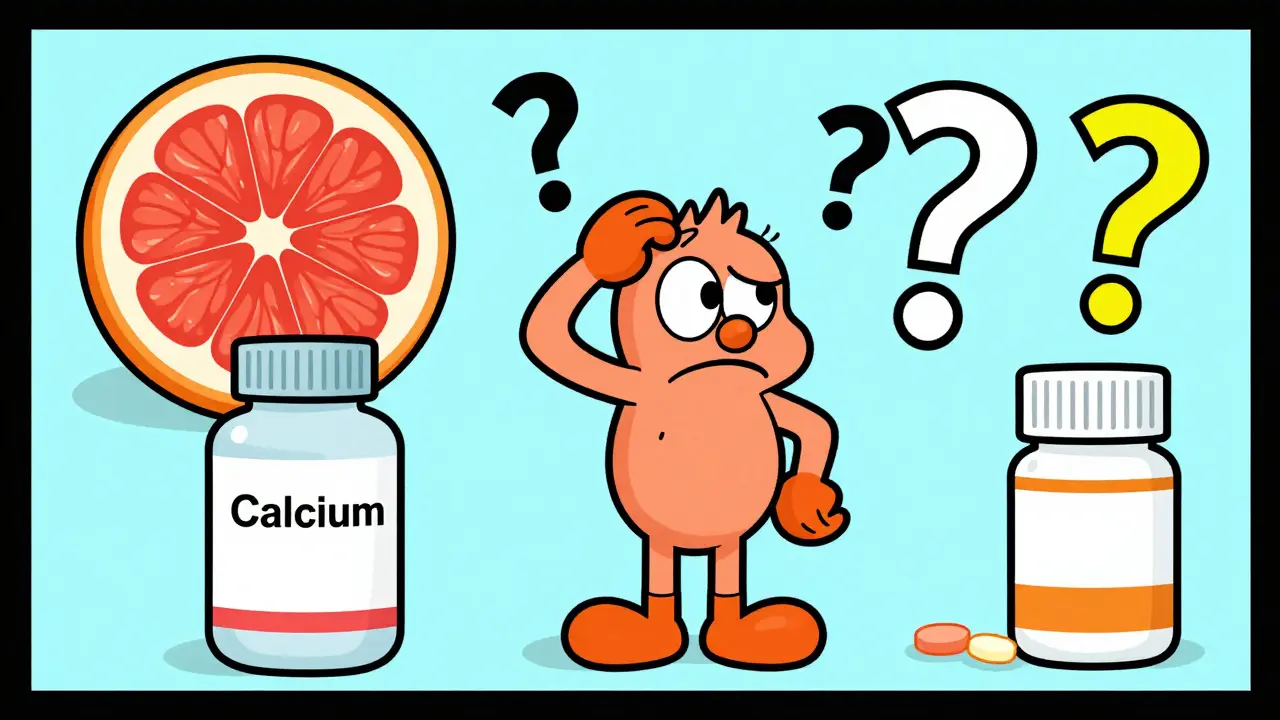
- Drug-Food/Beverage: Some foods can block or amplify a drug. A classic example is grapefruit juice, which can interfere with how some statins (cholesterol meds) are processed by the body.
- Drug-Supplement: Vitamins and herbal products aren't "natural" in a way that makes them safe for every drug. Calcium supplements, for instance, can block the absorption of levothyroxine, a common thyroid medication.
- Drug-Condition: This happens when a drug worsens another health problem you already have. A common case is using over-the-counter decongestants containing pseudoephedrine, which can spike blood pressure in people who already struggle with hypertension.
The 7 Essential Questions to Ask Your Doctor
You don't need to be a medical expert to protect yourself, but you do need to be your own advocate. When your provider hands you a new script, don't just nod and leave. Use these specific questions to get the clarity you need.
- "Will this interact with my other medications, supplements, or vitamins?" This is the big one. Be sure to mention everything, including that "natural" sleep aid or daily multivitamin.
- "Should I avoid certain foods, beverages, or other products while taking this?" Ask specifically about alcohol, caffeine, or specific juices.
- "What side effects should I watch for, and which ones require immediate medical attention?" There is a difference between a mild headache and a life-threatening allergic reaction. Know which is which.
- "Will this medication interfere with my current medical conditions?" If you have a kidney issue or a heart condition, a drug that is safe for most people might be risky for you.
- "Can I take this at the same time as my other meds?" Some drugs need to be spaced apart by several hours to avoid blocking each other.
- "What are the advantages of taking this medication over another one for my specific condition?" Understanding why this drug was chosen helps you monitor if it's working.
- "Is there potential for gene-drug interactions based on my genetic makeup?" This is a newer area of precision medicine. Some people process drugs faster or slower based on their DNA, which affects dosage and safety.
| Interaction Type | Example Combination | Potential Risk |
|---|---|---|
| Drug-Drug | Warfarin + Ciprofloxacin | Increased risk of severe bleeding |
| Drug-Supplement | Levothyroxine + Calcium | Reduced thyroid hormone absorption |
| Drug-Food | Statins + Grapefruit Juice | Increased drug levels in blood (toxicity) |
| Drug-Condition | Pseudoephedrine + Hypertension | Dangerous spike in blood pressure |
Your Secret Weapon: The Pharmacist
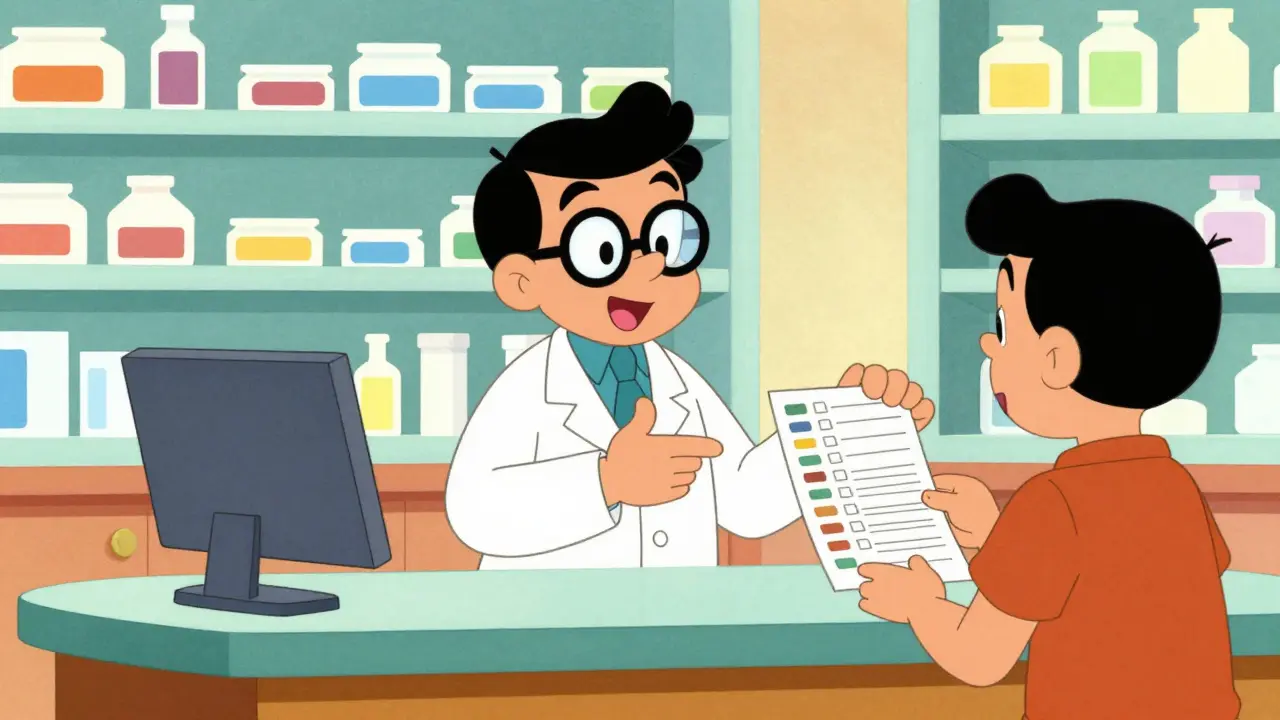
While doctors diagnose and prescribe, Pharmacists are the ultimate safety net. They are medication safety experts whose entire job focuses on chemistry and pharmacology. In fact, research shows that about 37% of serious drug interactions are caught by pharmacists before the patient even leaves the store.
Don't just drop off your prescription and walk away. Ask your pharmacist to review your full profile. If you use different pharmacies for different prescriptions, this is where things get dangerous because no single pharmacist has the full picture. To fix this, bring a physical list or the actual bottles of everything you take to every pharmacy visit.
You can also ask your pharmacist for the full package inserts. While the tiny label on the bottle is helpful, the full insert provides deep-dive details on potential interactions that might not be listed on the summary label.
How to Prepare for Your Appointment
Effective communication starts before you walk into the clinic. If you wing it, you'll likely forget something important. Here is a simple strategy to ensure nothing slips through the cracks.
First, create a master medication list. This shouldn't just be a list of drug names. Include the dosage (e.g., 20mg), how often you take it (e.g., twice a day), and what you take it for. Don't forget to include over-the-counter (OTC) meds, herbal teas for health, and vitamins.
Keep two copies of this list. Keep one at home on the fridge or in a designated spot, and keep a digital or paper copy in your wallet. According to data from the Cleveland Clinic, nearly 68% of medication errors happen because of incomplete medication histories. Being the person with the accurate list eliminates this risk.
Be honest about recreational substances. Whether it is alcohol, tobacco, or other substances, your provider needs to know. Some drugs can cause severe reactions or respiratory distress when mixed with alcohol or certain recreational drugs. They aren't there to judge you; they are there to keep you from ending up in the ER.
Modern Tools for Interaction Checking
We live in an era of precision medicine, and there are tools you can use to double-check your safety. While you should always defer to a professional, these resources can help you formulate better questions for your doctor.
For a quick check, the WebMD Drug Interaction Checker is a comprehensive public resource. It allows you to plug in multiple medications and supplements to see if there are known flags. Similarly, for those interested in the cutting edge, pharmacogenetic testing services can now analyze how your specific genes interact with certain drugs, providing a "composite view" of your risk profile.
Many community pharmacies now use advanced clinical decision support software. This software automatically flags potential clashes when a pharmacist enters a new script. However, the software only knows what is in the system. If you bought a supplement at a health food store, the software won't know about it-unless you tell the pharmacist.
What should I do if I suspect a drug interaction is happening right now?
Stop taking the medication immediately and contact your prescribing doctor or pharmacist. If you are experiencing severe symptoms like difficulty breathing, swelling of the face, or extreme dizziness, call emergency services or go to the ER. Do not wait for a return call from your doctor if the symptoms are acute.
Are herbal supplements safer than prescription drugs regarding interactions?
No, they are not necessarily safer. Many herbal supplements have powerful chemical properties that can either block a medication or amplify it to a dangerous level. For example, St. John's Wort is famous for interacting with a wide range of medications, including antidepressants and birth control, often making them less effective.
Do I need to worry about interactions if I only take one prescription drug?
Yes. Even if you only have one prescription, that drug can still interact with OTC medicines (like ibuprofen or decongestants), foods, supplements, or even your own existing health conditions (like kidney disease or high blood pressure).
Can I use an app to check interactions instead of asking a doctor?
Apps can be a great starting point for education and identifying potential red flags, but they should never replace professional medical advice. Apps cannot account for your specific medical history, kidney/liver function, or unique genetic makeup. Always verify app findings with a licensed pharmacist or doctor.
How often should I review my medication list with my provider?
You should do a full review every time a new medication is added or an existing dose is changed. It is also a good practice to do a "brown bag review" once or twice a year, where you bring every single bottle you take to your primary care provider to ensure everything is still necessary and safe.
Next Steps for Your Safety
If you are heading to the doctor today, start by spending five minutes writing down every pill, powder, and tea you consume. When you get your new prescription, remember that asking questions isn't a sign of distrust-it's a sign of a smart patient. If the doctor's office is too rushed for a deep dive, your pharmacist is waiting and ready to help you fill in the gaps. Your safety depends on the quality of the information you provide and the questions you dare to ask.
Comments (12)
Sue Stoller
23 Apr, 2026This is such a helpful reminder! 🌟 It's so easy to forget those tiny details when you're nervous at the doctor's office. Keeping a list on the fridge is a total game changer! 📝✨ Stay safe everyone! ❤️
Mike Arrant
25 Apr, 2026People just don't have a clue how to take care of themselves these days. You probably don't even need half the pills you're taking if you just fixed your diet and stopped eating processed garbage. Most of these "interactions" are just your body screaming for real food. Trust me, I've seen it all.
Emma Cozad
26 Apr, 2026lol imagine trusting big pharma and their "interations" lol its all just a scam to make u buy more meds from the us govt they just want us sedated and paying taxes
Amy Fredericks
28 Apr, 2026I really appreciate the part about the pharmacists. They often get overlooked but they really are the ones with the most detailed knowledge of how the chemicals actually mix together. It's a great way to get a second pair of eyes on your health plan without feeling like you're bothering your doctor during a short appointment.
Sarah Watters
28 Apr, 2026The mention of gene-drug interactions is just a gateway to more surveillance. First it's a "safety check" and then they have your entire genetic code on a server somewhere in the cloud to decide if you're "fit" for certain treatments. It's all too coordinated to be a coincidence.
Mayur Pankhi Saikia
29 Apr, 2026Actually... the premise that a layperson can effectively navigate these... complex interactions... simply by asking a few curated questions... is somewhat naive... If one lacks a foundational understanding of pharmacokinetics, the answers provided by a rushed GP... are practically useless...!!
Caroline Duvoe
30 Apr, 2026everyone knows this already 🙄 why is this a whole guide... just use an app and move on 💅
vimal purwal
1 May, 2026I must strongly disagree with the notion that a simple application can replace the wisdom of a medical professional, as the intricate nuances of a patient's systemic health cannot be quantified by an algorithm, and furthermore, I believe that the commitment to maintaining a physical medication list is a duty that every responsible adult should embrace with absolute rigor to ensure that no catastrophic error occurs due to negligence in communication during a clinical encounter.
Chidi Prosper
3 May, 2026Spot on. The pharmacist really is the last line of defense. I've had a few instances where the doctor missed a supplement I was taking and the pharmacist caught it immediately. It's a necessity to be vocal about everything you put in your body.
Anastasios Kyriacou
4 May, 2026too long didnt read... just ask the doc lol... also spellcheck is free people
Anantha Lakshmi
6 May, 2026Let's all try to be more proactive with our health! 💪 It's about empowering ourselves to take charge and not just follow orders blindly. Knowledge is power! 🌈✨
Nicole Antunes
6 May, 2026It is truly heartening to see such a comprehensive approach to patient safety. :) Taking a moment to organize one's health records can significantly reduce anxiety for both the patient and the provider. I hope many find this guide beneficial in their wellness journey. :)