
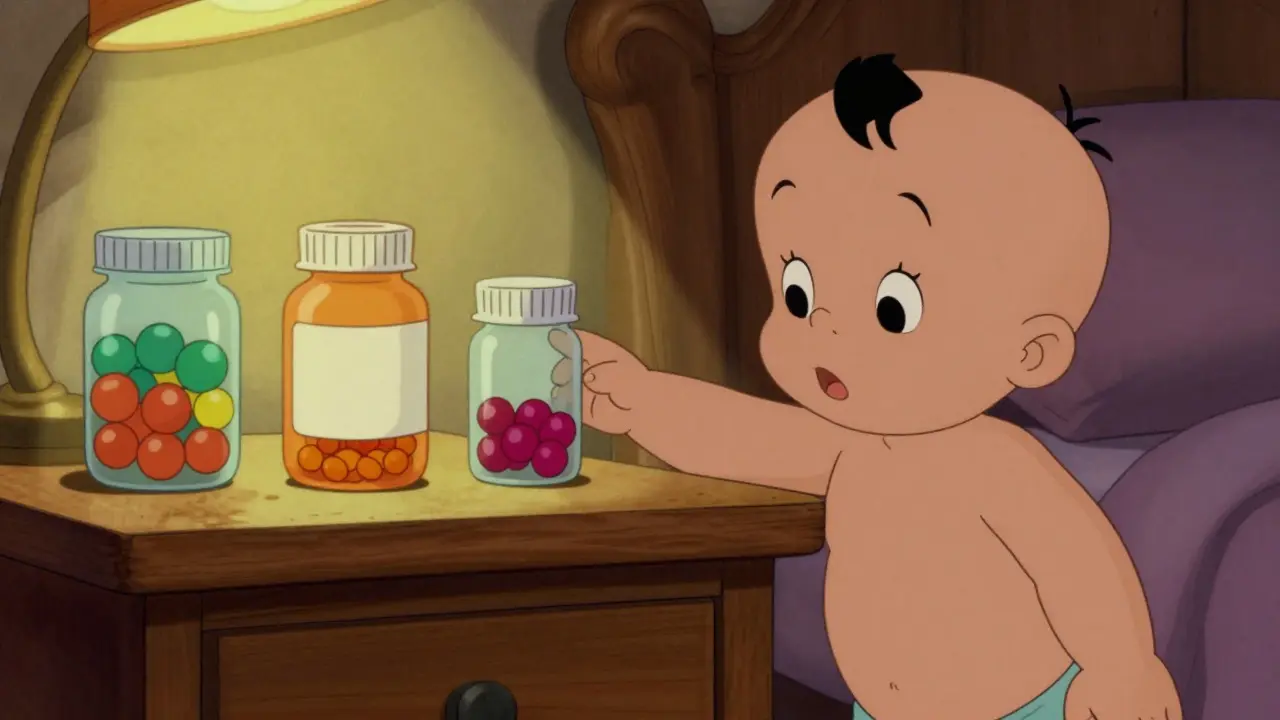
Imagine leaving a bottle of vitamins on the nightstand just for five minutes while you go get coffee. In that tiny window, a curious toddler might see, reach, and taste something that looks suspiciously like candy. It happens faster than you think. According to health authorities, medicines are the leading cause of child poisoning, sending roughly 60,000 children under five to emergency departments every year. This isn't about fear; it's about building barriers that work.
Understanding the Risk
We often assume our kids know better, or that they aren't capable of opening heavy plastic bottles. However, studies show that child-resistant caps only reduce access ability by about 50%. They are helpful, but they are not foolproof. A 2023 report highlighted that in 86% of medicine poisoning cases, the child accessed medicine belonging to an adult. Most of these incidents happen right at home because the medicine was within reach. When you understand that nearly two-thirds of these emergencies could be stopped by simply moving the bottle higher, it changes how you view your household layout.
Medication Safety is a set of practices designed to prevent accidental ingestion and ensure correct dosing for children and adults. The core goal is creating an environment where harmful substances are physically inaccessible.The most common mistake parents make is relying on a single solution, like a safety latch on a low cabinet. While that adds security, it doesn't solve the problem of pills falling on the floor during administration. Incidents occur from nightstands, dressers, purses, and even diaper bags. If a pill rolls under the bed, it becomes a hidden treasure hunt for a crawling child.
The Up and Away Rule
One of the most effective protocols developed by safety experts is the "Up and Away and Out of Sight" program. This isn't just a catchy phrase; homes that follow it consistently see a significant drop in poisoning incidents. Here is how you apply it practically:
- Elevation: Store all medicines at or above counter height. Specifically, aim for 48 inches from the floor level. This puts them beyond the reach of climbing toddlers.
- Visibility: Children play what they see. If they cannot see the colorful bottle, they are less likely to investigate. High kitchen cabinets or linen closets work well here.
- Locking Mechanisms: If you can't store high, lock it down. Safety latches alone reduce access by 35%, but combining them with locked storage increases that protection dramatically.
Think about your own habits. Do you leave your purse on a chair near the entryway? That bag likely contains painkillers, antihistamines, or eye drops. Guests often bring bags filled with prescription bottles. You should offer to place visiting guests' bags in a secure closet away from curious hands immediately upon arrival. It sounds polite and proactive rather than suspicious.
| Location | Risk Level | Reason |
|---|---|---|
| Nightstand | High | Frequent access point; often at child eye level |
| Kitchen Counter | Medium-High | Pills often dropped or left temporarily during dosing |
| Top Linen Shelf | Low | Hard to reach, usually out of sight |
| Bathroom Cabinet | Varies | Humidity damages meds; riskier if unlocked and low |
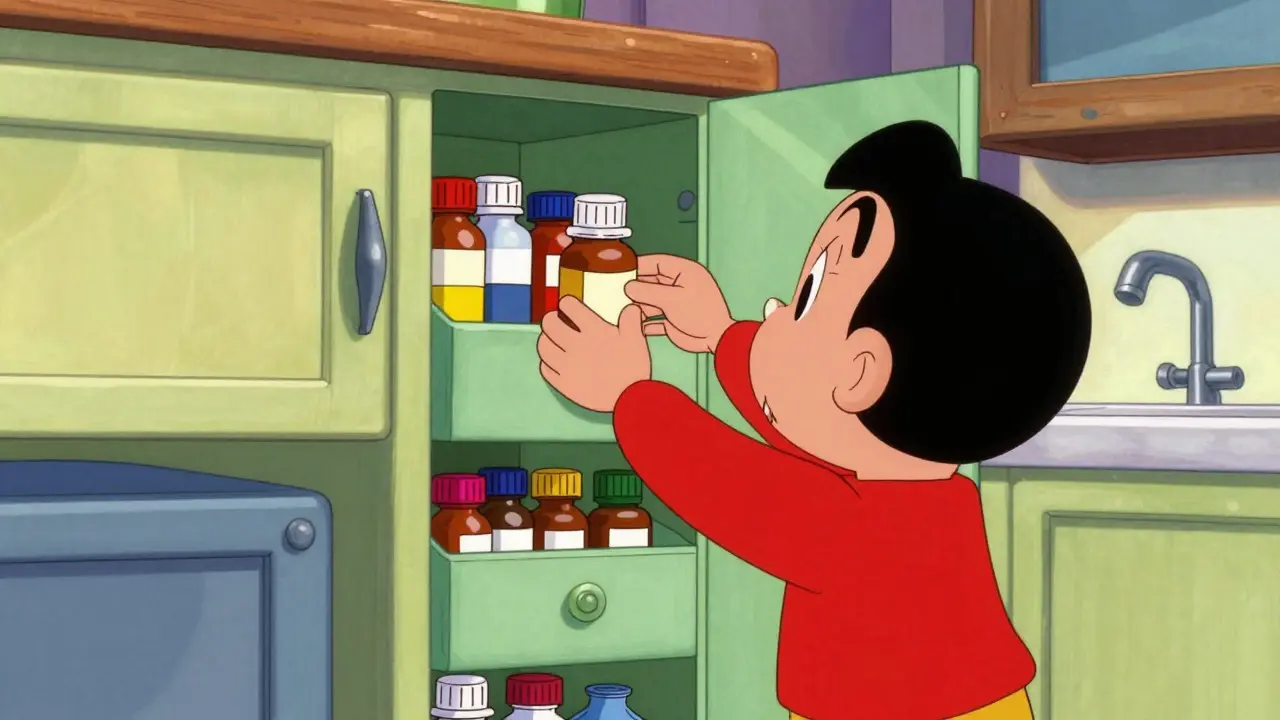
Mastering Dosing Precision
Safety isn't just about keeping meds away; it's also about giving the right amount safely. Many families still use kitchen teaspoons to measure liquid medicines. This is dangerous because kitchen spoons vary wildly in capacity-sometimes by up to 250%. One teaspoon might hold 2.5 milliliters while another holds over 7. Using the wrong spoon could mean your child gets double or triple the dose.
Always use the device that comes with the medicine, or buy a calibrated oral dosing syringe. These tools clearly mark measurements in milliliters (mL) only, removing the guesswork of converting between ounces or tablespoons. If you are administering medicine for someone else, or asking another caregiver to help, write down exactly what to give, how much, and when. Verbal instructions fade quickly, but written notes stay accurate.
Be extremely careful with Acetaminophen and Ibuprofen. Concentrations differ significantly between infant drops and children's liquids. Infant formulations are much stronger per volume. Reading the label every single time prevents accidental overdoses which can lead to serious liver damage in very young children.
Disposing of Unused Meds Safely
A big part of childproofing is knowing how to get rid of old bottles. Leaving expired antibiotics or leftover pain relievers in a drawer creates a ticking clock. If you can find a take-back program, that is ideal. However, many households rely on trash disposal methods when local programs aren't accessible.
The recommended process involves mixing solid medications with unappealing substances before throwing them away. Coffee grounds or cat litter works perfectly. Mix the pills in water, add the gritty substance, and seal it in a plastic bag before tossing it. This makes the contents unrecognizable and unpalatable to anyone rummaging through the bin. Never flush medications unless the label specifically says so, as flushing can contaminate local water systems.
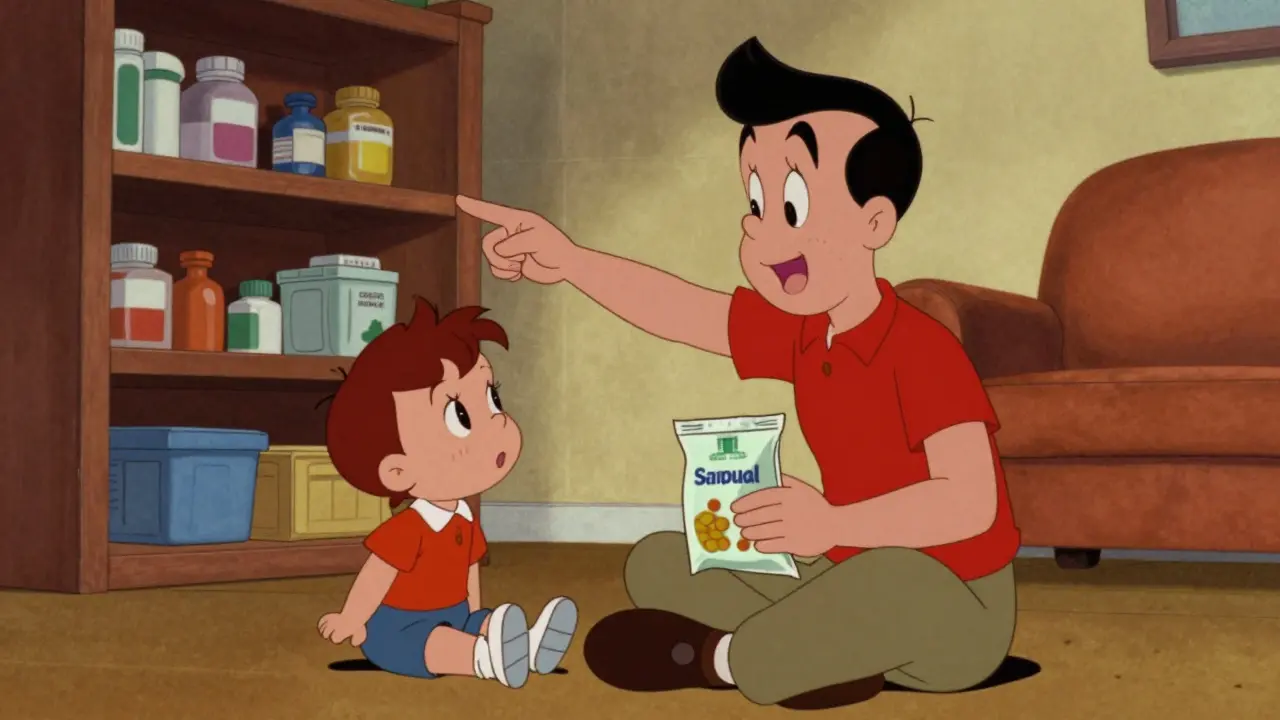
Talking to Your Child About Medicine
You can start educating your child about medicine safety as early as age two. At this stage, they begin understanding simple instructions. Experts recommend avoiding calling medicine "candy." Studies suggest this nickname increases the risk of accidental ingestion by making drugs sound desirable. Instead, clarify that medicine is for helping when you are sick and only grown-ups know how to use it.
Children who receive consistent safety education demonstrate better recognition of danger signs by age five. You can role-play scenarios, showing them that they should never touch a bottle unless a parent is there. Make it a normal part of the conversation, not a scary lecture. When they ask why you keep certain boxes high up, explain simply: "This is strong stuff, and I need to keep it safe until you are bigger." Honest answers build trust and awareness.
Regular Safety Sweeps
Finally, make a habit of conducting weekly safety sweeps. Walk through your rooms as if you were a small child looking for trouble. Check floors, behind sofa cushions, and under beds. Pills fall. Bottles roll. During these checks, verify that your child-resistant caps are tight after every use. Over time, the plastic tumblers can become loose, rendering them ineffective.
Maintain a mental checklist: Is the medicine up? Is it locked? Is the cap secure? By turning these actions into routine, you remove the stress of perfect memory. It becomes just part of tidying up the house, like putting toys away. Remember, prevention is always easier than dealing with the aftermath of an ER visit.
Can child-resistant caps stop my toddler?
No, they reduce access by about 50% but are not completely proof against persistent children. Always lock up medicine regardless of the cap.
Where is the best place to store medicine?
Store medicines at least 48 inches off the ground, preferably in a locked cabinet or high shelf in a linen closet.
Should I use kitchen spoons to dose liquid medicine?
Never use kitchen spoons. Their sizes vary too much. Always use the syringe or cup provided with the medication.
How do I safely throw away old pills?
Mix pills with water and coffee grounds or kitty litter, seal in a bag, and throw in regular trash unless a take-back bin is available.
Is the bathroom medicine cabinet safe for storage?
It is risky due to humidity and easy access. Prefer a cool, dry place like a bedroom linen closet that is out of reach.
Comments (15)
Cara Duncan
2 Apr, 2026This guide is exactly what we needed right now 😊 We moved our nightstand meds yesterday and felt so much better already. Everyone needs to see how dangerous the lower cabinets can be 💊. Little fingers find everything that looks colorful. We also checked our purses because that is a big blind spot. I hope everyone reads this before bedtime tonight 🏠.
Molly O'Donnell
3 Apr, 2026Keep the medicine locked away always.
Rocky Pabillore
4 Apr, 2026The general public consistently underestimates their children's capabilities regarding access. Most people rely on the psychological barrier of 'they won't understand' when they should rely on physical impossibility. It is rather amusing how complacency persists despite the data being clear.
Julian Soro
5 Apr, 2026You are absolutely right about the physical barriers being key. Sometimes we get too caught up in teaching and forget the environment needs work. It is great that you highlighted the importance of locks alongside height. We can all learn something new today!
Eleanor Black
5 Apr, 2026Honestly, the situation with household toxins is terrifying. I grew up without many rules on this subject. My mother trusted the plastic caps entirely. We now know those caps fail often. Toddlers are surprisingly capable climbers. They reach higher spots than you expect daily. Nightstands are actually the most dangerous zones. A quick glance can lead to tragedy unfortunately. We need to treat every pill as a threat. Storage solutions must be invisible to them. High shelves work well in most households. Linen closets are better than kitchen drawers. Locks provide necessary physical barriers always. Education helps but physical distance is key. Parents must remain vigilant constantly forever.
Rod Farren
7 Apr, 2026The pharmacokinetics of accidental ingestion suggest rapid absorption occurs orally. Dosage errors frequently stem from teaspoon variability. Standardized mL devices reduce variance significantly. Toxicity thresholds vary by pediatric age cohort. Consultation with medical professionals regarding storage protocols is advisable.
Jenny Gardner
7 Apr, 2026I have been reviewing the protocols; and I must say, they are incredibly thorough. The emphasis on elevation is quite appropriate. Furthermore, the distinction between infant drops and liquid concentrates is vital. Humidity damage is another factor we overlook regularly. Please consider the environmental factors carefully. Thank you for sharing this information with us.
Callie Bartley
8 Apr, 2026It seems like a lot of effort for something rare. Most kids never do this stuff anyway. Why worry so much over basic things?
Owen Barnes
9 Apr, 2026I belive medcine saftey is verry important for the family unit. We shoulld check the capes regulary. Childz love climbing so we need locks.
Russel Sarong
10 Apr, 2026Omg!!! That sounds scary though! We have to be so careful with those little bottles!!! It really makes my heart race thinking about it. I am going to check my cupboard right now!!!
Cullen Zelenka
10 Apr, 2026I think it is amazing how much we can improve just by changing habits. Every step forward makes home safer for everyone. Staying positive about safety helps build good routines too. We got this and we can protect them. Great mindset for all parents reading here.
Arun Kumar
11 Apr, 2026In my community elders often advise on storing poisons away. We share stories of caution openly. It is a strong tradition to protect the young ones. Let us continue supporting each other with this knowledge. Energy is best spent on prevention.
Sharon Munger
12 Apr, 2026Sounds like solid advice really happy to read this nice to see people care about safety so much. Will try the sweep tomorrow
Christopher Beeson
14 Apr, 2026The existential dread of parenting is anchored in these small risks. Society creates vulnerabilities through negligence. We analyze danger to maintain control. Yet fear often paralyzes action instead of guiding it. Prevention is a form of defense against chaos.
James DeZego
14 Apr, 2026Definitely recommend getting those oral syringes 🩺 Also check expiration dates monthly 🗓️. Keeping it secure saves stress later on. Stay safe everyone 👋.