
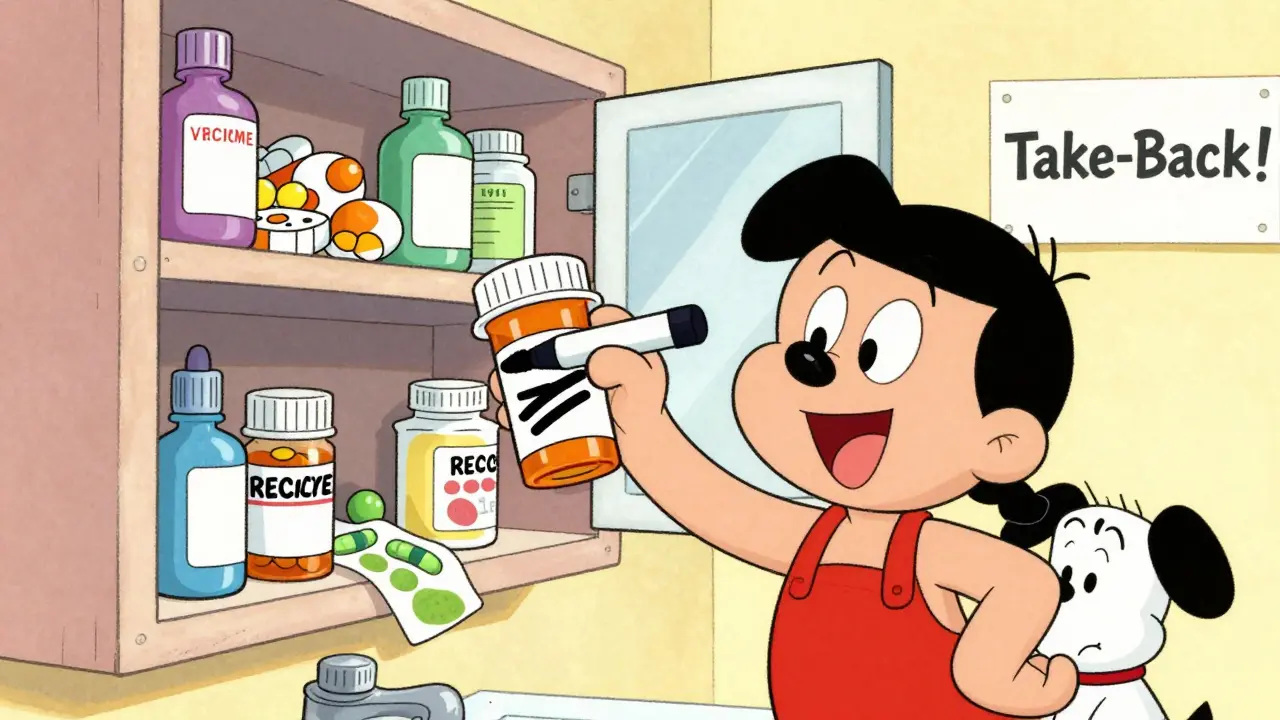
Every year, millions of unused pills sit in medicine cabinets across the U.S.-expired painkillers, leftover antibiotics, old antidepressants, even unused pet meds. Many people don’t know what to do with them. Some flush them down the toilet. Others toss them in the trash. Both ways are risky. Flushing pollutes waterways. Throwing them out leaves them within reach of kids, teens, or people looking to misuse them. The safest, smartest option? Take them to a drug take-back event or permanent collection site.
Why Take-Back Events Matter
In 2022, over 18 million Americans misused prescription drugs. Most of those drugs didn’t come from dealers-they came from family medicine cabinets. The DEA says 70% of misused pain meds were taken from someone else’s home. That’s why take-back programs were created. Since 2010, these events have collected nearly 30,000 tons of unwanted medications. Stericycle, one of the main disposal companies, incinerated that waste in 2024-no landfill, no water contamination.But here’s the problem: only 15% of unused medications are properly disposed of. The rest? Still sitting in drawers, cabinets, or worse-flushed down the toilet. That’s why proper preparation matters. If you don’t get it right, staff at collection sites might turn you away. And if you’re turned away, you might just keep the meds instead.
Step 1: Gather Everything You Want to Dispose Of
Start by checking every cabinet, bathroom drawer, and nightstand. Look for:- Expired or unused prescription pills
- Over-the-counter meds like ibuprofen or allergy pills
- Medication patches (like fentanyl or nicotine)
- Liquid medications (syrups, eye drops)
- Vitamins and supplements
- Pet medications
Don’t worry about mixing them. You can bring all of these together. The only things you can’t bring: aerosol cans (like inhalers), hydrogen peroxide, thermometers, iodine-based meds, or illegal drugs. If you’re unsure, leave it out-staff will tell you if something’s not allowed.
Step 2: Remove Your Personal Information
This is the most important step-and the one people mess up most often. According to Stericycle’s 2023 data, 41% of rejected submissions were because personal info wasn’t fully covered.Take each container and use a permanent marker to black out:
- Your name
- Your address
- Prescription number
- Doctor’s name
- Any other identifying details
If the label is too faded or hard to cover, just cut it off and throw it away. You don’t need the label. You just need to make sure no one can read who the meds belong to. HIPAA rules require this. Collection sites won’t accept anything with visible personal info-even if the rest is perfect.
Step 3: Keep Meds in Original Containers (If You Can)
Most collection sites prefer you keep medications in their original bottles. Why? It helps staff quickly identify what’s being dropped off. Over 92% of the 16,500+ authorized sites nationwide require this format.But what if you lost the bottle? That’s okay. You can put the pills in a small, sealed container instead:
- A clean plastic bottle with a tight lid
- A zip-lock bag (resealable, not flimsy sandwich bags)
Just make sure the container is sturdy enough to not leak or break. And don’t forget-still cover your name. Even if it’s in a bag, the privacy rule still applies.
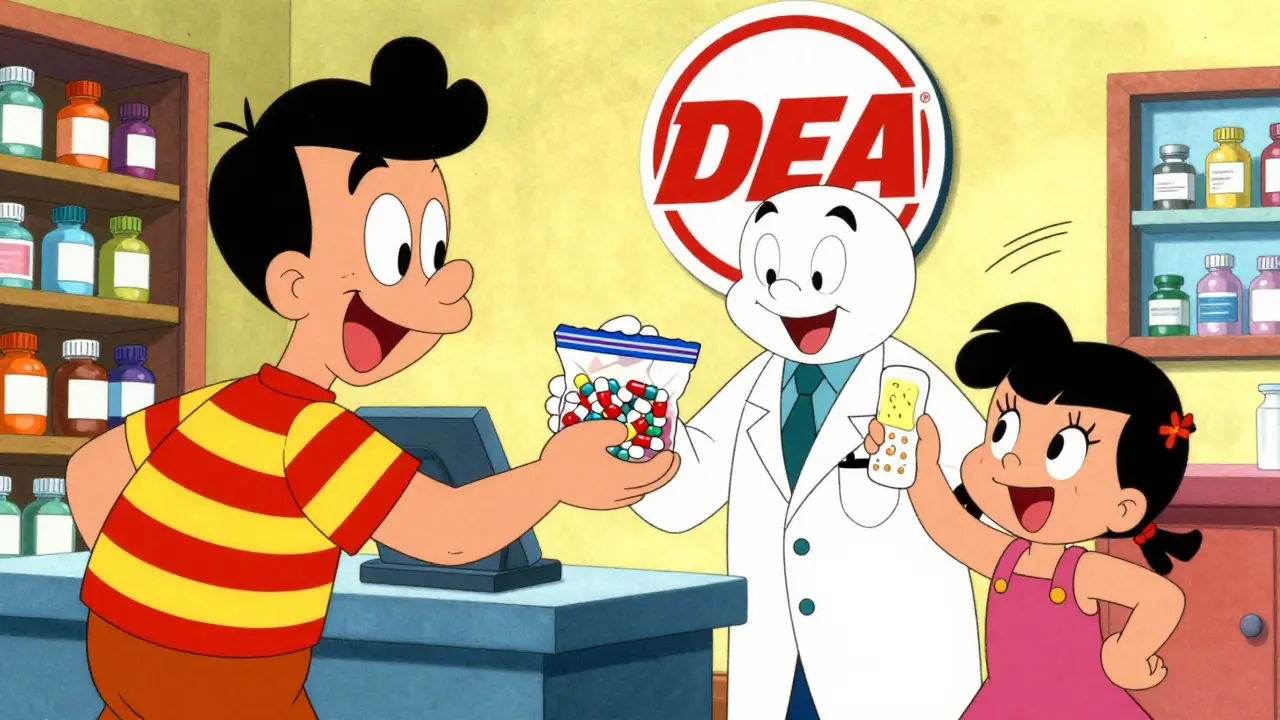
Step 4: Handle Liquids and Patches Differently
Liquids need special care. If you have cough syrup, eye drops, or liquid antibiotics, keep them in the original bottle. If that’s gone, put them in a small, leak-proof container. Tape the lid shut with packing tape for extra security. Don’t pour them into a bag-that’s a mess waiting to happen.Transdermal patches (like fentanyl or nicotine patches) are tricky. They still contain active medicine even after use. Fold each patch in half, sticky side in, so the drug is trapped inside. Then put it in the container. Most sites require this. If you don’t fold them, staff will reject them.
Insulin pens? These are different. They’re sharps. Most hospital-based collection sites accept them. Retail pharmacies? Only about a third do. Call ahead if you’re bringing pens or needles.
Step 5: Don’t Mix Medications from Different People
This isn’t a rule everywhere, but it’s common in military and VA programs-and it’s smart. If you’re bringing meds from multiple family members, keep them in separate containers. It makes sorting easier for staff and reduces the chance of mix-ups. You don’t need to label them. Just keep them physically separated.Step 6: Know What to Expect at the Site
When you show up, staff will check your items. They’ll look for:- Personal info removed
- Original container or sealed bag
- No prohibited items
This takes 2-5 minutes per person. If you’re prepared, it’s quick. If you’re not, you might get turned away. That’s why so many people give up. A 2023 Johns Hopkins study found 43% of people were unsure how to prepare their meds. That confusion led to 28% skipping the event entirely.
Pro tip: Call ahead. Ask the site: “Do you accept liquids? Do you need original bottles?” Walgreens kiosks are simple-just bring your meds, cover your name, and drop them in. VA hospitals often have disposal pouches you can take home for next time.
Where to Find a Take-Back Site
You don’t need to wait for an event. Most places now have permanent drop boxes:- Pharmacies (Walgreens, CVS, Rite Aid)
- Hospitals and clinics
- Police stations (many have 24/7 drop boxes)
- VA medical centers
Use the DEA’s online locator tool. Type in your zip code. It shows you the closest permanent sites. Over 71% of Americans live within five miles of one. In rural areas, it might be a bit farther-but most counties have at least one.
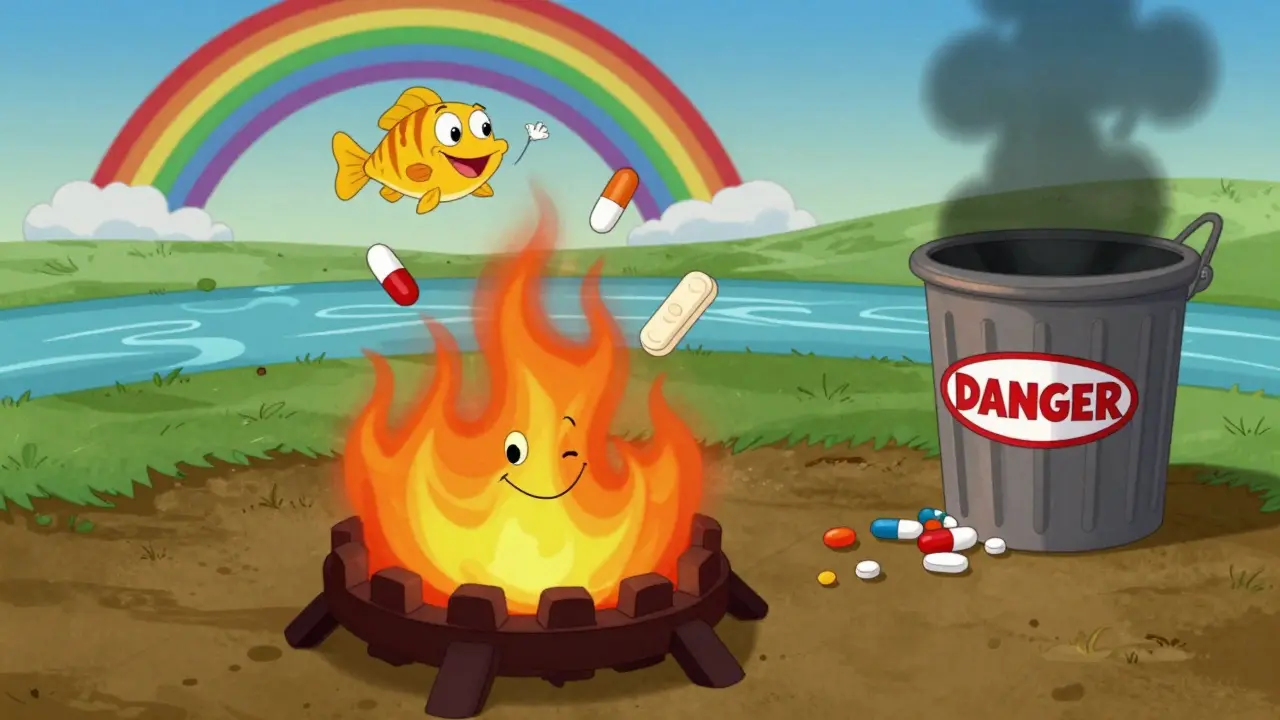
What Happens After You Drop Them Off?
Your meds don’t go to a landfill. They don’t get recycled. They go to a special incinerator-like a high-temperature furnace designed to destroy pharmaceuticals completely. No chemicals leak. No residue gets into the soil or water. The EPA says this prevents over 6 million pounds of drugs from entering waterways each year-if more people participated.Right now, only 15% of unused meds are properly disposed of. That’s why your action matters. One person dropping off a few bottles won’t change the world. But if 100 people do it? That’s 100 fewer pills floating in rivers, 100 fewer chances for someone to misuse them.
Common Mistakes and How to Avoid Them
Here’s what goes wrong-and how to fix it:- Mistake: Only covering part of the name. Fix: Black out everything. If you can still read “John Smith,” it’s not done.
- Mistake: Using a flimsy sandwich bag for liquids. Fix: Use a plastic bottle with a tight cap, taped shut.
- Mistake: Thinking you need to sort by type. Fix: Mix pills, patches, and vitamins together. Just keep them in one container.
- Mistake: Waiting until the next take-back day. Fix: Permanent sites are open year-round. You don’t need to wait.
One Reddit user, u/MedSafety2023, got turned away because their liquid antibiotics weren’t in the original bottle. Another, u/EcoPharm, had no trouble at a VA site using a ziplock bag-after scratching off their name. The difference? Preparation. It’s not about perfection. It’s about making it safe and clear.
Final Tip: Make It a Habit
Don’t wait until your cabinet is full. Every time you finish a prescription, ask yourself: “Do I need this?” If not, set it aside. When you have five or six bottles, take them to a drop box. It takes five minutes. You protect your family. You protect the environment. You help stop drug misuse.It’s not complicated. Remove your name. Keep it in a bottle or sealed bag. Drop it off. That’s it.
Can I throw unused pills in the trash?
You can, but it’s not safe. Medications in the trash can be found by kids, pets, or people looking to misuse them. If you must throw them out, mix pills with coffee grounds or cat litter, seal them in a container, and hide them in the trash. But take-back events are still the best option-no risk of misuse, no pollution.
Do I need to remove pills from blister packs?
No. You can leave pills in their blister packs. Just cover your name on the box or label. If the blister pack is loose, put the whole thing in a sealed bag or bottle. Staff don’t need to see individual pills-just know what’s inside and that your info is gone.
Can I bring expired vitamins and supplements?
Yes. Vitamins, herbal supplements, and over-the-counter products are accepted at nearly all take-back sites. Just remove your name from the bottle and put them in with your other meds.
What if I have a lot of meds? Can I bring a box?
Yes. Many sites welcome large drop-offs, especially during take-back events. Just make sure everything is labeled properly-personal info removed, containers sealed. If you have more than 10 bottles, call ahead to confirm they can handle it.
Are take-back events free?
Yes. All DEA-authorized collection sites offer free disposal. No payment, no ID, no questions asked. You’re not required to give your name. It’s anonymous, safe, and completely free.
Why can’t I flush medications anymore?
Flushing sends drugs into water systems. Studies show 80% of U.S. streams contain traces of pharmaceuticals. Even small amounts can harm fish and wildlife. The EPA and FDA both discourage flushing-except for a very few high-risk drugs (like fentanyl patches) where the risk of misuse outweighs environmental harm. Even then, take-back is still preferred.
Next Steps
Start today. Open your medicine cabinet. Pull out anything expired or unused. Grab a black marker. Cover your name. Put it in a bottle or ziplock. Drive to the nearest pharmacy or police station. Drop it off. That’s all.If you’re unsure where to go, search “DEA drug take back near me” online. You’ll find a site within minutes. And if you’ve never done it before? You’re not alone. But now you know how. And that makes a difference.
Comments (10)
sagar patel
26 Dec, 2025Just throw them in the river
Linda B.
26 Dec, 2025Of course the government wants you to drop them off. What are they really doing with all that pharmaceutical waste? You think it’s incinerated? Try buried under military bases. They’re recycling the active ingredients for… other programs. You don’t know what you’re really handing over.
Rick Kimberly
27 Dec, 2025While the intent behind take-back programs is laudable, the logistical burden placed on individuals is disproportionate. The requirement to remove personal identifiers from every container, while legally necessary under HIPAA, introduces unnecessary friction for elderly populations and those with visual impairments. A standardized, anonymized disposal system-perhaps centralized labeling or digital de-identification-would significantly improve compliance without compromising privacy.
Ben Harris
29 Dec, 2025You people are so obsessed with labels and bottles like it’s some sacred ritual. I threw my expired Xanax in the trash mixed with coffee grounds and a used diaper. No one’s gonna dig through my garbage unless they’re desperate. And guess what? The DEA doesn’t care. They’re too busy chasing people who buy fentanyl on Instagram. You’re solving a problem that doesn’t exist because you’re scared of your own medicine cabinet.
Zabihullah Saleh
29 Dec, 2025There’s something deeply human about holding onto medicine long after it’s expired. It’s not just about waste-it’s about memory. That bottle of pills your grandma took for her heart? You keep it because it’s the last physical thing you have of her. We treat these drugs like trash, but they’re relics. Maybe the real problem isn’t disposal-it’s how we’ve lost the ritual of letting go.
Christopher King
31 Dec, 2025They say it’s for safety. But if you really think about it, this whole system is designed to keep you docile. Take your meds to the police station? That’s not disposal-that’s surveillance. They’re tracking who’s hoarding what. Next thing you know, they’ll flag you for having too many antidepressants. You think they don’t have a database? They do. And they’re watching. Don’t be fooled by the ‘anonymous’ nonsense.
Terry Free
31 Dec, 2025Wow. You spent 1200 words telling people to cover their names with a Sharpie. Congrats. You just won the award for ‘Most Overcomplicated Solution to a Problem That Doesn’t Exist.’ If someone’s dumb enough to take pills out of a trash can mixed with coffee grounds, they deserve what they get. Also, why are we still using paper labels? QR codes. Digital records. We’re in 2025. Stop acting like we’re in 1998.
Bailey Adkison
1 Jan, 2026So you’re telling me it’s okay to throw out vitamins but not opioids? That’s not logic-that’s moral hierarchy. If you’re going to ban flushing because it’s ‘bad for fish,’ then ban all pharmaceuticals from landfills. But no-you’ll let antidepressants rot in soil while screaming about fentanyl. Hypocrisy is the real epidemic here.
Justin James
1 Jan, 2026Let me break this down for you because I’ve been researching this since 2018 and I’ve talked to 17 retired DEA agents and 3 whistleblowers from Stericycle and let me tell you this isn’t about safety it’s about control the government doesn’t want you to know what’s really happening with all these meds after they’re collected they’re not being incinerated they’re being ground up and shipped to China where they’re reprocessed into generic pills and sold back to American pharmacies under different labels and you think you’re helping the environment but you’re actually fueling a black market pharmaceutical pipeline that’s worth over $12 billion a year and nobody talks about it because the FDA and the DEA are in bed with the big pharma conglomerates and if you think your ziplock bag of expired ibuprofen is safe you’re tragically mistaken because your pills are probably already on some street corner in Detroit being sold as oxycodone to a kid who doesn’t even know what he’s taking and you’re the reason why
Carlos Narvaez
3 Jan, 2026Done. Took mine to Walgreens. Covered name. Ziplock. 30 seconds. No drama.