
Side Effect Risk Checker
Check Your Side Effect Risk
This tool helps you determine if your symptoms may indicate a predictable (Type A) or unpredictable (Type B) drug side effect. Type B reactions can be serious and require immediate medical attention.
When you take a medication, you expect it to help - not hurt. But side effects are common, and not all of them are the same. Some are expected, even listed on the label. Others come out of nowhere, with no warning. Understanding the difference between predictable and unpredictable side effects isn’t just academic - it can save your life.
What Are Predictable Side Effects?
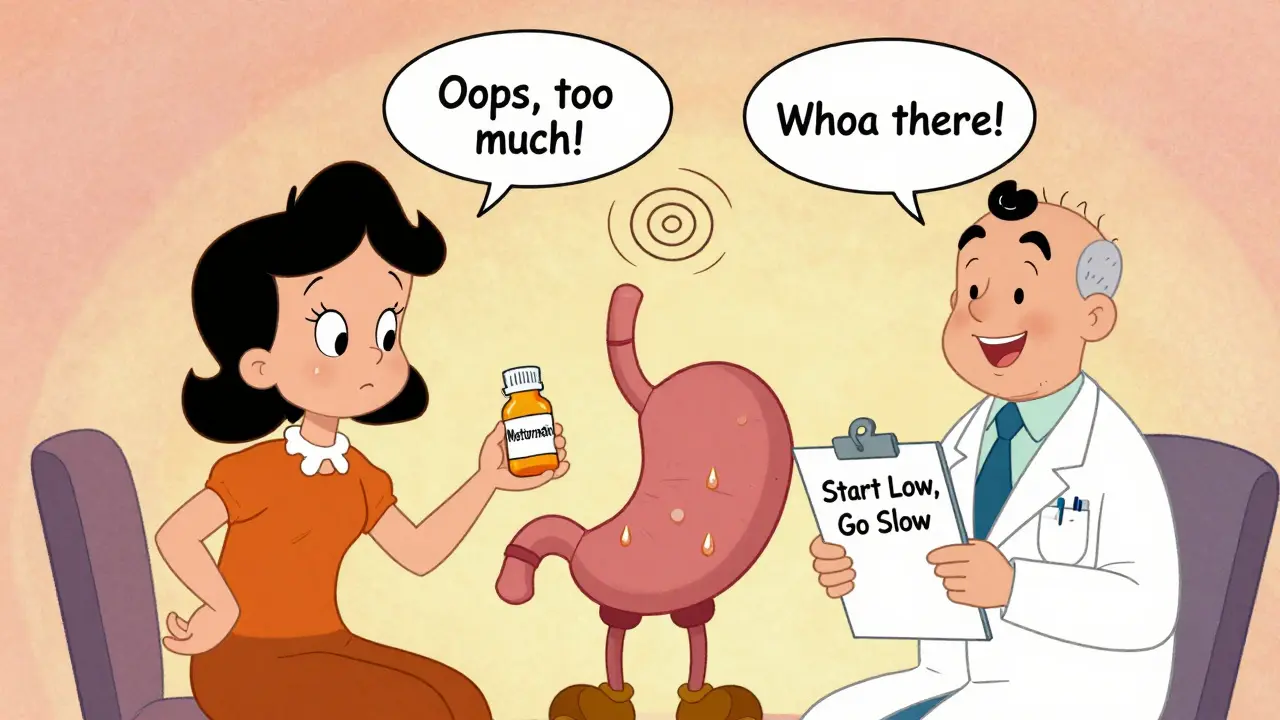
Predictable side effects, also called Type A reactions, make up about 75-80% of all adverse drug reactions. They happen because the drug is doing exactly what it’s supposed to do - just too much of it. Think of them as the drug’s side job: you hired it to lower your blood pressure, but it also makes you dizzy. Or you took an NSAID for your knee pain, and now your stomach feels like it’s on fire.
These reactions are dose-dependent. The higher the dose, the worse the side effect. That’s why doctors start you on low doses and slowly increase them. If you’re taking metformin for diabetes and you feel nauseous, that’s a Type A reaction. It’s common, it’s known, and it usually goes away if you cut the dose or take it with food.
Other classic examples:
- Low blood pressure from blood pressure meds
- Sedation from opioids or benzodiazepines
- Stomach bleeding from ibuprofen or aspirin
- Low blood sugar from insulin or sulfonylureas
The good news? Most Type A reactions are reversible. If you stop the drug or lower the dose, your body usually bounces back. They’re also preventable - with the right monitoring. Doctors check kidney function before giving NSAIDs. They watch your blood sugar when you start insulin. These aren’t surprises; they’re part of the plan.
What Are Unpredictable Side Effects?
Now, imagine this: you take a single pill - something you’ve never had before - and within days, your skin starts peeling off. Or you break out in hives, your throat swells, and you can’t breathe. This isn’t an overdose. You didn’t take too much. You didn’t mix it with alcohol. You did everything right. And yet, your body went into overdrive.
This is an unpredictable side effect - Type B. These reactions happen in just 20-25% of cases, but they’re responsible for most of the serious, life-threatening drug reactions. They’re not caused by the drug’s main action. They’re caused by your body’s weird, unique response to it.
Type B reactions include:
- Stevens-Johnson syndrome from carbamazepine or sulfonamides
- Anaphylaxis from penicillin
- Severe hemolytic anemia in people with G6PD deficiency after taking sulfa drugs
- Drug-induced liver injury with no clear dose pattern
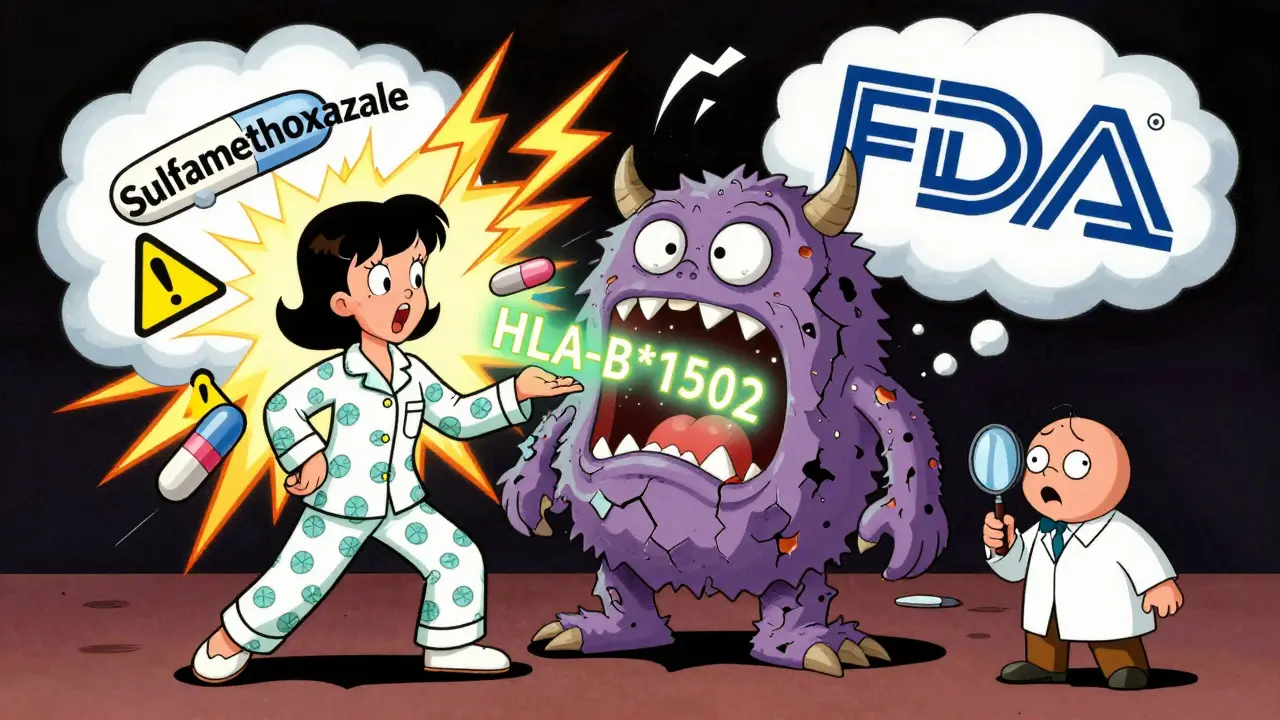
These reactions aren’t linked to how much you take. A 24-year-old with no history of allergies can develop toxic epidermal necrolysis after one dose of sulfamethoxazole. A healthy person can get a fatal rash from acetaminophen - even at the normal dose. There’s no warning. No pattern. Just pure bad luck.
And here’s the kicker: we still don’t fully understand why they happen. Some are tied to genetics. For example, people of Han Chinese descent with the HLA-B*1502 gene are at high risk of developing Stevens-Johnson syndrome from carbamazepine. But even with genetic testing, we can’t predict all of them. The FDA says current tests only catch about 30% of high-risk Type B reactions.
Why the Difference Matters
Knowing whether a reaction is Type A or Type B changes everything - from how doctors prescribe to how hospitals respond.
Type A reactions are like traffic jams: common, predictable, and manageable. They account for 75% of all adverse drug events, but only 5-10% of serious hospitalizations. They’re expensive to manage - $22.6 billion a year in the U.S. - but they rarely kill.
Type B reactions? They’re rare - only 1-2 per 100 hospital admissions - but they’re deadly. They make up just 25% of all adverse reactions, but they’re behind 15-20% of serious hospitalizations. And they’re the reason 15 out of 24 drugs were pulled from the market between 2009 and 2019.
Take NSAIDs. About 1-2% of people on standard doses get stomach bleeding. That’s Type A. But if someone develops a severe skin reaction after taking the same drug? That’s Type B - and it’s not about the dose. It’s about their biology.
Doctors treat them differently. For Type A, you adjust the dose. For Type B, you stop the drug - forever. And you warn the patient: don’t take this again. Ever.
How Doctors Try to Prevent Them
Preventing Type A reactions is routine. Doctors monitor kidney function. They check liver enzymes. They watch for signs of low blood sugar. It’s part of the job.
Preventing Type B reactions? That’s where things get complicated. Some are preventable - if you test for them.
Before giving abacavir (an HIV drug), doctors test for the HLA-B*5701 gene. If you have it, you’re at high risk of a deadly reaction - and you don’t get the drug. Simple. Effective. This testing is now standard in most U.S. hospitals.
Same with carbamazepine. In Asian populations, testing for HLA-B*1502 cuts the risk of Stevens-Johnson syndrome by over 90%. But here’s the problem: these tests don’t exist for most Type B reactions. We don’t know the genes. We don’t know the triggers. We just know it happened.
That’s why the FDA calls predicting Type B reactions a “critical unmet need.” Even with all our tech, AI systems trained on millions of patient records can predict Type A reactions with 89% accuracy - but only 47% for Type B.
Real Stories, Real Risks
A 68-year-old man started metformin for type 2 diabetes. Two days later, his blood sugar dropped to 48 mg/dL. He passed out. This was a Type A reaction - predictable, dose-related, and fixable with a lower dose.
A 24-year-old woman took sulfamethoxazole for a UTI. Three days later, she was in the burn unit. Over 30% of her skin had detached. She died. This was Type B - no prior history, no overdose, no warning. Just bad luck.
One emergency physician on Reddit described a patient who developed Stevens-Johnson syndrome after a single dose of acetaminophen. No known allergies. No genetic markers. No prior exposure. “It was like the drug just decided to turn on her,” he wrote.
These aren’t rare. They’re terrifying. And they’re why drug safety isn’t just about labels and warnings - it’s about understanding what your body can’t tell you.
What You Can Do
You don’t need to be a doctor to protect yourself. Here’s what helps:
- Know your meds. If you’re prescribed something new, ask: “Is this known to cause serious side effects?”
- Report weird symptoms. If you get a rash, fever, blistering, or swelling after starting a new drug - don’t wait. Call your doctor. Go to urgent care.
- Share your history. If a family member had a bad reaction to a drug, tell your doctor. Genetics can run in families.
- Ask about testing. If you’re on abacavir, carbamazepine, or allopurinol, ask if genetic screening is right for you.
Most importantly - don’t assume side effects are normal. Nausea? Maybe. Skin peeling? Never.
The Future of Drug Safety
The good news? We’re getting better. The NIH’s All of Us program has found 17 new gene-drug links since 2023. Hospitals are starting to use AI to flag high-risk patients. More labs offer pharmacogenetic testing.
But the bad news? Type B reactions will always be with us. They’re not a flaw in medicine - they’re a flaw in biology. Your body is unique. And some drugs, no matter how well studied, will trigger a catastrophic response in someone, somewhere.
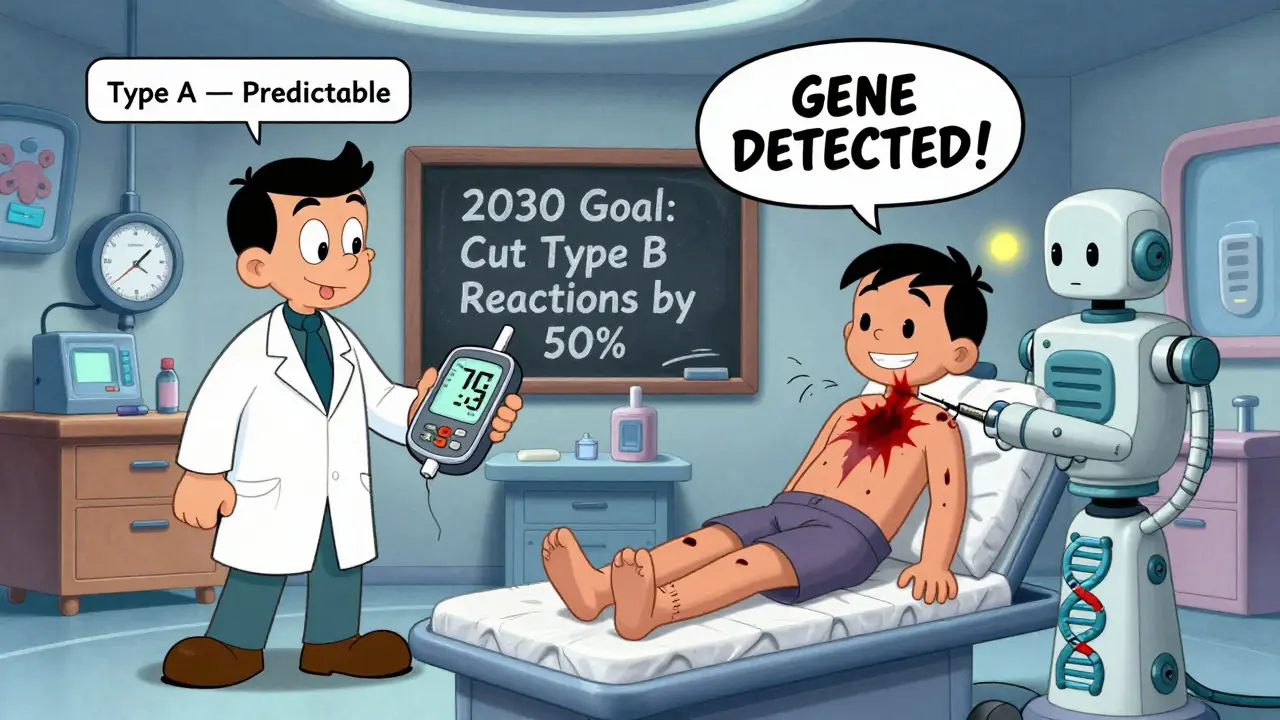
The goal isn’t to eliminate them. It’s to reduce them. By 2030, global efforts aim to cut severe Type B reactions by half through widespread genetic screening. That’s ambitious. But it’s possible - if we keep testing, keep learning, and keep listening to patients who say, “This didn’t feel right.”
Are all side effects dangerous?
No. Many side effects - like mild nausea, dizziness, or dry mouth - are uncomfortable but not dangerous. These are usually Type A reactions and often fade as your body adjusts. But if you develop a rash, swelling, difficulty breathing, or skin peeling, treat it as an emergency. These could be signs of a Type B reaction.
Can I avoid unpredictable side effects?
You can’t avoid them completely - but you can reduce your risk. Genetic testing can help for certain drugs (like abacavir or carbamazepine). Always tell your doctor about family history of drug reactions. And never ignore new symptoms after starting a medication. Early action saves lives.
Why do some people react badly to drugs others take fine?
It comes down to genetics, immune system differences, and sometimes unknown environmental triggers. Two people can take the same dose of the same drug, but one has a gene variant that causes their immune system to attack their own skin or liver. This is why Type B reactions are unpredictable - they’re not about the drug. They’re about you.
Is pharmacogenetic testing covered by insurance?
It depends. Testing for drugs like abacavir or warfarin is often covered because the risk is well-documented. For broader panels, coverage varies. Some insurers cover it if prescribed by a specialist. Others require prior authorization. Check with your provider - and ask your doctor if testing is right for you.
Can a drug be pulled from the market because of unpredictable side effects?
Yes. Between 2009 and 2019, 15 out of 24 drugs withdrawn in the U.S. were due to serious Type B reactions. These are often rare - one in 10,000 or even rarer - but they’re deadly enough that the risk outweighs the benefit. That’s why drug safety is an ongoing process, not a one-time approval.
Comments (8)
Tom Forwood
8 Feb, 2026Man, I had no idea drugs could just turn on you like that. My cousin took ibuprofen for a headache and ended up in the ICU with a full-body rash. No allergies, no family history, nothing. They said it was Type B. I still don’t sleep right thinking about it.
Tori Thenazi
9 Feb, 2026Okay, but have you considered that Big Pharma doesn’t WANT us to know about Type B reactions? I mean, think about it-how many drugs get pulled after they’ve made billions? And then they just slap a tiny warning on the next version and call it ‘improved’? They’re milking us. They know some people will die… and they’ve already priced in the lawsuits.
They don’t test for 90% of the gene variants because it’s too expensive. They’d rather let 1 in 10,000 people turn into a human torch than pay for screening. It’s not biology-it’s capitalism. And don’t even get me started on how they bury the data…
My aunt died from acetaminophen. No overdose. No warning. Just… gone. The FDA report said ‘rare adverse event.’ RARE? That’s code for ‘we didn’t care enough to stop it.’
And now they’re pushing AI to ‘predict’ it? Like we need more algorithms to tell us what our bodies already screamed? I’m not buying it. We need mandatory genetic testing for EVERY prescription. Now. Not ‘when it’s convenient.’
Someone’s got to say it: this isn’t medicine. It’s Russian roulette with a pill bottle.
Sam Dickison
9 Feb, 2026As an ER doc, I see Type A all the time-nausea from metformin, dizziness from beta-blockers, the usual. But Type B? That’s the one that haunts you. I had a 22-year-old come in with toxic epidermal necrolysis after a single dose of allopurinol. No prior history. No family risk. Just… poof. Skin sloughing off like a sunburn gone nuclear.
And yeah, we test for HLA-B*5701 with abacavir now. That saved lives. But for the rest? We’re flying blind. We don’t have the biomarkers. We don’t have the funding. And patients? They think ‘side effect’ means ‘mild stomach upset.’
Bottom line: if you get a rash, fever, or blistering after a new med? Don’t wait. Don’t Google it. Go to the ER. That’s not drama-that’s survival.
Chelsea Cook
10 Feb, 2026Oh honey, you think this is bad? Wait till you find out how many people get prescribed carbamazepine in rural Alabama without a single genetic test. And then they wonder why the ER is full of ‘mystery rashes.’
It’s not ‘bad luck.’ It’s negligence wrapped in a white coat.
Karianne Jackson
11 Feb, 2026I took that one pill and my face swelled up like a balloon. I thought I was dying. Turns out it was Type B. I’m never taking another prescription without asking for a genetic test now. No more guessing games.
Monica Warnick
12 Feb, 2026It’s wild how we treat side effects like a checklist instead of a biological conversation. Your body isn’t a machine. It’s a unique ecosystem. And we’re throwing chemicals at it like it’s a vending machine that should just… accept the change.
Some people’s immune systems just… rebel. No warning. No reason. Just ‘nope, not today.’
And yet we still act like if you just ‘followed instructions,’ you’d be fine. Like if you just didn’t sneeze too hard, your liver wouldn’t revolt.
We need to stop treating biology like it’s supposed to be predictable.
John McDonald
12 Feb, 2026Love this breakdown. Type A = ‘oh, that’s just the drug doing its thing too hard.’ Type B = ‘your body just declared war.’
I’m all for more testing. I got my HLA-B*5701 checked before starting abacavir-free through my employer’s wellness program. Took 10 minutes. Saved me from a nightmare.
Why isn’t this standard? Why does it feel like a privilege? We need this on every new script. Period.
Brett Pouser
12 Feb, 2026As a Black guy who’s been told ‘it’s just anxiety’ when I said a drug made me feel like my insides were melting… I get it.
They don’t test Black and Brown people enough. We’re underrepresented in trials. We’re dismissed as ‘overreacting.’ And then we get Type B and no one listens until it’s too late.
This isn’t just science. It’s justice. We need diversity in pharmacogenomics. Or we’re just guessing who gets to live.