
Blood Thinner & Ginkgo Biloba Interaction Checker
This tool helps you understand if Ginkgo Biloba is safe to take with your current blood thinners. Always consult your doctor before making changes to your medications.
Select your blood thinners
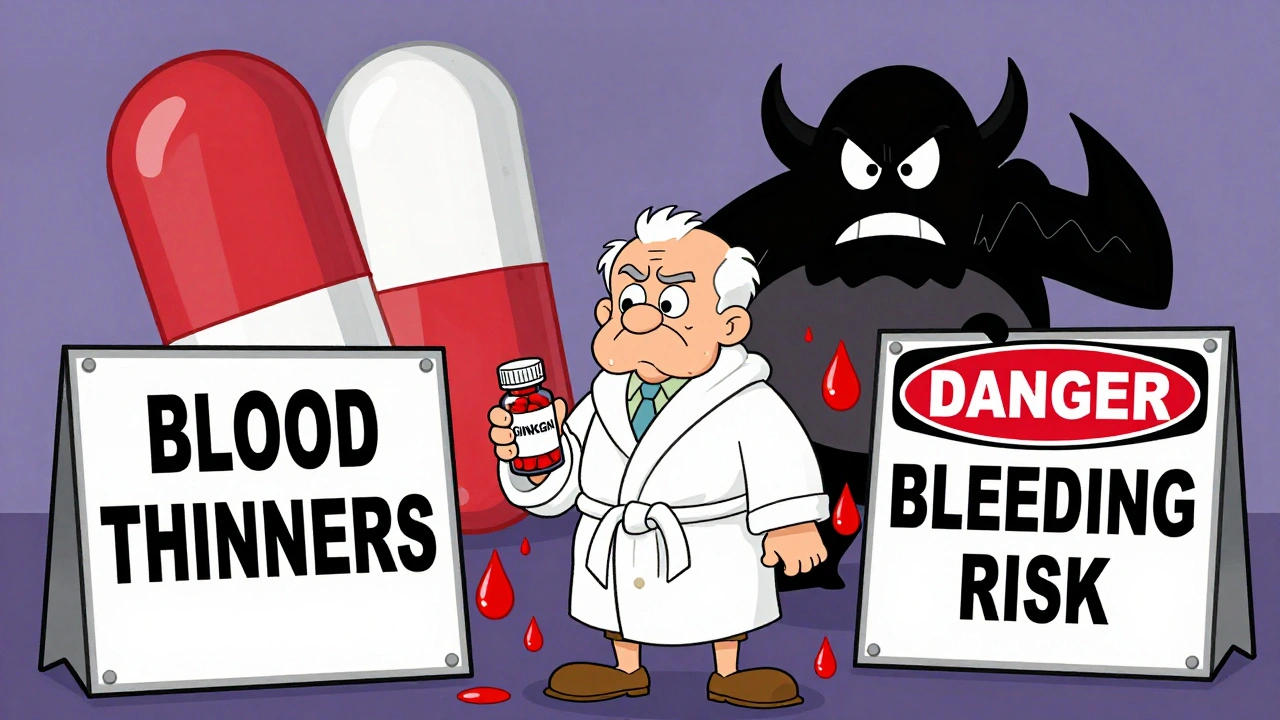
If you're taking blood thinners and thinking about trying Ginkgo Biloba for memory or circulation, stop. This isn't a harmless herb. It could put you in the hospital.
Why Ginkgo Biloba Is Riskier Than You Think
Ginkgo Biloba comes from the leaves of an ancient tree native to China. For decades, people have taken it hoping to improve memory, reduce dizziness, or boost blood flow. It’s sold everywhere - drugstores, health food shops, even online marketplaces. The standard dose? 120 to 240 mg per day. That’s what most studies use. But here’s the problem: Ginkgo doesn’t just affect your brain. It affects your blood.Researchers have found that Ginkgo contains compounds that interfere with blood clotting. That sounds good if you’re trying to prevent clots - until you’re already on a blood thinner. Then it becomes dangerous. The American Society of Anesthesiologists says to stop Ginkgo 2 to 3 weeks before any surgery. Why? Because even minor cuts or internal bleeding can become life-threatening.
Case reports confirm this isn’t theoretical. One man developed spontaneous bleeding in his right eye after just one week of taking Ginkgo with low-dose aspirin. Another woman suffered a brain hemorrhage after years of daily Ginkgo - no other blood thinners involved. These aren’t rare accidents. They’re predictable outcomes.
Which Blood Thinners Are Most Dangerous to Mix With Ginkgo?
Not all blood thinners are the same. And not all combinations with Ginkgo carry the same risk. Some are far more dangerous than others.Warfarin (Coumadin, Jantoven) is the biggest red flag. Studies show Ginkgo can raise your INR - a key test that measures how long your blood takes to clot. A higher INR means thinner blood. Too high, and you risk internal bleeding. There are documented cases of INR levels spiking into dangerous ranges after people started taking Ginkgo.
Clopidogrel (Plavix), an antiplatelet drug, also pairs dangerously with Ginkgo. Both stop platelets from clumping. Together, they can cause bleeding in the stomach, brain, or eyes. The same goes for aspirin - even the low 80 mg dose used for heart protection. Add Ginkgo, and your bleeding risk jumps by nearly 10% according to a 2023 PLOS ONE study.
Even common painkillers like ibuprofen (Advil, Motrin IB) and celecoxib (Celebrex) can become risky when mixed with Ginkgo. These drugs already irritate the stomach lining. Add Ginkgo’s anti-clotting effect, and ulcers or internal bleeding become more likely.
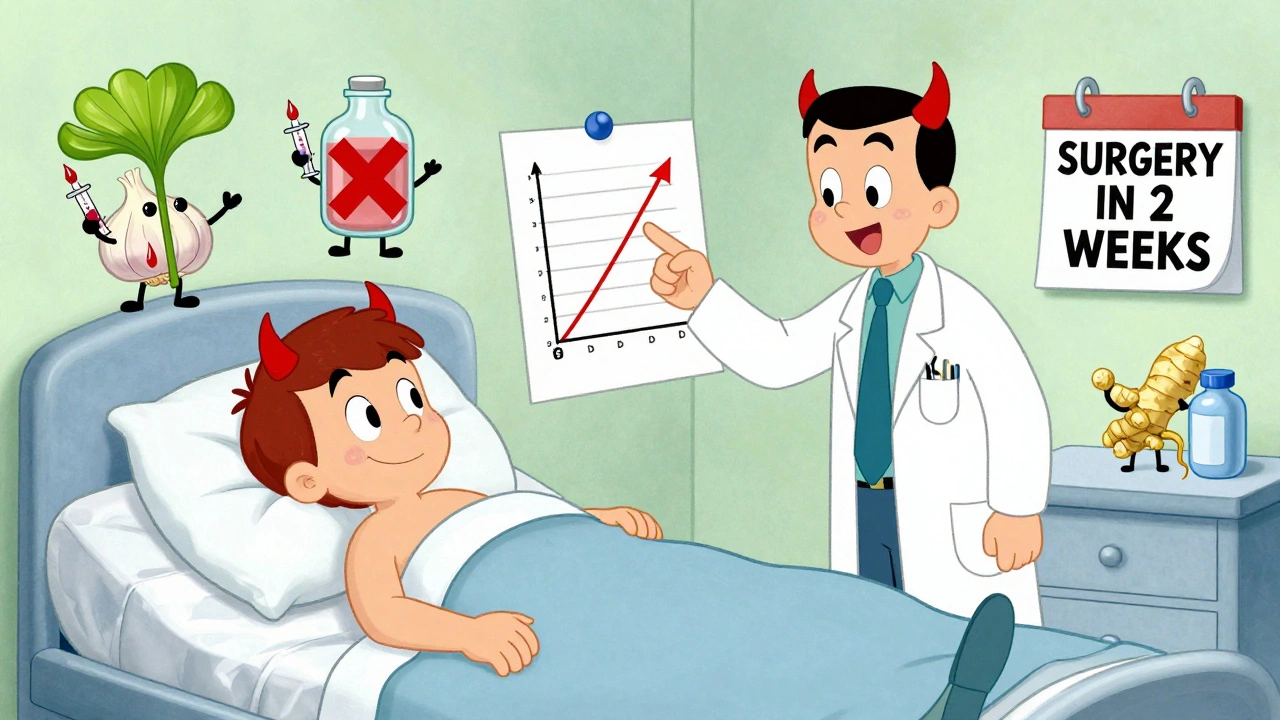
And it’s not just prescription meds. Over-the-counter supplements like garlic, ginger, and ginseng also thin the blood. Taking them with Ginkgo? You’re stacking the odds. One person taking all four had a major gastrointestinal bleed.
The Science Is Mixed - But That Doesn’t Mean It’s Safe
You might have heard that some studies say Ginkgo doesn’t affect blood clotting. That’s true - but misleading.A 2023 PLOS ONE study tested a standardized Ginkgo extract called EGb 761 on 29 different blood clotting markers. None changed. Sounds reassuring, right? But here’s the catch: that study didn’t look at real-world bleeding events. It looked at lab tests. Real people bleed. And in other studies, when researchers tracked actual bleeding incidents - not just lab numbers - they found clear links.
Another study from the NIH found that while Ginkgo didn’t make people bleed more often, it did mess with coagulation test results. That means your doctor might see abnormal numbers and think you’re at higher risk - even if you’re not bleeding yet. It’s like a smoke alarm going off because someone burned toast. The alarm isn’t wrong. The toast just shouldn’t have been in there.
The truth? We don’t have perfect data. But we have enough warning signs to treat Ginkgo like a drug - because it acts like one.
Who Should Never Take Ginkgo Biloba?
Some people should avoid Ginkgo entirely - no exceptions.- Anyone on blood thinners - warfarin, aspirin, Plavix, Xarelto, Eliquis, or anything else that prevents clots.
- People with bleeding disorders - hemophilia, von Willebrand disease, or even a history of frequent nosebleeds or easy bruising.
- Pregnant or breastfeeding women - Ginkgo may affect fetal circulation and isn’t proven safe.
- People over 65 - aging blood vessels are more fragile. Even small increases in bleeding risk can lead to serious outcomes.
- Anyone scheduled for surgery - dental work, knee replacement, even a colonoscopy. Stop Ginkgo at least two weeks before.
Mayo Clinic says it plainly: if you have a bleeding condition, skip Ginkgo. Period.
What About Other Interactions?
Ginkgo doesn’t just play with blood thinners. It messes with other meds too.Antidepressants like fluoxetine (Prozac) and sertraline (Zoloft) may become less effective when taken with Ginkgo. That’s not just a theory - it’s been seen in clinical reports.
Statins like Lipitor and Zocor? Ginkgo might lower their effectiveness. That’s bad news if you’re taking them to protect your heart.
Diabetes meds - Ginkgo can lower blood sugar. If you’re on insulin or metformin, you could end up with dangerously low glucose levels.
Seizure medications - Ginkgo may reduce their effect. That’s a serious risk for anyone with epilepsy.
And don’t forget decongestants. Products with phenylephrine (like Sudafed PE) can raise blood pressure. Ginkgo may block the body’s ability to regulate that spike, leading to hypertensive crisis.
What Should You Do Instead?
If you’re considering Ginkgo for memory or circulation, ask yourself: is the risk worth it?There’s no solid proof Ginkgo improves memory in healthy people. Some studies show tiny, short-term benefits in older adults with mild cognitive decline - but nothing dramatic. And the risks? They’re real.
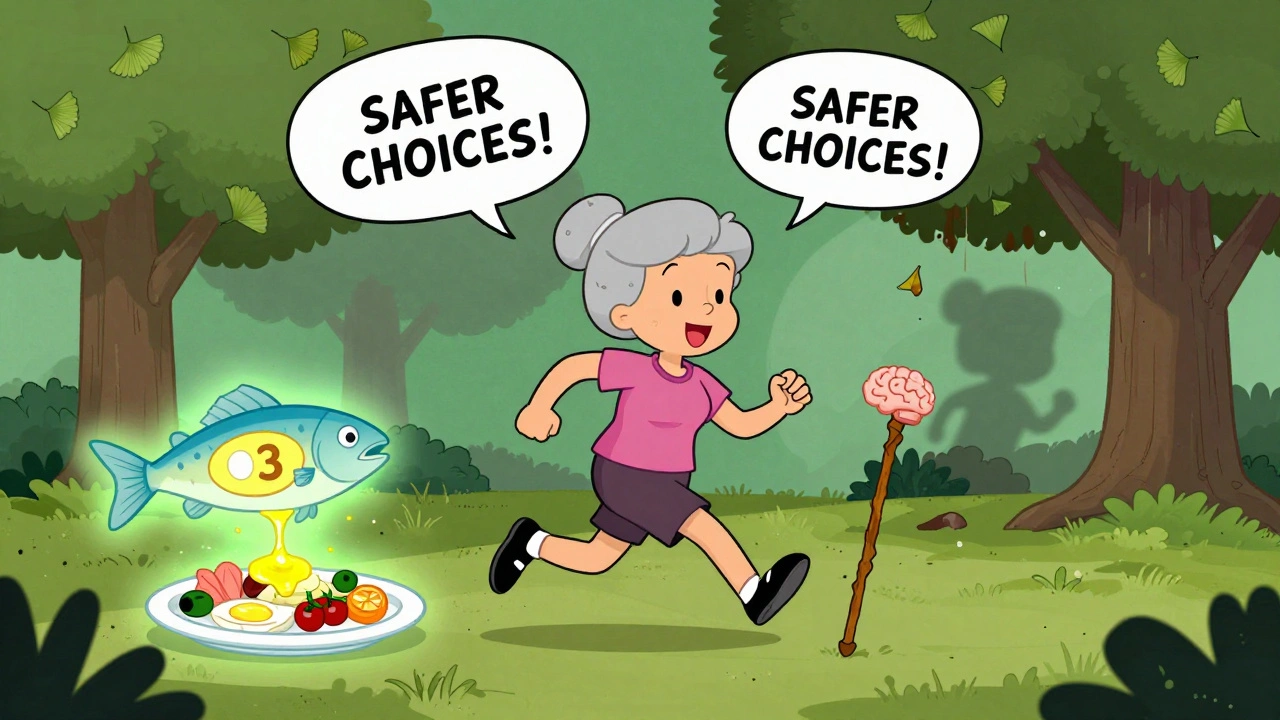
Instead of Ginkgo, try proven alternatives:
- Exercise - even 30 minutes of walking daily improves blood flow and brain function.
- Omega-3s from fish oil - proven to support circulation without the bleeding risk.
- Mediterranean diet - rich in antioxidants, linked to better brain health.
- Control blood pressure and cholesterol - these matter far more than any supplement.
If you’re already taking Ginkgo, don’t quit cold turkey. Talk to your doctor or pharmacist. They can help you taper safely if needed.
How to Stay Safe
Here’s what you need to do right now:- Check every supplement you take - even if it says “natural” or “herbal.”
- Bring a list of all your meds and supplements to every doctor’s visit.
- Ask your pharmacist: “Could this interact with my blood thinners?”
- If you’re having surgery, tell your surgeon and anesthesiologist about every herb, vitamin, or tea you take.
- Stop Ginkgo at least two weeks before any procedure - don’t gamble with 36 hours.
The supplement industry isn’t tightly regulated. Two bottles of Ginkgo from different brands can have wildly different strengths - or even contaminants. The FDA doesn’t test them before they hit shelves. You’re the only one watching out for you.
Final Reality Check
Ginkgo Biloba isn’t a miracle cure. It’s a potent substance with real, documented risks. If you’re on blood thinners, the choice is simple: skip it. There’s no safe middle ground. No “low dose” that’s risk-free. No “I’ve been taking it for years and nothing happened.” That’s luck - not safety.Over 1.5 million Americans take Ginkgo. Millions more worldwide. But no one ever wakes up thinking, “I hope I bleed today.” Yet every year, people do - because they didn’t know the risk.
Knowledge isn’t just power. In this case, it’s the difference between walking out of the hospital - and not walking out at all.
Can I take Ginkgo Biloba if I’m on aspirin?
No. Even low-dose aspirin (80 mg) combined with Ginkgo Biloba increases bleeding risk significantly. Studies show a clear link between this combination and internal bleeding, including in the stomach and brain. Don’t risk it. Talk to your doctor about safer alternatives for memory or circulation.
How long before surgery should I stop Ginkgo Biloba?
Stop Ginkgo Biloba at least 2 to 3 weeks before any surgery - even minor procedures like dental work or colonoscopies. While some studies suggest 36 hours might be enough, medical guidelines from the American Society of Anesthesiologists recommend the longer window to ensure your blood can clot properly. Don’t gamble with your safety.
Is Ginkgo Biloba safe for older adults?
No. Older adults are at higher risk of bleeding due to fragile blood vessels and often taking multiple medications. Mayo Clinic and other health authorities advise older adults - especially those on blood thinners - to avoid Ginkgo Biloba entirely. The potential benefits don’t outweigh the risks.
Can Ginkgo Biloba cause brain bleeding?
Yes. There are documented case reports of people suffering brain hemorrhages after long-term use of Ginkgo Biloba - even without other blood thinners. While rare, the risk is real and potentially fatal. Ginkgo interferes with clotting mechanisms, and in vulnerable individuals, that can lead to uncontrolled bleeding in the brain.
Do all Ginkgo Biloba supplements have the same risk?
No - but that doesn’t make them safer. Supplements aren’t regulated like drugs, so potency and ingredients vary widely. Some may contain higher levels of clotting-inhibiting compounds. Others might be contaminated. Even “standardized” extracts like EGb 761 carry documented risks when mixed with blood thinners. There’s no guaranteed safe version.
Are there any natural alternatives to Ginkgo Biloba for memory?
Yes. Regular physical activity, a Mediterranean diet rich in vegetables, fish, and olive oil, and managing blood pressure and cholesterol are proven to support brain health. Omega-3 supplements from fish oil also have strong evidence for cognitive support - without the bleeding risk. Don’t rely on unproven herbs when science-backed options exist.
Comments (13)
kevin moranga
12 Dec, 2025Man, I’ve been taking ginkgo for years thinking it was just a ‘natural brain booster’ - turns out I was playing Russian roulette with my blood.
Thanks for laying this out so clearly. I’m ditching it tomorrow. No more ‘herbal’ gambles when my life’s on the line.
Also, just checked my supplement bottle - turns out it’s got 120mg per capsule. Guess I didn’t need that third one in the morning.
Y’all be safe out there. Your brain’s awesome, but your blood’s even more important.
Alvin Montanez
13 Dec, 2025People still take this crap? It’s not ‘natural’ if it’s actively sabotaging your coagulation cascade. The supplement industry is a legal loophole for pharmaceutical-grade toxins.
They slap ‘herbal’ on a bottle and suddenly it’s okay to risk intracranial hemorrhage? Where’s the FDA oversight? Where’s the warning label that says ‘THIS COULD KILL YOU IF YOU’RE ON ASPIRIN’?
And don’t even get me started on ‘I’ve taken it for 10 years and nothing happened.’ That’s not a defense - that’s just bad luck you haven’t cashed in yet.
Stop romanticizing plants. Ginkgo isn’t a tea. It’s a pharmacological agent with a half-life and documented bleeding risk. Treat it like the drug it is.
Keasha Trawick
14 Dec, 2025Okay, so let me get this straight - we’re telling people to avoid a 200-million-year-old tree extract because it ‘interferes with clotting’... but we’re fine with warfarin, which is literally rat poison repackaged as medicine?
There’s a cognitive dissonance here that’s giving me whiplash.
Yes, Ginkgo can increase bleeding risk - but so can alcohol, aspirin, NSAIDs, and literally half the supplements on your shelf.
Why is this one singled out like it’s the devil’s leaf? Because it’s ‘natural’? Because it’s not patented?
And don’t even get me started on the ‘no safe dose’ narrative. That’s not science - that’s fearmongering wrapped in a Mayo Clinic seal.
Maybe the real issue isn’t Ginkgo. Maybe it’s our pathological fear of anything that isn’t a Big Pharma product.
Webster Bull
15 Dec, 2025ginkgo = bad if u on blood thinners. no cap.
walk more. eat fish. stop stressing.
your brain don’t need magic leaves. it needs sleep, water, and not being scared all the time.
ps: if u r 65+ and still takin this? pls stop. ur arteries are already on vacation. don’t make ‘em take a hike.
Emma Sbarge
15 Dec, 2025As an American, I find it infuriating that we allow this kind of unregulated toxicity to be sold next to candy bars.
It’s not ‘freedom’ if your freedom to take a supplement can kill you - or worse, cost taxpayers $200K in ER bills because someone didn’t read the fine print.
We regulate cigarettes, alcohol, and energy drinks. Why not this? Because it’s ‘natural’? That’s not logic - that’s mythology dressed up as wellness.
It’s time we treat herbal supplements like what they are: untested, unregulated, and potentially lethal.
Tommy Watson
15 Dec, 2025bro i took ginkgo for 3 years and my brain feels like a wet sock
but hey at least i didn't bleed out
also my mom says it 'cleared her head' so i guess it works for some people?
maybe its just placebo but i feel like i'm the only one who thinks this stuff is overhyped
also why is everyone so scared of bleeding? i mean... we bleed all the time right?
cut my finger yesterday, put a bandaid on, done.
why is this different?
Donna Hammond
15 Dec, 2025Thank you for this comprehensive breakdown - it’s exactly the kind of clarity people need before they start popping supplements like candy.
One thing I’d add: many patients don’t realize their pharmacist is their best ally here. Pharmacists see every med and supplement you take - they can flag interactions you didn’t even know existed.
Bring your entire pill bottle to the pharmacy, not just your prescription list. Even ‘harmless’ teas like green tea or hibiscus can interact.
And if you’re over 65? Don’t assume ‘I’ve been fine for years’ means you’re safe. Aging changes how your liver metabolizes everything. What was tolerable at 55 isn’t at 70.
Knowledge isn’t just power - it’s your best defense against silent, preventable harm.
Richard Ayres
16 Dec, 2025While the risks of Ginkgo Biloba when combined with anticoagulants are well-documented, I think we should also acknowledge the broader cultural context.
Many people turn to herbal remedies not out of ignorance, but because they distrust pharmaceutical systems or have experienced adverse effects from synthetic drugs.
That doesn’t excuse the risk - but it does demand a more compassionate, educational approach rather than pure alarmism.
Perhaps the real issue isn’t Ginkgo itself, but the lack of accessible, non-pharmaceutical alternatives for cognitive support - and the systemic failure to provide them.
Let’s not vilify the herb. Let’s fix the system that makes people feel they need it.
Karen Mccullouch
18 Dec, 2025UHHH so you’re saying I can’t take my ‘brain booster’ anymore? I spent $40 on this stuff and now you’re telling me I’m gonna bleed out??
My grandma took this for 20 years and she’s still walking around like she’s 40.
What’s next? Are you gonna tell me I can’t breathe oxygen because it’s ‘oxidative’??
Stop scaring people with your science-speak. I’m not a lab rat. I’m a human who wants to remember where I put my keys.
And FYI - if you’re scared of herbs, go take your little pills and stay in your box.
Michael Gardner
19 Dec, 2025Actually, I think this whole article is fear porn.
There are zero randomized controlled trials proving Ginkgo causes bleeding in people on low-dose aspirin.
Case reports ≠ evidence.
And if you look at the actual meta-analyses, the risk is negligible - unless you’re on warfarin, which is already a ticking time bomb.
Also, Ginkgo has been used for millennia. If it were that dangerous, we’d be seeing mass hemorrhages in China every year.
Stop overmedicalizing nature. Not everything that’s not a patent is a poison.
Tom Zerkoff
20 Dec, 2025Thank you for the meticulous and clinically grounded exposition. This is precisely the kind of public health communication that is urgently needed in an era of misinformation.
It is imperative to distinguish between traditional herbal use and modern pharmacological dosing. The former often involved lower, intermittent intake; the latter, standardized extracts delivered at therapeutic concentrations, which alter risk profiles significantly.
Furthermore, the interaction kinetics between Ginkgo’s terpene lactones and antiplatelet agents are not merely additive - they are synergistic, amplifying bleeding potential beyond what linear models predict.
For clinicians, this underscores the necessity of structured supplement histories during intake assessments - a practice still underutilized in primary care.
Let us not mistake cultural familiarity for clinical safety.
Yatendra S
21 Dec, 2025ginkgo is like the universe whispering to your brain 🌿🧠
but yeah... if u on blood thinners... maybe just hug a tree instead 😅
life is short. but bleeding out? that’s just rude.
omega-3s + walk = free brain upgrade 🙏
kevin moranga
22 Dec, 2025Wait - I just saw your comment, @5891. You’re right. I’m not just being ‘careful.’ I’m being irresponsible if I think ‘I’ve been fine’ means it’s safe.
My dad had a GI bleed last year - turned out he was taking garlic pills and aspirin. He didn’t even know garlic thins blood.
So now I’m printing out this post and putting it on my fridge next to my meds.
Thanks for the kick in the pants. I needed it.