
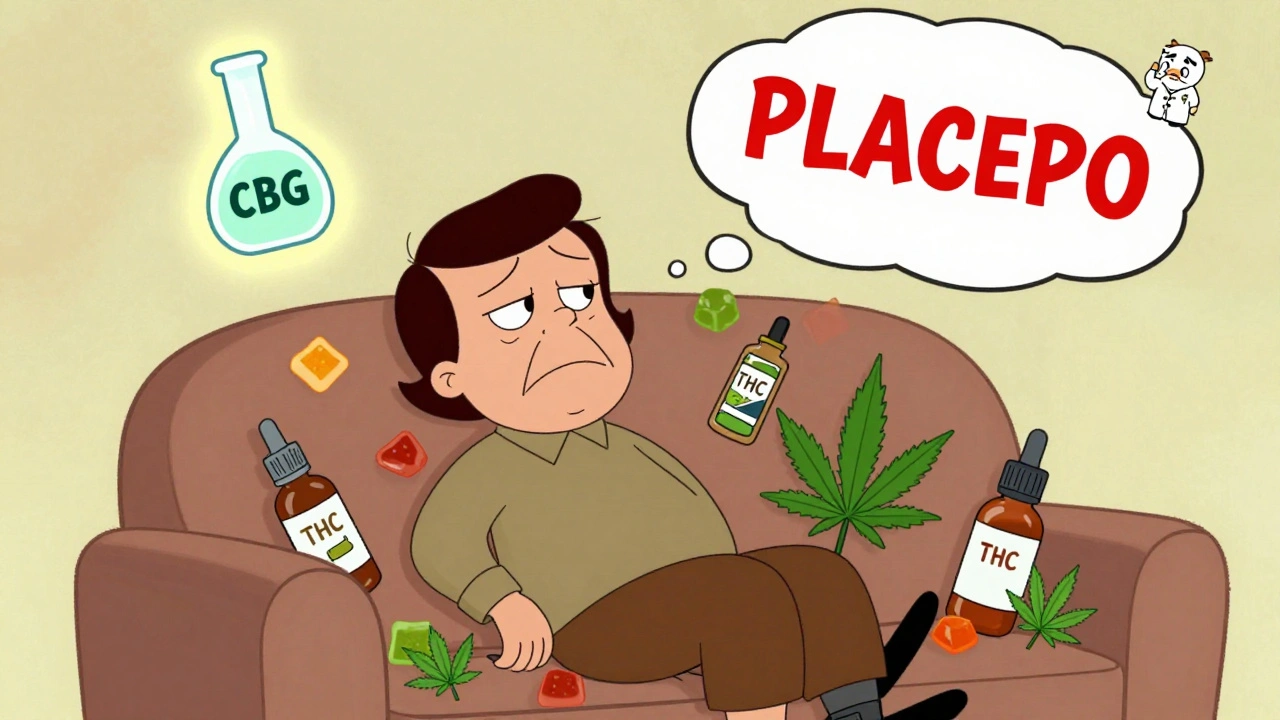
When you’re living with chronic pain, every day feels like a battle. Opioids come with addiction risks. NSAIDs can wreck your stomach or kidneys over time. So people turn to cannabinoids-CBD oil, THC gummies, cannabis tinctures-hoping for relief without the downsides. But here’s the truth: cannabinoids for pain aren’t a miracle cure. They’re not even a clear win. The science is messy, the products are unregulated, and what works for one person might do nothing for another.
What Cannabinoids Actually Do to Pain
Cannabinoids are chemicals from the cannabis plant that talk to your body’s endocannabinoid system. This system helps regulate pain, mood, sleep, and inflammation. The two most studied compounds are THC (the psychoactive one) and CBD (the non-intoxicating one). But there are others-CBG, CBN, CBC-that are showing up in new research. A January 2025 study from Yale found that CBG, CBD, and CBN all reduced activity in a key pain-signaling protein in nerve cells. CBG stood out-it had the strongest effect in the lab. That’s exciting because CBG doesn’t get you high. But here’s the catch: this was a test-tube study. It hasn’t been tested in humans yet. So while the mechanism looks promising, we don’t know if it translates to real pain relief in people. On the other hand, a University of Bath review of 16 high-quality clinical trials found that CBD, when used alone, performed no better than a placebo for pain. Fifteen out of sixteen studies showed no meaningful benefit. That’s not a small inconsistency-it’s a massive red flag. If CBD were truly effective, we’d see consistent results across multiple trials. We don’t. THC, however, tells a different story. When paired with CBD in a 1:1 ratio-like in the prescription spray Sativex-it’s been shown to help with nerve pain from multiple sclerosis and cancer. Health Canada approved it for exactly that. But that’s pharmaceutical-grade, tightly controlled, and prescribed. It’s not the same as what you buy online.The CBD Myth: Hope Over Evidence
The CBD market exploded because of hope. People saw stories online: “CBD cured my arthritis!” “I stopped opioids after using CBD oil!” But when you dig into the data, those stories don’t hold up. The Harvard Medical School blog from 2020 said it plainly: there’s no high-quality human study proving CBD alone helps with pain. The FDA has only approved CBD for two rare forms of epilepsy-not for pain. And yet, in 2022, the U.S. CBD market hit $4.3 billion. People spent billions on something science says likely doesn’t work for pain. A 2023 review of consumer CBD products found they often don’t contain what’s on the label. Some had zero CBD. Others had up to 260% more than advertised. Worse, many contained hidden THC, which can cause anxiety, paranoia, or a failed drug test. One Reddit user spent $400 on CBD gummies and felt nothing. Another said it cut their fibromyalgia pain by 30%. Both are real experiences. But neither proves CBD works-it just proves people feel something. That something might be placebo, or it might be the other ingredients in the product. The problem isn’t just ineffective products. It’s exploitation. Companies market CBD as a cure-all for pain, sleep, anxiety-anything you’re struggling with. They prey on desperation. Dr. Chris Eccleston from the University of Bath called it: “Almost as if chronic pain patients don’t matter, and that we’re happy for people to trade on hope and despair.”THC vs. CBD: Which One Actually Helps?
If you’re looking for real pain relief from cannabinoids, THC is the one with more consistent evidence. But it comes with trade-offs. THC activates the CB1 receptor in your brain. That’s why it gets you high. But it’s also why it reduces pain signals. Studies show THC-containing products work better than CBD alone for neuropathic pain, muscle spasms, and cancer-related pain. The combination of THC and CBD seems to work better than either alone-a phenomenon called the “entourage effect.” But THC isn’t safe for everyone. It can cause dizziness, dry mouth, increased heart rate, memory issues, and anxiety. For people with a history of psychosis or bipolar disorder, it’s risky. And if you’re taking blood thinners, antidepressants, or other meds metabolized by the liver, THC can interfere with them. CBD, on the other hand, doesn’t cause intoxication. It’s generally safer. But for pain? The evidence is weak. Some people swear by it. Most studies say it doesn’t work. If you’re going to try CBD, don’t expect pain relief. You might get better sleep or less anxiety-but that’s not the same as reducing joint pain or nerve pain.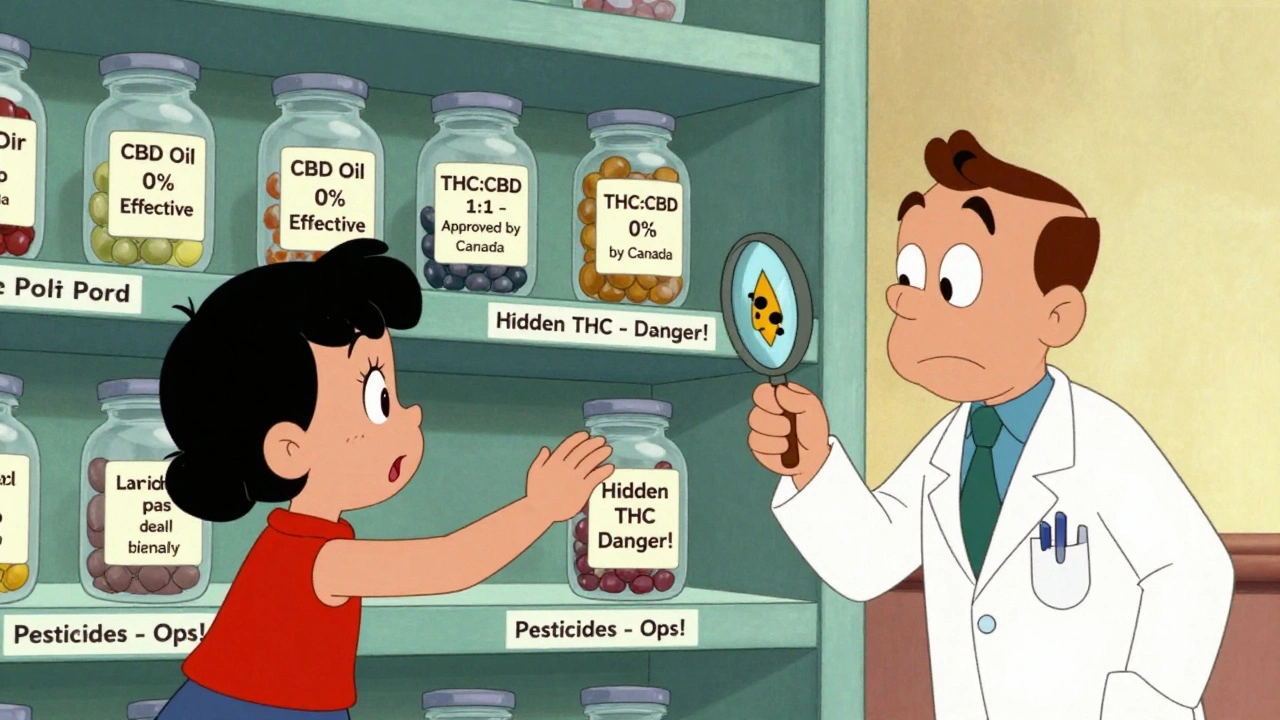
Dosing: No Rules, Just Guesswork
There’s no official dosing guide for cannabinoids and pain. Not because scientists don’t want to give you one-they can’t. The lack of regulation and poor research makes standardization impossible. Clinicians who do recommend cannabinoids usually start low: 2.5-5 mg of THC or 10-20 mg of CBD. They advise patients to wait at least 2-3 hours before taking more, especially with edibles. Effects can take hours to show, and they last longer than you think. A 2023 patient testimonial from Leafly described switching from 120 mg of oxycodone daily to a 1:1 THC:CBD tincture and reducing opioids to just 30 mg a day-with equal pain control and fewer side effects. That’s powerful. But it’s one case. It doesn’t mean it works for everyone. The biggest danger? People assume more is better. They take 100 mg of CBD, think it’s not working, and double it. That’s when liver toxicity becomes a risk. A University of Bath meta-analysis flagged high-dose CBD as potentially harmful to the liver. And since most products aren’t tested, you have no idea what you’re really consuming.Safety: What Nobody Tells You
Cannabinoids are not harmless. Even if they don’t cause addiction like opioids, they have risks. - Drug interactions: Both THC and CBD affect liver enzymes (CYP450) that break down blood thinners, antidepressants, seizure meds, and statins. Mixing them can lead to dangerous side effects. - Liver damage: High doses of CBD, especially over time, have been linked to elevated liver enzymes in clinical trials. - Psychoactive effects: If a product contains even trace amounts of THC, you could feel high-or fail a drug test. That’s a real problem for people in jobs with random screening. - Contamination: A 2023 analysis of 100 CBD products found 70% had pesticides, heavy metals, or synthetic cannabinoids. Some contained illegal substances like delta-8 THC, which isn’t regulated at all. The CDC says there’s limited evidence cannabinoids help most types of pain. But they do acknowledge a few studies show benefit for neuropathic pain. That’s it. For back pain? Arthritis? Migraines? The evidence is thin or nonexistent.What Works Right Now?
If you’re considering cannabinoids for pain, here’s what you need to know:- Don’t expect CBD alone to relieve pain. The science says it probably won’t.
- If you want real pain relief, look for a 1:1 THC:CBD product-but only if it’s prescribed and regulated. Sativex is one example. In places like Canada or the Netherlands, you can get government-tested herbal cannabis.
- Avoid over-the-counter CBD oils unless they’re third-party tested and come with a Certificate of Analysis (COA). Look for labs that test for potency, pesticides, and heavy metals.
- Start with the lowest possible dose. Wait at least 4 hours before increasing.
- Talk to your doctor. Especially if you’re on other medications.
- Never replace opioids or other prescribed pain meds without medical supervision. Withdrawal can be dangerous.

The Future: What’s Coming Next?
There’s real hope on the horizon-but it’s not in the gummy aisle at the gas station. Researchers are running Phase III trials right now. One at Columbia University is testing CBD for chronic low back pain. Another from GW Pharmaceuticals is studying THC:CBD for cancer pain. Results are expected in 2024-2025. If they’re positive, we could see the first FDA-approved cannabinoid pain medication by 2027. The Yale study on CBG is another step forward. If CBG proves effective in human trials, it could become a non-intoxicating, non-addictive pain treatment. But that’s years away. The FDA is also reviewing whether cannabis should be moved from Schedule I (no medical use, high abuse potential) to a lower schedule. That could open the floodgates for research. Right now, federal law makes it nearly impossible to get funding or approval for large-scale studies. Until then, the market is a Wild West. Companies sell hope. Patients pay for it. And science waits.Frequently Asked Questions
Can CBD oil help with chronic pain?
The majority of high-quality clinical trials show CBD alone does not provide meaningful pain relief beyond placebo. While some individuals report benefits, these are often due to placebo effects, improved sleep, or reduced anxiety-not direct pain reduction. There is no FDA approval for CBD to treat any type of pain.
Is THC better than CBD for pain?
Yes, for certain types of pain-especially neuropathic pain, muscle spasms, and cancer-related pain-THC has stronger evidence. Products with a 1:1 ratio of THC to CBD, like Sativex, are approved in Canada for multiple sclerosis and cancer pain. THC works by directly affecting pain signals in the nervous system, while CBD’s role is more indirect and less proven.
What’s the best way to take cannabinoids for pain?
Tinctures (under-the-tongue oils) and sprays offer the most predictable dosing and faster onset than edibles. Smoking or vaping delivers effects quickly but carries lung risks. Edibles are harder to dose accurately and can cause delayed, intense reactions. Topicals may help localized pain but don’t enter the bloodstream significantly, so they won’t help with widespread pain.
Are over-the-counter CBD products safe?
Many are not. Studies show up to 70% of CBD products sold online contain inaccurate levels of CBD, and some contain hidden THC, pesticides, or synthetic cannabinoids. Only products with a Certificate of Analysis (COA) from an independent lab should be considered. Even then, safety for long-term use isn’t established.
Can cannabinoids replace opioids?
Some patients report reducing opioid use after switching to THC:CBD products, but this should only be done under medical supervision. Cannabinoids are not proven to be as effective as opioids for severe acute pain. Abruptly stopping opioids can cause dangerous withdrawal. A doctor can help taper safely while monitoring for side effects.
Is CBG the next big thing for pain?
Early lab studies suggest CBG may be more effective than CBD or THC at blocking pain signals in nerve cells. But these are preliminary results from test tubes and animals. No human trials have been completed yet. CBG is not available in regulated medical products and is not proven to help with pain in people.
What to Do Next
If you’re considering cannabinoids for pain:- Stop spending money on CBD gummies hoping for pain relief. The odds are against you.
- If you live in a state or country with legal medical cannabis, talk to a doctor who specializes in pain management. Ask about regulated THC:CBD products.
- If you’re already using cannabinoids, track your symptoms. Did pain decrease? Or did you just feel calmer? That’s different.
- Never stop prescribed pain meds without medical guidance.
- Watch for new FDA-approved cannabinoid medications between 2025 and 2027. Those will be the first truly evidence-based options.
Comments (12)
Harriet Wollaston
11 Dec, 2025I get it-so many of us are just trying to find a way to breathe through the pain without losing ourselves to pills or side effects. I tried CBD for months, thought it was magic until I realized I was just sleeping better, not feeling less pain. Still, I’m glad I tried. No regrets, just realism now.
Rawlson King
12 Dec, 2025Anyone who buys CBD gummies from a gas station deserves what they get. No regulation, no science, just marketing gurus selling placebo in cute packaging. If you want relief, go through a doctor and get something that’s been tested. Otherwise, you’re funding a scam.
Bruno Janssen
13 Dec, 2025I used to take 60mg of oxycodone a day. Switched to a 1:1 tincture after my doc said it was safe with my meds. Pain’s still there, but I’m not numb. I can actually talk to my kid again. That’s worth more than any study.
Scott Butler
13 Dec, 2025Why are we even letting this stuff be sold? The FDA should shut down every CBD company in America. This isn’t medicine-it’s a cult. We’re letting desperate people get scammed because ‘natural’ sounds better than ‘pharmaceutical.’ Pathetic.
Emma Sbarge
15 Dec, 2025My mom’s got severe RA. She tried every CBD product under the sun-$800 worth. Nothing. Then she got a prescription THC:CBD spray through her VA doctor. Her pain dropped 50% in two weeks. No highs, no crashes. Just relief. If you’re going to try this, don’t waste money on Amazon. Go legit.
Donna Hammond
16 Dec, 2025Let’s be clear: the science on CBD for pain is overwhelmingly negative. Multiple systematic reviews, randomized controlled trials, meta-analyses-all point to no clinically significant effect beyond placebo. That’s not opinion. That’s evidence. Meanwhile, THC-dominant formulations with proper dosing and medical oversight show consistent, reproducible benefits for neuropathic and inflammatory pain. The disconnect between public perception and clinical data is alarming. Stop buying gummies. Talk to a pain specialist.
Sheldon Bird
17 Dec, 2025Everyone’s got their own story. Mine? I tried CBD, didn’t help my back. Then I tried a low-dose THC oil at night-just 5mg. Slept through the night for the first time in years. Didn’t feel high. Just… quiet. Maybe it’s placebo. Maybe it’s not. But I’m not giving it up. If it helps me live, that’s enough.
Karen Mccullouch
18 Dec, 2025They’re all liars. Big Pharma hates cannabis because it’s cheaper than their drugs. That’s why they fund studies that say CBD doesn’t work. Look at the history-opium was banned too. They’re scared of natural solutions. I’ve been pain-free for 3 years on full-spectrum oil. They can’t prove it’s not real.
Willie Onst
19 Dec, 2025It’s funny how we treat pain like it’s a puzzle with one right answer. But it’s not. It’s a personal landscape. What works for me might be useless for you. Maybe CBD helps your anxiety, which helps your pain perception. Maybe THC helps your nerves directly. Maybe neither does. But if you’re trying to find peace, why judge someone for reaching for something that gives them a little quiet? We need more compassion, not more dogma.
Jennifer Taylor
19 Dec, 2025They’re hiding the truth. The government knows cannabinoids work. They’ve had the data for decades. But why let people get relief for $50 a month when they can sell them $500 pills? I saw a guy in a white coat at a conference say ‘we’ve got to keep the narrative controlled.’ That’s why they call CBD useless. It’s not science-it’s control.
Shelby Ume
20 Dec, 2025While I acknowledge the empirical limitations of over-the-counter cannabidiol formulations for nociceptive modulation, I would respectfully submit that anecdotal efficacy, when coupled with a favorable safety profile in non-psychotic populations, may warrant cautious, individualized therapeutic consideration under clinical supervision. The absence of robust evidence should not be conflated with the presence of therapeutic futility.
Keasha Trawick
22 Dec, 2025CBG is the future. Think about it-non-psychoactive, targets TRPV1 and GPR55 receptors, inhibits anandamide reuptake, downregulates pro-inflammatory cytokines like IL-6 and TNF-alpha. That’s not ‘maybe it works’-that’s a multi-target neuropharmacological profile with potential to outperform both CBD and THC. The Yale study? Just the tip of the iceberg. We’re looking at a paradigm shift in pain pharmacology. The problem? The DEA’s still stuck in 1970. We’re years away from this hitting mainstream, but when it does? It’ll change everything.