
What Are Hormone Therapy Combinations?
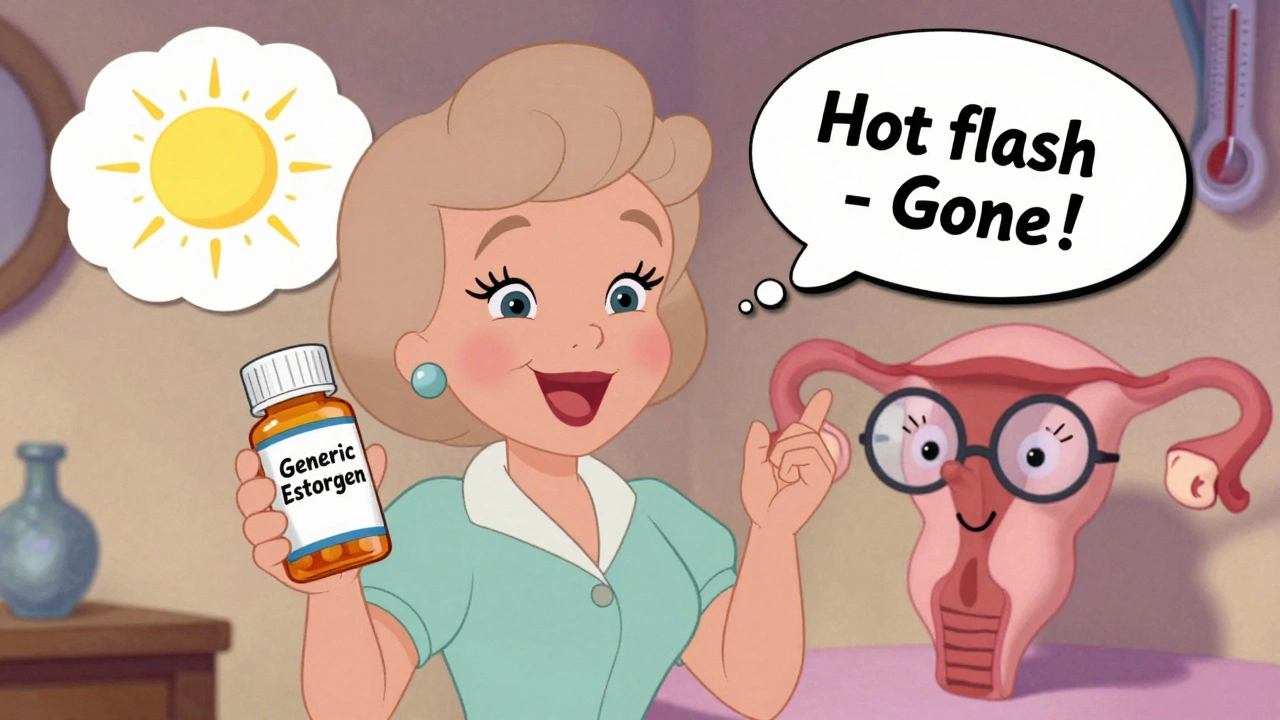
When women go through menopause, their bodies stop making estrogen and progesterone. That drop causes hot flashes, night sweats, sleep problems, and vaginal dryness. Hormone therapy combinations - often called HRT - replace these hormones to ease symptoms. But not all combinations are the same. The right one depends on whether you still have your uterus, how long it’s been since your last period, your age, and your personal health risks.
There are two main types of HRT combinations: sequential and continuous. Sequential therapy is for women who are still having periods or just stopped recently. It means taking estrogen every day and adding progestogen for 10 to 14 days each month. This mimics a natural cycle and often causes monthly bleeding - which is normal and expected. Continuous therapy is for women who haven’t had a period for a full year. Here, you take estrogen and progestogen together every single day, with no breaks. That usually stops periods altogether.
If you’ve had a hysterectomy, you don’t need progestogen at all. Estrogen alone is safe and effective for you. But if you still have a uterus and take estrogen without progestogen, your risk of uterine cancer can jump by 2 to 12 times. That’s why combining them isn’t optional - it’s medical necessity.
Generic Hormone Options: What’s Available and How Much Do They Cost?
You don’t need to pay hundreds of dollars a month for hormone therapy. Most prescriptions today are generics, and they’re just as safe and effective as brand-name versions. In the U.S., common generic estrogen options include conjugated estrogens (like Premarin generics) in doses of 0.3mg, 0.45mg, or 0.625mg. Estradiol tablets come in 0.5mg and 1mg strengths. Progestogen is usually medroxyprogesterone acetate - available as 2.5mg, 5mg, or 10mg tablets.
Prices vary a lot. With insurance, some generics cost under $10 a month. Without insurance, you might pay between $4 and $40, depending on the dose and pharmacy. GoodRx coupons can cut those prices even further. In New Zealand, Australia, and Canada, these same generics often cost less than $15 per month due to government price controls.
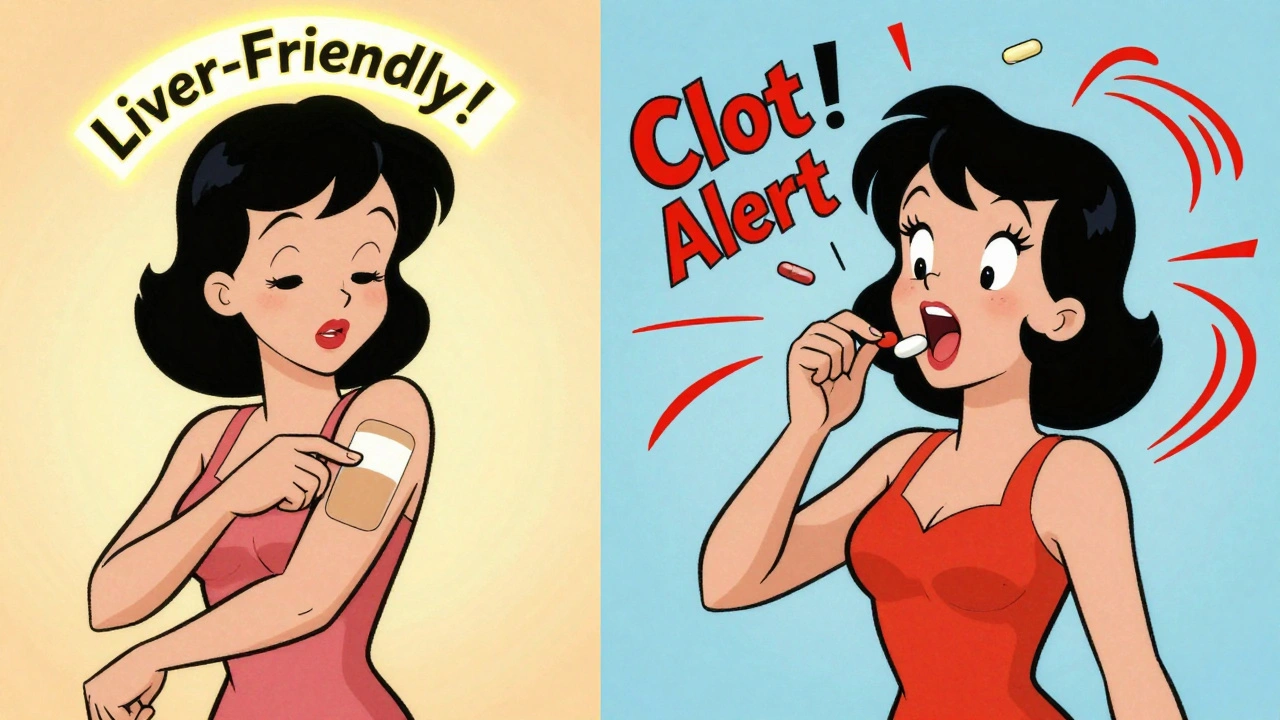
But pills aren’t the only option. Transdermal patches, gels, and sprays are becoming more popular - and for good reason. They deliver hormones through the skin, skipping the liver. That means less strain on your blood clotting system. The most common generic transdermal options are estradiol patches (like Climara) and gels (like Estradiol Gel). Some patches even combine estrogen and progesterone in one patch, like the newer TWIRP formulation approved by the FDA in 2023.
Oral vs. Transdermal: Which Delivery Method Is Safer?
Choosing between pills and patches isn’t just about convenience - it’s about risk. Oral estrogen gets absorbed through your gut and goes straight to your liver. That triggers changes in proteins that make your blood more likely to clot. Studies show oral HRT increases the risk of venous thromboembolism (VTE) - blood clots in the legs or lungs - by 2 to 3 times compared to not using hormones at all.
Transdermal methods - patches, gels, sprays - don’t have that same effect. They deliver hormones directly into your bloodstream. That means your liver isn’t overloaded. Research from the National Institutes of Health confirms: transdermal estrogen carries almost the same VTE risk as not using hormones at all. That’s why experts now recommend transdermal options for women with a history of blood clots, obesity, or those over 60.
Stroke risk also differs. Women over 60 who take oral estrogen have a 39% higher chance of stroke, according to the Women’s Health Initiative. That risk doesn’t rise with transdermal use. If you’re over 60 or have high blood pressure, migraines with aura, or a history of stroke, transdermal is the clear first choice.
Progestogen Matters: Synthetic vs. Micronized
Not all progestogens are created equal. Most generic HRT combinations use medroxyprogesterone acetate - a synthetic progestin. But there’s another option: micronized progesterone. This is bioidentical, meaning it’s chemically identical to the progesterone your body makes. It’s available as oral capsules (like Prometrium) and as an intrauterine system (Mirena IUD).
Why does this matter? Breast cancer risk. Long-term use of synthetic progestins increases breast cancer risk by about 2.7% per year. Micronized progesterone? Only 1.9% per year. That difference might seem small, but over five years, it adds up. The European Menopause and Andropause Society says micronized progesterone has a better safety profile - especially for women with a family history of breast cancer.
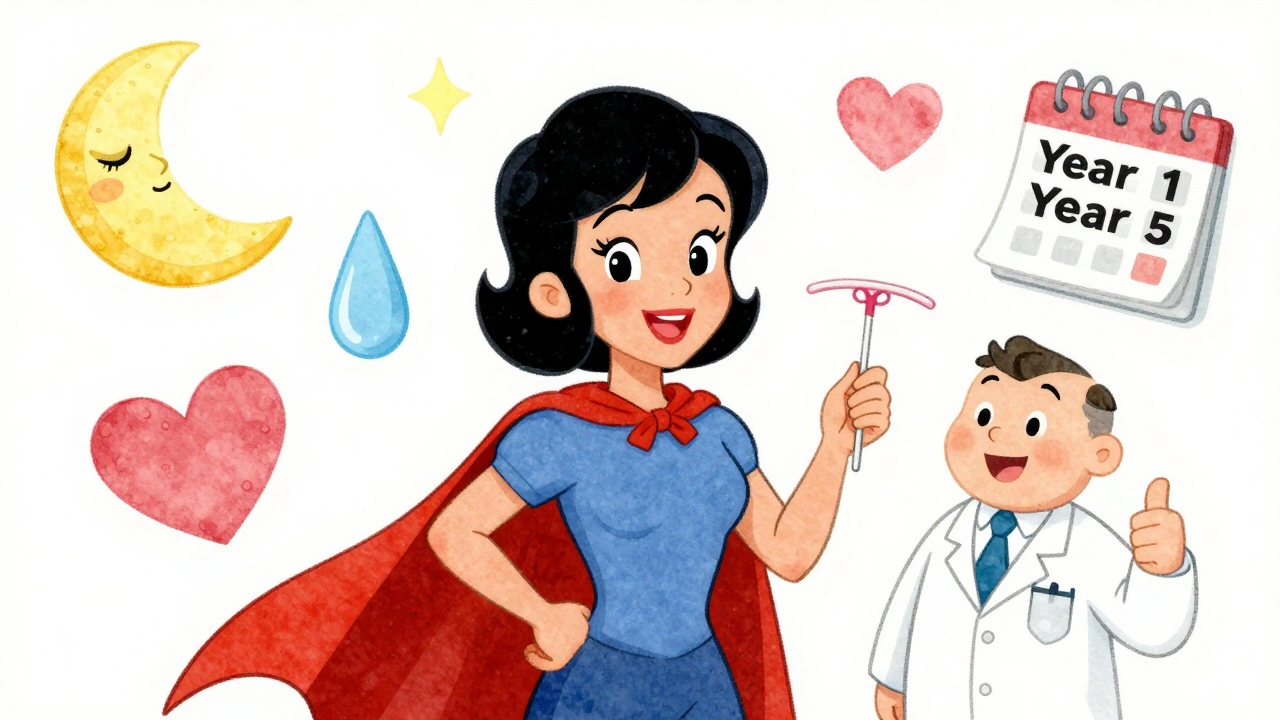
The Mirena IUD is another smart option. It releases progesterone directly into the uterus, so you need very little in your bloodstream. That means fewer side effects like bloating or mood swings. It’s especially useful for women who need progestogen just to protect the uterine lining - not for symptom relief.
Who Should Use HRT? Age and Timing Are Everything
HRT isn’t for everyone. But for healthy women under 60 or within 10 years of their last period, the benefits usually outweigh the risks. The goal isn’t to prevent heart disease or osteoporosis long-term - it’s to relieve symptoms and improve quality of life during the transition.
Starting HRT early - within three years of menopause - may even protect your heart. The Kronos Early Estrogen Prevention Study found that transdermal estradiol started this early didn’t worsen artery plaque and might reduce heart disease risk. But starting after 60? That’s a different story. Your body hasn’t seen estrogen in decades. Adding it suddenly can trigger clots, strokes, or even dementia. As one expert put it: "Throwing hormones at an older body that hasn’t seen them for years can be very harmful."
The American College of Obstetricians and Gynecologists says HRT is appropriate for symptom relief in this younger group - but not for preventing chronic disease. That’s a key distinction. Don’t take it to avoid osteoporosis unless you’ve already tried safer options like calcium, vitamin D, and weight-bearing exercise.
Common Problems and How to Handle Them
Many women stop HRT because of side effects - but most are temporary. Breakthrough bleeding is the most common. Up to 20% of women on sequential or continuous HRT will spot or bleed during the first 6 months. That’s normal as your body adjusts. But if it continues past 6 months, see your doctor. You might need a different dose, delivery method, or type of progestogen.
Other side effects include breast tenderness, headaches, nausea, or mood changes. These often go away after a few weeks. If they don’t, don’t just quit. Talk to your provider. Maybe you need less estrogen. Or switch from pills to a patch. Or try micronized progesterone instead of medroxyprogesterone.
Application matters too. Patches need to go on clean, dry skin - not oily or sweaty areas. Replace them twice a week. Gels must be applied daily to the arm or thigh and you can’t shower or swim for an hour after. Skin-to-skin contact with others right after applying gel can transfer the hormone - which is dangerous for children or partners.
How Long Should You Stay on HRT?
There’s no one-size-fits-all answer. Most women take HRT for 2 to 5 years. But some need it longer - especially if symptoms are severe and they’re otherwise healthy. The North American Menopause Society recommends reviewing your treatment every year after the first 3 to 5 years.
Long-term use (5+ years) does slightly raise breast cancer risk. But that risk is small: less than 1 in 1,000 women per year. For many, the trade-off - better sleep, less pain, improved mood - is worth it. The key is using the lowest dose that works and choosing the safest delivery method.
Many women worry about stopping. Symptoms can return, sometimes worse than before. That’s called rebound. If you decide to stop, taper slowly. Don’t quit cold turkey. Reduce the dose over 2 to 3 months. Your body needs time to adjust.
What’s New in Hormone Therapy?
The field is evolving. The 2023 FDA approval of a new estrogen-progesterone combination patch is a big step. Early data suggests it may lower breast cancer risk compared to older oral combos. Researchers are also testing tissue-selective estrogen complexes (TSECs) and selective progesterone receptor modulators (SPRMs). These are designed to help with hot flashes without affecting breast or uterine tissue.
Transdermal options are gaining ground, especially in Europe, where 65% of prescriptions are patches or gels. In the U.S., that number is still only 35%, but it’s rising. As more doctors learn the safety differences, and as generics become cheaper and more accessible, HRT is becoming a smarter, more personalized choice.
Final Thoughts: It’s Not One Size Fits All
Hormone therapy combinations aren’t about taking a pill because everyone else is. It’s about matching your symptoms, your body, and your risks. If you’re under 60, have a uterus, and are struggling with menopause symptoms, HRT can be life-changing. But only if you choose the right combination, the right delivery method, and the right dose.
Start low. Go slow. Use generics. Prefer transdermal if you have any clotting risk. Talk to your doctor about micronized progesterone. And never assume you’ll be on it forever. Reassess every year. Your needs will change - and your treatment should too.
Comments (12)
Karandeep Singh
1 Dec, 2025HRT in US is overpriced lol. In India we get estradiol patches for $2/month. Why pay $40 when generics work same?
Kelly Essenpreis
1 Dec, 2025Why are we even talking about this like its medicine and not a corporate scam
Rachel Stanton
2 Dec, 2025Important to note that transdermal estrogen bypasses first-pass liver metabolism-this reduces thrombotic risk significantly. For women with metabolic syndrome or thrombophilia, this isn't just preference-it's clinical necessity. Always consider pharmacokinetics over convenience.
James Allen
3 Dec, 2025I mean honestly if you're not using the brand name you're basically gambling with your hormones. I know a lady who switched to generic and ended up in the ER with a clot. Yeah it's cheaper but is it worth it? Probably not. America needs to stop cutting corners on women's health.
ariel nicholas
4 Dec, 2025You say transdermal is safer... but have you considered the environmental impact of all those plastic patches? And the lithium in the adhesive? The FDA doesn't test for that. Also, who benefits from pushing patches? Pharma. Always pharma.
Scotia Corley
5 Dec, 2025The data presented is statistically sound, yet the interpretation lacks nuance. The WHI findings were mischaracterized in popular discourse; subgroup analyses reveal differential risk profiles based on age at initiation. To generalize across all postmenopausal women is both unscientific and irresponsible.
Debbie Naquin
7 Dec, 2025HRT isn't a treatment it's a transition tool. The body doesn't need estrogen replacement it needs recalibration. We're treating symptoms not the root-why not address insulin resistance or adrenal fatigue first? The system is broken.
Kenny Leow
8 Dec, 2025In Singapore, we use micronized progesterone as first-line. No mood swings, no bloating. The culture here respects natural rhythms-maybe we should too. Not everything American is better.
Amber-Lynn Quinata
8 Dec, 2025I know someone who died from HRT. They said it was safe. They lied. Big Pharma is hiding the truth. The FDA is paid off. You think patches are safe? They're just slower poison. Watch the documentary 'Hormone Lies'.
Suzanne Mollaneda Padin
9 Dec, 2025For women with PCOS transitioning into menopause, the combo of transdermal estradiol + micronized progesterone is a game-changer. I've seen patients go from debilitating anxiety to sleeping through the night. It's not magic-it's physiology. But you need a provider who listens.
Alexander Williams
11 Dec, 2025The literature consistently demonstrates that synthetic progestins elevate CRP and fibrinogen levels more than bioidentical progesterone. This has direct implications for endothelial function. The 2.7% vs 1.9% breast cancer differential is clinically meaningful in longitudinal cohorts.
Mary Ngo
12 Dec, 2025I read this and I just feel like... what if this is all a lie? What if menopause isn't a disease? What if we're being manipulated into thinking our bodies are broken? What if the real solution is meditation, fasting, and rejecting patriarchy?