
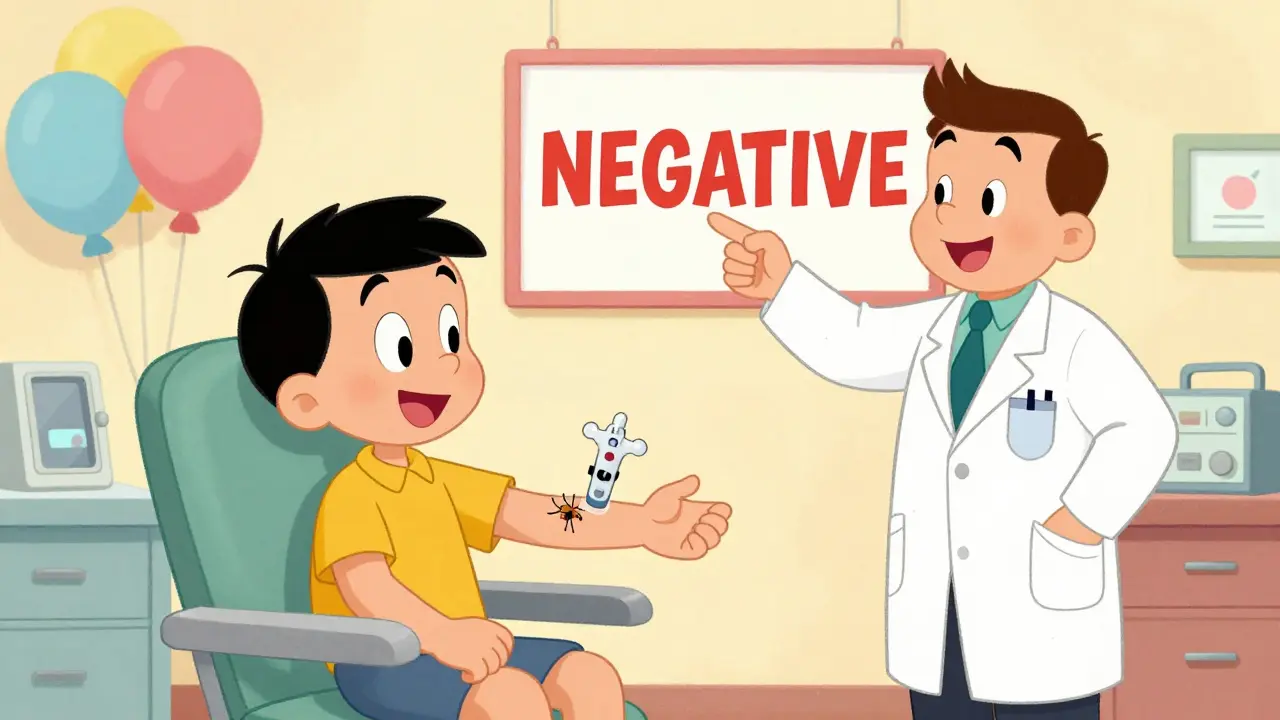
If you’ve been told you’re allergic to antibiotics-especially penicillin-you might be carrying a label that’s not just outdated, but potentially dangerous. About 10% of people in the U.S. say they’re allergic to penicillin, but when tested properly, fewer than 1% actually are. That means most of you are avoiding a safe, cheap, and effective antibiotic for no reason. And that’s not just inconvenient-it’s risky. You’re more likely to get a harder-to-treat infection, stay longer in the hospital, or contribute to antibiotic resistance. The good news? You can find out for sure with a simple, safe, and well-studied allergy test.
Why This Test Matters
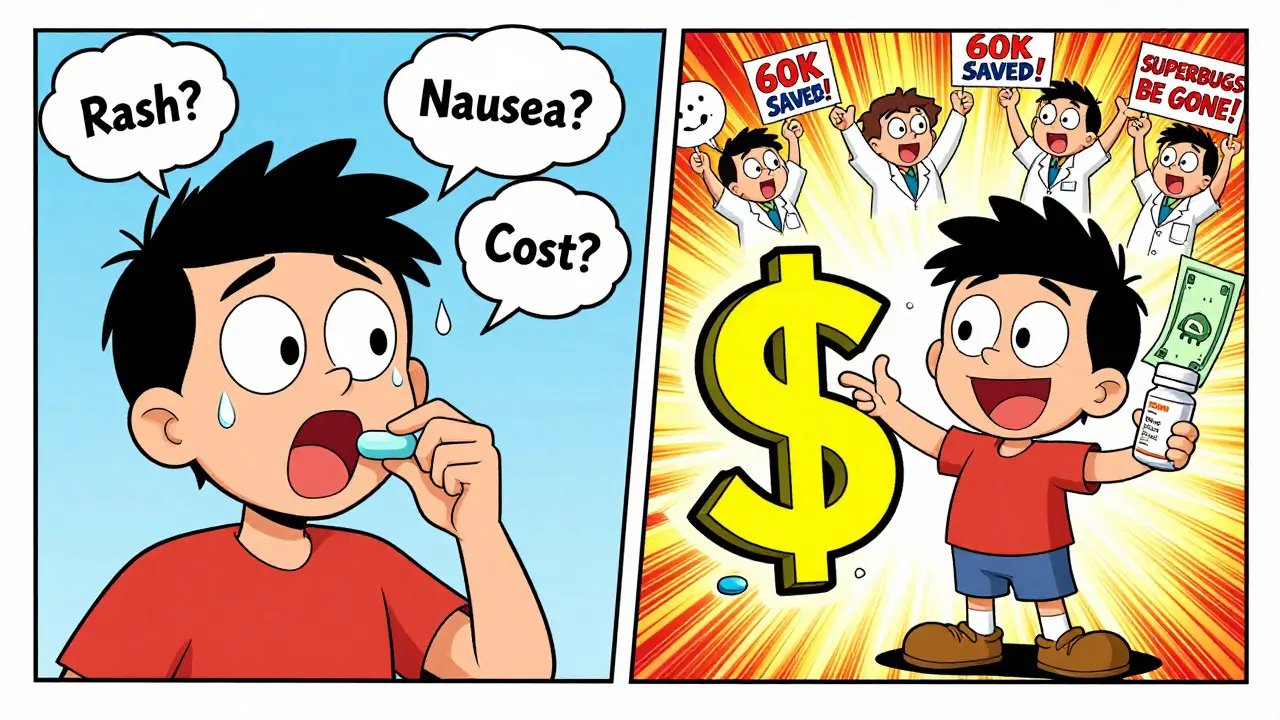
Antibiotic allergies aren’t like food allergies. You don’t always get hives or swelling the first time you take the drug. Sometimes, you feel nauseous, get a rash, or have a fever weeks later. These reactions get labeled as "allergies," even if they’re not true immune responses. But when doctors see "penicillin allergy" on your chart, they switch you to broader-spectrum antibiotics. Those drugs cost more, have worse side effects, and fuel superbugs. A 2020 study in JAMA Internal Medicine found people with unconfirmed penicillin allergies get stronger antibiotics 69% more often. That adds up to $6,000 extra per person every year.
Testing changes all that. Once you’re cleared, doctors can use the best antibiotic for your infection-penicillin or one of its close relatives. That means faster recovery, fewer complications, and lower costs. One patient in a 2023 study switched from daptomycin, which costs $1,850 per dose, to penicillin at $12. Their annual drug bill dropped from over $67,000 to less than $5,000. That’s not a coincidence. It’s science.
What You Need to Do Before Testing
Preparing for this test isn’t optional. If you don’t stop the right medications ahead of time, the test won’t work. The results could be wrong, and you might be told you’re allergic when you’re not-or worse, miss a real allergy.
- Stop all first-generation antihistamines like diphenhydramine (Benadryl) and hydroxyzine at least 72 hours before your appointment. These drugs are common in cold and sleep aids.
- Stop second-generation antihistamines like cetirizine (Zyrtec), loratadine (Claritin), fexofenadine (Allegra), and levocetirizine (Xyzal) for a full 7 days. These are often taken daily for allergies, so plan ahead.
- Stop tricyclic antidepressants like doxepin 14 days before testing. These also block histamine and can interfere.
- Keep taking everything else, including blood pressure meds, heart meds, or diabetes drugs. But tell your allergist about all your medications-even ones you think don’t matter.
- Watch for ACE inhibitors like lisinopril or enalapril. They can make an allergic reaction harder to treat. Your doctor will monitor you more closely if you’re on one.
The key is honesty. Don’t skip a medication because you think it’s "not important." The test relies on your body’s natural response. If antihistamines are still in your system, your skin won’t react-even if you’re truly allergic.
What Happens During the Test
The test isn’t scary. It’s done in three steps, and you’re watched closely the whole time. You’ll be in a clinic with emergency meds on hand-epinephrine, oxygen, and monitors-just in case.
- Skin prick test: A tiny drop of penicillin reagent is placed on your skin, then lightly pricked with a plastic device. It feels like a mosquito bite. No needles. No pain. If there’s no reaction in 15 minutes, you move to the next step.
- Intradermal test: If the first test is negative, a small amount of penicillin is injected just under the skin. You’ll see a small bump, like a mosquito bite. If it swells more than 3mm and turns red, that’s a positive sign. If it stays flat, you’re cleared to the next step.
- Oral challenge: This is the final step. You swallow a small dose of penicillin-usually 10% of a normal pill. You wait 30 minutes. Then you take the full dose. You’re monitored for another 60 minutes. Most people feel nothing. Some get a mild rash or stomach upset. That doesn’t always mean allergy.
The chance of a serious reaction during this test is about 0.06%. That’s lower than the risk of being struck by lightning in a given year. And if something does happen, your team is ready. Epinephrine is always nearby. You’re never alone.
What the Results Mean
Not every reaction is an allergy. A red, itchy bump larger than 3mm on the skin test means you likely have a true IgE-mediated allergy. That’s serious. But if your skin test is negative, and you tolerate the oral dose without trouble, you’re not allergic. Period.
Some people get a delayed reaction-itching or swelling at the test site 4 to 8 hours later. That happens in about 15% of cases. It’s not dangerous. Just use over-the-counter hydrocortisone cream. It goes away in a day or two.
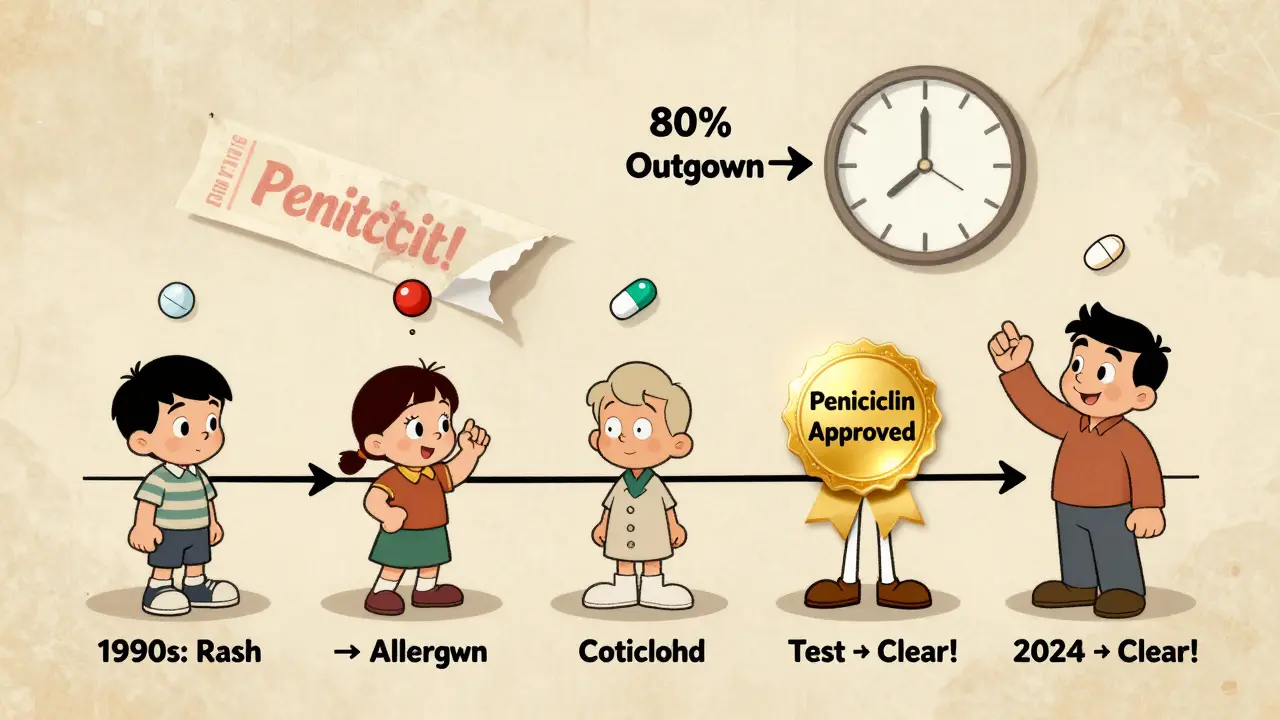
And here’s something most people don’t know: allergies fade. If you had a serious reaction to penicillin 10 years ago, there’s an 80% chance you’ve outgrown it. That’s why retesting is so important-even if you were told you were allergic as a child.
What to Expect After Testing
If you test negative, your allergist will give you a letter to give your doctor. It says you’re not allergic to penicillin. That letter is your ticket to better care. Next time you’re sick, your doctor won’t reach for the expensive, broad-spectrum drugs. They’ll use the one that works best.
Many patients say the hardest part wasn’t the test-it was the prep. Stopping your daily antihistamines for a week feels annoying. But 92% of people who’ve been tested say it was less uncomfortable than they expected. And 88% say they’d recommend it to someone else.
One Reddit user wrote: "The oral challenge was just swallowing a regular pill, much easier than I feared." Another said: "The skin prick felt like a mild mosquito bite." That’s the reality. No needles. No pain. Just peace of mind.
Why This Isn’t Done More Often
You’d think every doctor would offer this test. But only 17% of primary care providers follow the guidelines. Why? Access. In rural areas, 63% of counties have no allergist. And many doctors don’t know the protocols. But things are changing.
Hospitals are starting formal "de-labeling" programs. By 2027, 75% of U.S. hospitals are expected to have them-up from just 42% today. Some clinics are even testing patients at home under telemedicine supervision, with 95% success rates. And researchers are working on a blood test that could replace skin testing altogether.
But right now, skin testing is the gold standard. And it works. The negative predictive value is 95-98%. That means if you test negative, you’re almost certainly not allergic. No guesswork. No assumptions.
Next Steps
If you’ve been told you’re allergic to penicillin or another antibiotic:
- Check your medical records. What reaction did you have? Was it a rash? Nausea? Or something more serious?
- Call your doctor. Ask if you can be referred to an allergist for testing.
- Start planning your prep. Write down every medication you take. Mark your calendar. Stop antihistamines 7 days before your appointment.
- Don’t assume you’re allergic forever. Your body changes. So should your care.
This test doesn’t just change your future. It changes your family’s. It changes your community’s. Every time you’re correctly de-labeled, you help reduce antibiotic resistance. And that’s not just good for you-it’s good for everyone.
Can I take antihistamines the day before my allergy test?
No. First-generation antihistamines like Benadryl must be stopped 72 hours before testing. Second-generation ones like Zyrtec or Claritin need to be stopped 7 full days before. Even one dose can block your skin’s reaction and lead to a false negative result. Don’t risk it.
Is the oral challenge dangerous?
The risk of a severe reaction during the oral challenge is about 0.06%. That’s extremely low. The test is done in a controlled setting with emergency equipment and trained staff ready. Mild symptoms like a rash or stomach upset happen in about 10% of cases, but these are not allergic reactions and don’t mean you’re allergic. The benefits far outweigh the risks.
Do I need to stop all my medications?
No. Only medications with antihistamine effects need to be stopped-like Benadryl, Zyrtec, and doxepin. Blood pressure pills, insulin, asthma inhalers, and heart medications should continue as usual. But always tell your allergist about every drug you take, even supplements. Some, like ACE inhibitors, require extra monitoring.
Can I get tested for allergies to other antibiotics besides penicillin?
Penicillin is the only antibiotic with a standardized, reliable test. For other antibiotics like sulfa or vancomycin, there’s no proven skin or blood test. Diagnosis is based on your reaction history and sometimes a controlled challenge. If you’re allergic to penicillin, you’re not automatically allergic to others. Testing for penicillin can open the door to safer alternatives.
What if I had a severe reaction years ago? Can I still be tested?
Yes. In fact, you should be. About 50% of people who had an anaphylactic reaction to penicillin lose their allergy within 5 years. After 10 years, 80% do. Your body changes. A test can confirm whether you still have the allergy-or if you’re safe to use penicillin again.
Comments (8)
Aisling Maguire
4 Mar, 2026I got tested last year after being told I was allergic since I was 5. Turned out I wasn't. My doctor was shocked. They just assumed. Now I take amoxicillin for every cold and save like $300 a year. Seriously, if you think you're allergic, just get tested. It's not a big deal.
Divya Mallick
5 Mar, 2026This is pure pharmaceutical propaganda. The CDC knows antihistamines mask reactions but they don't tell you that the real reason they push this test is because Big Pharma wants you on their $2000-per-dose alternatives. Penicillin is a 1940s drug. They're terrified you'll realize how cheap and effective it is. They'd rather you take three antibiotics at once than one. The '80% outgrew it' stat? That's a placebo effect. Your immune system doesn't just forget. It's all about profit.
Renee Jackson
5 Mar, 2026Thank you for this comprehensive and evidence-based overview. The data presented here aligns with current clinical guidelines from the American Academy of Allergy, Asthma & Immunology. It is imperative that patients and providers recognize the clinical and economic burden of unverified antibiotic labels. Proper de-labeling not only improves individual outcomes but also contributes meaningfully to antimicrobial stewardship at a population level. I encourage all clinicians to integrate this into routine practice.
Jane Ryan Ryder
6 Mar, 2026So let me get this right. You want me to stop taking Zyrtec for a week so some doctor can poke me with a plastic thing and then make me swallow a pill because maybe I'm not allergic to a drug I've never taken since 1998? And you call this science? Lol. I'll keep my $6000 a year in extra meds thanks. At least I know what I'm paying for.
Callum Duffy
7 Mar, 2026The precision of the testing protocols described here is commendable. The negative predictive value of 95-98% is statistically robust and clinically significant. It is concerning, however, that access remains inequitable, particularly in rural regions. This is not merely a medical issue but a systemic one. Standardization and education must be prioritized to ensure that this life-changing intervention is not a privilege but a standard of care.
Stephen Vassilev
8 Mar, 2026I've been researching this for months. Did you know that the penicillin reagent used in skin tests is not FDA-approved for this purpose? It's an off-label use. The manufacturers don't even guarantee the purity. And what about cross-reactivity with cephalosporins? No one talks about that. The FDA has issued 14 warnings since 2019 about false negatives in low-income clinics using expired reagents. This isn't a test-it's a gamble with your life. And now they want you to stop your blood pressure meds? What if you have a stroke during the 7-day window? Who's liable?
Sharon Lammas
10 Mar, 2026I used to think I was allergic because I got a rash once after a tooth extraction. I never questioned it. Then I read about how allergies fade. I wondered-was it even an allergy? Or just a virus? Or stress? Or the painkillers? I didn’t want to risk it. But reading this made me realize I’d been living in fear of a ghost. I got tested. Negative. I felt like I’d been given back a part of my health I didn’t even know I’d lost.
Milad Jawabra
12 Mar, 2026If you're reading this and you've been told you're allergic-do it. Seriously. It's one of the easiest life upgrades you'll ever do. I was skeptical too. Thought I'd be in the ER. Turned out I was fine. My doctor said I saved them $5000 on my last infection. My kid is on penicillin now for ear infections instead of that nasty azithromycin that gave him diarrhea for a week. Do the prep. Show up. Get cleared. Your future self will high-five you.