
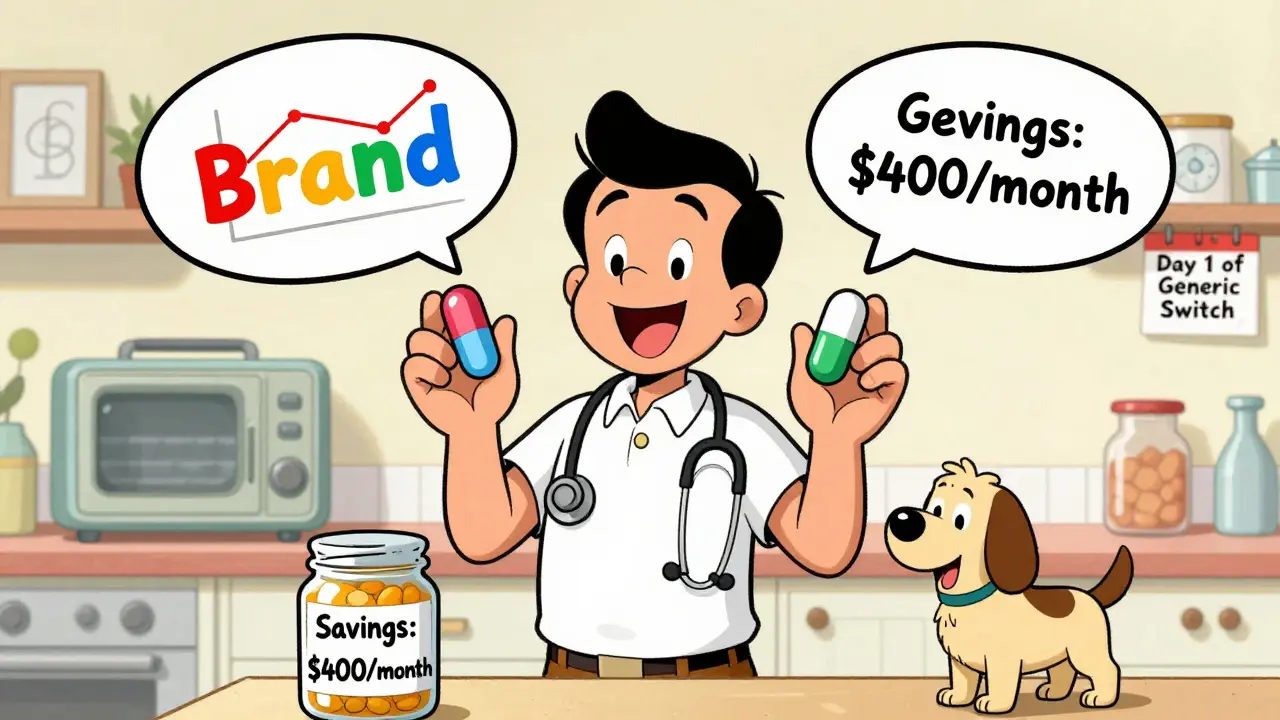
Switching from a brand-name medication to a generic version can feel unsettling-especially when you’re managing a chronic condition like diabetes, high blood pressure, or thyroid disease. You’ve been on the same pill for years. It’s familiar. It works. So why change? And what if something goes wrong?
The truth is, for most people, switching to a generic maintenance medication doesn’t change how they feel. It just changes how much they pay. Generics are not cheaper because they’re weaker. They’re cheaper because they don’t carry the cost of marketing, branding, or patent protection. But that doesn’t mean the transition is always smooth. Some people notice subtle differences. Others don’t notice anything at all. Here’s what you need to know before, during, and after the switch.
What Are Maintenance Medications?
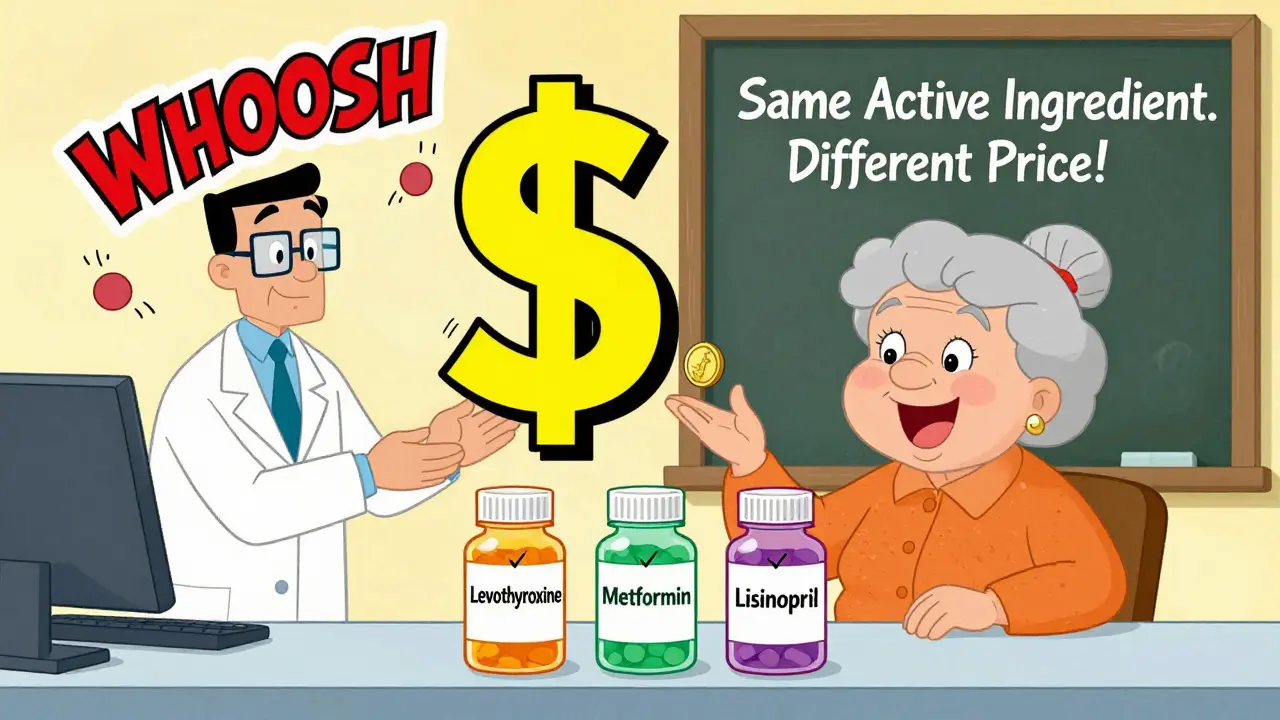
Maintenance medications are the daily or weekly pills, patches, or injections you take to manage long-term health conditions. These aren’t for quick fixes. They’re for keeping things stable: your blood sugar, your blood pressure, your thyroid levels, your cholesterol. Common examples include atorvastatin for high cholesterol, levothyroxine for hypothyroidism, metformin for diabetes, lisinopril for high blood pressure, and sertraline for depression.
These drugs are taken consistently-sometimes for life. That’s why they’re called "maintenance." They don’t cure. They control. And because they’re taken so often, even small changes in cost or how they feel can have big effects on whether you keep taking them.
Why Generics Are Just as Effective
The U.S. Food and Drug Administration (FDA) doesn’t approve a generic drug unless it does the exact same job as the brand-name version. That means:
- Same active ingredient
- Same strength
- Same dosage form (pill, liquid, patch, etc.)
- Same way it enters your body (oral, injected, inhaled)
The only differences? Inactive ingredients-things like fillers, dyes, or preservatives. These don’t affect how the drug works. But for a small number of people, they can cause minor reactions. A rash. A stomach upset. A weird taste. These usually go away after a few weeks as your body adjusts.
The FDA requires generics to prove they deliver the same amount of active drug into your bloodstream at the same rate as the brand. This is called bioequivalence. The standard? The generic’s concentration in your blood must fall within 80-125% of the brand’s. That’s a tight range. It’s not a guess. It’s science.
How Much Money Do You Save?
The cost difference is staggering.
Brand-name Lipitor (atorvastatin) used to cost over $378 for a 30-day supply. The generic? $0.99 at major pharmacies. That’s not a typo. Nine-nine cents.
For insulin, brand-name Lantus runs about $345 per vial. The authorized generic version? $98.50. The biosimilar Semglee? $285. Even the higher-priced alternatives are still far cheaper than the original.
According to the Congressional Budget Office, generics save the U.S. healthcare system over $300 billion every year. For someone managing two or three chronic conditions, switching to generics can mean saving $1,200 or more annually.
And here’s the kicker: people who take generics are actually more likely to stick with their medication. Studies show 12-15% higher adherence rates with generics. Why? Because they can afford them. And when people take their meds regularly, hospital visits drop by 23%.
When Generics Might Cause Problems
Most people do fine. But not everyone.
Some drugs have what’s called a "narrow therapeutic index." That means the difference between a dose that works and a dose that’s too much is very small. For these, even tiny changes in how the body absorbs the drug can matter.
Examples include:
- Levothyroxine (for thyroid)
- Warfarin (a blood thinner)
- Phenytoin (for seizures)
For these, switching between different generic manufacturers can sometimes cause small shifts in blood levels. One study found 5-8% of levothyroxine patients had noticeable changes in their thyroid hormone levels after switching manufacturers. That doesn’t mean the generic didn’t work-it means their body responded differently to the new filler or coating.
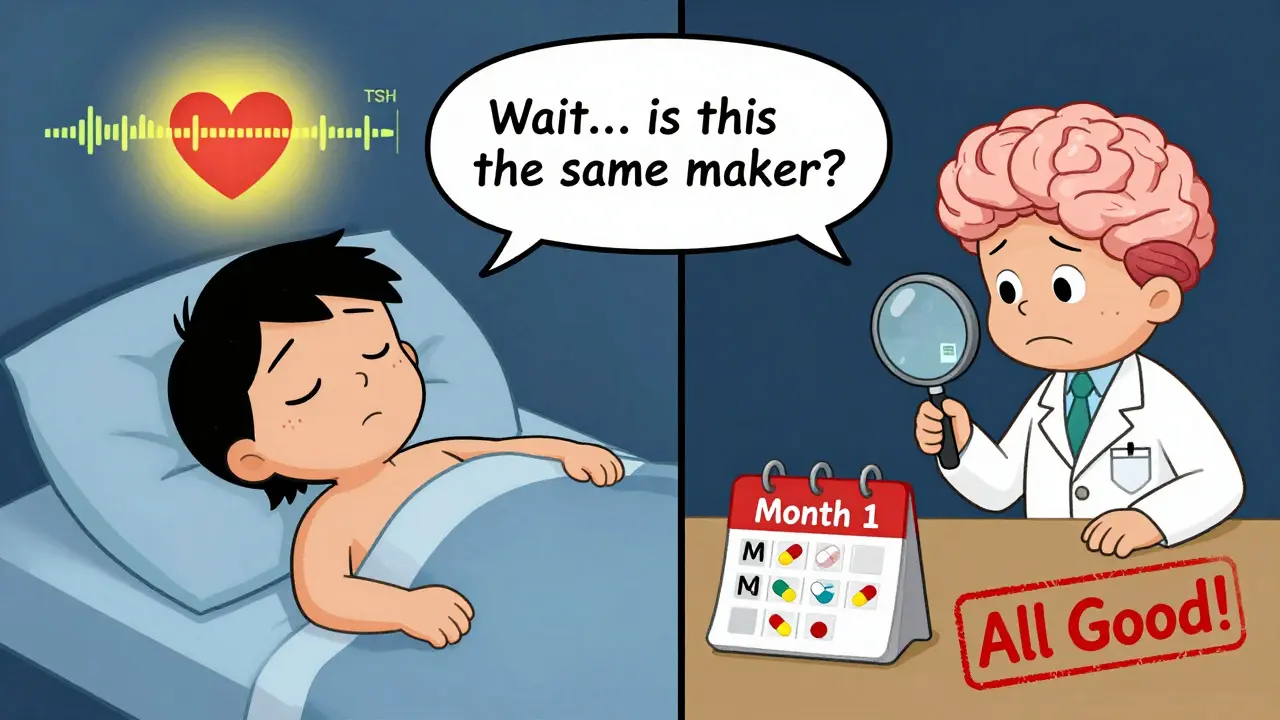
That’s why many doctors and pharmacists recommend staying with the same generic manufacturer once you’ve found one that works. If your pharmacy switches your generic without telling you, it’s okay to ask: "Is this the same maker as last time?"
For psychiatric medications like antidepressants, patient perception matters too. A survey by the National Alliance on Mental Illness found 34% of people worried generics wouldn’t work as well-even though studies show no difference in effectiveness. That fear can lead to stopping the drug, which is far riskier than switching.
What to Expect When You Switch
If you’re switching from a brand-name to a generic, here’s what usually happens:
- First week: You might notice nothing. Or you might feel a little off. A headache. A change in digestion. This is usually your body adjusting to new inactive ingredients.
- Weeks 2-4: Most side effects fade. Your body gets used to the new version.
- By month 2: If you’re still feeling worse, talk to your doctor. But don’t assume it’s the medication. Sometimes symptoms are from stress, sleep, diet, or the condition itself changing.
Keep a simple log. Write down how you feel each day. Note energy, mood, sleep, or symptoms. Use the FDA’s free Medication Tracker app-or just a notebook. If you’re on thyroid medication, ask your doctor to check your TSH level 6-8 weeks after switching. For blood pressure, check it at home more often for a few weeks.
Pharmacists are your best ally here. They know which generics come from which manufacturers. They can tell you if your refill changed. And they can help you request a specific brand if needed.
How to Protect Yourself
Here are five practical steps to make the switch safer:
- Ask your pharmacist: "Is this the same manufacturer as before?" If it changed, ask if you can stick with the one that worked.
- Don’t switch back and forth: Constantly changing between generics increases the chance of instability. Stick with one.
- Monitor your symptoms: Especially for thyroid, heart, seizure, or blood-thinner meds. Keep track. Share notes with your doctor.
- Know your insurance rules: Many plans automatically switch you to generics. If you need the brand, you’ll need prior authorization-and approval is rare (only 14% of requests are approved).
- Use adherence tools: Pill organizers, phone alarms, or apps that remind you to take your meds. Consistency matters more than the brand.
What’s Changing in 2026?
The landscape is shifting fast. In 2023, the FDA approved 79 new generic versions of drugs for chronic conditions-including the first generics for Jardiance (diabetes) and Entresto (heart failure). More are coming.
The Inflation Reduction Act of 2022 capped insulin costs at $35 per month for Medicare users. That’s pushed more people toward generics and biosimilars.
But there’s a warning: fewer companies now make generics. In 2010, there were 15 manufacturers for an average drug. Today, it’s down to 8. That means supply shortages are more likely. If your pharmacy runs out of your generic, you might get a different one. That’s when you need to be extra careful.
The FDA’s new GDUFA III rules require stricter testing for complex generics-like inhalers and topical creams. That’s good news. It means better quality control.
Real Stories, Real Results
On Reddit, one person wrote: "Switched from Synthroid to generic. Felt tired, foggy. Went back. Felt better. Then my doctor said my TSH was fine. We tried a different generic. Now I feel great and save $400 a year."
Another said: "I’ve been on generic metformin for 8 years. Never had a problem. My blood sugar is better than when I was on the brand."
And then there’s the older woman in Wellington who told her pharmacist: "I used to skip doses because the brand cost $120. Now I take it every day. My blood pressure is down. I’m not going back."
These aren’t outliers. They’re the norm.
Final Thought: It’s Not About the Pill. It’s About the Pattern.
Chronic conditions don’t care if your pill is blue or white. They care if you take it. Every day. Without fail.
Generics aren’t a compromise. They’re a smart, science-backed choice. For 9 out of 10 people, they work just as well-and cost a fraction. The few who struggle aren’t failing. Their bodies are just more sensitive. And that’s okay. You’re not alone. Your doctor, pharmacist, and even your insurance plan can help you find the right version.
Don’t let fear stop you from saving money. But do pay attention to how you feel. Track it. Talk about it. And keep taking your medicine. That’s the real win.
Are generic maintenance medications as safe as brand-name ones?
Yes. The FDA requires generics to meet the same strict standards for safety, strength, quality, and performance as brand-name drugs. The only differences are in inactive ingredients-fillers, dyes, or coatings-which rarely cause issues. For 90% of patients, generics are just as safe.
Can I switch back to my brand-name drug if I don’t feel well on the generic?
Yes, but it’s not always easy. Most insurance plans require you to try the generic first. If you still have issues, your doctor can submit a prior authorization request. Approval rates are low-only about 14%-so you’ll need clear documentation: lab results, symptom logs, or evidence that the generic caused side effects. For drugs like levothyroxine or warfarin, doctors are more likely to approve a brand if there’s proof of instability.
Why do some people feel worse after switching to a generic?
In most cases, it’s not the active drug. It’s the inactive ingredients-like dyes, fillers, or binders. Some people are sensitive to these, especially if they have allergies or digestive issues. For narrow therapeutic index drugs (like thyroid meds), even tiny changes in absorption can affect hormone levels. Most people adjust within 2-4 weeks. If symptoms persist, talk to your doctor about switching to a different generic manufacturer or staying on the brand.
Should I avoid generics for antidepressants or mental health meds?
No-clinical studies show generics for depression, anxiety, and bipolar disorder work just as well as brand-name versions. But because mental health symptoms are sensitive, some people feel anxious about switching. That’s normal. Talk to your prescriber. Monitor your mood and sleep. If you notice changes, give it 3-4 weeks before deciding it’s the medication. Many people report no difference at all.
How do I know if my pharmacy switched my generic?
Check the pill’s appearance. Generics from different manufacturers often look different-different color, shape, or imprint. Your pharmacy should notify you if the manufacturer changes. But they don’t always do it. If you’re unsure, ask your pharmacist: "Is this the same maker as last time?" You can also check the National Drug Code (NDC) on the box. If it changed, you can request the previous version.
Comments (13)
Linda Franchock
16 Feb, 2026So let me get this straight - we’re paying $400 for a blue pill that does the same thing as a white one that costs a dollar? And the system calls this "innovation"? I swear, if I had a nickel for every time Big Pharma told me "trust the science" while hiking prices, I could buy a whole pharmacy.
Liam Earney
17 Feb, 2026Oh, my god. I just read this. I’ve been on generic levothyroxine for three years. Three years. And I swear, every time I switch pharmacies - which they do without telling me - I feel like I’ve been hit by a truck made of fog. My brain? It’s like someone unplugged my thoughts. I get dizzy. I cry for no reason. I forget my own birthday. And when I ask my doctor? They just say, "It’s bioequivalent." Bioequivalent?! My body doesn’t care about your equations - it cares about the fact that I can’t remember how to make coffee anymore!
And don’t get me started on the pill shape. Last time it was oval. Now it’s round. Same chemical. Different soul. I need consistency. Not science. Not math. Not your FDA-approved percentages. I need my thyroid to stop betraying me.
Why is no one talking about this? Why is no one listening? I’m not a statistic. I’m not a data point. I’m a human being who just wants to wake up and know who she is.
Sam Pearlman
18 Feb, 2026Wait wait wait - you’re telling me people actually feel worse on generics? I thought that was just people being dramatic. But now I’m second-guessing my entire life. I’ve been on generic metformin since 2018. No issues. Zero. But maybe I’m just lucky? Or maybe my body is a robot? What if I’m the exception and everyone else is suffering in silence? Should I switch back to the brand just to see if I feel like a person again? 😅
Steph Carr
20 Feb, 2026Let’s be real - this whole system is a circus. We’re told generics are identical, then we’re told "oh, but if you’re sensitive to dyes, maybe not." So which is it? Are they the same or are they not? And why do we have to be scientists just to take a pill? I don’t want to track my TSH levels like a lab rat. I just want to live. And yes - I’ve had that weird taste after switching. And yes - I stopped taking it for two days because I was convinced I was dying. Turns out? Just a new filler. But now I’m traumatized. And honestly? I’m not sorry.
Also - the fact that we’re saving $1200 a year but still have to beg for a specific manufacturer? That’s not healthcare. That’s a hostage situation with a pharmacy counter.
Brenda K. Wolfgram Moore
21 Feb, 2026I’ve been on lisinopril for 15 years. Brand. Then generic. Then a different generic. Then back. I kept a log. I checked my BP daily. I didn’t panic. I didn’t stop. I just watched. And guess what? My numbers stayed steady. The only thing that changed was my bank account. I’m not saying everyone’s experience is the same. But for most of us? It’s just a pill. And we’re lucky to have it. Stop making it a drama. Just take it. And if you feel off? Talk to your pharmacist. They’re the real MVPs here.
Prateek Nalwaya
22 Feb, 2026In India, generics aren’t just cheaper - they’re the only option. We don’t have luxury brands. We have life. And people? They’re alive. Diabetics walking 10km to clinics. Hypertensives sharing pills with neighbors. And yet - no one’s falling over. No one’s screaming about dyes. Why? Because survival doesn’t care about pill color. Maybe we’ve been too pampered here. Maybe the anxiety isn’t in the medicine - it’s in the marketing. We’ve been conditioned to fear the unknown. But the body? It just wants to work. Give it a chance.
Agnes Miller
24 Feb, 2026my pharmacist switched my generic last month and i didn't notice til i looked at the pill and it was green not blue. i was like wait a second. then i remembered i had a headache last week and thought maybe it was stress. turned out it was the new coating. took me 3 days to adjust. i'm not mad. just surprised. i didn't even know they could change that without telling me. next time i'm asking for the nfc code. or at least a warning.
Geoff Forbes
24 Feb, 2026People who complain about generics are just lazy. If you can’t handle a pill that’s 99.9% chemically identical, maybe you shouldn’t be on medication at all. The FDA doesn’t approve junk. Your body is weak. Your mind is fragile. You want brand-name because you think it’s "better"? That’s not science. That’s consumerism. Get over it. Save your money. Take the pill. Or don’t. But stop whining.
Jonathan Ruth
24 Feb, 2026Let’s be honest - this whole thing is a government-backed scam. Generics are cheaper because they’re made overseas with lower standards. The FDA is a joke. They approve generics based on math, not real-world results. I know someone who had a stroke after switching. Coincidence? I think not. The system is rigged. Big Pharma doesn’t want you to know this. But I do. And now you do too.
Philip Blankenship
25 Feb, 2026I’ve been on generic sertraline for 7 years. I’ve had 3 different manufacturers. One made me feel like a zombie. One made me feel like a superhero. One? Just me. Same dose. Same pill. Just different fillers. I started journaling. I noticed patterns. I switched back to the superhero one. My doctor didn’t care. My insurance didn’t care. But I cared. And I asked. And they let me. It’s not about being entitled. It’s about being human. If you’re still alive after 7 years on a generic? You’re doing better than most. And if you’re still reading this? You’re probably the kind of person who reads labels. So do it. Ask. Track. Care. It’s not weakness. It’s wisdom.
Oliver Calvert
26 Feb, 2026Generics work. End of story. The FDA doesn’t mess around. If your doctor says it’s safe, take it. If you’re worried, check your levels. But don’t let fear stop you from saving hundreds. I’ve been on generics since 2010. Never had a problem. And I’m still here. Simple as that.
Kancharla Pavan
26 Feb, 2026You people are pathetic. You think you deserve brand-name pills because you’re "special"? You have a chronic condition? Good. That means you’re responsible. And responsibility means accepting the cheapest, most effective option. If you can’t afford to take your medicine? Then you shouldn’t be taking it at all. Stop whining about dyes and fillers. Stop playing victim. The world doesn’t owe you comfort. It owes you survival. Take the generic. Be grateful. Or don’t take it. But don’t expect sympathy.
PRITAM BIJAPUR
27 Feb, 2026Life is a journey. Pills are just tools. 🌱 Whether blue or white, round or oval - they’re all just messengers of healing. I used to fear change. Now I embrace it. My thyroid? It doesn’t care about branding. My heart? It beats the same. I switched to generic and saved $500. I used that money to buy a plant. It’s called "Hope." 🌿 It’s growing. And so am I. Sometimes, the smallest change - in a pill, in a price, in a perspective - leads to the biggest transformation. Be gentle with your body. But don’t fear the switch. You’re not losing. You’re evolving. 🙏