
What Are Cluster Headaches?
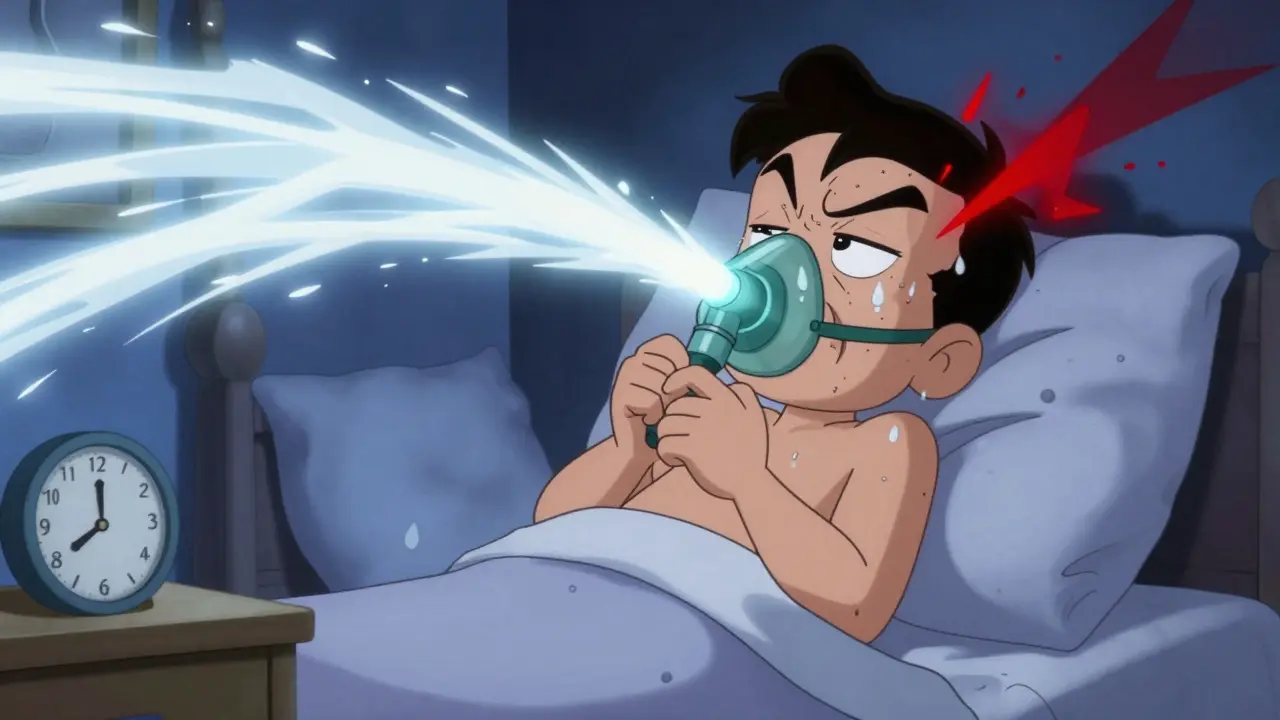
Cluster headaches are not just bad headaches-they’re among the most painful conditions known to medicine. People who experience them describe the pain as a hot poker driven behind the eye, burning through bone, and lasting anywhere from 15 minutes to three hours. Unlike migraines, which often come with nausea and light sensitivity, cluster headaches strike with brutal precision: one side of the head, always the same side during a cycle, and always at the same time of day. Many patients say they wake up 2-3 hours after falling asleep, drenched in sweat, eyes watering, nose running, and unable to sit still. The pain is so intense that it’s been called the "suicide headache."
These attacks happen in clusters-weeks or months of daily attacks, followed by long periods of remission. About 1 in 1,000 people get them, and men are three times more likely than women. They usually start between ages 20 and 50. Despite how common the pain is, cluster headaches are still underdiagnosed. Many patients see five or more doctors before getting the right name for what they’re enduring.
Why Oxygen Therapy Works
When a cluster headache hits, time is everything. The faster you act, the better the chance of stopping it. Oxygen therapy is the fastest, safest, and most effective way to do that. Breathing 100% pure oxygen through a mask at 12 to 15 liters per minute can stop an attack in as little as 8 to 15 minutes for nearly 8 out of 10 people.
The science behind it is simple: high-flow oxygen increases blood oxygen levels, which helps constrict the swollen blood vessels around the trigeminal nerve-the main source of the pain. It also reduces inflammation in the hypothalamus, the part of the brain that controls the body’s internal clock and is believed to trigger these attacks. Unlike pills or injections, oxygen doesn’t affect your heart, liver, or blood pressure. There are no drug interactions, no dizziness, no chest tightness. You just breathe.
How to Use Oxygen Therapy Correctly
Getting oxygen to work means doing it right. Most people fail not because the treatment doesn’t work, but because they use it wrong.
- Use a non-rebreather mask with a reservoir bag. Regular nasal cannulas won’t deliver enough oxygen.
- Set the flow rate to 12-15 liters per minute. Anything below 10 L/min is often ineffective.
- Start breathing oxygen as soon as you feel the first throb. Waiting even 10 minutes can make the difference between relief and suffering for hours.
- Sit upright, lean forward slightly, and breathe deeply and steadily. Don’t hold your breath. Let the mask seal tightly around your nose and mouth.
- Keep the oxygen tank or concentrator close by-bedside, in your car, at your desk. You never know when the next attack will come.
Many patients find demand-valve masks (which release oxygen only when you inhale) easier to use because they’re lighter and quieter. They’re also more portable, which helps if you’re traveling or need to move quickly during an attack.
Oxygen vs. Triptans: What’s Better?
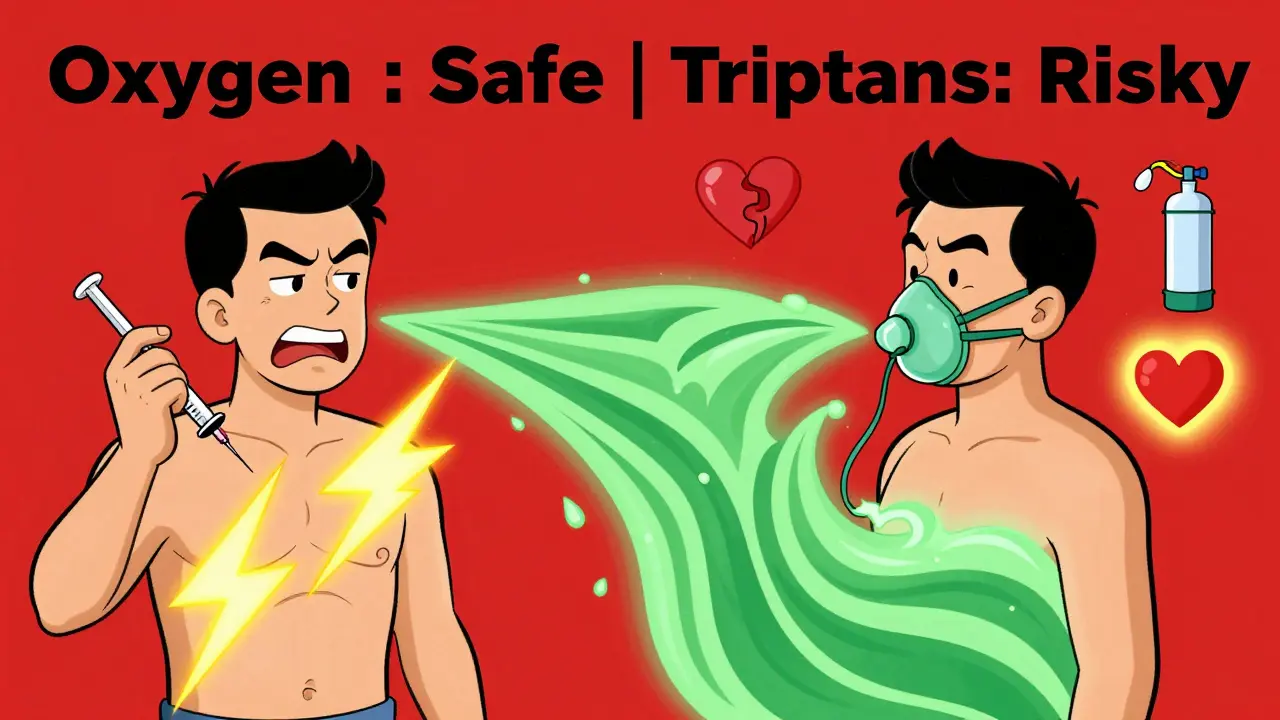
Triptans-like sumatriptan injections or zolmitriptan nasal spray-are common alternatives. They work fast too, but they come with risks. Sumatriptan can cause chest pressure, rapid heartbeat, and is unsafe for people with heart disease or high blood pressure. About 1 in 7 cluster headache patients can’t use triptans at all because of this.
Here’s how they compare:
| Treatment | Pain-Free at 15 Minutes | Side Effects | Cardiovascular Risk | Cost (Monthly) |
|---|---|---|---|---|
| Oxygen (12-15 L/min) | 78% | None reported | None | $150-$300 (rental) |
| Sumatriptan injection | 74% | Chest tightness, dizziness (34%) | High | $200-$400 |
| Zolmitriptan nasal spray | 50% | Bitter taste, drowsiness (22%) | Moderate | $180-$350 |
Oxygen wins on safety, speed, and simplicity. It’s the only treatment recommended as a Level A (strongest) evidence option by both the American Academy of Neurology and the European Headache Federation. It’s also the only one you can use while pregnant, or if you have heart problems, liver disease, or kidney issues.
Why Some People Don’t Get Relief
Not everyone responds to oxygen. About 1 in 5 people still get little to no relief, even when they use it perfectly. Researchers have found a few key reasons why:
- You’ve never smoked. Surprisingly, non-smokers are less likely to respond.
- Your attacks last longer than 180 minutes. Oxygen works best on shorter, more intense bursts.
- You still have headaches between attacks. If your pain doesn’t fully go away during remission, oxygen is less effective.
If oxygen doesn’t work for you, it’s not your fault. It just means you need a different plan. Other options include injectable lidocaine, nerve blocks, or newer devices like gammaCore, which uses electrical stimulation to calm overactive nerves.
Getting Oxygen: Insurance, Costs, and Access
The biggest hurdle isn’t the treatment-it’s getting it. In the U.S., Medicare only covers oxygen therapy if you’ve tried and failed two triptans, and if you have at least one attack per week. Even then, 41% of initial claims are denied. Private insurers like UnitedHealthcare approve about 7 out of 10 requests, but Aetna approves less than half.
Equipment costs vary:
- Oxygen concentrator (15 L/min): $1,200-$2,500 to buy, $150-$300/month to rent
- Non-rebreather mask: $5-$10 each (replace monthly)
- Tubing and accessories: $20-$50 per year
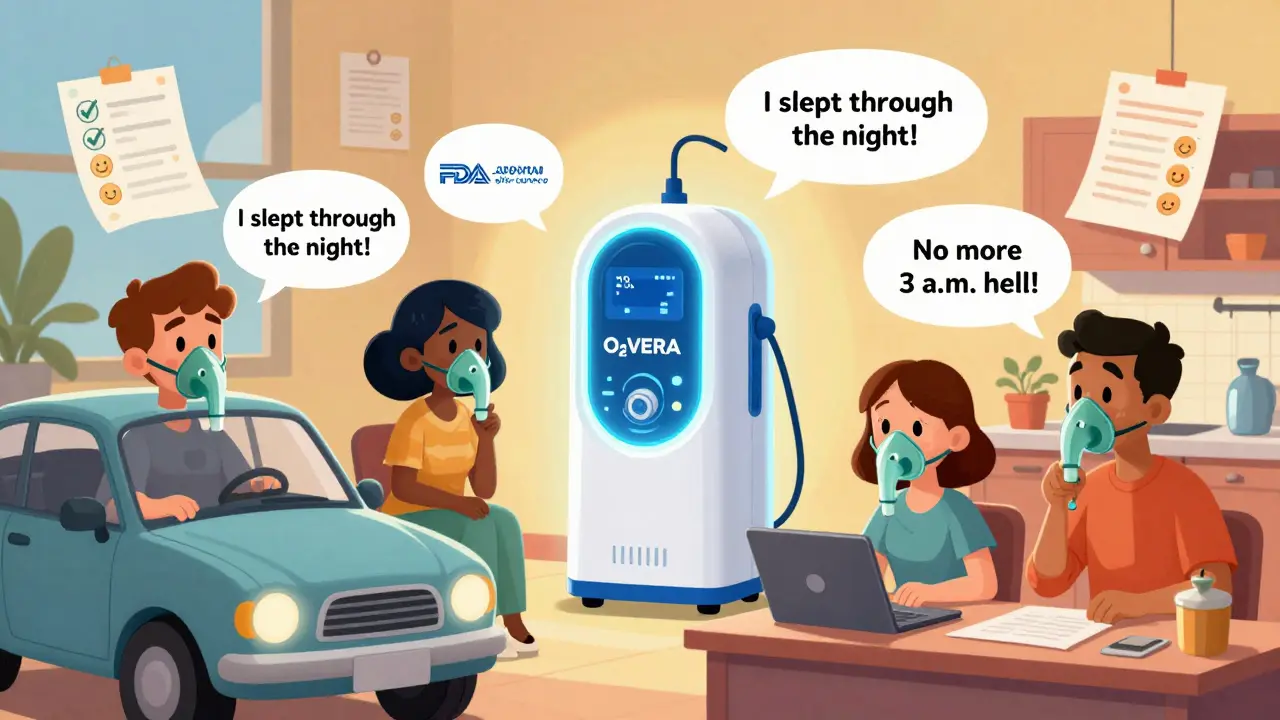
Portable options like the Inogen One G5 or the new FDA-cleared O2VERA device weigh under 5.5 pounds and fit in a backpack. These are game-changers for people who travel, work outside the home, or need to move quickly during an attack.
Some states have passed laws requiring insurance to cover oxygen for cluster headaches. As of 2023, 22 states have such protections. If you live in one of them, you have better odds. If not, you may need to appeal denials or work with a durable medical equipment (DME) provider who specializes in headache disorders.
Real Stories: What Patients Say
On Reddit’s r/ClusterHeadaches community, over 70% of users who use oxygen say it’s the only thing that saved their lives. One user wrote: "I went from 8 attacks a day to 2 after I got my oxygen setup right. I slept through the night for the first time in 18 months."
Others talk about the struggle: "I waited 3 months for Medicare to approve my machine. I had to buy one out of pocket. It cost me $2,100. I cried when it arrived."
And then there’s the mask problem. Many people say the mask slips, hurts their face, or doesn’t seal well. That’s why many switch to demand-valve masks-they’re lighter, quieter, and respond instantly to your breathing.
What’s Next for Oxygen Therapy?
Researchers are working on faster, easier ways to deliver oxygen. New nasal cannulas designed for cluster headaches are showing 89% effectiveness in early trials. Portable devices are getting smaller, smarter, and cheaper. One clinical trial is testing a system that delivers oxygen in under 7 minutes-half the current time.
For now, oxygen remains the gold standard. It’s not perfect, but it’s the most reliable tool we have. And for people who get it right, it’s life-changing.
What to Do If You Think You Have Cluster Headaches
If you’re having severe, one-sided headaches that come in waves, wake you up at night, and come with a watery eye or stuffy nose-you need to see a headache specialist. Don’t wait. Don’t assume it’s a migraine. Get diagnosed. Get tested for oxygen therapy.
Start by asking your doctor for a referral to a neurologist who specializes in headaches. Use the American Headache Society’s "Find a Headache Doctor" directory to locate one near you. Bring a headache diary: write down when attacks happen, how long they last, what helps, and what doesn’t. That information can make the difference between getting help and being dismissed.
And if you’re already diagnosed: get your oxygen setup now. Don’t wait for the next attack. Put the mask and machine where you sleep, where you work, where you relax. Practice using it. Learn the right flow rate. Make sure the seal is tight. This isn’t just treatment-it’s survival.
Is oxygen therapy safe for people with heart problems?
Yes. Unlike triptans, oxygen therapy has no known cardiovascular risks. It doesn’t raise blood pressure, doesn’t cause chest tightness, and doesn’t interact with heart medications. It’s the safest acute treatment available for people with heart disease, high blood pressure, or a history of stroke.
How long does it take for oxygen to work?
For most people, pain starts to ease within 5 to 10 minutes. About 78% are pain-free within 15 minutes when using 12-15 liters per minute through a non-rebreather mask. The key is starting as soon as the headache begins-waiting even 10 minutes can reduce effectiveness.
Can I use oxygen therapy every day?
Yes. There’s no limit to how often you can use oxygen during cluster periods. It’s non-addictive and doesn’t lose effectiveness over time. Many patients use it 3-5 times a day during active cycles. It’s safe for long-term, frequent use.
Why does my insurance deny oxygen therapy?
Many insurers still treat cluster headaches as "rare" or "experimental," even though oxygen therapy is a Level A recommendation by top neurology groups. Common reasons for denial include lack of documentation, failure to try triptans first, or not meeting attack frequency thresholds. Appeals are often successful with a letter from your headache specialist and copies of clinical guidelines.
Do I need a prescription for oxygen?
Yes. Medical-grade oxygen is a prescription drug in most countries. You’ll need a doctor to write a prescription using ICD-10 code G44.0 (cluster headache). You’ll also need a durable medical equipment (DME) provider to supply the concentrator and mask. Without a prescription, you can’t get insurance coverage or legal access to medical oxygen.
What if oxygen doesn’t work for me?
About 20% of people don’t respond to oxygen, even when used correctly. If that’s you, talk to your doctor about alternatives: injectable lidocaine, occipital nerve blocks, or neuromodulation devices like gammaCore. Some patients benefit from combining treatments. Clinical trials are also exploring new options like nasal oxygen delivery systems and targeted nerve stimulators.
Comments (13)
Randolph Rickman
16 Dec, 2025I was skeptical at first, but oxygen therapy literally saved my life. I went from 6 attacks a day to maybe one or two after I got my setup right. No more lying on the floor screaming. Just breathe. It’s that simple.
Pro tip: Get the demand-valve mask. Way quieter, way less annoying when you’re trying to sleep or work. I keep mine next to my bed, in my car, and at my desk. You never know when it’s gonna hit.
Josias Ariel Mahlangu
17 Dec, 2025People who don't try oxygen are just giving up too easily. This isn't some new-age fad-it's science. If you're still relying on pills that give you chest tightness and heart palpitations, you're putting yourself at risk. Oxygen is free of side effects. Why wouldn't you use it?
Arun ana
18 Dec, 2025OMG this is so helpful 😭 I’ve been suffering for 3 years and no one told me about oxygen! Just got my mask today-fingers crossed it works! Thank you for laying it all out like this. You’re a legend 💪
Kayleigh Campbell
19 Dec, 2025So let me get this straight: the most effective treatment is literally just breathing air? And insurance won’t cover it unless you’ve already suffered through two rounds of drugs that could kill you? Welcome to American healthcare, folks. Where the cure is cheaper than the problem.
Kim Hines
20 Dec, 2025I’ve used oxygen for 8 years. Still works every time. The only thing worse than the headache is waiting for your insurance to approve the machine. Took me 11 months. I bought one used on Facebook Marketplace for $800. Still works fine.
James Rayner
22 Dec, 2025I used to think I was just really bad at sleeping... until I got diagnosed. Now I know it wasn’t insomnia-it was cluster headaches. Oxygen didn’t just stop the pain, it gave me back my life. I can hug my kids again without crying. That’s worth more than any pill.
anthony epps
23 Dec, 2025Wait, so if you don't smoke, oxygen doesn't work as well? That's wild. Why is that? Is it like your lungs are used to less oxygen or something?
Andrew Sychev
25 Dec, 2025This post is a joke. Everyone knows oxygen is just a placebo. If it worked so well, why aren’t hospitals giving it out like candy? You people are just desperate. Go take your triptans like normal people.
Dan Padgett
26 Dec, 2025You know, in my village back home, we used to say pain like this was a spirit trying to climb out through your skull. I didn’t believe it till I felt it. Now I know-no spirit, just science. And oxygen? That’s the real magic. No incense, no chants. Just air. Deep, clean, life-giving air.
Hadi Santoso
26 Dec, 2025so i got my oxygen machine last week and holy cow it’s a game changer. i had no idea the mask had to be a non-rebreather type. i was using a stupid nasal thing and wondering why nothing worked 😅 thanks for the heads up! also, anyone know where to get cheap tubing? mine keeps leaking
Joanna Ebizie
27 Dec, 2025You’re telling me I spent 5 years on triptans and now I’m supposed to just breathe? And my insurance is gonna make me jump through 12 hoops to get a machine that costs more than my laptop? This system is broken.
sue spark
28 Dec, 2025I’ve been using oxygen for two years now. It’s the only thing that lets me sleep. I don’t talk about it much. Most people don’t get it. But when the pain hits, I just reach for the mask. And I breathe.
Tiffany Machelski
28 Dec, 2025i just got my prescrtiption and ordered the mask but i think i spelled non-rebreather wrong on the form and now they’re asking for a re-submission… why does everything have to be so hard