
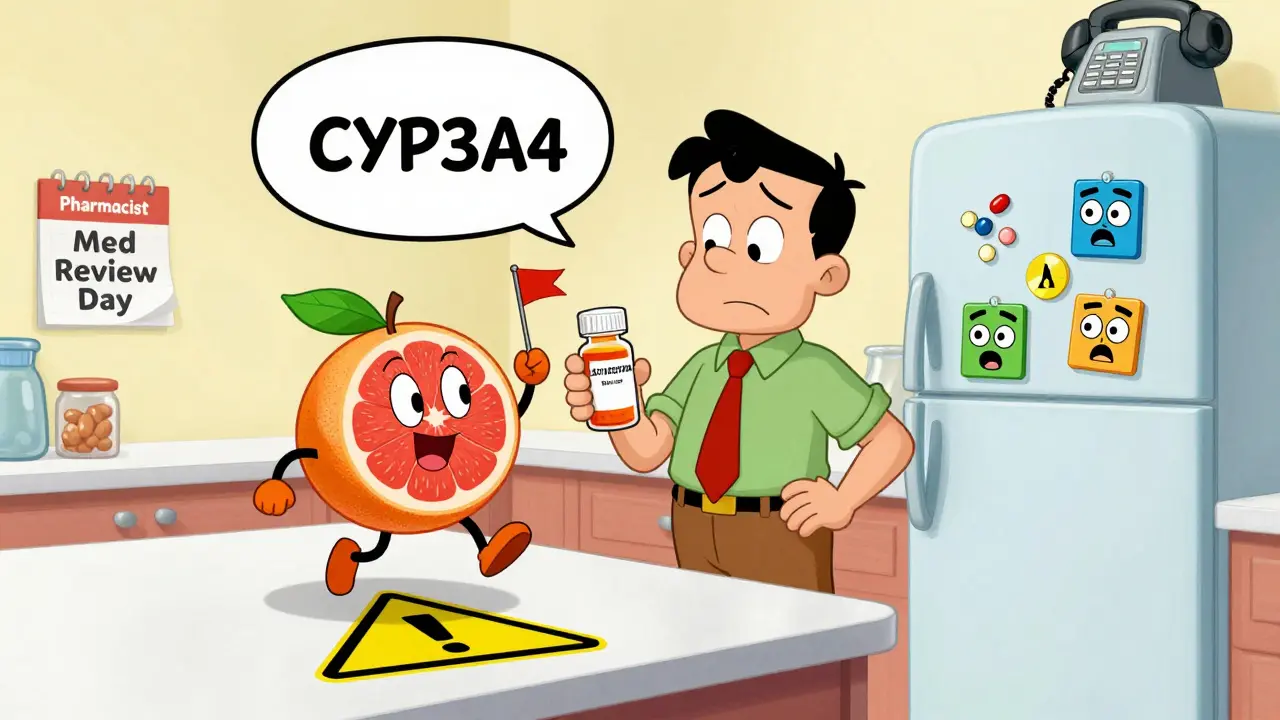
Starting a new medication can feel like a relief - finally, something to help with that pain, high blood pressure, or sleep trouble. But what you might not realize is that this new pill could be reacting with something else you’re already taking. It’s not just about the drug itself. It’s about the drug interactions it might have with your other meds, supplements, or even your morning grapefruit juice. These interactions aren’t rare. They happen in 3-5% of all prescriptions, and if you’re on five or more medications, your risk jumps to nearly one in three. The good news? You can manage them. You just need to know what to look for and how to act.
What Are Drug Interactions, Really?
A drug interaction happens when one substance changes how another works in your body. This isn’t just about pills clashing. It can involve over-the-counter painkillers, herbal supplements, vitamins, alcohol, or even certain foods. There are two main types:- Pharmacokinetic: This affects how your body absorbs, breaks down, or gets rid of a drug. For example, if a medication blocks the enzyme CYP3A4 - which handles about half of all drug metabolism - your other meds can build up to dangerous levels. Simvastatin, a common cholesterol drug, becomes risky when taken with amlodipine (a blood pressure pill). The safe max? Only 20 mg of simvastatin per day. Go higher, and you risk muscle damage.
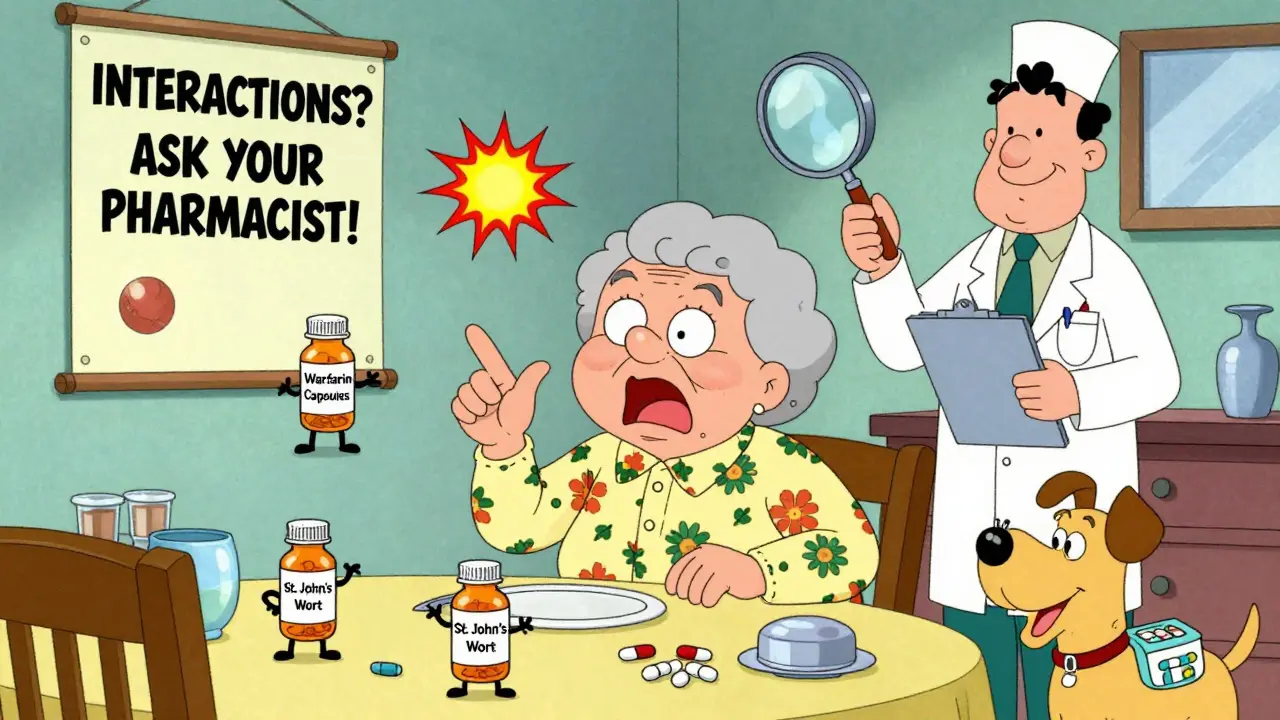
- Pharmacodynamic: This is when two drugs amplify each other’s effects. Take blood thinners like warfarin and amiodarone together? Your bleeding risk can spike. Or combine opioids with promethazine? Sedation and breathing trouble can double or triple. Even something as simple as St. John’s Wort - a popular herbal mood booster - can cut the effectiveness of birth control, transplant drugs, or HIV meds by 40-60%.
These aren’t theoretical risks. They’re documented in real patients. A 2023 study found that 28.3% of adults over 65 take at least one high-risk combination. And many don’t even know it.
Who’s Most at Risk?
You might think only older adults or people on a dozen pills are in danger. But the truth is, anyone starting a new medication is vulnerable - especially if they’re not telling their doctor everything they take.- People over 65: Nearly half take five or more medications. Their kidneys and liver don’t clear drugs as efficiently, so even small interactions can become big problems.
- People with kidney or liver issues: If your eGFR is below 30 mL/min or you have liver disease, your body can’t process drugs normally. Interaction risks go up 2.5 to 4 times.
- People taking antidepressants, anticoagulants, or heart meds: These are among the most common culprits in dangerous interactions. For example, MAO inhibitors like phenelzine can cause a life-threatening blood pressure spike if you eat aged cheese, red wine, or cured meats - foods with as little as 2-5 mg of tyramine.
- People who use supplements without telling their doctor: St. John’s Wort, garlic, ginkgo, and fish oil are all common. But they’re not harmless. A 2022 survey found 68% of patients don’t mention supplements to their provider. That’s a blind spot.
What to Do Before Starting a New Medication
Don’t wait until you feel strange. Act before you even take the first pill.- Make a full list. Write down every pill, patch, liquid, or supplement you take - even the ones you only use once in a while. Include doses and why you take them. Don’t forget herbal teas, CBD, or vitamins. If you’re not sure, check the bottle.
- Bring it to your appointment. Don’t just say, “I take a few things.” Show the list. Ask your doctor or pharmacist: “Could this new drug interact with anything here?”
- Ask about alternatives. If the new drug has a high risk of interaction, ask: “Is there another option that won’t clash?” Sometimes switching from simvastatin to pravastatin avoids the problem entirely.
- Check for food warnings. Some drugs need an empty stomach. That means no food for one hour before and two hours after - not “don’t eat breakfast.” Grapefruit juice can double the level of certain blood pressure and cholesterol drugs. Avoid it unless your provider says it’s safe.
Monitoring After You Start
Starting a new med isn’t the end of the process - it’s the beginning of careful observation.- Know the red flags. If you feel unusually tired, dizzy, confused, have unexplained bruising, muscle pain, or a sudden change in heartbeat, call your provider. These aren’t just side effects - they could be signs of an interaction.
- Follow up on lab tests. If you’re on warfarin, your INR should be checked within 3-5 days of starting a new interacting drug. Then weekly for the first month. For statins, a simple blood test can catch early signs of muscle damage.
- Use a pill organizer. It helps you track what you took and when. If something goes wrong, you’ll know exactly what changed.
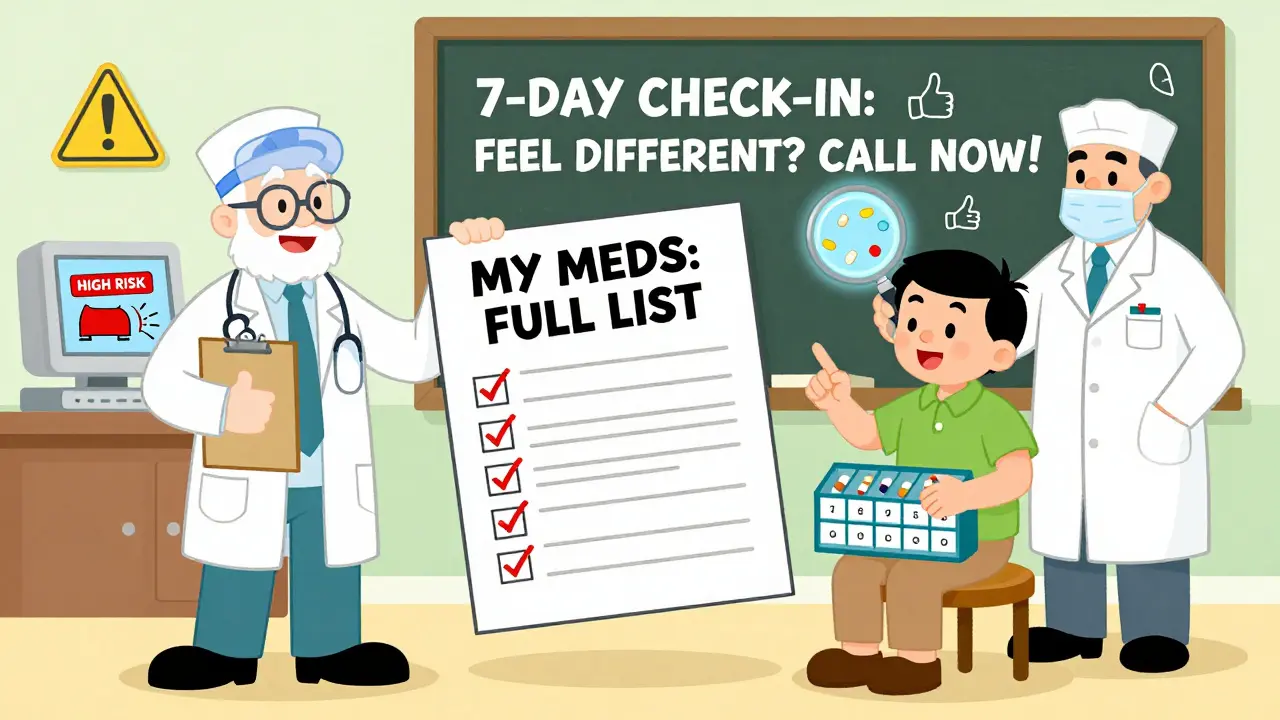
- Don’t skip follow-ups. Your doctor should schedule a check-in within 7 days of starting a high-risk drug. If they don’t, ask for one.
How Pharmacists Can Help (And Why You Should Use Them)
Pharmacists are trained to spot interactions you might miss. In fact, studies show they catch 40-60% more potential problems than doctors alone during medication reviews.Ask your pharmacist to do a full medication review every time you get a new prescription. They’ll check:
- Every drug you take - including OTC and supplements
- How each drug is absorbed and broken down
- Whether doses need adjusting
- What to avoid (foods, alcohol, other meds)
At Mayo Clinic, pharmacist-led reviews cut hospital readmissions by 22% over 18 months. That’s not magic - it’s attention to detail.
Why EHR Alerts Often Fail - And What You Can Do
Your doctor’s computer might warn you about an interaction. But here’s the problem: doctors get so many alerts that they ignore 90-95% of them. Most are low-priority or redundant.But high-severity alerts - like “contraindicated” or “50% dose reduction required” - are still heeded 75% of the time. So if your system flags a warning, don’t dismiss it. Ask: “Is this a major risk? What happens if I ignore it?”
Also, not all systems are equal. New guidelines (like the ICH M12 from May 2024) are pushing for better, standardized DDI alerts. But until then, you need to be your own safety net.
What You Can Do Right Now
You don’t need to wait for your next appointment. Start today:- Check your medicine cabinet. Pull out every bottle. Write down the name, dose, and reason.
- Call your pharmacy. Ask them to print a full list of everything you’ve filled in the last year.
- Look up your new medication. Search “[medication name] + drug interactions” on trusted sites like MedlinePlus or the FDA’s Drug Interaction Database.
- Ask your doctor: “Is this safe with my other meds? What should I watch for?”
One pharmacist on Reddit summed it up: “When starting a new statin, I always check if they’re taking amlodipine. If yes, I cap simvastatin at 20mg or switch to pravastatin.” That’s the kind of practical thinking that saves lives.
When to Worry - And When to Relax
Not every interaction is dangerous. Some are minor - like a slight delay in absorption that doesn’t change outcomes. But you can’t guess which is which.Here’s a quick guide:
- Worry: Blood thinners + NSAIDs, statins + certain antibiotics, antidepressants + migraine meds, opioids + sedatives, warfarin + amiodarone, MAO inhibitors + tyramine-rich foods.
- Probably fine: A daily multivitamin with most prescriptions (unless it has high-dose vitamin K with warfarin), occasional ibuprofen with a single daily blood pressure pill (if kidneys are healthy).
If you’re unsure, assume it’s risky. Talk to someone who knows.
Final Thought: You’re Not Just a Patient - You’re a Partner
Medication safety isn’t just the doctor’s job. It’s yours too. You’re the one who takes the pills. You’re the one who notices when something feels off. You’re the one who remembers to mention that herbal tea you started last week.Don’t be afraid to ask questions. Don’t assume your doctor knows everything you take. Don’t ignore a warning just because it’s loud or annoying. A simple conversation before you start a new drug could prevent a hospital visit, a fall, a stroke, or worse.
Start today. Write down your meds. Ask the questions. Stay in control. Your health depends on it.
Can I take grapefruit juice with my new medication?
It depends. Grapefruit juice can block the enzyme CYP3A4, causing some drugs to build up to dangerous levels. This includes certain statins (like simvastatin and atorvastatin), some blood pressure meds (like felodipine), and immunosuppressants (like cyclosporine). If you’re on one of these, avoid grapefruit entirely. If you’re unsure, ask your pharmacist - they can check your specific drugs.
I’m on five medications. Should I be worried?
Yes, you should be cautious. People taking five or more medications have up to a 30% chance of a clinically significant drug interaction. The more meds you take, the higher the risk - especially if any are blood thinners, statins, antidepressants, or heart drugs. Ask your doctor or pharmacist for a full medication review. Sometimes, one or two drugs can be safely stopped or replaced.
Can herbal supplements really cause dangerous interactions?
Absolutely. St. John’s Wort is the most common offender - it can reduce the effectiveness of birth control, HIV drugs, antidepressants, and transplant meds by 40-60%. Garlic and ginkgo can thin your blood, raising bleeding risk if you’re on warfarin or aspirin. Even fish oil can interact with blood thinners. Always tell your provider about every supplement you take - even if you think it’s “natural” and harmless.
What should I do if I miss a dose and then take another med?
Don’t double up. If you miss a dose, check the instructions on the label or call your pharmacist. Taking two doses too close together can increase interaction risks. For example, if you’re on a blood thinner and accidentally take two pills, your bleeding risk could rise sharply. Keep a log of missed doses and mention them at your next check-up.
How often should I get a medication review?
At least once a year - and every time you start or stop a medication. If you’re over 65 or on five or more drugs, aim for every 3-6 months. Pharmacists can do a full review in 15-20 minutes. Many insurance plans cover this service. Don’t wait until something goes wrong.
Are electronic health record alerts reliable?
They’re helpful, but not perfect. Most alerts are low-priority and get ignored. High-severity alerts - like those warning of contraindicated combinations or needing a 50% dose reduction - are still followed about 75% of the time. But systems still miss 15-20% of dangerous interactions. Never rely on alerts alone. Always ask your provider or pharmacist to double-check.
Next Steps: Your Action Plan
If you’re starting a new medication, here’s what to do right now:- Write down every medication, supplement, and OTC product you take.
- Call your pharmacy and ask for your full medication history.
- Look up your new drug and its known interactions using MedlinePlus or the FDA’s database.
- Ask your doctor: “Could this interact with anything I’m already taking? What should I watch for?”
- Schedule a follow-up with your pharmacist within 7 days.
- Set a phone reminder to check in with yourself in 3 days: “Do I feel any different?”
Small steps. Big protection. You’ve got this.
Comments (14)
Colin Pierce
28 Jan, 2026Man, I wish more people knew this stuff. I’m a pharmacist, and I see people come in all the time with 8 meds and zero idea how they interact. That simvastatin + amlodipine thing? I cap it at 20mg every single time. No exceptions. It’s not even close to being debatable. Just ask for pravastatin instead - same effect, way safer.
And yeah, grapefruit juice? If you’re on anything with CYP3A4, just say no. Even one glass can mess you up for days. I’ve had patients end up in the ER over it. It’s not a myth. It’s math.
Mel MJPS
29 Jan, 2026This is so real. My mom took St. John’s Wort with her antidepressant and started feeling like a zombie. She didn’t tell her doctor because she thought it was ‘natural’ so it was ‘safe.’ Turns out, it cut her meds in half. She’s fine now, but man - I wish someone had told her sooner.
Just talk to your pharmacist. They’re not just the people who hand out pills. They’re your secret health weapon.
Irebami Soyinka
30 Jan, 2026Y’all in the US are so lazy with your meds. In Nigeria, we don’t have fancy EHR alerts - we have grandmas who remember every pill you ever took since 2003. 😅
And yes, garlic and ginkgo? They thin your blood like wine on an empty stomach. My uncle had a stroke because he took fish oil + warfarin and thought ‘natural’ meant ‘no consequences.’ Spoiler: it didn’t.
Stop treating supplements like candy. They’re not vitamins - they’re active drugs. Period.
Lexi Karuzis
31 Jan, 2026EVERY SINGLE TIME - the system fails. The EHR alerts? They’re designed to be ignored. The FDA knows this. The pharma companies know this. And yet, they still push these dangerous combos because they make money.
Did you know that the CYP3A4 enzyme is blocked by grapefruit juice because it’s a cheap, natural way to boost drug absorption? That’s not an accident. That’s a profit-driven design flaw. They want you to take MORE of the drug - not less.
And don’t get me started on how they hide interactions in the fine print. You think your doctor reads all 47 pages of the prescribing info? Ha. They get 3 minutes per patient. You’re on your own.
And yes - I’ve seen people die from this. I’m not exaggerating. This is corporate negligence dressed up as ‘medical care.’
matthew martin
2 Feb, 2026I love how this post doesn’t just dump facts - it gives you a game plan. Like, ‘call your pharmacy’? Genius. I did that last week after my doc added a new anxiety med. Turns out, my ‘harmless’ fish oil was bumping up my INR. My pharmacist caught it before I turned into a human bruise.
Also - that pill organizer? Lifesaver. I used to just dump everything in a jar. Now I’ve got a little tray with AM/PM slots. I even take pics of it before I leave the house. It’s weird, but it works.
And yeah - if your doctor doesn’t schedule a follow-up? Ask for one. You’re not being annoying. You’re being smart.
Chris Urdilas
3 Feb, 2026So… let me get this straight. I can’t have grapefruit juice, garlic, ginkgo, fish oil, or St. John’s Wort, but I can have 3 beers and 2 Advil? Because that’s totally fine, right? 😏
Look, I get it - interactions are real. But also, life’s not a spreadsheet. I take my blood pressure med with my coffee, my statin with my toast, and I eat grapefruit like it’s going out of style. I’ve been fine for 7 years. Maybe the real risk is over-medicalizing everything?
Just saying. Don’t panic. Just pay attention. And if you feel weird? Call someone. Not the internet. Not Reddit. Your actual human who’s paid to know this stuff.
SRI GUNTORO
3 Feb, 2026How can you be so careless? People die from this. Not ‘maybe.’ Not ‘sometimes.’ Actual deaths. And you’re out here joking about grapefruit juice like it’s a lifestyle choice? You think your ‘7 years fine’ means it’s safe? That’s not science - that’s gambling with your organs.
I’ve seen a 68-year-old woman bleed internally because she took turmeric with warfarin and thought ‘it’s just a spice.’ She didn’t survive. You’re lucky if you’re still breathing. This isn’t about being ‘over-medicalized’ - it’s about being alive.
doug b
4 Feb, 2026Hey - I get it. You’re trying to keep it chill. But here’s the thing: you don’t have to be paranoid to be careful. Just write down your meds. Call your pharmacist. Ask one question. That’s it.
I used to think supplements were harmless too - until I started taking them with my thyroid med and ended up feeling like I was running on a treadmill in a sauna. Turned out, calcium blocked the absorption. Took me 3 months to figure it out.
Don’t wait until you’re in the ER. Do the 5-minute checklist. Your future self will high-five you.
Kevin Kennett
6 Feb, 2026My grandma used to say, ‘If you don’t know what’s in it, don’t put it in you.’
That’s it. That’s the whole rule. No fancy charts. No apps. Just common sense.
And if your doctor doesn’t have time to talk? Find a new one. Your health isn’t a traffic ticket you pay and forget. It’s your body. Treat it like it matters.
Jeffrey Carroll
7 Feb, 2026I appreciate the thoroughness of this post. It’s rare to see such a comprehensive, evidence-based guide on medication safety that doesn’t resort to fearmongering. The emphasis on pharmacist involvement is particularly vital - they are the most underutilized resource in primary care.
For those hesitant to engage, consider this: a single medication review can prevent a hospitalization that costs upwards of $15,000. The time investment is minimal; the payoff is life-altering.
Brittany Fiddes
8 Feb, 2026Oh, please. You think this is the first time someone’s warned about grapefruit? We’ve been screaming this since the 90s. But no - the American healthcare system is too busy selling you $300 pills to care if you live or die.
And don’t get me started on how the FDA lets pharma companies bury interaction warnings in 200-page PDFs that no one reads. It’s not negligence - it’s intentional. They profit from your ignorance.
Meanwhile, in Europe, they’ve had standardized DDI alerts since 2015. Here? We’re still arguing whether turmeric counts as a drug. Pathetic.
And yes - I’m British. We actually regulate this stuff. Just saying.
Katie Mccreary
8 Feb, 2026You’re all overthinking it. I take 6 meds, grapefruit juice, CBD, and fish oil. I feel great. If I felt weird, I’d stop. Simple.
Also, your ‘red flags’ list is just a list of things that happen to everyone. Dizziness? Everyone gets dizzy. Muscle pain? You’re 40, not 80. Stop scaring people for clicks.
Phil Davis
9 Feb, 2026Yeah, but what if you’re on Medicaid and your pharmacy won’t do a free review unless you’re on 10+ meds? What if your doctor’s office won’t schedule a follow-up for 6 weeks? What if you’re working two jobs and can’t afford to miss a shift to sit in a waiting room?
This advice is great - if you have time, money, and access. For the rest of us? We’re just trying not to die between paychecks.
Robert Cardoso
11 Feb, 2026Statistically, the risk of a fatal interaction is 0.003% per prescription. That’s lower than being struck by lightning. The real danger is the psychological harm of overmedicalization - the anxiety, the guilt, the belief that you’re one supplement away from death.
Yes, interactions exist. But they’re not the apocalypse. The system is designed to make you feel powerless so you’ll keep buying pills, supplements, and ‘safety guides.’
Be skeptical. Not fearful. Question the narrative. Not the meds.