
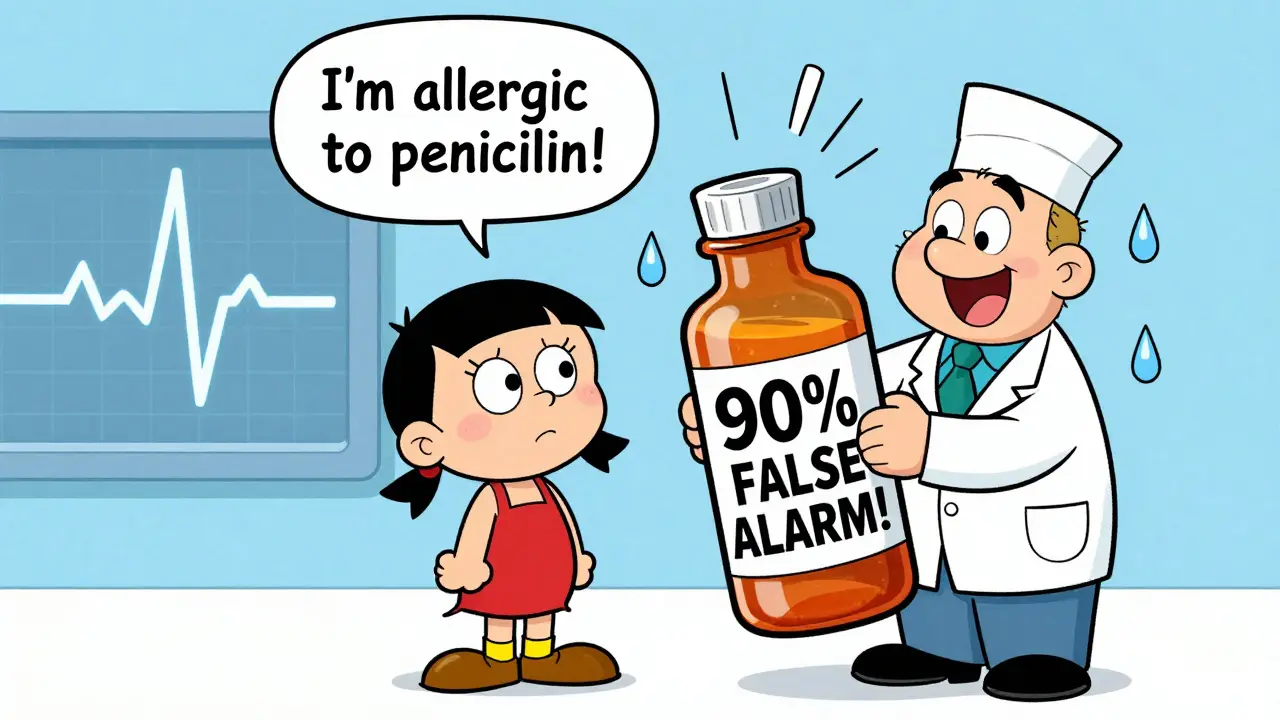
More than 1 in 10 people believe they’re allergic to a medication. But here’s the truth: most of them aren’t. If you’ve ever been told you’re allergic to penicillin because you got a rash as a kid, or you avoid ibuprofen after a stomach upset, you might be carrying around a label that’s not just wrong-it’s dangerous.
Penicillin: The Most Misdiagnosed Allergy
Penicillin is the number one drug people say they’re allergic to. About 10% of Americans claim it. But when you test them properly, only about 1% actually have a true IgE-mediated allergy. That means 9 out of 10 people who think they’re allergic to penicillin can safely take it. The rest? They likely had a viral rash, a side effect, or a reaction that wasn’t allergic at all.Why does this matter? Because if you’re labeled penicillin-allergic, doctors can’t use the safest, cheapest, most effective antibiotics. Instead, they reach for broader-spectrum drugs like vancomycin or fluoroquinolones. These are more expensive, harder on your gut, and more likely to cause resistant infections. A 2017 study in JAMA Internal Medicine found patients with a penicillin allergy label stayed in the hospital half a day longer and paid over $1,000 more per admission. That’s not just a personal cost-it’s a system-wide burden.
Testing for penicillin allergy is simple and reliable. It starts with skin testing using a reagent called Pre-Pen, followed by a small oral dose of amoxicillin under supervision. The process takes a few hours. If the test is negative, you’re cleared. The negative predictive value is 97-99%. That’s better than most medical tests. Yet, only 1 in 5 people with a penicillin label ever get tested. Most never even ask.
Sulfa Drugs: A Hidden Risk
Sulfonamide antibiotics-like Bactrim (trimethoprim-sulfamethoxazole)-are another big trigger. About 3% of the general population reacts to them. But for people living with HIV, that number jumps to 60%. The reaction isn’t always obvious. It might start as a mild rash, then turn into a blistering, life-threatening condition like Stevens-Johnson syndrome.Not all sulfa drugs are the same. If you’re allergic to Bactrim, you might still be able to take other sulfa-containing medications like furosemide (a water pill) or sulfonylureas (for diabetes). The allergic component is specific to the sulfonamide group in antibiotics. But most patients don’t know that. They avoid all sulfa drugs, even when they’re not needed.
Doctors often prescribe Bactrim for urinary tract infections, ear infections, and even some types of pneumonia. If you’re allergic and can’t take it, alternatives are less effective and more expensive. The bottom line: if you think you’re allergic to sulfa, get it checked. Don’t assume.
NSAIDs: More Than Just a Stomachache
Ibuprofen, naproxen, aspirin-these common painkillers cause more than just indigestion. For some people, they trigger a real immune response. Unlike penicillin allergies, NSAID reactions aren’t always IgE-mediated. In fact, many are caused by how the body processes prostaglandins. This leads to a condition called aspirin-exacerbated respiratory disease (AERD). People with AERD have asthma, nasal polyps, and sinus infections that get worse every time they take aspirin or other NSAIDs.Studies show 7% of adults with asthma and 14% with nasal polyps react to NSAIDs. The reaction isn’t a rash. It’s wheezing, swelling, or a sudden drop in breathing. It can happen within minutes. If you’ve ever had an asthma attack after taking Advil or Aleve, don’t brush it off. You might have AERD. The good news? Acetaminophen (Tylenol) is usually safe. And there are specific desensitization protocols for people who need NSAIDs long-term, like those with arthritis.
Anticonvulsants: Genetics Can Save Your Life
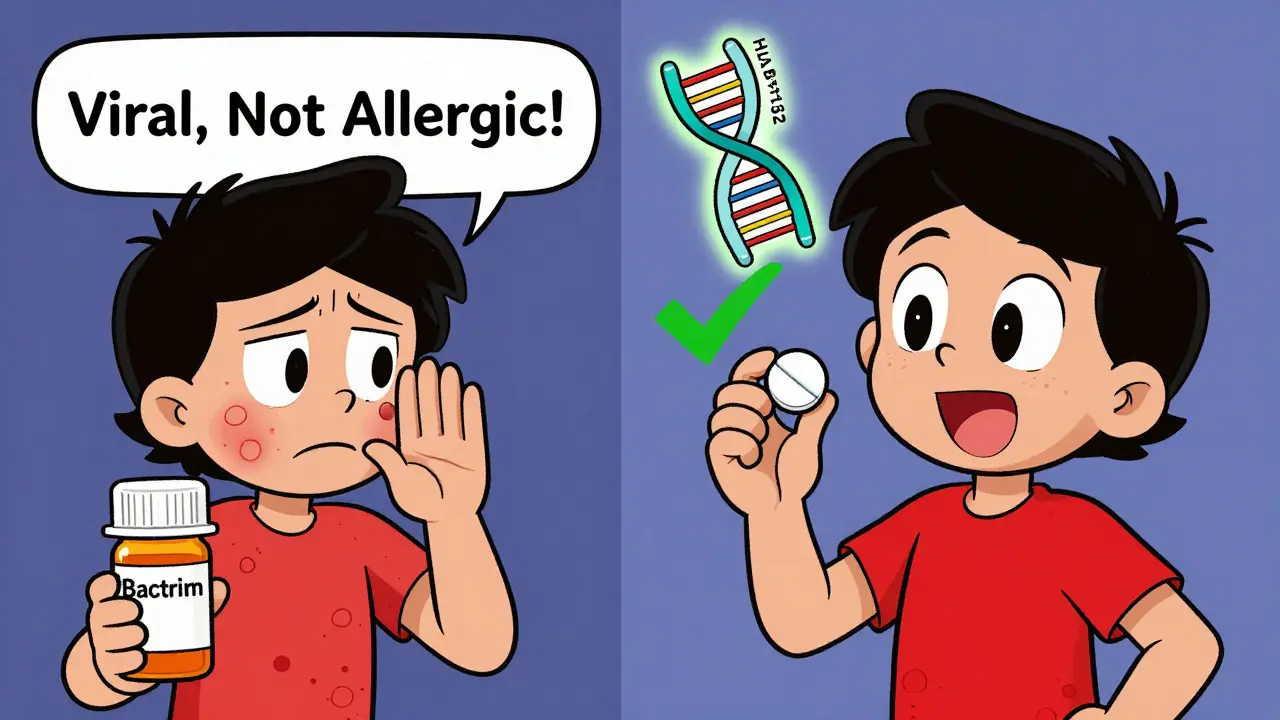
Carbamazepine (Tegretol) and lamotrigine (Lamictal) are used to treat epilepsy and bipolar disorder. But they’re also among the most dangerous drugs when it comes to skin reactions. Carbamazepine can cause Stevens-Johnson syndrome or toxic epidermal necrolysis-conditions where your skin starts to die. It’s rare, but deadly.Here’s the critical part: your genes determine your risk. The HLA-B*1502 gene variant is strongly linked to carbamazepine reactions. It’s found in 10-15% of people from Southeast Asia-Thailand, Malaysia, the Philippines-but less than 1% of Europeans. Because of this, the FDA recommends genetic testing before prescribing carbamazepine to people with Asian ancestry. In Taiwan, where screening became routine, cases of SJS dropped by 90%.
Lamotrigine causes rashes in 5-10% of users. Most are mild and go away. But in 0.8 out of every 1,000 people, it turns serious. The risk is highest in the first few weeks. That’s why doctors start with tiny doses and increase slowly. If you develop a rash while on lamotrigine, stop taking it and call your doctor immediately. Don’t wait.
Chemotherapy and Biologics: The New Frontier
Cancer drugs are different. They’re not meant to be gentle. But hypersensitivity reactions are common. Taxanes like paclitaxel (Taxol) cause reactions in 20-41% of patients. Monoclonal antibodies like cetuximab (Erbitux) trigger infusion reactions in nearly 1 in 5. These aren’t always allergic-they’re often related to how fast the drug is given or the body’s response to foreign proteins.Still, the symptoms can be scary: flushing, low blood pressure, trouble breathing. Hospitals have protocols to manage them. Premedication with steroids and antihistamines reduces severe reactions by over 90%. Desensitization is also possible-slowly increasing the dose over hours-so patients can keep getting the drugs they need.
And it’s only going to get more common. New biologic drugs for autoimmune diseases and cancer are exploding in use. Each one carries a risk. By 2030, experts predict we’ll need 20% more allergists just to handle these reactions. Right now, only 35% of U.S. hospitals have a dedicated drug allergy service. Access is a real problem.
Contrast Dyes: The Invisible Trigger
Ever had a CT scan with contrast dye? About 1-3% of people react. Most are mild-itching, nausea. But 1 in 2,500 will have a severe reaction. The good news? You can reduce your risk. If you’ve had a prior reaction, premedication with steroids and antihistamines cuts the chance of another moderate-to-severe reaction from 12.7% down to just 1%.Contrast reactions aren’t always IgE-mediated. Some are caused by the dye’s osmolality, not your immune system. That’s why some people react to one type of dye but not another. If you’ve ever felt hot, itchy, or nauseous during a scan, tell your radiologist. They can switch dyes or premedicate you next time.
What to Do If You Think You’re Allergic
If you’ve been told you’re allergic to a drug, ask yourself: What happened? When? How bad? Was it a rash? Hives? Trouble breathing? Did it happen right after taking the drug-or days later?Here’s a quick guide:
- If you had hives, swelling, or trouble breathing within an hour, it’s likely allergic. Get tested.
- If you got a rash days later, it could still be allergic-but it might not be. A doctor can help sort it out.
- If you had nausea, headache, or dizziness, it’s probably not an allergy. It’s a side effect.
- If you were told you’re allergic as a child, you may have outgrown it. Most people do.
Don’t rely on memory. Don’t assume. Go to an allergist. Ask for testing. Even if you’re not planning to take the drug again, knowing the truth gives you control over your care.
The Bigger Picture: Why This Matters
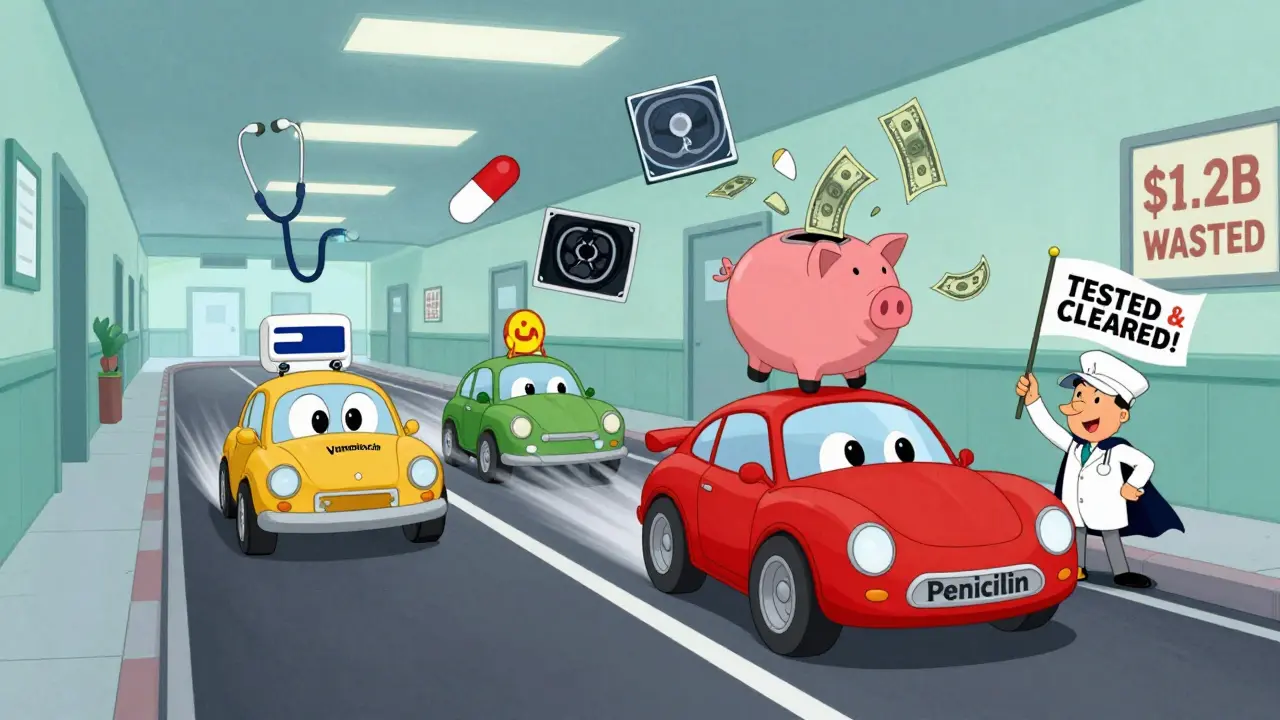
Mislabeling drug allergies isn’t just about one person’s inconvenience. It’s driving the rise of antibiotic resistance. When we avoid penicillin and use stronger drugs, we’re selecting for bacteria that survive. The CDC calls this one of the top global health threats. Every time we use a broad-spectrum antibiotic unnecessarily, we make the problem worse.And it’s expensive. Mislabeled penicillin allergies cost the U.S. healthcare system $1.2 billion a year. That’s money spent on longer hospital stays, more tests, and drugs that aren’t as good.
There’s progress. Telehealth penicillin testing now cuts wait times from 60 days to 14. Genetic screening for carbamazepine is becoming standard. Electronic health records are starting to flag high-risk patients. But change moves slowly. You can’t wait for the system to catch up.
If you think you’re allergic to a medication-especially penicillin, sulfa, or NSAIDs-take action. Talk to your doctor. Ask for a referral to an allergist. Get tested. You might be surprised what you find out.
Can you outgrow a drug allergy?
Yes, especially with penicillin. About 80% of people who had a penicillin allergy as a child lose it over time if they don’t take the drug again. After 10 years without exposure, most are no longer allergic. That’s why testing is recommended even if the allergy was diagnosed decades ago.
Are all drug reactions allergies?
No. In fact, over 90% of drug reactions are not allergic. They’re side effects-like nausea from antibiotics, dizziness from blood pressure meds, or stomach upset from NSAIDs. True allergies involve the immune system and usually include symptoms like hives, swelling, wheezing, or anaphylaxis. If you’re not sure, an allergist can help distinguish between the two.
Is penicillin allergy testing safe?
Yes, and it’s very safe when done by trained professionals. Skin testing is done with tiny amounts of the drug. The oral challenge uses a very small dose of amoxicillin under supervision. Less than 1% of people have a reaction during testing-and if they do, it’s caught and treated immediately. The risk of not testing-taking ineffective antibiotics or missing out on better ones-is much higher.
Can I take cephalosporins if I’m allergic to penicillin?
Most people can. Cross-reactivity between penicillin and cephalosporins is only about 1-3%, not the old 10% myth. If you had a mild reaction to penicillin (like a rash), you’re likely fine. If you had anaphylaxis, your doctor may still proceed cautiously-but many allergists will test you first. The risk is low, and the benefit of using a better antibiotic is high.
What if I need a drug I’m allergic to?
There’s a solution called desensitization. It’s used for essential drugs like chemotherapy, antibiotics for life-threatening infections, or aspirin for heart disease. The process involves giving tiny, increasing doses of the drug over several hours under close monitoring. It temporarily makes your body tolerate the drug. It’s not permanent-you have to keep taking it regularly-but it saves lives when no alternatives exist.
Comments (9)
Ajay Sangani
22 Dec, 2025so i thought i was allergic to penicillin cuz i got a rash when i was 7... turns out it was just chickenpox lol. guess i’ve been avoiding antibiotics for 20 years like a scared rabbit. time to get tested maybe.
Adarsh Dubey
24 Dec, 2025This is one of those topics that should be taught in high school biology. Most people don’t realize that a rash from a virus isn’t an allergy, and doctors often don’t challenge old labels. It’s not just about personal health-it’s public health. Antibiotic resistance is real, and misdiagnosed allergies are fueling it.
claire davies
25 Dec, 2025Oh my god, I’ve been avoiding sulfa drugs since I had a ‘rash’ after a UTI in 2011. Turns out it was probably just the dehydration and stress? I’m now Googling ‘furosemide vs sulfonamide’ at 2am like a detective solving my own medical mystery. Claire, you’re a legend for posting this. My pharmacist will be shocked when I walk in next week saying ‘I think I’m not allergic after all.’
Diana Alime
26 Dec, 2025so like… i took ibuprofen once and got a headache? so now i’m ‘allergic’? yeah right. doctors are just lazy and throw ‘allergy’ around like it’s a free pass to give you something expensive. tylenol works fine anyway. who needs science when you got google?
Chris Buchanan
27 Dec, 2025Bro. You’re telling me I’ve been avoiding penicillin since I was 12 because I got a rash from a cold? And now I’m on vancomycin for a sinus infection that could’ve been crushed by amoxicillin? I feel like I’ve been scammed by my own childhood. Time to book that allergist appointment. Who’s with me?
Bhargav Patel
28 Dec, 2025The structural and immunological distinctions between sulfonamide antibiotics and other sulfa-containing compounds remain grossly underappreciated in clinical practice. The conflation of chemical class with immunological specificity is a systemic failure in patient education and provider training. The HLA-B*1502 association with carbamazepine is not merely a genetic footnote-it is a paradigm for precision pharmacology. We must institutionalize pre-prescription screening where prevalence is high, not as an afterthought, but as a standard of care. The cost of inaction is measured not only in dollars, but in preventable mortality.
Rosemary O'Shea
29 Dec, 2025Oh darling, I’m *so* relieved you wrote this. I was just at a dinner party last week where some poor woman was told she couldn’t take *any* NSAIDs because she once felt ‘a bit funny’ after Advil. I nearly fainted. She’s been taking Tylenol for migraines for a decade. She’s a poet. She deserves to feel better. This isn’t medicine-it’s superstition with a stethoscope.
Pankaj Chaudhary IPS
31 Dec, 2025This is not just medical advice-it is a civic duty. In India, where antibiotic misuse is rampant, mislabeled allergies contribute to the silent crisis of drug resistance. We must empower our youth with knowledge, not fear. Every doctor, every pharmacist, every parent must understand: a childhood rash is not a life sentence. Testing saves lives. Let us not wait for a pandemic to act.
Bartholomew Henry Allen
1 Jan, 2026USA leads the world in medical innovation yet we let people live with fake allergies because nobody wants to schedule an appointment. We need mandatory allergy re-evaluation every 10 years. No excuses. No paperwork. Just test it. If you’re not allergic anymore, your insurance should pay for it. This is basic. Stop making it complicated.