
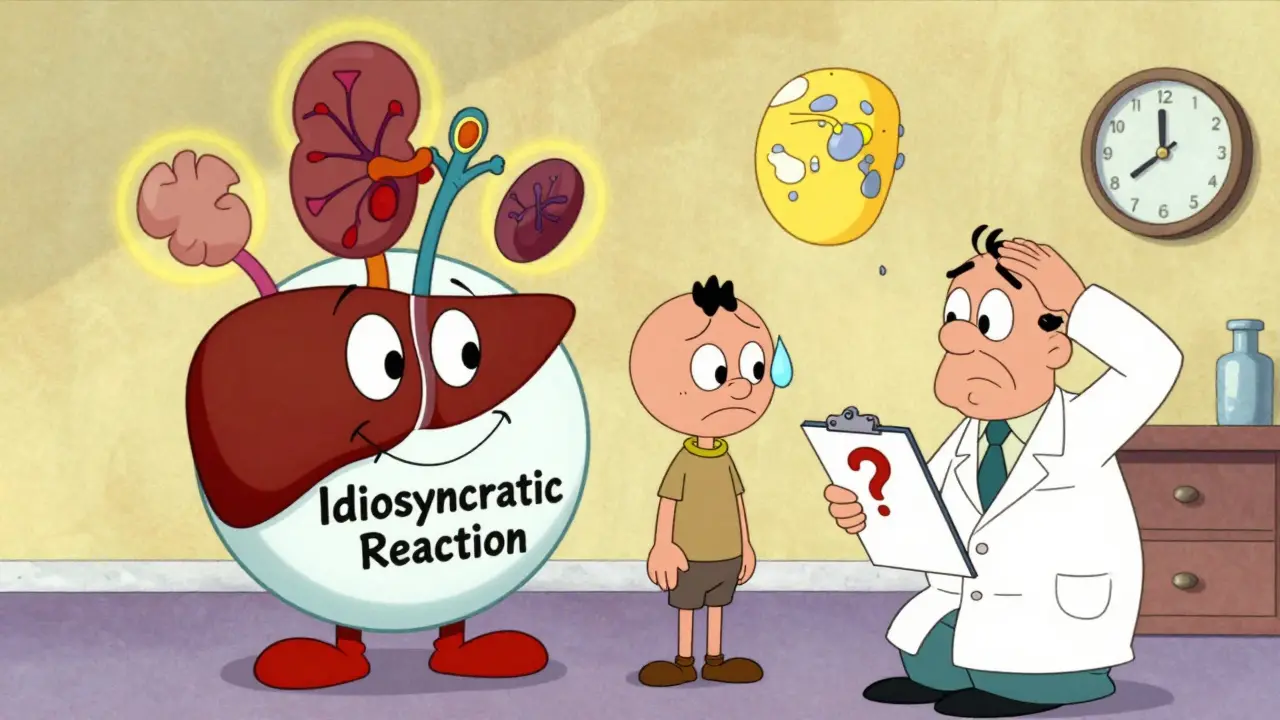
Idiosyncratic Drug Reaction Symptom Checker
Check Your Symptoms
Idiosyncratic reactions typically appear 1-8 weeks after starting a medication. Symptoms may include rash, fever, dark urine, or extreme fatigue. If these symptoms occur after taking a new drug, they could indicate a serious reaction.
What This Means
Please check your symptoms to see the result
Your symptoms could indicate a serious reaction that needs immediate medical attention.
Idiosyncratic reactions typically appear 1-8 weeks after starting a new medication.
Most people expect side effects from medications - nausea, dizziness, or a dry mouth. But what if your body reacts to a drug in a way no one predicted? Not because you took too much, not because the drug is poorly made, but because your body, for reasons still not fully understood, turns against it? This is what idiosyncratic drug reactions are: rare, unpredictable, and sometimes deadly responses that happen to just a handful of people.
What Makes a Drug Reaction ‘Idiosyncratic’?
Not all side effects are the same. About 80 to 85% of adverse reactions are predictable. These are called Type A reactions - they happen because of how the drug works in the body. Take blood pressure meds: if they lower your pressure too much, you might feel faint. That’s expected. You can see it coming. You can adjust the dose.
Idiosyncratic drug reactions, or Type B reactions, are the opposite. They don’t follow the rules. They happen in 1 out of every 10,000 to 100,000 people. You can’t predict them by age, weight, or even how the drug is usually processed. A person might take the same dose as their neighbor and feel fine, while the neighbor ends up in the hospital with a severe rash, liver failure, or even organ shutdown.
These reactions usually show up after 1 to 8 weeks of taking the drug. That delay makes them even harder to spot. A doctor might think the fever and rash are from a virus, not a medication. By the time the real cause is found, damage may already be done.
The Most Common and Dangerous Types
Not all idiosyncratic reactions look the same. The most frequent and serious ones fall into two main groups: liver injury and severe skin reactions.
Idiosyncratic drug-induced liver injury (IDILI) is the biggest concern. It accounts for nearly half of all serious drug-related liver damage. It can show up as hepatitis-like symptoms - yellow skin, dark urine, extreme fatigue. In 60-65% of cases, it damages liver cells directly. In others, it blocks bile flow. The damage can be mild and go away when the drug is stopped. Or it can be fatal. About 5-10% of people with severe IDILI die. Others develop chronic liver disease.
Severe cutaneous adverse reactions (SCARs) are rarer but even more terrifying. These include:
- Stevens-Johnson syndrome (SJS) - painful blisters and peeling skin, often starting in the mouth or eyes.
- Toxic epidermal necrolysis (TEN) - life-threatening, with over 30% of skin sloughing off.
- DRESS syndrome - rash, fever, swollen lymph nodes, and internal organ inflammation.
TEN has a death rate of 25-35%. Survivors often face permanent scarring, vision loss, or chronic lung problems. These reactions are not allergies in the traditional sense. They’re immune system overreactions triggered by the drug, often weeks after starting it.
Why Do These Reactions Happen?
No one knows for sure why only some people have these reactions. But science has strong theories.
The leading idea is the hapten hypothesis. Some drugs break down in the body into reactive chemicals. These chemicals stick to your body’s own proteins, making them look like foreign invaders. Your immune system, confused, attacks. Think of it like putting a sticker on your car and then being chased by a dog that thinks the sticker is a threat.
Another theory is the danger hypothesis. The drug doesn’t just create a fake target - it also stresses your cells. That stress signals your immune system to wake up and react, even to harmless things.
Genetics play a huge role. For a few drugs, we know exactly which gene variant puts someone at risk:
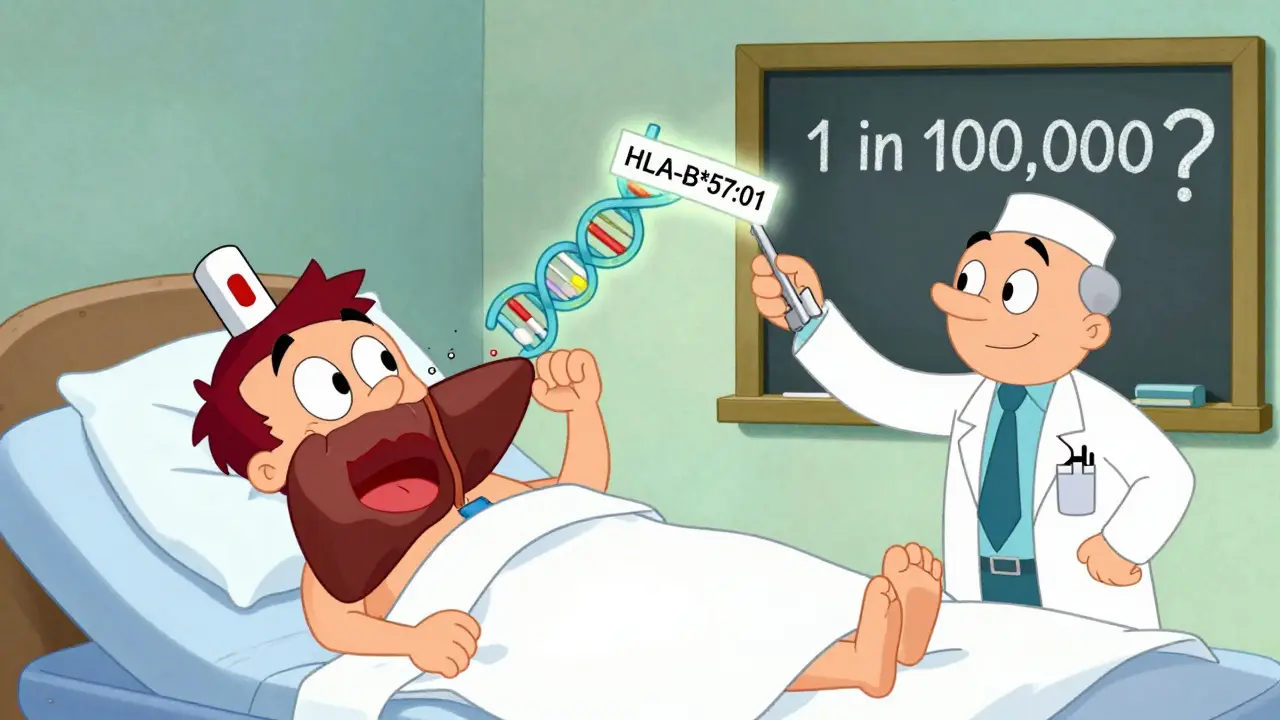
- Abacavir (an HIV drug) - people with the HLA-B*57:01 gene have a near-certain risk of a dangerous reaction. Testing for this gene before prescribing has nearly eliminated these reactions.
- Carbamazepine (a seizure drug) - HLA-B*15:02 carriers in Southeast Asia are at high risk for SJS/TEN. Screening is now standard in Thailand, Malaysia, and China.
- Phenytoin - HLA-A*31:01 increases SJS/TEN risk, especially in Europeans and Japanese.
But here’s the problem: these are the exceptions. For 92% of idiosyncratic reactions, we have no genetic test. No blood marker. No way to know who’s at risk before they take the drug.
How Doctors Diagnose Them
There’s no single test for idiosyncratic reactions. Diagnosis is a puzzle.
Doctors look for three things:
- Timing - Did symptoms start 1 to 8 weeks after starting the drug?
- Severity - Is the reaction way worse than expected for the dose?
- No other cause - Could it be an infection, autoimmune disease, or another drug?
For liver injury, they use the RUCAM scale. If the score is above 8, the drug is considered a ‘highly probable’ cause. For skin reactions, the ALDEN score helps link the drug to the rash.
The gold standard? Stopping the drug. If symptoms improve within days, that’s strong evidence. Re-challenging - giving the drug again - is rarely done because it’s dangerous. Only 5-10% of cases ever get tested this way.
Some labs offer lymphocyte transformation tests, which check if immune cells react to the drug in a dish. But they’re not perfect - only 60-70% accurate.
What Patients Experience
People who’ve had these reactions often describe feeling ignored.
A 2023 survey of over 600 patients on the Inspire community found that 72% said it took weeks to get the right diagnosis. Many were told they had the flu, a virus, or even psychosomatic symptoms. One woman with DRESS syndrome spent 17 days in the hospital before anyone connected her fever and rash to the new antibiotic she’d started.
Recovery isn’t quick. The Drug-Induced Liver Injury Patient Support Group found that 74% of members needed hospitalization - for an average of 12.4 days. Nearly 30% developed lasting liver damage. The average out-of-pocket cost per severe event? $47,500.
And the emotional toll? Many report never feeling fully safe taking any medication again. Even common painkillers become scary.
How the Pharmaceutical Industry Is Responding
Idiosyncratic reactions are the #1 reason drugs get pulled off the market. Between 1950 and 2023, 38 drugs were withdrawn in the U.S. alone because of them. Troglitazone (for diabetes) and bromfenac (a painkiller) are two infamous examples.
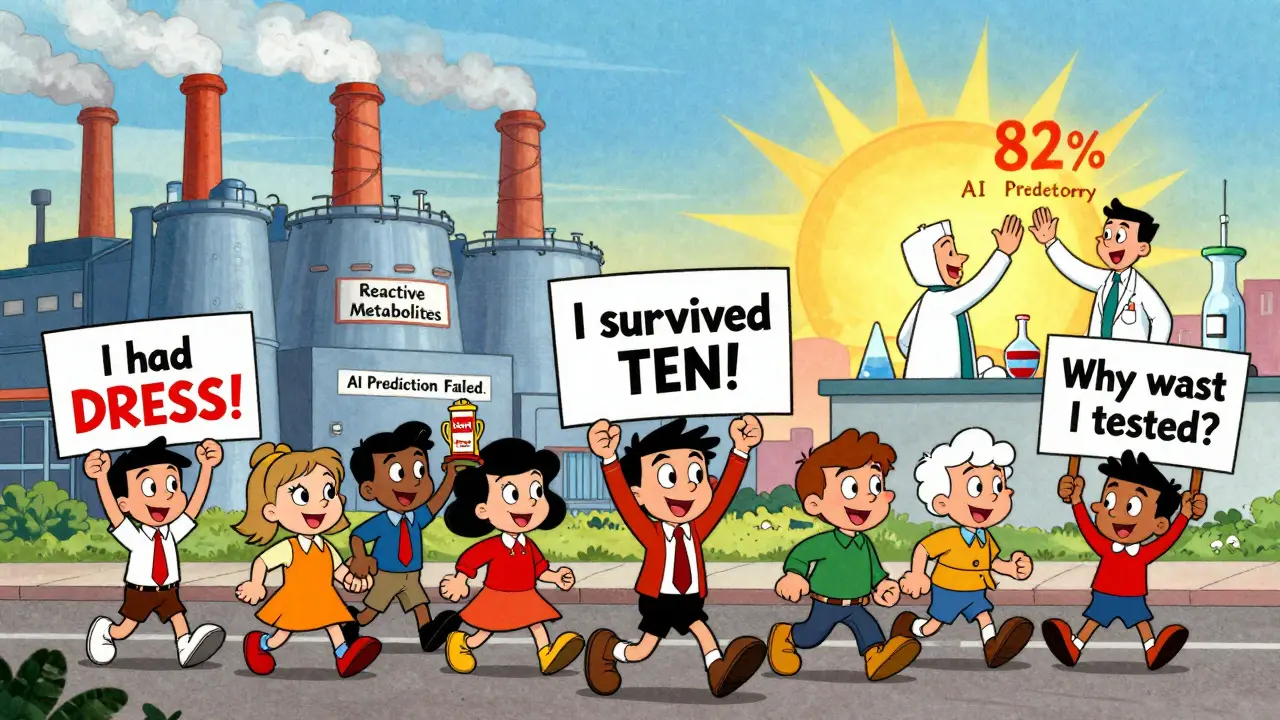
Today, drug companies spend billions trying to avoid this. In 2005, only 35% of pharmaceutical firms screened for reactive drug metabolites - the chemicals that trigger these reactions. By 2023, that number jumped to 92%. Pfizer and others now set strict limits: if a drug breaks down into more than 50 picomoles of reactive material per milligram of protein, it’s usually dropped.
Regulators are pushing too. The FDA now requires detailed metabolite testing for any drug that reaches more than 10% of the parent drug’s exposure in the body. The EMA now demands immune monitoring for all new cancer drugs that target specific proteins.
AI tools are being built to predict risk. Companies like ArisGlobal and Oracle Health Sciences are training algorithms on millions of patient records. But so far, none can predict more than 70% of cases accurately. We’re still far from a universal test.
What’s Next? Hope on the Horizon
There’s real progress.
In 2023, the FDA approved the first predictive test for pazopanib, a kidney cancer drug. It can now identify patients at high risk for liver damage with 82% accuracy. That’s a breakthrough.
Scientists have found 17 new gene-drug links since 2022. The NIH is pouring $47.5 million into the Drug-Induced Injury Network to dig deeper into how these reactions start.
By 2027, the European Commission’s ADRomics project aims to combine genetics, immune markers, and AI to predict risk before a single pill is taken. The goal? Reduce severe reactions by 60-70% in the next decade.
But experts like Dr. Jack Uetrecht warn: we’ll never eliminate these reactions entirely. The human immune system is too complex. Too variable. Too personal.
The best we can do is get better at spotting them early - and protecting the people who are most at risk.
What You Should Know
If you’re taking a new medication:
- Know the warning signs - rash, fever, dark urine, extreme tiredness, nausea, swollen glands.
- Don’t assume it’s ‘just a virus.’ If symptoms start 1-8 weeks after starting a drug, tell your doctor immediately.
- Keep a list of all medications you’ve taken, including over-the-counter and supplements.
- Ask if there’s a genetic test for your drug - especially if you’re of Southeast Asian descent or have a family history of drug reactions.
- If you’ve had a severe reaction before, never take that drug again - even in small amounts.
Doctors need to listen. Patients need to speak up. And science needs more time - and more funding - to catch up with the complexity of the human body.
Comments (13)
Mandy Vodak-Marotta
3 Feb, 2026So I’ve been on carbamazepine for seizures since I was 16, and I’m 38 now. Never had a rash, never had a fever, never even felt weird-just fine. But my cousin? Took it for three weeks, woke up with blisters all over her mouth, and ended up in the ICU for TEN. They found out she had HLA-B*15:02 after the fact. I swear, if they’d tested her before, she’d still be dancing at weddings. It’s insane we don’t screen everyone. Why are we still playing Russian roulette with prescriptions?
Harriot Rockey
3 Feb, 2026This is so important 🙏 I had DRESS from an antibiotic and spent 3 weeks in the hospital. They thought it was the flu for 10 days. My doctor didn’t even ask about meds until I screamed, ‘WHAT IF IT’S THE DRUG?!’ Now I carry a medical alert card. Please, if you’re on something new-track your symptoms. Don’t wait for a crisis. You’re not overreacting. Your body is screaming.
Joy Johnston
5 Feb, 2026It’s remarkable how much progress has been made in pharmacogenomics over the past decade. The transition from reactive medicine to predictive pharmacology represents one of the most significant paradigm shifts in clinical therapeutics since the advent of evidence-based protocols. The integration of HLA typing into pre-prescription workflows for high-risk agents such as abacavir and carbamazepine has demonstrably reduced morbidity and mortality. Nevertheless, the remaining 92% of idiosyncratic reactions remain a formidable challenge requiring multi-omics approaches and longitudinal cohort studies.
Zachary French
5 Feb, 2026yo. so like. i just took a random painkiller and woke up with my skin peeling off? nope. not me. i’m basically immune to all this nonsense. but apparently my cousin’s friend’s dog had a bad reaction to a flea pill? so now i’m scared of ibuprofen? this is why america’s gonna collapse. we’re all scared of medicine because some guy in a lab in 2003 got a rash. chill out. drugs aren’t poison. your body’s not a magic box that randomly explodes. #stopoverthinking
pradnya paramita
7 Feb, 2026From a pharmacovigilance standpoint, the haptenization hypothesis remains the most empirically supported mechanism for IDILI and SCARs. The covalent binding of electrophilic metabolites to host proteins triggers neoantigen formation, which, in the context of HLA-restricted T-cell activation, leads to cytotoxic immune responses. The RUCAM and ALDEN scoring systems, while imperfect, remain the most validated clinical tools for causality assessment. However, the absence of validated biomarkers for non-HLA-associated reactions underscores the urgent need for proteomic and transcriptomic profiling in early-phase clinical trials.
Nathan King
7 Feb, 2026One cannot help but observe the tragic irony inherent in modern pharmacotherapy: we have developed increasingly sophisticated molecular tools to target disease, yet remain fundamentally incapable of predicting how a single human organism will respond to a compound. The reductionist paradigm of pharmacokinetics fails spectacularly when confronted with the emergent complexity of human immunogenetics. It is not merely a matter of dosage or metabolism-it is the profound, unquantifiable individuality of the human immune system that renders predictive medicine an aspirational fantasy. We are, after all, not machines.
Daz Leonheart
9 Feb, 2026just wanna say thank you for writing this. i had a bad reaction to sulfa drugs when i was 12 and spent months recovering. no one believed me. doctors kept saying it was allergies or stress. i still get nervous taking any new pill. if you’re reading this and you’ve been through something like this-you’re not crazy. your body’s not broken. it’s just different. and you’re not alone.
Lorena Druetta
9 Feb, 2026My sister had a reaction to a new antidepressant. They thought it was a stroke. She was in the ER for 48 hours before they realized it was DRESS. Now she can’t take any NSAIDs, antibiotics, or even certain supplements. She says she feels like a walking hazard. I just want people to know-these reactions aren’t rare in the lives they destroy. One person’s ‘rare’ is another person’s lifelong trauma. Please, if you’re a doctor-listen. If you’re a patient-speak up.
Jhoantan Moreira
11 Feb, 2026It’s heartbreaking how many people suffer silently because they’re afraid they’ll be labeled ‘hypochondriacs.’ I’ve seen it happen to friends. The system needs to shift from ‘it’s probably nothing’ to ‘let’s rule it out.’ A simple question-‘When did you start this drug?’-could save lives. We need more empathy, not more tests. And maybe, just maybe, we need to treat people like humans, not data points.
Shelby Price
12 Feb, 2026so i’m just wondering… if we’re so good at gene testing now, why isn’t everyone getting a panel before they get prescribed anything? like, my cousin got a DNA kit from 23andMe and found out she had a 98% risk for a drug reaction. but her doctor said ‘we don’t screen for that.’ why not? it’s like having a fire alarm but refusing to install batteries.
Justin Fauth
12 Feb, 2026THIS is why we need to stop letting foreigners run our FDA. Look at this-some guy in India gets a drug, his body reacts, and now we’re banning it for everyone? No. We need to stop letting science be held hostage by a few bad cases. We’re not living in the 1800s. We have tech. We have data. We don’t need to throw out good medicine because a few people’s bodies are ‘too sensitive.’ Just stop giving it to them. Don’t punish the whole country.
Jesse Naidoo
14 Feb, 2026Wait, so you’re saying your body might just… hate a drug? Like, randomly? That’s not science, that’s like… magic. I don’t believe in this. I think it’s all in their head. Or maybe they’re just bad at taking meds. I’ve been on 17 different drugs and never had a problem. So why can’t everyone just be normal?
Alec Stewart Stewart
14 Feb, 2026My grandma had a reaction to penicillin in the 60s. Died. No one knew why. No one tested her. Now my mom won’t let me take any antibiotic without a full history. I get it. It’s scary. But I’m glad someone’s finally talking about this. Don’t ignore the weird symptoms. Write them down. Show them to your doctor. Even if it’s ‘probably nothing.’ It might not be.