
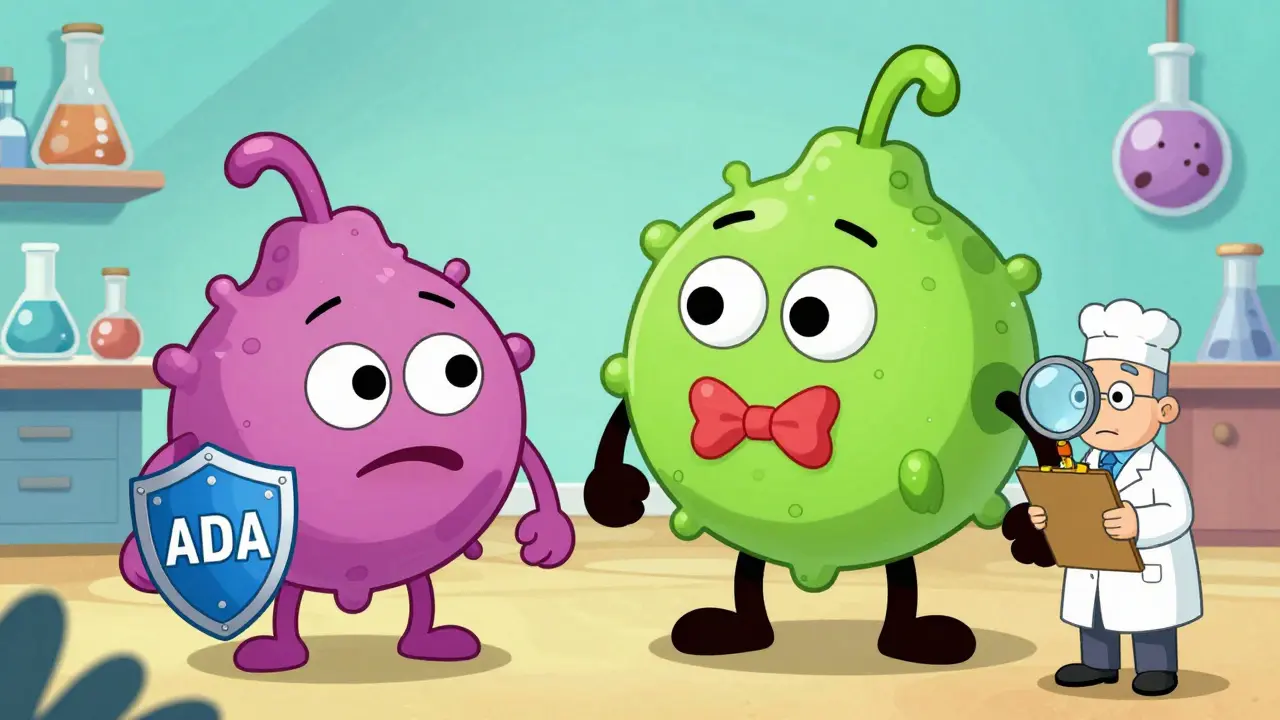
When you hear the word biosimilar, you might think it’s just like a generic drug - cheaper, same effect, done. But that’s not true. Biosimilars aren’t chemically identical like your everyday generic pills. They’re made from living cells - human or animal - and even tiny changes in how those cells are grown can change how your body reacts. One of the biggest concerns? Immunogenicity. That’s the fancy term for when your immune system sees the drug as a threat and starts fighting back.
What Is Immunogenicity, Really?
Immunogenicity means your body produces antibodies against the drug. These aren’t normal antibodies that fight colds or flu. These are called anti-drug antibodies (ADAs). They stick to the biologic, like a lock on a key, and can block it from working. In some cases, they can even cause serious reactions - think rashes, swelling, or worse, anaphylaxis.
It sounds scary, but here’s the catch: even the original biologic drugs - the ones biosimilars are copying - can cause this. For example, about 70% of patients on some monoclonal antibodies develop ADAs over time. So the real question isn’t whether immunogenicity happens. It’s: Does the biosimilar cause more of it than the original?
Why Can’t Biosimilars Be Exactly the Same?
Think of a biologic like a complex sculpture made of clay. The original is hand-sculpted by one artist. A biosimilar is made by another artist using the same blueprint, but different tools, different clay, maybe even different weather in the studio. The final shape looks identical. But under a microscope? Tiny differences show up.
These differences come from:
- Post-translational modifications - things like sugar chains (glycans) attached to the protein. A small change in sialylation or galactosylation can alter how the immune system sees the drug.
- Manufacturing impurities - leftover proteins from the host cells (like Chinese hamster ovary cells). If there’s more than 100 parts per million, ADA risk jumps by 87%.
- Protein aggregates - clumps of the drug that form during storage or handling. If they make up more than 5% of the product, immunogenicity risk triples.
- Stabilizers - one biosimilar might use polysorbate 80; the original uses polysorbate 20. Sounds minor? It’s not. These can change how the protein folds and whether it clumps.
These aren’t bugs - they’re expected. But they’re why regulators demand head-to-head testing. You can’t just say, “It’s close enough.” You have to prove it’s the same in how your body responds.
How Do We Measure Immune Response?
Testing for ADAs isn’t as simple as a blood test. It’s a three-step process:
- Screening - Does the patient have any antibodies at all?
- Confirmation - Are those antibodies really targeting the drug, or is it a false positive?
- Characterization - Are they neutralizing? That means they block the drug from working.
And here’s the problem: the method matters. One lab might use electrochemiluminescence (ECL) and find 13.1% of patients developed ADAs. Another lab using ELISA might only find 5%. If you compare a biosimilar tested with one method to the original tested with another, you’re not comparing apples to apples - you’re comparing apples to oranges.
That’s why the EMA and FDA both say: comparative studies must use identical assays. Same equipment. Same reagents. Same timing. Otherwise, you’re not measuring immunogenicity - you’re measuring lab technique.
What Makes Some People More Likely to React?
It’s not just about the drug. Your body matters too.
- Route of delivery - Shots under the skin (subcutaneous) cause 30-50% more ADAs than IV infusions. That’s why some biosimilars - like those for rheumatoid arthritis - are designed for injection.
- How often you take it - If you get the drug every 2 weeks, your immune system has less time to adapt. Continuous dosing lowers risk by 25% compared to intermittent use.
- Your genes - People with the HLA-DRB1*04:01 gene variant are nearly 5 times more likely to develop ADAs to certain biologics.
- Your disease - Patients with rheumatoid arthritis have 2.3 times higher risk than healthy people. Why? Their immune systems are already on high alert.
- Other drugs - Taking methotrexate with a TNF inhibitor cuts ADA rates by 65%. That’s why combo therapy is standard in autoimmune diseases.
So even if two biosimilars are identical on paper, one might cause more reactions in a patient with RA who’s not on methotrexate. Context is everything.
Real-World Evidence: What Do Patients Actually Experience?
Let’s cut through the noise. What do real patients and real studies say?
In 2021, a study of 1,247 rheumatoid arthritis patients found no difference in ADA rates between the original infliximab and its biosimilar CT-P13. Both had around 12% ADA incidence. That’s reassuring.
But then came the NOR-SWITCH trial. 481 patients switched from the original infliximab to the biosimilar. The biosimilar group had slightly higher ADA rates - 11.2% vs. 8.5%. Still, no difference in clinical outcomes. No more flares. No more hospital visits.
Then there’s adalimumab. The Danish Biologics Registry found that Humira (the original) had 18.7% ADA rates. Amgevita (the biosimilar) had 23.4%. Statistically significant? Yes. Clinically meaningful? Not really. Patients still responded well. No drop in effectiveness.
And then there are the Reddit threads.
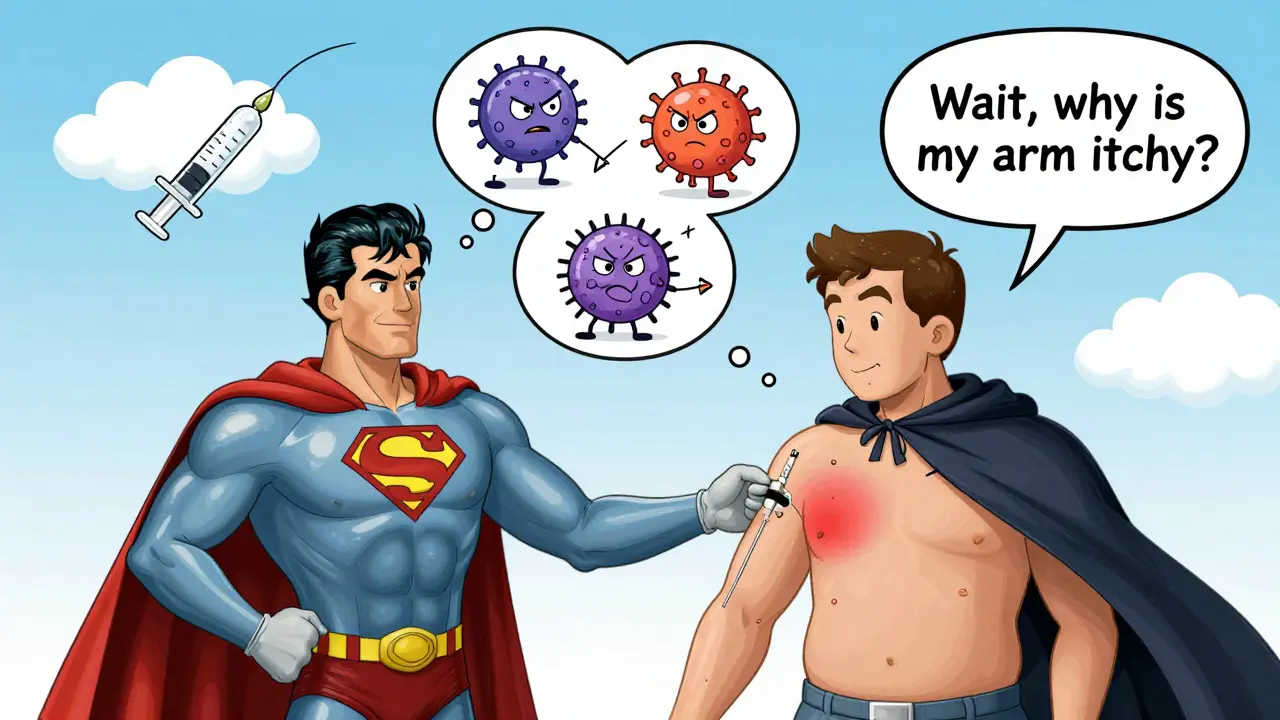
One patient, u/RheumPatient87, wrote: “After switching to the biosimilar etanercept, I got red, itchy injection sites. Never happened with the original.” Another, u/BiologicSurvivor, said: “Switched to biosimilar rituximab three years ago. Zero difference.”
Surveys of rheumatologists tell a similar story. 68% think immunogenicity fears are overblown. 22% say they’ve seen real differences in practice. That’s a wide gap. It means some doctors see it. Some don’t. And the patients? They’re the ones living with it.
Regulators Are Watching - But What Do They Require?
The FDA and EMA don’t just say, “Make it similar.” They demand proof. Here’s what’s required:
- Analytical similarity - The biosimilar must match the original in structure, purity, and function at a molecular level.
- Animal studies - Toxicity and pharmacokinetics must be comparable.
- Clinical trials - Head-to-head studies in a sensitive population (like RA or psoriasis) to prove safety and efficacy.
- Immunogenicity testing - Must be done with the same assays, same timing, same patient population.
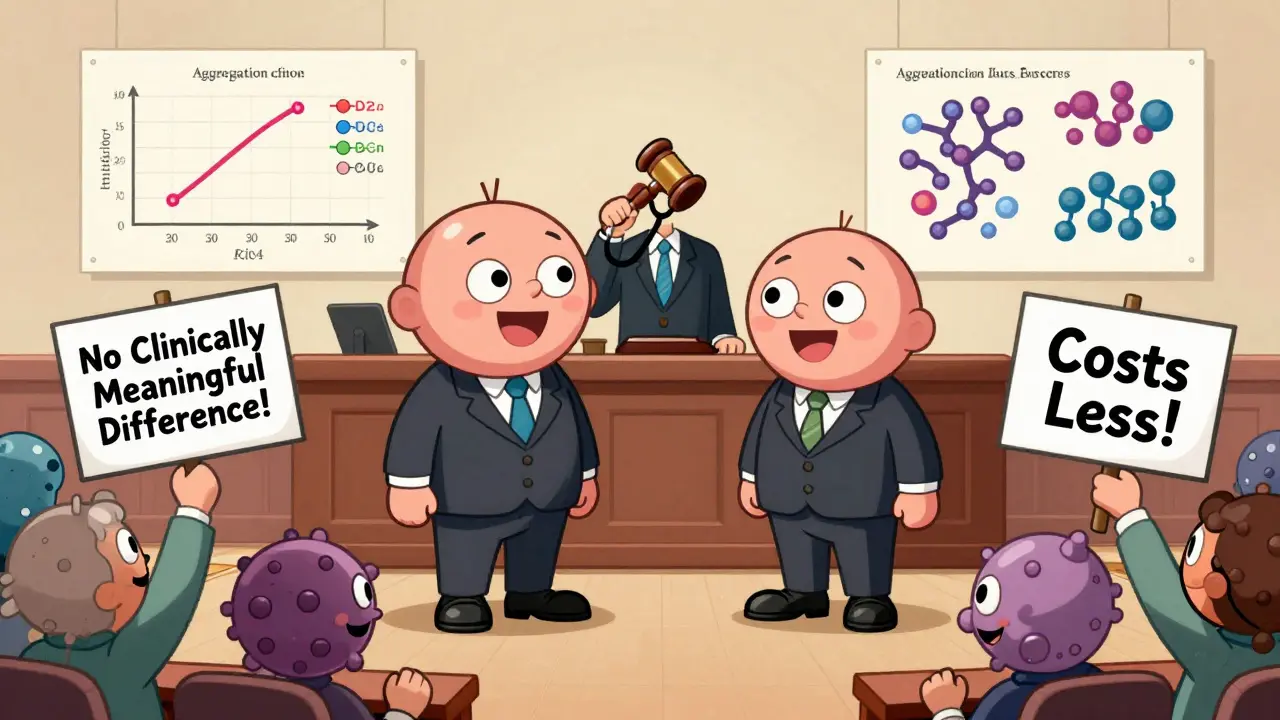
And they’re not done. The FDA’s “totality of evidence” approach means they look at everything - from manufacturing to patient outcomes. If one biosimilar has higher ADA rates but no drop in effectiveness, it can still be approved. The bar isn’t zero immunogenicity. It’s no clinically meaningful difference.
What Does This Mean for Patients?
Here’s the bottom line:
- Yes, biosimilars can trigger immune responses - just like the originals.
- Minor differences exist, but they rarely lead to real-world problems.
- Most patients switch without issue.
- If you notice new side effects after switching - redness, swelling, fever, fatigue - tell your doctor. It’s rare, but it happens.
- Don’t assume biosimilars are risk-free. But don’t fear them either.
What’s more important? Cost. Biologics can cost $30,000-$70,000 a year. Biosimilars? Often half that. For many patients, that’s the difference between staying on treatment and stopping.
The Future: Smarter Testing, Fewer Surprises
Experts predict that by 2027, we’ll be able to map the exact sugar chains on a biologic molecule with 99.5% accuracy using advanced mass spectrometry. That means we’ll know not just if two drugs are similar - but why they’re similar.
Some labs are already combining proteomics (protein shapes), glycomics (sugar patterns), and immunomics (immune reactions) to predict risk before a drug even hits the market. It’s like a weather forecast for your immune system.
And the data keeps growing. In Europe, 85% of infliximab prescriptions are now biosimilars. In the U.S., adoption is slower - but rising. As more patients use them and more studies are done, the fear fades. The science catches up.
Immunogenicity isn’t going away. But we’re learning how to manage it - not avoid it.
Can biosimilars cause more side effects than the original biologic?
In most cases, no. Clinical trials and real-world data show that biosimilars have similar safety profiles to their reference products. While some patients report new injection-site reactions or fatigue after switching, these are rare and often not linked to higher antibody levels. Regulatory agencies require head-to-head testing to ensure no clinically meaningful differences exist.
Why do some patients react differently to biosimilars than others?
It depends on the person. Factors like genetics (especially HLA variants), disease type (e.g., rheumatoid arthritis increases risk), how the drug is given (injection vs. IV), and whether they’re taking other medications like methotrexate all play a role. Even the same biosimilar might trigger a reaction in one patient but not another.
Are all biosimilars the same?
No. Each biosimilar is made by a different company, using different cell lines, purification methods, and stabilizers. While they all must meet strict similarity standards, small differences in glycosylation or aggregation can exist. That’s why switching between different biosimilars (not just biosimilar to originator) isn’t always studied - and may carry unknown risks.
Do I need to get tested for antibodies if I switch to a biosimilar?
Routine antibody testing isn’t recommended for most patients. Doctors typically monitor for loss of effectiveness or new side effects. If your condition starts to flare after switching, your provider may check for ADAs - but only if there’s a clinical reason. Testing without symptoms can lead to unnecessary worry.
Why are biosimilars cheaper if they’re so complex to make?
Because they don’t need to repeat all the early-stage clinical trials. The original biologic company spent billions on research and safety testing. Biosimilar makers build on that data. They focus on proving similarity, not starting from scratch. That cuts development time and cost by 70-80%, which translates to lower prices - often 30-50% less than the original.
Comments (10)
Melissa Stansbury
20 Mar, 2026I switched to a biosimilar for my RA last year and got these insane itchy hives every time I injected it. My doctor said it's 'probably just coincidence' but I know better. The original never did this. Now I'm stuck paying out of pocket for Humira because my insurance won't cover it. This isn't science - it's corporate cost-cutting and we're the lab rats.
SNEHA GUPTA
22 Mar, 2026The real issue isn't whether biosimilars are identical - they can't be. Life doesn't work that way. The question is whether the differences are clinically relevant. Too often, we confuse molecular similarity with therapeutic equivalence. Science demands rigor, not convenience. If we're going to replace expensive biologics, we owe patients more than a spreadsheet calculation.
Gaurav Kumar
23 Mar, 2026India makes 70% of the world's generic drugs. We know how to make things that work. Why are Americans so scared of biosimilars? Because they're used to paying $50k/year for a pill that's basically a protein with a fancy label. Your immune system doesn't care about your credit score. Stop being scared of savings. 🇮🇳💪
David Robinson
23 Mar, 2026Look, I get it. Biosimilars are cheaper. But let's not pretend this is just about money. There are real patients out there who develop neutralizing antibodies after switching - and yeah, their disease flares. I've seen it. Labs use different assays, manufacturers tweak stabilizers, and regulators approve based on 'no clinically meaningful difference' - which is code for 'we don't have enough data yet.' This isn't progress. It's a gamble with people's lives. And the worst part? No one's tracking long-term outcomes systematically. We're just hoping no one dies.
gemeika hernandez
25 Mar, 2026My sister took a biosimilar and got a rash. Then she got dizzy. Then she couldn't walk. They said it was 'just an allergic reaction.' But I know. It was the drug. They didn't test her properly. I'm never letting anyone switch me again. It's too risky. End of story.
Nicole Blain
26 Mar, 2026Just switched to a biosimilar last month 😊 No issues so far! Felt like a weight lifted off my wallet 💸 My rheumatologist said 9/10 people are fine. Fingers crossed! 🤞
Kathy Underhill
27 Mar, 2026The data is clear: most biosimilars perform equivalently in real-world use. The fear of immunogenicity is amplified by anecdote and mistrust. Regulatory agencies don't approve drugs based on hope. They require evidence. If a biosimilar passes analytical, preclinical, and clinical benchmarks with identical assays - it's safe. The burden of proof lies with those claiming harm, not with those offering a more affordable option.
Srividhya Srinivasan
28 Mar, 2026Have you heard about the 'glycan switch' in biosimilars? Big Pharma knows this. They engineered the original biologic to have just enough immunogenicity to keep patients dependent - then let biosimilars inherit the instability. It's not science. It's a profit loop. And now they're telling us it's 'safe' because the side effects are 'rare'? Rare doesn't mean harmless. It means they're not counting you in the statistics.
Prathamesh Ghodke
29 Mar, 2026Hey, I work in a clinic that handles biosimilars daily. We've had maybe 3 out of 200 patients report new reactions - all mild, all resolved with dose adjustment. The rest? Same results, half the cost. I get why people are nervous. But fear shouldn't override data. And honestly? Most patients are just relieved they can afford their meds now.
Stephen Habegger
30 Mar, 2026Big win for patients. Biosimilars aren't perfect - nothing is. But they're saving lives by making treatment accessible. If you're worried about immune response, talk to your doctor. But don't let fear of the unknown stop you from getting the care you need. You're not a guinea pig - you're a person who deserves a shot at health.