
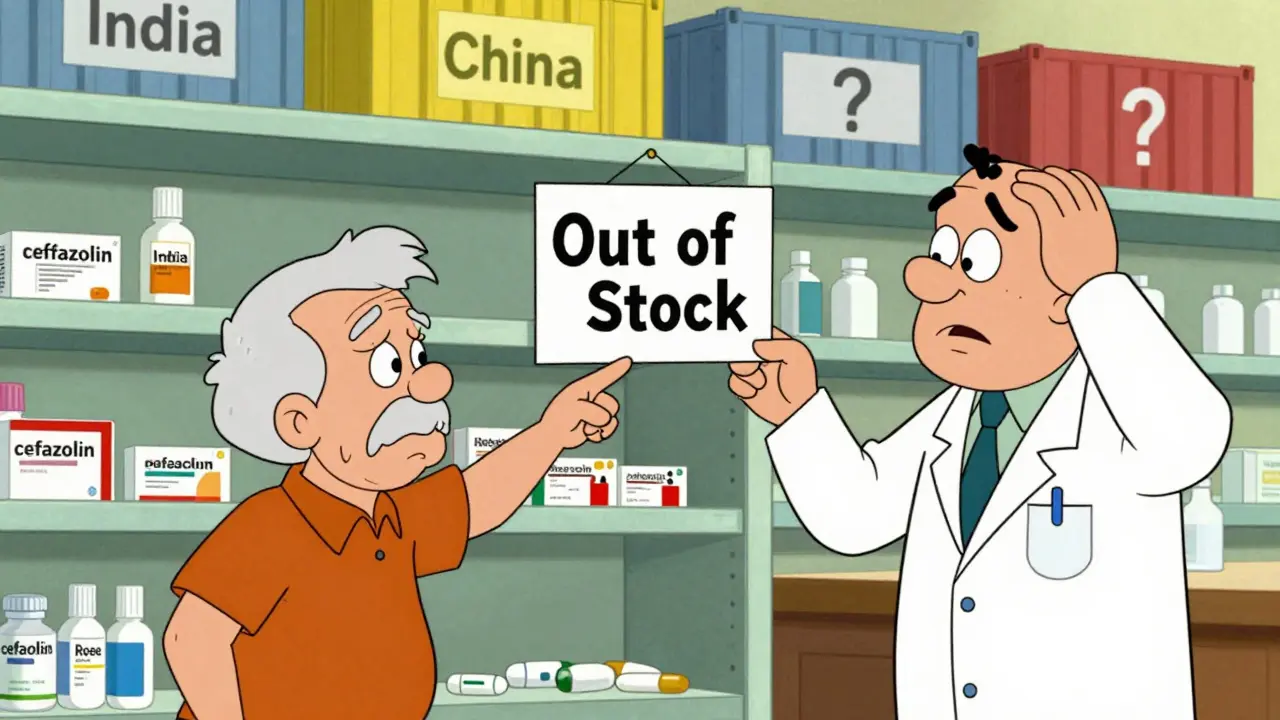
When you walk into a pharmacy and find your usual prescription isn’t available, or your doctor says they can’t get the generic version anymore, it’s not just bad luck. It’s the result of pricing pressure and shortages that have been reshaping healthcare economics since 2020. These aren’t temporary hiccups-they’re systemic failures that ripple through hospitals, clinics, and homes, making essential medicines harder to get and more expensive to buy.
Why Medicines Disappear from Shelves
Shortages in pharmaceuticals don’t happen because no one is making the drug. They happen because the system can’t keep up. The same supply chain bottlenecks that caused toilet paper runs in 2020 hit drug manufacturing even harder. Active pharmaceutical ingredients (APIs) are often made in just one or two plants worldwide-mostly in India and China. When a factory in India shuts down for regulatory inspections, or a port in Shanghai closes due to lockdowns, the entire global supply of a common antibiotic or blood pressure medication can stall. According to the U.S. Food and Drug Administration, over 300 drugs experienced shortages in 2022, with 40% of them being critical, life-saving medications like insulin, chemotherapy agents, and anesthetics. The European Medicines Agency reported similar trends, with 15% of essential medicines facing supply disruptions across the EU in 2021. These aren’t obscure drugs either. They’re the ones millions rely on daily.How Pricing Pressure Turns Scarcity Into Crisis
When a drug becomes scarce, prices don’t just rise-they spike. Manufacturers with remaining stock can charge more because there’s no competition. Distributors pass those costs to hospitals. Hospitals pass them to patients. In the U.S., a shortage of the generic antibiotic cefazolin led to price increases of over 1,200% in some markets between 2020 and 2022. In New Zealand, where public health systems absorb much of the cost, the government still paid 37% more for insulin in 2022 than it did in 2019. The problem gets worse when price controls are applied. In the UK, the government capped the price of certain generic drugs to keep them affordable. But that meant manufacturers lost money producing them. Between 2020 and 2023, 14 drug manufacturers stopped making five essential medicines entirely because the capped prices didn’t cover production costs. The result? More shortages, not fewer.Who Gets Hurt the Most
It’s not just about cost. It’s about access. Patients on fixed incomes, elderly people on multiple medications, and those in rural areas feel the impact first. A 2023 survey by the New Zealand Ministry of Health found that 22% of patients over 65 reported skipping doses or delaying refills due to unavailability or cost. In low-income communities, the numbers were even higher-nearly 35%. Hospitals aren’t immune. Emergency rooms have had to switch to less effective or more toxic alternatives when preferred drugs run out. One Wellington hospital reported switching 12% of its cardiac patients to a different beta-blocker in 2022 because the original was unavailable. That meant more side effects, more follow-up visits, and higher long-term care costs.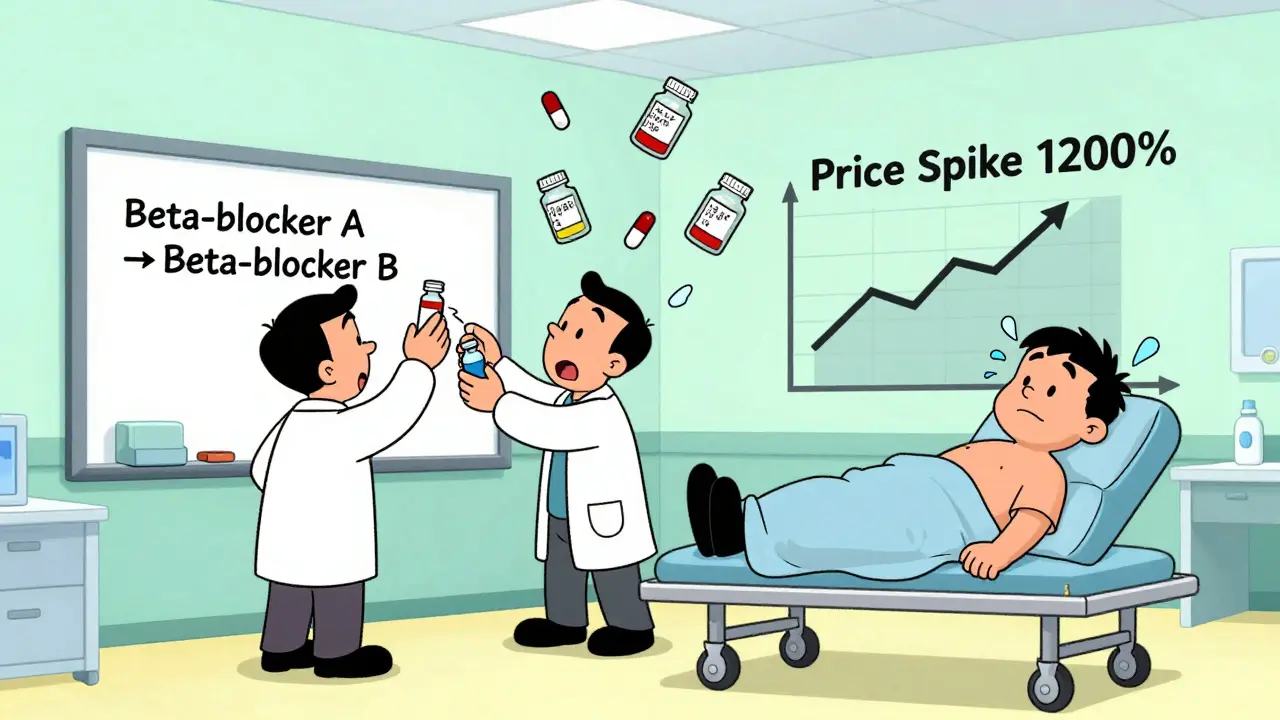
The Ripple Effect on Health Outcomes
Shortages don’t just raise prices-they lower survival rates. A 2023 study in the Journal of the American Medical Informatics Association tracked 1.2 million patients in the U.S. and found that when chemotherapy drugs were in short supply, cancer patients experienced a 14% higher risk of disease progression. For patients with chronic conditions like diabetes or epilepsy, even a two-week gap in medication can lead to hospitalization. In New Zealand, where healthcare is publicly funded, delays in drug availability led to a 9% increase in avoidable hospital admissions for asthma and diabetes complications between 2021 and 2023. The cost? Over $180 million in extra public spending in just two years.Why Traditional Solutions Fail
Governments often respond to shortages by stockpiling drugs. But stockpiles are expensive and outdated fast. Many medications have short shelf lives. By the time a batch is ordered, manufactured, shipped, and stored, the crisis may have passed-or worsened. Some countries try to force manufacturers to keep producing. But without profit, they won’t. In 2022, the U.S. tried to incentivize domestic production of APIs with $1 billion in grants. Only 12 out of 150 applicants met the criteria. Building a new API plant takes five to seven years and costs over $200 million. That’s not a quick fix. Price controls? They backfire. When prices are capped, manufacturers stop making the cheapest versions. That’s what happened with generic metformin in Canada-prices were kept low, so companies stopped producing it. The result? Patients paid more for branded versions, and pharmacies ran out of stock more often.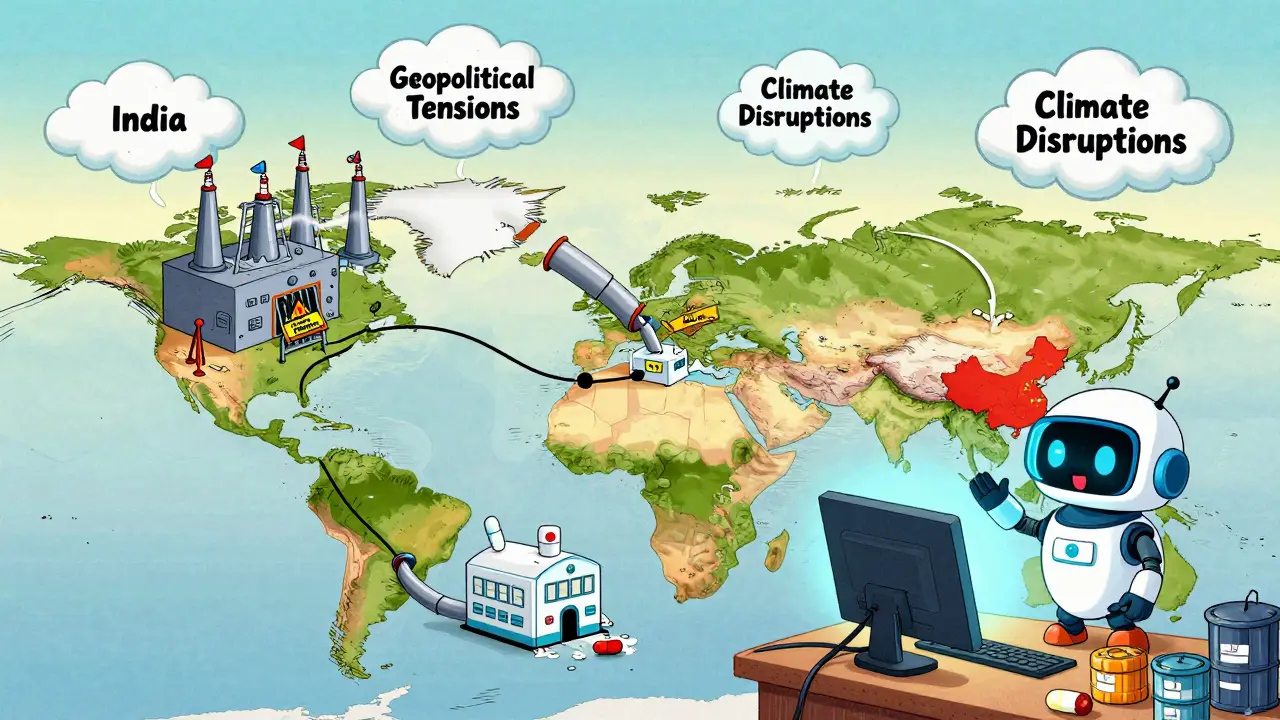
What’s Actually Working
The real solutions are quieter but more effective. Companies that diversified their supplier base saw 40% fewer disruptions. One New Zealand pharmaceutical distributor switched from relying on a single Indian manufacturer to sourcing from three countries-India, South Korea, and Germany. Their drug availability improved by 58%. Digital tools are helping too. Hospitals using real-time inventory tracking systems reduced stockouts by 31%. One Auckland hospital implemented an AI-driven alert system that flagged when a drug’s supply was dropping below 10 days’ worth. That gave them time to find alternatives before patients were affected. The European Central Bank found that temporarily relaxing competition rules during crises helped. In Germany, during the height of the shortage crisis, regulators allowed pharmacies to swap similar drugs without extra paperwork. That reduced pharmaceutical shortages by 19% in six weeks.The Road Ahead
The good news? Supply chain pressures have eased since late 2022. The Global Supply Chain Pressure Index returned to pre-pandemic levels by early 2023. But that doesn’t mean the risk is gone. Geopolitical tensions, climate disruptions, and labor shortages in manufacturing hubs mean the system is still fragile. Experts at the International Monetary Fund warn that supply chain disruptions will remain 15-20% above pre-pandemic levels through 2025. That means pricing pressure and shortages won’t vanish overnight. The question isn’t whether they’ll return-it’s whether we’ll be ready. The answer lies in building resilience, not just reacting. That means investing in diverse, transparent supply chains. It means letting prices reflect true costs so manufacturers can keep producing. It means giving hospitals better tools to track inventory and switch drugs when needed. And it means recognizing that healthcare isn’t just about treatment-it’s about access. And access depends on supply.Why do drug shortages keep happening even after the pandemic?
Drug shortages persist because the global supply chain for medicines was never designed to be flexible. Most active ingredients are made in just one or two factories, often overseas. When those factories face disruptions-whether from weather, regulation, or politics-the whole system stalls. Even after pandemic-related delays eased, the underlying fragility remained. Companies didn’t rebuild redundant supply lines because it’s expensive. And without profit incentives, they won’t.
Can price controls prevent high drug costs during shortages?
No-they often make shortages worse. When governments cap drug prices, manufacturers lose money producing them. If they can’t cover costs, they stop making the drug. This happened with generic antibiotics in the UK and insulin in Canada. The result? Fewer options, longer waits, and higher prices for alternatives. Prices need to reflect real costs to keep production going.
How do shortages affect patients in countries with public healthcare?
Even in public systems, shortages hit hard. Governments pay for drugs, but if the drug isn’t available, patients can’t get it. Delays mean worse health outcomes-more hospital visits, complications, and long-term damage. In New Zealand, 22% of seniors skipped doses during shortages. Public funding doesn’t fix supply-it just pays for the gap when it’s filled.
Are generic drugs more likely to be in short supply than brand-name ones?
Yes. Generic drugs have thinner profit margins, so manufacturers prioritize higher-margin branded drugs. When costs rise or demand shifts, generics are the first to be cut. In the U.S., over 80% of drug shortages in 2022 were for generics. They’re cheaper to buy, but harder to keep in stock.
What can hospitals do to prepare for future shortages?
Hospitals can build resilience by diversifying suppliers, using real-time inventory tracking, and creating alternative treatment protocols. One hospital in Wellington reduced stockouts by 31% by using AI to predict when drugs would run low. They also trained staff to switch to clinically equivalent alternatives quickly. That’s not just smart-it’s lifesaving.
Will nearshoring solve the problem of drug shortages?
It helps, but it’s not a full fix. Bringing drug production closer to home-like moving API manufacturing from India to Mexico or Eastern Europe-reduces shipping delays and geopolitical risks. But it also raises costs by 8-12%. That means higher prices for patients and payers. Nearshoring is part of the solution, but it needs to be paired with better inventory systems and smarter pricing.
Comments (14)
shubham rathee
21 Jan, 2026bro the whole system is rigged like a casino where the house always wins and we’re the suckers buying tickets with our lives
Steve Hesketh
23 Jan, 2026man i saw this play out in my aunt’s village in Nigeria-she had to wait 3 months for her blood pressure meds because the shipment got stuck in Lagos port. when it finally came, the price was 3x what it used to be. we ain’t just talking about pills here, we’re talking about people’s lives getting postponed every day. we need to stop treating healthcare like a stock market and start treating it like a human right.
Dee Monroe
24 Jan, 2026it’s funny how we talk about ‘supply chain resilience’ like it’s some new concept, but the truth is we’ve known for decades that centralizing production in two countries is a recipe for disaster. we built this system to maximize short-term profits, not human survival. now we’re surprised when the house collapses? we didn’t just ignore the warning signs-we laughed at them. and now we’re paying with lives. imagine if we’d invested in diversified manufacturing, local production, and fair pricing 10 years ago instead of chasing quarterly earnings. we wouldn’t be here. but we didn’t. so here we are. broken. waiting. hoping. again.
Rod Wheatley
25 Jan, 2026YES. YES. YES. I work in a rural ER in Iowa, and last year we ran out of epinephrine for 11 days. Eleven days. We had to use expired vials just to keep people alive. And the worst part? The hospital admin said, ‘It’s cheaper to pay for ER visits from people who didn’t get their insulin than to stock the drug.’ That’s not a business decision-that’s a moral failure. We need to stop pretending this is about economics. It’s about ethics. And if we don’t fix it, we’re not just failing patients-we’re failing ourselves.
Jerry Rodrigues
26 Jan, 2026the system is broken but people keep trying to fix the wrong parts. stockpiles? useless. price caps? counterproductive. the real fix is letting manufacturers make a decent profit on generics so they don’t quit making them. simple. obvious. ignored.
Jarrod Flesch
27 Jan, 2026real talk: i’m from Australia and we’ve got a public system but we still had insulin shortages last year. my mate’s kid had to go to the hospital because the pharmacy ran out. it’s not just a US problem. this is global. we all think ‘we’re different’ but we’re not. we’re all just one factory shutdown away from chaos 😔
Barbara Mahone
29 Jan, 2026in my grandmother’s village in rural Georgia, they used to get medications from a traveling pharmacist who drove from town to town. now? no one drives anymore. no one stocks. no one cares. the system moved on, but the people didn’t. we talk about AI and supply chains like they’re magic bullets, but what we really need is someone who remembers that medicine isn’t a product-it’s a promise.
Stephen Rock
30 Jan, 2026the real crisis isn't the shortage it's that you people still think this is about healthcare
Melanie Pearson
1 Feb, 2026the data presented here is statistically significant and methodologically sound. however, the implicit moral framing is a dangerous overreach. healthcare is not a right-it is a service. the market corrects inefficiencies. if manufacturers cease production due to price controls, that is not a failure of policy-it is a rational economic response. to anthropomorphize pharmaceutical companies as villains is unscientific and emotionally manipulative. the solution is not to punish profitability-it is to incentivize innovation through deregulation and market-based pricing mechanisms.
Kevin Narvaes
2 Feb, 2026you ever heard of the deep state controlling drug prices? they let the shortages happen so you gotta go to big pharma for the ‘premium’ versions. the fda is in on it. the WHO too. they want you dependent. watch the documentary ‘pillgate’ on the dark web. it’s real. they’re even replacing the active ingredients with placebo filler in generics. i’ve seen the lab reports.
Malvina Tomja
2 Feb, 2026you all sound like you’ve never opened a textbook. the reason generics are in short supply is because they’re low-margin commodities. if you want them available, pay for them. stop pretending you want affordable medicine while refusing to pay for it. this isn’t a moral crisis-it’s a failure of personal responsibility. stop blaming corporations. blame yourself for expecting something for nothing.
Samuel Mendoza
3 Feb, 2026price controls cause shortages. end of story.
Glenda Marínez Granados
4 Feb, 2026so we’ve spent 20 years pretending capitalism is a healthcare system… and now we’re shocked it’s broken? 🤡
Kelly McRainey Moore
5 Feb, 2026i just want to say thank you to the nurses and pharmacists who are still showing up every day even when the system’s failing. you’re the real heroes.