
Quercetin Medication Interaction Checker
Check Your Medications
Enter medications you're taking to see if they may dangerously interact with quercetin supplements.
Interaction Results
Many people take quercetin supplements hoping to reduce inflammation, boost immunity, or fight allergies. It’s found naturally in apples, onions, and berries, and now it’s sold in capsules, powders, and energy drinks. But here’s something most users don’t know: quercetin can dangerously raise the levels of common medications in your bloodstream - sometimes by more than 50%. This isn’t theoretical. It’s happening right now in homes across the country.
How Quercetin Slows Down Your Body’s Drug Cleanup System
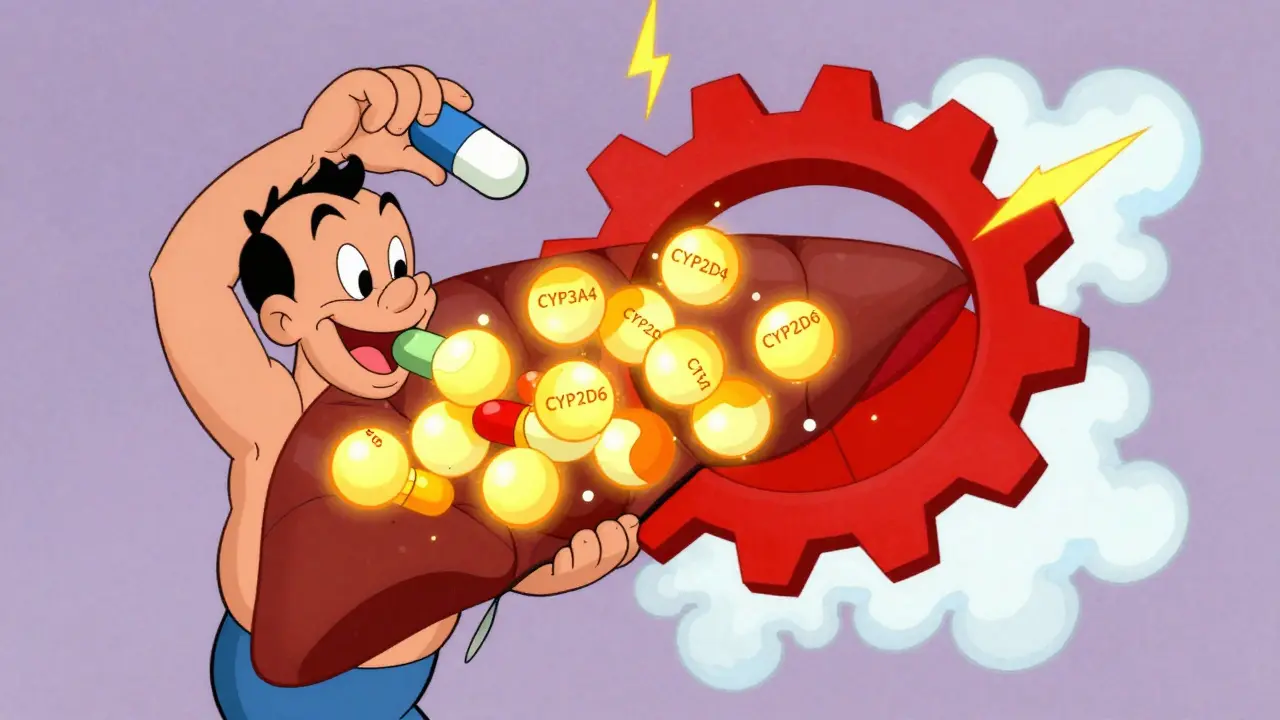
Your liver and intestines use a group of enzymes called cytochrome P450 (CYP) to break down most prescription drugs. Think of them as the body’s recycling crew for medications. Quercetin doesn’t just sit there - it jams the machinery. Studies show it strongly blocks CYP3A4, CYP2D6, and CYP2C19, three of the most important enzymes for drug metabolism.
At just 10 micromolar concentration - levels easily reached with a 500 mg supplement - quercetin can inhibit CYP2D6 by 70-85%. That means if you’re taking a drug like metoprolol, codeine, or fluoxetine, your body can’t clear it fast enough. The result? Higher blood levels. More side effects. Possibly dangerous ones.
The same thing happens with CYP3A4, which handles about half of all prescription drugs. Quercetin cuts its activity by 40-60%. That’s similar to the effect of grapefruit juice - something doctors have warned about for decades. But unlike grapefruit, quercetin supplements are often taken daily, without anyone telling you it’s risky.
Which Medications Are Most at Risk?
Not all drugs are affected equally. Some are extremely sensitive to even small changes in metabolism. Here are the top categories of medications that can become dangerous when taken with quercetin:
- Blood thinners - Warfarin, apixaban, rivaroxaban. Quercetin can raise their levels by 20-35%, increasing bleeding risk. One study showed INR levels jumping by 0.8 to 1.5 points in people taking both.
- Immunosuppressants - Cyclosporine, tacrolimus. These drugs have a very narrow safety window. A 30-50% increase in blood concentration can lead to kidney damage or nerve toxicity.
- Heart medications - Diltiazem, amiodarone, metoprolol. Higher levels can cause slow heart rate, dizziness, or fainting.
- Chemotherapy drugs - Abemaciclib, paclitaxel. Quercetin can raise abemaciclib levels from 15.2 ng/mL to over 20 ng/mL, pushing patients into toxic ranges.
- Pain relievers - Acetaminophen. Even this common drug can build up to unsafe levels when combined with high-dose quercetin.
These aren’t rare cases. The FDA’s adverse event database recorded 147 suspected quercetin-drug interactions between 2015 and 2022. Experts believe the real number is closer to 3,000 - because most people don’t connect their new symptoms to a supplement they started taking weeks ago.
Why Food Isn’t the Problem - But Supplements Are
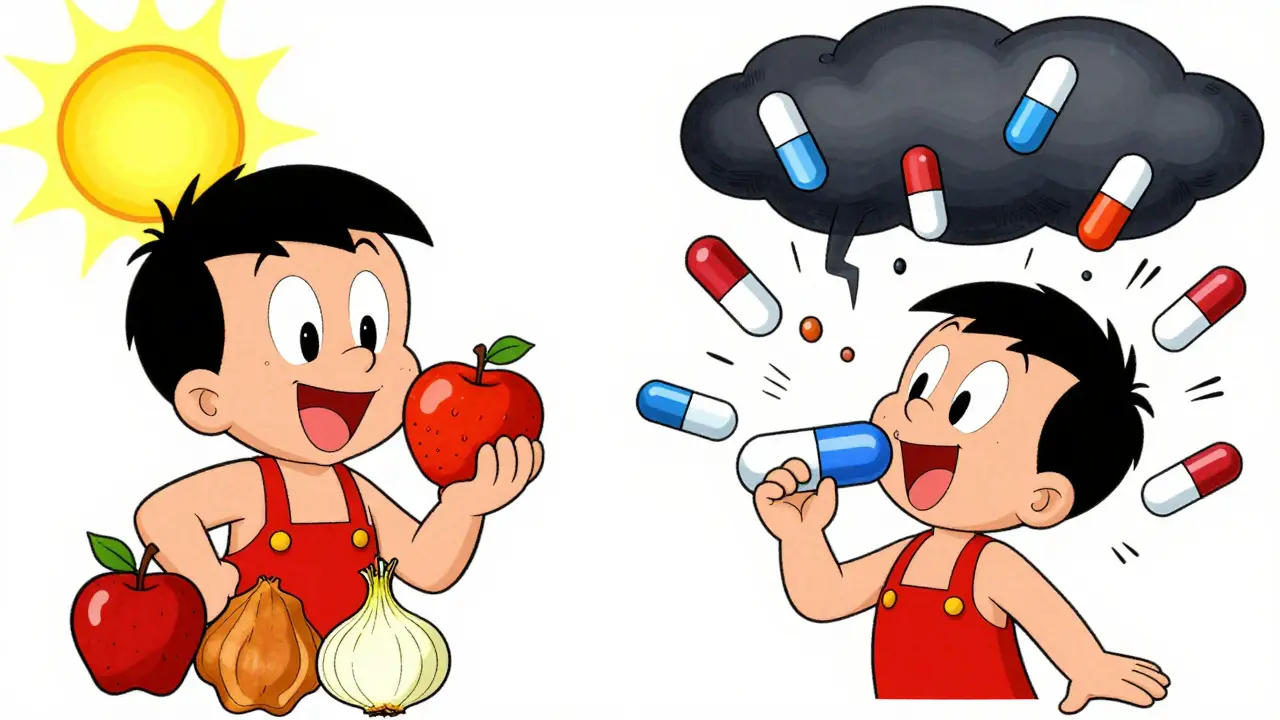
Don’t panic about eating onions or apples. The quercetin in whole foods is bound to sugar molecules (glycosides), which your body absorbs slowly and breaks down before it can interfere with enzymes. Rutin, the form in buckwheat and citrus, is about 60-70% less potent than pure quercetin aglycone.
The danger comes from supplements. A single 500 mg capsule delivers 100 times more quercetin than you’d get from a pound of onions. And many people take 1,000 mg or more daily, believing more is better. The 2021 National Health Interview Survey found that 23% of quercetin users take over 1,000 mg per day - far beyond what’s been studied for safety.
Even worse, supplements aren’t regulated like drugs. Manufacturers don’t have to prove they’re safe before selling them. The FDA has issued 17 warning letters to quercetin brands since 2018 for making false claims about curing cancer or COVID-19. But they can’t stop you from buying them.
Who’s Most at Risk?
It’s not just about dose. Some people are far more vulnerable:
- People over 65 - Their liver and kidneys clear quercetin 25-40% slower than younger adults, meaning it builds up faster.
- Those on multiple medications - If you’re taking five or more drugs, the chance of one being affected by quercetin jumps dramatically.
- People with liver disease - Their CYP enzymes are already impaired. Adding quercetin pushes them over the edge.
- Patients on narrow-therapeutic-index drugs - These are medications where the difference between a helpful dose and a toxic one is tiny. Even a 15% increase can be life-threatening.
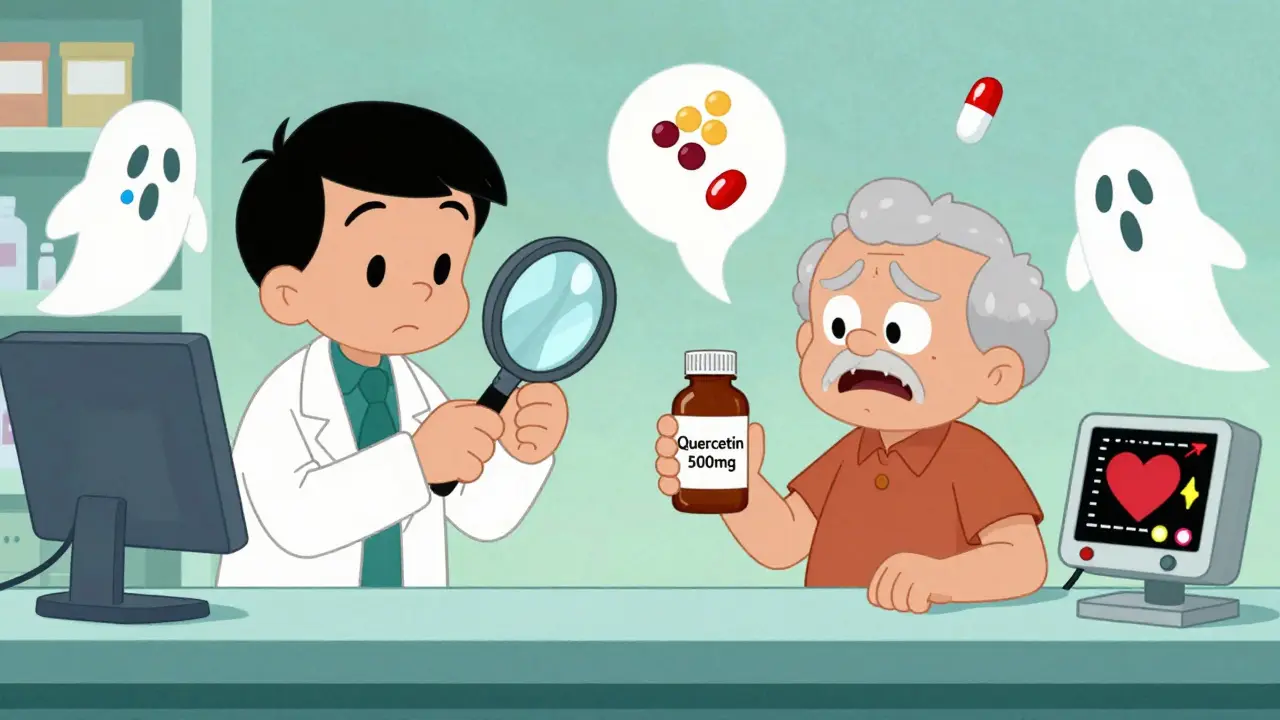
One real-world case: A 72-year-old woman took 1,000 mg of quercetin daily for "immune support" while on warfarin. After two weeks, she developed bruising and nosebleeds. Her INR jumped from 2.3 to 5.1 - a level that puts her at high risk of internal bleeding. She stopped the supplement, and her INR returned to normal in five days.
What Should You Do?
If you’re taking quercetin supplements and any prescription medication, here’s what to do:
- Stop taking quercetin immediately if you’re on blood thinners, immunosuppressants, or chemotherapy drugs.
- Talk to your pharmacist - They have access to drug interaction databases and can check your specific medications. Don’t rely on your doctor alone - pharmacists are trained for this.
- If you must continue quercetin, take it at least 4-6 hours apart from your medication. This can reduce interaction risk by 30-50%.
- Never exceed 500 mg per day - and even that’s risky if you’re on sensitive drugs.
- Watch for new symptoms - Unexplained bruising, dizziness, nausea, irregular heartbeat, or unusual fatigue could be signs of drug buildup.
There’s no scientific proof that quercetin supplements provide meaningful health benefits beyond what you get from eating vegetables. The $387 million global supplement market is built on hope, not hard data. But the risks? They’re very real.
What’s Being Done About It?
Regulators are catching up. The FDA now lists quercetin as a "dietary supplement of concern" and recommends that new drug trials test for interactions with it. The European Food Safety Authority (EFSA) has warned that doses over 1,000 mg/day pose "potential concerns" for drug interactions.
In 2024, the FDA proposed a new rule requiring supplement labels to clearly state possible drug interactions - especially for high-risk ingredients like quercetin. Until then, the burden is on you.
Supplements aren’t harmless. They’re powerful chemicals. And when they meet prescription drugs, the result isn’t synergy - it’s a collision. Your body doesn’t know the difference between a pill from the pharmacy and a capsule from the health store. It only knows what’s in your bloodstream.
Can I take quercetin if I’m on blood pressure medication?
It depends. If you’re taking beta-blockers like metoprolol or calcium channel blockers like diltiazem, quercetin can raise their levels and cause low blood pressure, slow heart rate, or dizziness. Avoid combining them unless your doctor or pharmacist confirms it’s safe. Even then, stick to 250 mg or less and monitor for side effects.
Does quercetin interact with statins?
Yes. Statins like atorvastatin and simvastatin are broken down by CYP3A4. Quercetin can increase their blood levels by up to 30%, raising the risk of muscle pain, weakness, or a rare but serious condition called rhabdomyolysis. Avoid high-dose quercetin if you’re on a statin. Lower doses (under 250 mg) may be acceptable with medical supervision.
Is it safe to take quercetin with antidepressants?
Many antidepressants - including fluoxetine, sertraline, and venlafaxine - are metabolized by CYP2D6, which quercetin strongly inhibits. This can lead to serotonin syndrome, a potentially fatal condition. Do not combine quercetin supplements with SSRIs or SNRIs unless under direct medical supervision.
What about natural sources like onions and apples?
You’re safe eating quercetin-rich foods. The compound in onions, apples, and berries is mostly bound as glycosides, which your body absorbs slowly and converts into less active forms. You’d need to eat over 5 pounds of onions daily to reach the same level as a 500 mg supplement. Food is fine. Supplements are not.
How long does quercetin stay in your system?
Quercetin and its metabolites can remain active in your body for up to 24-48 hours, especially in older adults or those with liver issues. That means even if you take your supplement in the morning and your medication at night, there’s still overlap. For safety, separate them by at least 6 hours - or better yet, avoid quercetin entirely if you’re on critical medications.
Final Thought: Natural Doesn’t Mean Safe
Just because something comes from a plant doesn’t mean it’s harmless. Aspirin comes from willow bark. Digitalis comes from foxglove. Both saved lives - and both killed people when dosed wrong. Quercetin is no different. It’s a potent biological agent, not a vitamin.
If you’re taking supplements to feel better, ask yourself: Are you improving your health - or just risking your safety? The science is clear. For most people, the benefits of quercetin supplements are unproven. The risks? They’re documented, predictable, and avoidable.
Stop taking it. Talk to your pharmacist. Eat your vegetables instead. Your body will thank you.
Comments (11)
Rohit Kumar
31 Jan, 2026Quercetin isn't some magic bullet. It's a flavonoid with real pharmacological activity, and treating it like a vitamin is dangerous. In India, we see this all the time - people pop supplements because a YouTube influencer said it 'boosts immunity,' then end up in the ER with bleeding ulcers from warfarin interactions. The system is broken when a 500 mg capsule is sold next to multivitamins with zero warning labels.
Jodi Olson
1 Feb, 2026My pharmacist flagged this when I asked about my statin and quercetin. She said the interaction risk is real, not theoretical. I stopped the supplement. No regrets. My CK levels dropped back to normal in two weeks. Don’t gamble with your liver.
Kelly Weinhold
3 Feb, 2026I get it, people want to feel in control of their health. I used to take quercetin for allergies too - until I started feeling dizzy after my blood pressure med. Turns out, my body was holding onto too much of it. Switching to just eating more apples and onions was a game-changer. No more weird side effects, and I actually enjoy my food more now. Sometimes the simplest fix is the best one. You don’t need a pill to be healthy - just a plate of veggies.
Eliana Botelho
5 Feb, 2026Wait, so now even onions are dangerous? This is just Big Pharma’s way of pushing more drugs. Why don’t you check who funds these 'studies'? The FDA banned grapefruit juice warnings for years until pharma companies realized they could sell more statins if people stopped eating fruit. Quercetin is natural. Supplements are regulated? LOL. I’ve been taking 1000mg for 3 years. My doctor hasn’t noticed anything. Coincidence?
April Allen
7 Feb, 2026Let’s be precise: quercetin aglycone is a potent inhibitor of CYP3A4 and CYP2D6, with IC50 values in the low micromolar range - easily achieved with oral dosing of 500 mg or more. The pharmacokinetic interaction is well-documented in vitro and in vivo. The FDA’s Adverse Event Reporting System (FAERS) shows a statistically significant signal for bleeding events and bradycardia in co-administration cases. This isn’t anecdotal - it’s clinical pharmacology. The real issue is the lack of labeling requirements under DSHEA. Patients assume supplements are inert. They’re not. They’re pharmacologically active compounds with narrow therapeutic indices when combined with CYP-metabolized drugs. If you’re on anything with a 'narrow therapeutic index' - warfarin, tacrolimus, digoxin, phenytoin - avoid quercetin entirely. No exceptions.
Kathleen Riley
8 Feb, 2026The notion that natural substances are inherently benign is a dangerous fallacy rooted in romanticized pre-scientific thinking. The pharmacopeia of modern medicine is composed entirely of compounds derived from nature - yet we do not treat them with the same casual disregard. To equate the consumption of a whole food with the ingestion of an isolated, concentrated phytochemical is to misunderstand both biochemistry and human physiology. The burden of proof lies not with the scientific community, but with the purveyors of unregulated substances who profit from ignorance.
Beth Cooper
9 Feb, 2026They don’t want you to know this, but quercetin actually blocks the same enzymes that the government uses to control your mind through chemtrails. The FDA hates it because it’s free and people stop buying their SSRIs. My cousin’s neighbor’s cousin took it and his tinnitus went away. That’s why they’re scared. They can’t patent nature. That’s why they’re trying to scare you off with fake science. Don’t be fooled. Eat your onions. Fight the system.
Donna Fleetwood
9 Feb, 2026I used to be skeptical too - until my mom had a scary episode after starting quercetin with her heart meds. She’s fine now, but it scared the hell out of us. I’m not saying don’t take supplements - I take magnesium and vitamin D. But I always check with my pharmacist first. We don’t have to be afraid of everything, but we do have to be smart. Knowledge is power. Talk to someone who knows what they’re talking about before you swallow something that could mess with your meds.
Melissa Cogswell
10 Feb, 2026Just wanted to add - if you’re on a statin and considering quercetin, check your CYP3A4 genotype. Some people are poor metabolizers already. Adding quercetin on top of that is asking for trouble. I’m a pharmacist and I’ve seen three cases of rhabdo linked to this combo. It’s not common, but when it happens, it’s catastrophic. A simple drug interaction checker can save your life.
Shubham Dixit
12 Feb, 2026Western medicine always tries to scare people away from natural remedies. In India, we’ve used quercetin-rich foods for centuries without any of this drama. You people take one pill for every little ache and then blame the supplement when something goes wrong. Your bodies are weak because you don’t eat real food. Eat onions, drink turmeric milk, stop chasing pills. The real problem is your dependency on pharmaceuticals, not quercetin. This is cultural imperialism disguised as science.
KATHRYN JOHNSON
13 Feb, 2026Stop. This is not a debate. Quercetin inhibits CYP3A4. CYP3A4 metabolizes 50% of pharmaceuticals. Elevated plasma concentrations = toxicity. The data is irrefutable. The FDA has issued 17 warning letters. 147 adverse events documented. 3,000 estimated. Your anecdote doesn’t override pharmacokinetics. Your nationalism doesn’t negate biochemistry. Your conspiracy theories don’t change enzyme kinetics. Stop taking it. Talk to your pharmacist. Now.