
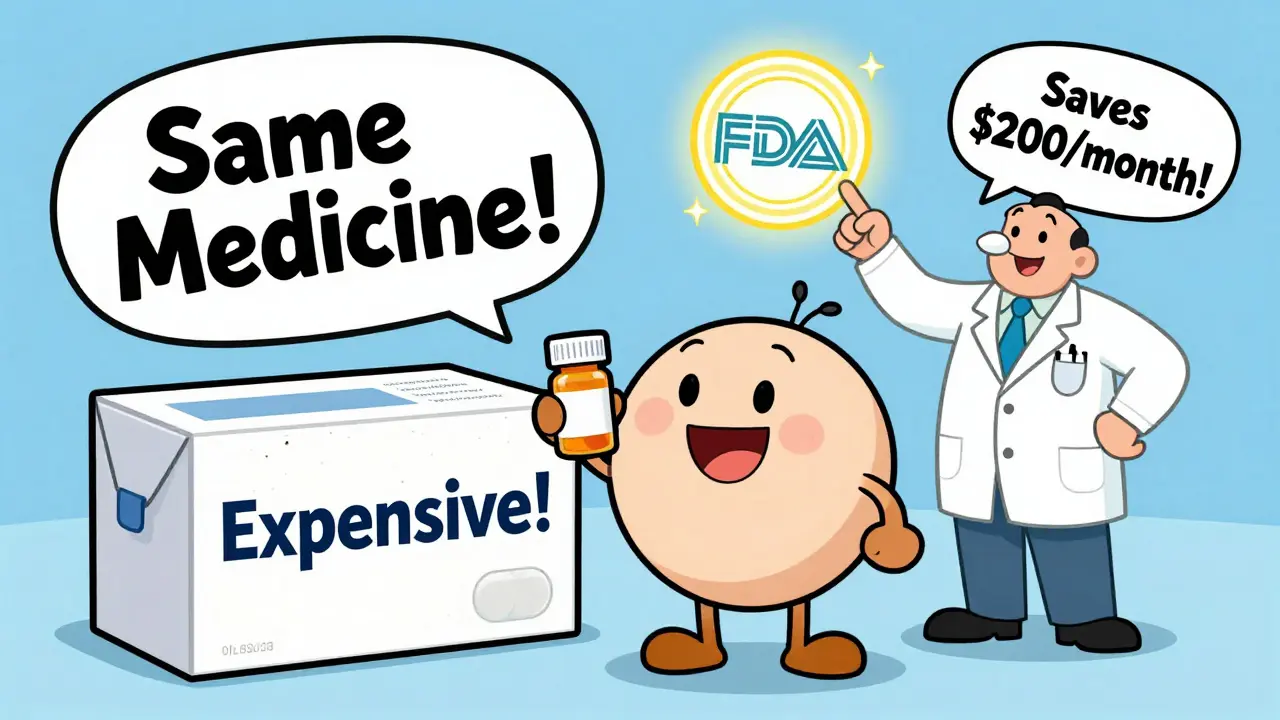
When you pick up a prescription, do you ever wonder if the generic pill in your hand works the same as the brand-name one? You’re not alone. Millions of people switch to generics every year to save money-sometimes hundreds of dollars a month. But behind the cost savings is a quieter, more complex question: Are patients actually happy with generics? And more importantly, does their satisfaction affect whether they take their medicine at all?
It’s Not About the Medicine-It’s About the Mind
The science is clear: generics are just as safe and effective as brand-name drugs. They contain the same active ingredients, meet the same manufacturing standards, and are required to be bioequivalent-meaning they deliver the same amount of medicine into your bloodstream at the same rate. The U.S. FDA and the European Medicines Agency both enforce strict rules to make sure of it. So why do so many patients still feel like generics don’t work as well? The answer isn’t pharmacology. It’s psychology. Studies show that patients who believe a drug is cheaper are more likely to assume it’s lower quality-even when there’s no difference in the pill itself. This is called the “price-quality heuristic.” Your brain uses cost as a shortcut to judge value. If something costs less, your mind whispers: “Maybe it’s not as good.” This isn’t just a feeling. It shows up in real outcomes. In one 2024 study of 2,080 patients across Europe and North America, 59% reported they thought their generic statin was less effective at lowering cholesterol-even though blood tests showed no difference in LDL levels compared to the brand version. The same pattern appeared with antidepressants and epilepsy meds. The drug worked. But the patient didn’t believe it did.What Actually Drives Patient Satisfaction?
Researchers have spent years building tools to measure patient satisfaction with generics. One of the most widely used is the Generic Drug Satisfaction Questionnaire (GDSQ). It’s not a simple yes-or-no survey. It asks detailed questions across three areas:- Effectiveness (e.g., “Did your symptoms improve after switching?”)
- Convenience (e.g., “Was it easy to get refills?”)
- Side effects (e.g., “Did you notice any new or worse side effects?”)
Doctors and Pharmacists Are the Missing Link
One of the biggest surprises in the research? The single most powerful factor in patient satisfaction isn’t the drug-it’s the person handing it to them. A 2023 study in Saudi Arabia found that when doctors explained the FDA’s bioequivalence standards (80-125% range), patient satisfaction jumped by 34%. That’s not a small bump. That’s a game-changer. Patients trust their providers. If a doctor says, “This generic is exactly the same,” and explains why, patients are far more likely to believe it. But if the doctor just says, “It’s cheaper,” or worse, doesn’t mention it at all, patients fill in the blanks themselves-with fear. Pharmacists play a critical role too. In the U.S., pharmacists can legally substitute generics unless the prescriber says “dispense as written.” But many don’t take the time to explain the switch. In one survey, 62% of patients said they didn’t know they were getting a generic until they saw the receipt. The result? Confusion. And confusion leads to non-adherence.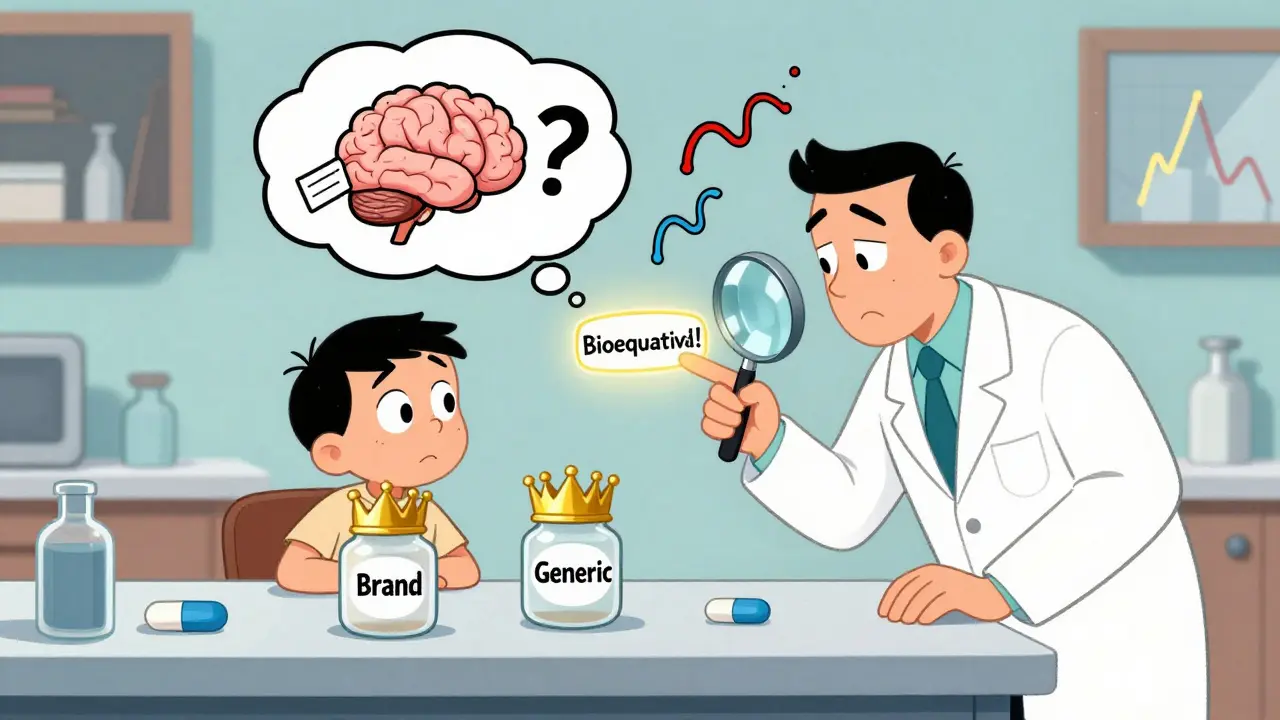
Some Drugs Are Tricky-And Patients Know It
Not all generics are created equal in the eyes of patients-and for good reason. Drugs with a narrow therapeutic index (NTI) are especially sensitive. These are medications where even a tiny change in blood level can cause serious problems. Think: warfarin (blood thinner), levothyroxine (thyroid), phenytoin (seizure), and lithium (bipolar disorder). In these cases, patients are right to be cautious. While the FDA says generics are bioequivalent, some patients report noticeable differences. Reddit threads are full of stories like: “I switched to generic levothyroxine and my fatigue got worse. Went back to brand-felt normal again.” Studies show that 37.4% of patients with NTI drugs express hesitancy toward generics. That’s not irrational fear. It’s lived experience. Even if the science says the difference is negligible, the patient’s body might feel it differently due to minor variations in fillers, coatings, or release rates. That’s why some doctors still prescribe brand-name versions for these drugs-even when insurance pushes for generics. It’s not about profit. It’s about trust.Cost Saves Lives-When Patients Stick With It
Let’s not forget the upside. In the U.S., 90.7% of prescriptions filled are for generics. But they make up only 22.8% of total drug spending. That’s a massive savings-$475 billion globally in 2023 alone. And here’s the kicker: every 10% increase in patient satisfaction with generics leads to a 6.3% rise in generic dispensing rates. Why? Because when people trust the drug, they take it. And when they take it, they stay healthy. Non-adherence to medication costs the U.S. healthcare system about $300 billion a year. That’s more than heart disease or cancer. It’s not because people are lazy. It’s because they don’t believe the medicine will work-or they can’t afford the brand version. In Saudi Arabia, 63.8% of satisfied generic users said cost savings allowed them to take their medicine consistently. Without generics, many would have skipped doses-or gone without entirely.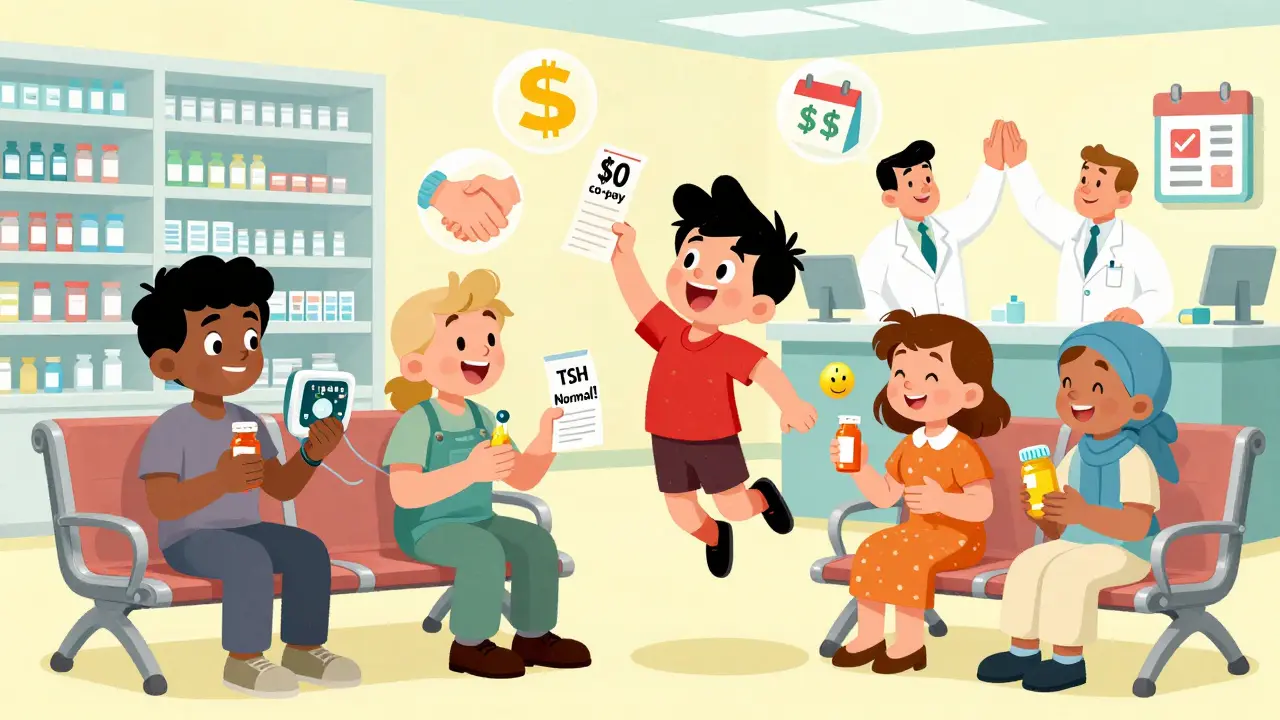
Comments (9)
Malikah Rajap
18 Jan, 2026Okay, but have you ever held a generic pill in your hand-and just… felt it? Like, the shape, the color, the weird little imprint? It’s not just about chemistry-it’s about ritual. We’ve been conditioned to trust the blue pill with the logo, not the white oval with ‘A12’ on it. And honestly? That’s not irrational. It’s human. Your brain doesn’t care about FDA bioequivalence percentages-it cares about familiarity. And when that familiarity vanishes? You panic. Even if your LDL is perfect.
Aman Kumar
20 Jan, 2026Let’s be clear: the entire generic drug paradigm is a neoliberal exploitation of patient ignorance. The pharmaceutical-industrial complex has engineered a system where cost-efficiency is fetishized over therapeutic fidelity. Bioequivalence is a statistical mirage-80-125% is not ‘the same,’ it’s a legal loophole masquerading as science. And now we’re gaslighting patients into believing their lived experience is ‘psychological noise’? That’s not medicine. That’s corporate eugenics dressed in white coats.
Jake Rudin
21 Jan, 2026It’s fascinating how deeply we anthropomorphize pills. We don’t just take medication-we negotiate with it. We whisper to it. We blame it when we feel off. The real tragedy isn’t that generics are ‘perceived’ as inferior-it’s that we’ve built a healthcare system that never asks patients what they *feel*, only what their labs show. And then we act shocked when people stop taking their meds. Maybe the problem isn’t the pill. Maybe it’s that we treat bodies like machines and souls like afterthoughts.
Astha Jain
22 Jan, 2026lol so basically ppl are dumb and blame the pill? lmao. i mean, if you cant tell the difference between a $1 pill and a $100 pill then maybe u shouldnt be on meds at all? also why is everyone so obsessed with ‘trust’? its chemistry, not a relationship. just take the damn thing.
Valerie DeLoach
23 Jan, 2026What struck me most is how often we mistake adaptation for failure. I switched from brand to generic levothyroxine last year. My TSH fluctuated for six weeks. I panicked. I thought the generic was ‘weak.’ Turns out, my sleep had worsened due to stress, my coffee intake had doubled, and my body was just recalibrating. My endocrinologist didn’t explain any of this. She just said, ‘Try the brand.’ I didn’t know I was supposed to ask. We need better communication-not more pills. We need better conversations.
Tracy Howard
25 Jan, 2026Canada doesn’t have this problem. We don’t let Big Pharma dictate our prescriptions. We have national pharmacare. We don’t let patients be confused by pill colors. We don’t let pharmacists silently swap meds. We don’t let cost be the only metric. If you’re still arguing about ‘perception’ over policy, you’re not a patient advocate-you’re a corporate apologist. Just say it.
Josh Kenna
26 Jan, 2026bro i had the same thing with my antidepressant. switched to generic, felt like i was underwater for 3 weeks. went back to brand, felt human again. my doc said it was ‘in my head.’ but my therapist said, ‘maybe your body knows something your lab doesn’t.’ i don’t know what’s right. i just know i feel better on the brand. and i’m not gonna risk my mental health for $20 a month.
Erwin Kodiat
28 Jan, 2026Love this thread. Honestly? I think the real win here isn’t proving generics work-it’s proving that people deserve to be heard. Even if their ‘feeling’ isn’t measurable in a lab, it’s real in their life. And if trust is the missing ingredient? Then maybe we need to start prescribing empathy along with the pill.
Jackson Doughart
28 Jan, 2026The data is clear: satisfaction correlates with communication, not chemistry. The FDA’s bioequivalence standard is a regulatory artifact, not a clinical guarantee. For NTI drugs, the variability in inactive ingredients-though legally permissible-can alter dissolution kinetics in unpredictable ways across diverse patient phenotypes. Until we acknowledge that ‘equivalence’ is a population-level approximation, not an individual certainty, we will continue to see non-adherence driven not by irrationality, but by legitimate, unaddressed physiological uncertainty. We must move beyond one-size-fits-all substitution policies and embrace patient-centered pharmacotherapy.