
Imagine waking up with a brutal head cold and reaching for a standard decongestant to clear your sinuses. For most people, it's a routine fix. But for men dealing with an enlarged prostate, that simple pill can trigger a medical emergency. When you can't urinate despite a full bladder, it's not just uncomfortable-it's a condition called acute urinary retention that often leads straight to the emergency room.
What is Benign Prostatic Hyperplasia?
Before looking at the medication risk, we need to understand the condition. Benign Prostatic Hyperplasia is a noncancerous enlargement of the prostate gland that compresses the urethra, making it difficult for urine to flow from the bladder. Also known as BPH, it is incredibly common; data from the National Institute of Diabetes and Digestive and Kidney Diseases shows that about 50% of men hit this milestone by age 60, and up to 90% of men over 85 live with it.
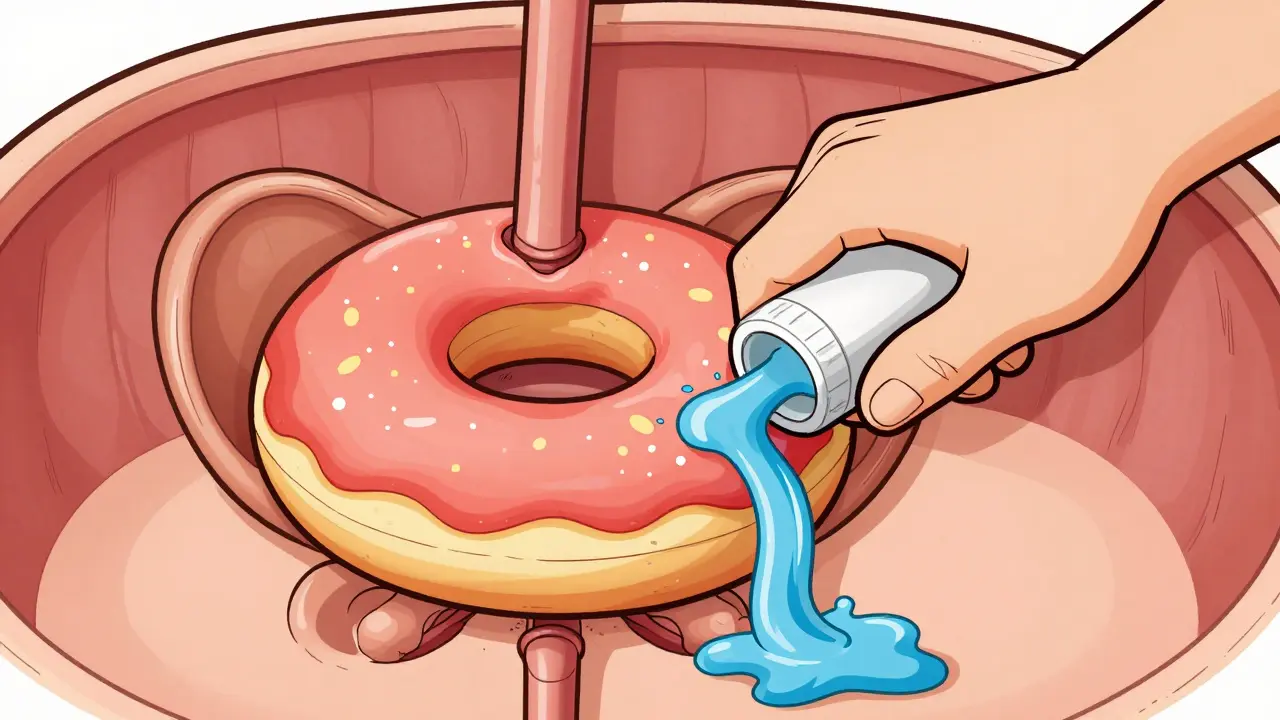
Think of the prostate as a donut that wraps around the urinary tube. In BPH, that donut gets thicker. This creates a "bladder outlet obstruction," leading to a weak stream, a constant feeling that you haven't fully emptied your bladder, and a frequent need to go, especially at night.
How Decongestants Trigger Urinary Retention
The danger lies in how certain cold medicines interact with the muscles in your prostate. Alpha-adrenergic agonists are compounds that stimulate alpha-receptors in the body to constrict blood vessels and smooth muscles. Decongestants like pseudoephedrine use this mechanism to shrink swollen blood vessels in your nose, which clears your congestion.
The problem is that these receptors aren't just in your nose; they are densely packed in the prostate and the bladder neck. When you take a systemic decongestant, it triggers the smooth muscle in the prostate to contract. For a man with a normal prostate, this is barely noticeable. But for someone with Benign Prostatic Hyperplasia, this contraction acts like a clamp, narrowing an already restricted path. Urodynamic studies show this can increase urethral resistance by as much as 35-40%, effectively shutting the door on urine flow.
Comparing Common Decongestants and Their Risks
Not all sinus medications are created equal. Some are significantly more dangerous than others based on how they are absorbed and how strongly they bind to alpha-receptors.
| Medication | Common Brand | Risk Level | Impact on Urethral Resistance |
|---|---|---|---|
| Pseudoephedrine | Sudafed | High (OR 3.45) | Increases by ~27% |
| Phenylephrine | Neo-Sine | Moderate (OR 2.15) | Increases by 15-20% |
| Oxymetazoline | Afrin (Nasal) | Low (OR 1.25) | Minimal systemic effect |
Pseudoephedrine is the biggest culprit. Because it has a long half-life of 12 to 16 hours, the "clamping" effect on the prostate can last well into the next day. In fact, some clinical trials have seen urinary symptoms persist up to 24 hours after a single dose.
Real-World Consequences: From Home to Hospital
The clinical data is backed up by harrowing patient experiences. In online forums like the Prostate Cancer Foundation, a significant number of men report a sudden inability to void after taking cold meds. One user described the feeling as "terrifying," where the bladder is painfully full, but the exit is completely blocked.
This isn't just a minor inconvenience. Research from the University of Michigan indicates that 70% of BPH patients who experience acute urinary retention after using decongestants require a catheter to be inserted for 48 to 72 hours to drain the bladder. This is a sterile tube inserted through the penis into the bladder-an experience most men would prefer to avoid.
Safe Alternatives for Congestion Relief
You don't have to suffer through a cold just because you have BPH. There are several ways to manage congestion without risking a trip to the ER. The key is to use treatments that don't enter the bloodstream in high concentrations or that don't target alpha-receptors.
- Saline Nasal Irrigation: Using a Neti pot or saline spray is the safest gold standard. It physically flushes out mucus without any chemical interaction with the prostate.
- Intranasal Corticosteroids: Drugs like fluticasone is a potent steroid spray that reduces inflammation in the nasal passages with almost no systemic absorption. These are highly effective and don't affect urinary flow.
- Second-Generation Antihistamines: If you have allergies causing the congestion, stick to loratadine (Claritin) or cetirizine (Zyrtec). Unlike first-generation antihistamines (like Benadryl), these lack the anticholinergic effects that further hinder bladder contraction.

Practical Protocols for Men Over 50
If you are managing BPH, you should adopt a strict "medication filter" for over-the-counter (OTC) drugs. Start by checking the active ingredients on the back of the box for pseudoephedrine or phenylephrine.
Follow the "48-Hour Rule": Never take a systemic decongestant for more than two consecutive days without talking to your doctor. If you absolutely must use one, some urologists suggest combining it with an alpha-blocker like tamsulosin, which works in the opposite direction by relaxing the prostate muscles. A Cleveland Clinic study found that starting an alpha-blocker 72 hours before a necessary decongestant dose reduced the risk of retention by 85%.
Be on the lookout for "early warning signs." If you notice your urinary stream getting weaker or if you have to strain more than usual after taking a cold pill, stop the medication immediately. These are the red flags that a total blockage is imminent.
The Future of BPH-Safe Cold Care
The medical community is moving toward better safety standards. The FDA now requires updated labels on pseudoephedrine products to warn men about urinary retention. We are also seeing the development of more selective medications. For instance, research into bladder-selective alpha-1D receptor antagonists aims to create a way to treat congestion without accidentally closing the bladder neck.
Until these new drugs are widely available, the best defense is awareness. The European Association of Urology recommends complete avoidance of systemic alpha-agonists for BPH patients, noting that simple medication reviews can prevent nearly 92% of these avoidable emergency room visits.
Can I use nasal spray decongestants like Afrin?
Yes, generally. Nasal sprays (like oxymetazoline) have much lower systemic absorption compared to oral pills. While they can still have an effect in very high doses, the risk of acute urinary retention is significantly lower than with oral pseudoephedrine.
Why is Benadryl also risky for men with BPH?
First-generation antihistamines like diphenhydramine (Benadryl) have anticholinergic properties. These properties prevent the bladder muscle (the detrusor) from contracting effectively, which, combined with an enlarged prostate, makes it even harder to push urine out.
What should I do if I can't urinate after taking a decongestant?
This is a medical emergency. If you experience a total inability to void, go to the emergency room immediately. They will provide catheterization to relieve the pressure and prevent potential kidney damage from urine backup.
Are there any safe "all-in-one' cold medicines for BPH?
Be very careful with "multi-symptom" or "nighttime" formulas. Many contain both a decongestant (to shrink vessels) and an antihistamine (to stop runny nose), creating a double-hit of urinary restriction. Look for products that are strictly pain-relieving (like acetaminophen) or used only as a nasal saline rinse.
Does the risk apply to men with mild BPH?
While those with severe symptoms (IPSS score >12) are at highest risk, even men with mild symptoms can experience a sudden reduction in flow. However, some experts suggest that occasional, low-dose use may be acceptable for very mild cases under a doctor's supervision.
Comments (8)
dwight koyner
6 Apr, 2026It is imperative that patients maintain a comprehensive list of their current medications and share it with their pharmacist when purchasing over-the-counter products. A pharmacist can effectively screen for potential contraindications such as the one described here, which may prevent a significant medical emergency. I strongly recommend those with BPH seek a curated list of approved cold remedies from their urologist to avoid any ambiguity during illness.
jack hunter
6 Apr, 2026classic fear mongering. just cause some guys can't handle a pill dont mean we all need to live in fear of a little sudifed. its all about the individual consititution anyway and the obsession with medicalizing every single tiny risk is just a way to keep us dependent on the system. we used to just have a cold and deal with it without reading 50 pages of warnings on a box
Jitesh Mohun
7 Apr, 2026stop ignoring the basics just use a neti pot you lazy people its literally the most natural way to clear sinuses without messing up your internal organs why do you insist on popping pills for every little sniffle just read the damn labels and stop complaining when you end up in the er
Stephen Luce
7 Apr, 2026I've actually been through this before and it's a nightmare. The panic that sets in when you realize you literally cannot go is something I wouldn't wish on anyone. It's so easy to overlook these ingredients in those multi-symptom packs because they just market them as 'maximum strength' without explaining what that actually means for your body.
Jay Vernon
8 Apr, 2026Thanks for sharing this! 🌟 It is really good to know what to avoid. Stay safe everyone! 🙏✨
Timothy Burroughs
9 Apr, 2026typical american healthcare failure that people have to find this info online instead of their doctors actually telling them the truth during a visit. if you can't even manage your own bladder without a guidebook you've failed at basic manhood and it's a disgrace how weak people have become in this country
Srikanth Makineni
11 Apr, 2026neti pots are the only way. simple and effective
shelley wales
13 Apr, 2026It is so important that we support each other in navigating these health challenges. Many of us feel overwhelmed by the complex labels on these medications, so having a clear guide like this is a wonderful resource for the community. Please remember that you are not alone in this and reaching out to a healthcare provider is always a positive step toward better health. It is heartening to see people sharing their experiences to help others avoid the same mistakes. By staying positive and proactive, we can all manage these conditions much more effectively. I hope everyone feels encouraged to double-check their medicine cabinets today. Taking a moment to be mindful of what we put in our bodies is an act of self-care that pays off. Let's keep looking out for one another and sharing these vital tips. It's all about making small, smart changes that lead to a healthier life for everyone. Be kind to yourselves and don't be afraid to ask for help when you need it. We are all in this together and knowledge is the best tool we have. Stay hopeful and stay healthy!