
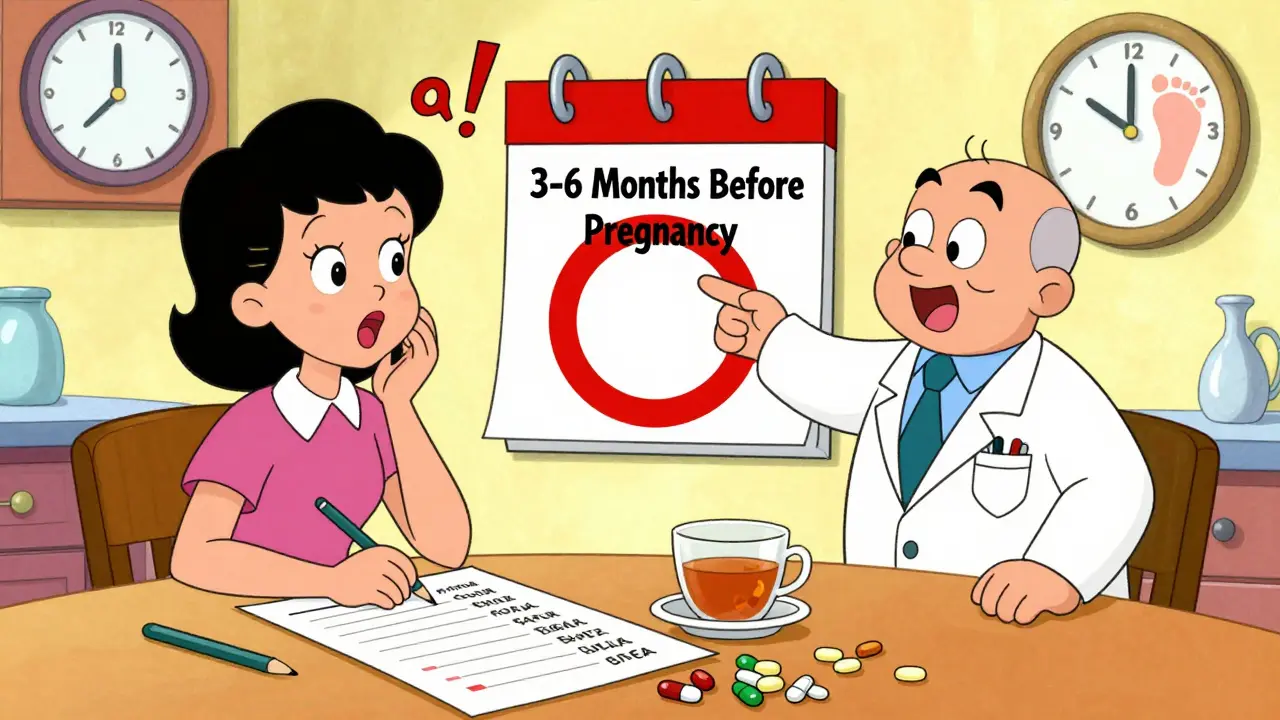
Many women don’t realize that the most critical time for fetal development happens before they even know they’re pregnant. Major organs like the heart, brain, and spine form between weeks 3 and 8 of pregnancy - often before a missed period. If you’re taking any medication - prescription, over-the-counter, or even herbal supplements - and you’re planning to conceive, waiting until you’re pregnant to check safety is too late. A preconception medication plan isn’t optional. It’s essential.
Why Timing Matters More Than You Think
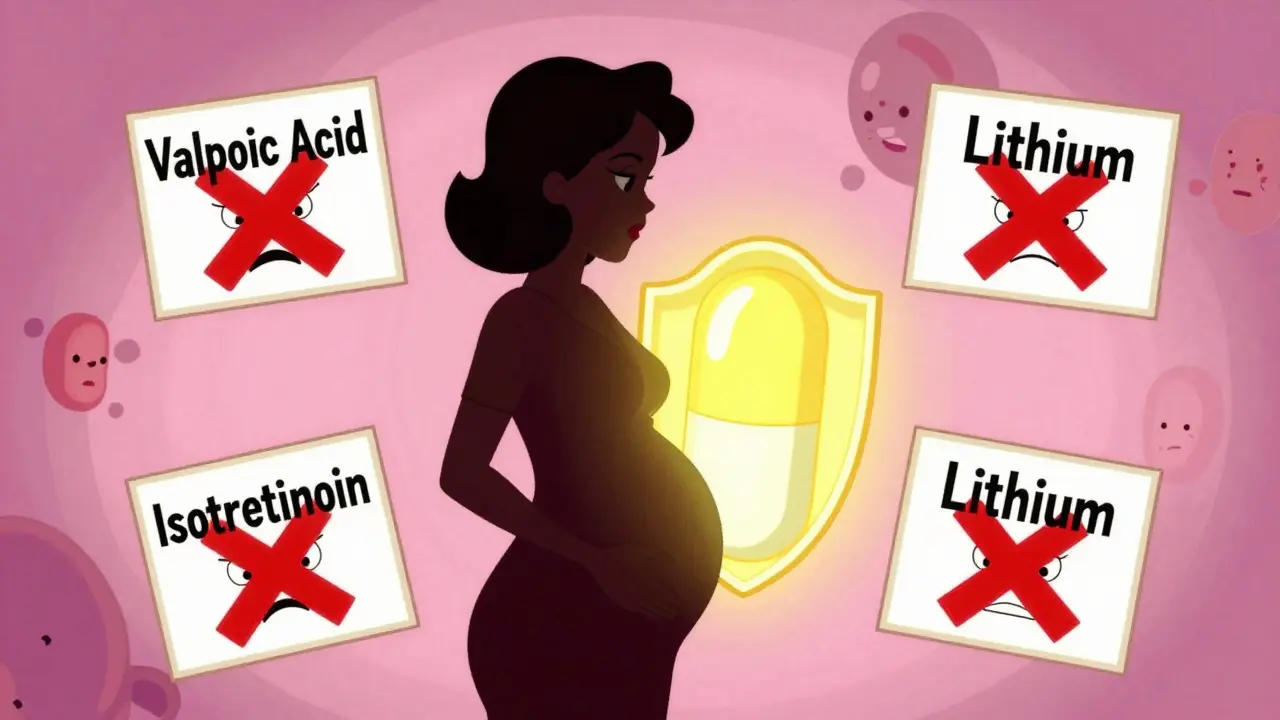
You might think, “I’ll stop that medicine as soon as I find out I’m pregnant.” But by then, the damage could already be done. About 45% of pregnancies in the U.S. are unintended, and even planned pregnancies often begin without medication adjustments. The first eight weeks are a silent window: no symptoms, no test, just rapid cell division. That’s when drugs like valproic acid, lithium, or isotretinoin can cause severe birth defects. A 2022 study from the Teratology Society found that exposure to certain medications during this time can increase the risk of major congenital anomalies by 2 to 10 times.Start With a Full Medication Review
Don’t just think about your prescriptions. Include everything: painkillers, antidepressants, acne treatments, vitamins, and herbal teas. Even something as common as ibuprofen can interfere with ovulation and early implantation. Start by making a list of every substance you take daily or weekly. Then, schedule a visit with your doctor - ideally 3 to 6 months before you start trying. This isn’t a quick chat during a flu shot appointment. It’s a focused review.Folic Acid: The Non-Negotiable Starter
Every woman planning pregnancy should take folic acid - no exceptions. The World Health Organization recommends 400 mcg daily for all women aged 15 to 49. But if you have epilepsy, diabetes, obesity, or a previous child with a neural tube defect, you need more: 4 to 5 mg daily. That’s 10 times the standard dose. Why? Because drugs like valproic acid or carbamazepine block folic acid absorption. Without the higher dose, your baby’s risk of spina bifida or anencephaly jumps from 0.1% to 1-2%. Start this at least three months before conception. It’s the single most effective way to prevent birth defects.Drugs to Avoid Before Pregnancy
Some medications are simply too risky to continue. Here’s what you need to know:- Valproic acid (for seizures or bipolar disorder): Linked to a 10.7% rate of major malformations. Switch to lamotrigine or levetiracetam if possible.
- Lithium (for mood disorders): Increases risk of Ebstein’s anomaly, a rare heart defect. Consider alternatives like quetiapine or mood-stabilizing therapy.
- Topiramate (for migraines or epilepsy): Raises oral cleft risk to 1.4% (baseline is 0.36%).
- Methotrexate (for rheumatoid arthritis or psoriasis): Causes miscarriage in up to 18% of cases. Must be stopped 3 months before trying.
- Isotretinoin (for severe acne): Causes severe facial, heart, and brain defects. Requires one full month of contraception after stopping - no exceptions.
- Warfarin (for blood clots): Crosses the placenta and causes fetal warfarin syndrome. Switch to low-molecular-weight heparin before conception.
Managing Chronic Conditions Safely
If you have a chronic illness, your medication plan needs to be customized. Here’s how:- Thyroid disease: Your TSH should be under 2.5 mIU/L before conception. Once pregnant, your levothyroxine dose typically needs to increase by 30% - don’t wait for your next appointment. Test your levels as soon as you get a positive pregnancy test.
- Autoimmune diseases: Methotrexate and cyclophosphamide are absolute no-gos. Sulfasalazine and hydroxychloroquine are safer options. Work with a rheumatologist to stabilize your condition before conception.
- HIV: Your viral load must be undetectable (<50 copies/mL) before trying. Modern antiretrovirals are safe and reduce transmission risk to under 1%. Don’t stop your meds - optimize them.
- High blood pressure: ACE inhibitors and ARBs are dangerous in pregnancy. Switch to labetalol, nifedipine, or methyldopa. Get your blood pressure under control before conception.
What About Birth Control?
If you’re on hormonal birth control and planning pregnancy, stop it when you’re ready. But if you’re on enzyme-inducing drugs like carbamazepine or phenytoin, your birth control might not work. These medications speed up how fast your body breaks down hormones. Up to 47% of women on these drugs experience unintended pregnancy because their pill, patch, or ring fails. Use a backup method - condoms or an IUD - while switching to a safer contraceptive or preparing for pregnancy.How Long Does It Take to Adjust?
Not all drugs clear your system the same way. Timing matters:- Methotrexate: Wait 3 months (at least 3 full ovulatory cycles).
- Isotretinoin: Wait 1 month after stopping.
- Lithium: 1 to 2 months to stabilize on a new medication.
- Antidepressants (SSRIs): Can often continue with monitoring. Fluoxetine and sertraline have the most safety data.
What If You’re Already Pregnant and Didn’t Plan?
If you’re pregnant and realized you’ve been taking a risky medication, don’t panic. Contact your doctor immediately. Many medications are safe in early pregnancy, and some risks are dose-dependent. Don’t stop anything on your own - abrupt withdrawal can be dangerous. Your provider can assess exposure timing and recommend targeted ultrasounds or screenings.Why Most People Don’t Do This - And How to Get Help
Only 24% of obstetric providers consistently review medications before pregnancy, even though 89% say it’s important. Why? Time. Most appointments are 15 minutes. Many doctors don’t have access to teratogen specialists. And if you’re in a fee-for-service system, preconception care often doesn’t get paid for. But help exists. Kaiser Permanente, which has integrated care systems, achieves a 67% preconception medication review rate. In the Netherlands and Sweden, national programs have cut birth defect rates by 35%. You don’t need a fancy clinic. Start with your primary care provider. Ask: “Can we review my medications for pregnancy safety?” Bring your list. Ask for a referral to a maternal-fetal medicine specialist if you have a chronic condition. Use tools like the CEP Preconception Health Care Tool or the FDA’s updated pregnancy labeling system.What’s New in 2026?
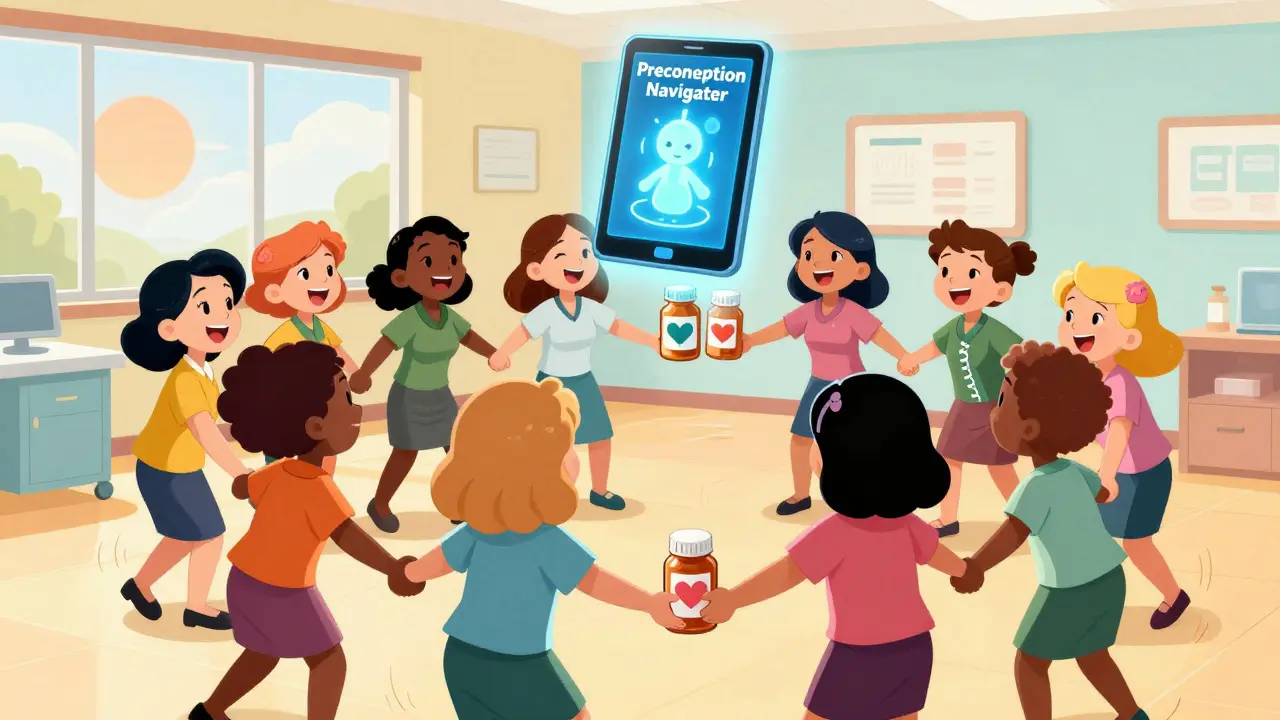
A digital tool called Luma Health’s Preconception Navigator was approved by the FDA in January 2023. It uses AI to cross-check your meds against the latest teratogenicity databases. It’s not a replacement for your doctor, but it’s a great way to prepare before your appointment. The NIH is also running the PharmaTox study to build personalized risk models using your genetics and metabolism - the future of precision preconception care.Creating a medication plan before conception isn’t about fear. It’s about control. You’re not giving up your health - you’re protecting your future child’s. Every adjustment made before pregnancy reduces risk exponentially. Waiting until you’re pregnant means missing the most critical window of all.
Can I keep taking my antidepressants before and during pregnancy?
Yes, many antidepressants are safe. SSRIs like sertraline and fluoxetine have the most safety data and are often continued during pregnancy. Untreated depression carries risks too - including poor prenatal care and preterm birth. Work with your psychiatrist and OB-GYN to choose the lowest effective dose. Never stop abruptly.
Do I need to stop all supplements before getting pregnant?
No - but you should review them. Some herbal supplements like black cohosh, dong quai, or high-dose vitamin A can be harmful. Stick to prenatal vitamins with folic acid and avoid unregulated products. If you’re taking magnesium, iron, or omega-3s, those are usually fine - just confirm dosages with your doctor.
What if I have a rare condition and my doctor doesn’t know the risks?
Ask for a referral to a maternal-fetal medicine specialist or a teratogen information service. In the U.S., organizations like MotherToBaby offer free, expert advice by phone or online. They review drug safety using the latest research and can help you and your doctor make informed choices.
Is it safe to take ibuprofen while trying to conceive?
Occasional use is unlikely to cause harm, but regular use may interfere with ovulation and implantation. Switch to acetaminophen (paracetamol) for pain relief while trying to conceive. It’s the safest option with the most evidence.
How do I know if my medication is teratogenic?
Check the FDA’s Pregnancy and Lactation Labeling Rule (PLLR) updates on drug labels. Look for sections titled “Pregnancy” and “Risk Summary.” Avoid drugs labeled with “Category X” (contraindicated in pregnancy). Use trusted resources like MotherToBaby, the Teratology Society, or your pharmacist. Don’t rely on Google.
Can I get help with medication costs during preconception planning?
Yes. Many pharmaceutical companies offer patient assistance programs for safer pregnancy medications. Nonprofits like NeedyMeds and the Patient Access Network Foundation can help with copays. Folic acid is available over-the-counter and inexpensive - most pharmacies sell 4 mg tablets for under $10.
Comments (12)
Ian Long
8 Jan, 2026Yo, I just read this and I’m stunned. I was on lamotrigine for years and never thought to ask about preconception safety. My wife and I started trying last year and I didn’t even know half this stuff. We’re going to the clinic next week for a full med review. This post literally saved us from a potential disaster.
Pooja Kumari
10 Jan, 2026Okay but let’s be real - in India, most women don’t even know what folic acid is, let alone that they need 4mg if they’re on valproate. My cousin took epilepsy meds while pregnant and her kid had a cleft palate. No one told her anything. Doctors here just hand out prescriptions like candy. I’m sharing this with every girl in my WhatsApp group. Someone needs to start a movement - preconception health isn’t a luxury, it’s survival. And yes, I’m crying while typing this.
Jacob Paterson
10 Jan, 2026Of course you need to stop isotretinoin before pregnancy. DUH. But why are we acting like this is new information? It’s been in every OB-GYN pamphlet since 2005. The real problem is that women are still being treated like children who can’t manage their own meds. If you’re dumb enough to get pregnant while on Accutane, you shouldn’t be having kids. This isn’t rocket science - it’s basic biology. Stop glorifying ignorance as ‘planning’.
Angela Stanton
12 Jan, 2026Let’s talk pharmacokinetics: the placental transfer coefficient of valproic acid is 0.8–1.0, meaning fetal exposure is nearly identical to maternal serum levels. That’s why teratogenicity is so high. Meanwhile, lamotrigine’s transfer rate is 0.6–0.7, and it’s classified as Category C with lower neural tube defect risk. Also, folic acid at 4–5mg isn’t just ‘recommended’ - it’s a pharmacologic intervention to counteract MTHFR inhibition from antiepileptics. If you’re not testing MTHFR polymorphisms preconception, you’re doing half the work. Also - why is no one talking about SSRI withdrawal syndrome in neonates? That’s a silent epidemic.
Jerian Lewis
12 Jan, 2026I’ve been on methotrexate for psoriasis for 8 years. Stopping it felt like losing a lifeline. But I did it. Took 6 months to stabilize. Now I’m 3 months pregnant. No regrets. This isn’t about fear - it’s about responsibility. You don’t get to blame the baby for your poor planning.
Kiruthiga Udayakumar
13 Jan, 2026My sister took lithium during her first pregnancy and her baby had a heart defect. She blames herself. But honestly? No one told her it was dangerous. Not her doctor, not her mom, not Google. This needs to be mandatory education. Like, right after sex ed. If you’re a woman of childbearing age, you should get a pamphlet on this every time you refill a prescription. Just a little card. Please.
Chris Kauwe
15 Jan, 2026Western medicine is obsessed with pills. Meanwhile, in ancient Ayurveda, they’ve been using ashwagandha and shatavari for fertility for millennia. Why are we ignoring holistic approaches? The real issue isn’t medication - it’s that we’ve outsourced our bodies to Big Pharma. You want safety? Clean diet, yoga, sunlight. Not more chemicals. This post is just another way to profit off women’s fear.
RAJAT KD
16 Jan, 2026Stop ibuprofen 3 months before trying. Simple. Done.
Phil Kemling
17 Jan, 2026It’s funny how we treat pregnancy like a medical emergency instead of a natural process. We’re so afraid of chemicals we forget our bodies evolved to handle them. Maybe the real problem isn’t the drugs - it’s our fear of uncertainty. What if we trusted biology more? What if we stopped pathologizing reproduction?
Drew Pearlman
18 Jan, 2026I just want to say - if you’re reading this and you’re scared, you’re not alone. I was terrified when I found out I needed to switch my antidepressants. But I did it. I worked with my psychiatrist, my OB, and even joined a support group. Now I have a 1-year-old who’s healthy as a horse. It’s hard, but it’s worth it. You’ve got this. And if you need someone to talk to, I’m here. No judgment. Just love.
Johanna Baxter
20 Jan, 2026My doctor told me to stop my anxiety meds cold turkey when I got pregnant and now I’m in a mental hospital. Thanks for nothing. This post is the only thing that made sense. Why do doctors act like we’re just supposed to suffer in silence?
Patty Walters
20 Jan, 2026Just wanna add - if you’re on warfarin, DO NOT switch to heparin without a hematologist. I did and ended up with a pulmonary embolism at 8 weeks. Get the right specialist. This stuff is life or death. And yes, I cried reading this too.