

When we talk about these infections, we are usually referring to Acute Otitis Media is a rapid-onset infection of the middle ear characterized by fluid buildup and inflammation of the tympanic membrane. Commonly known as AOM, it is one of the most frequent reasons children visit the doctor. In the US alone, about 5.6 million children deal with this annually. Most kids will have at least one episode by the time they turn three, typically peaking between 6 and 24 months of age.
The Big Question: To Treat or to Wait?
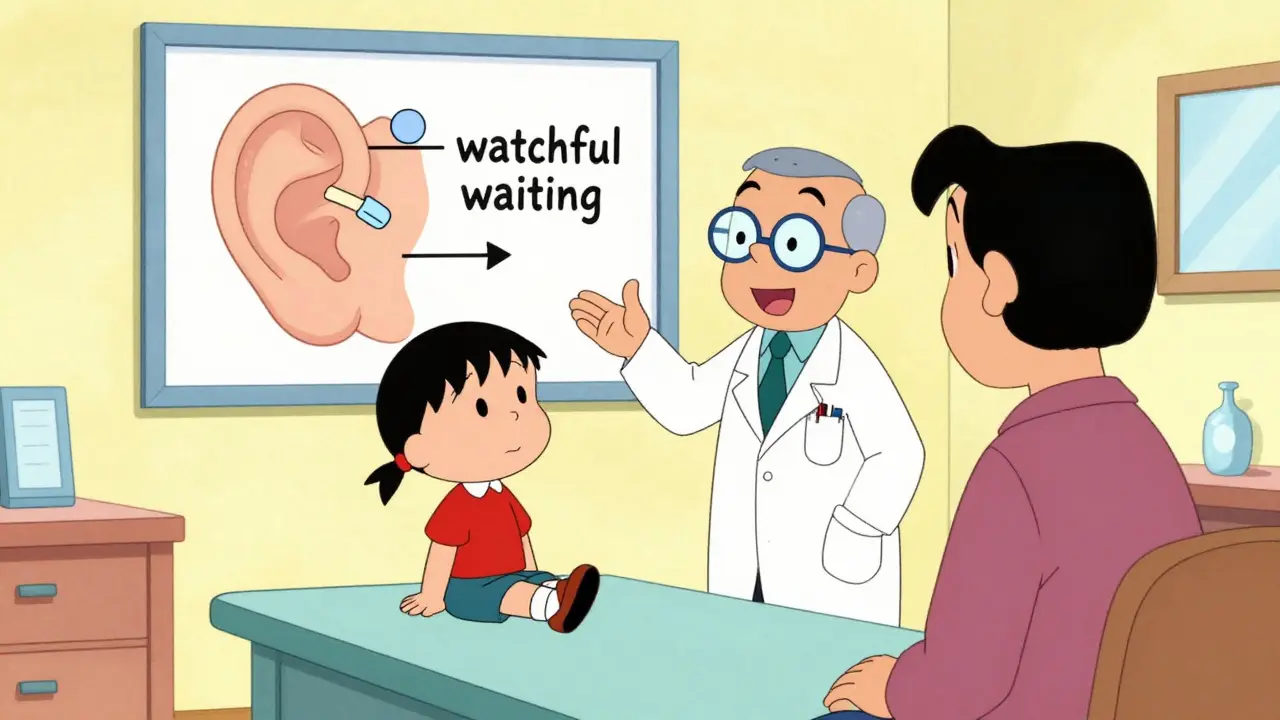
The most stressful part of a clinic visit is often deciding whether to start medicine right away or wait and see. This is where Watchful Waiting is a clinical strategy where doctors monitor a child for 48 to 72 hours before deciding if antibiotics are necessary ] comes in. It isn't just "doing nothing"; it's a calculated medical decision based on the child's age and the severity of their symptoms.
Research shows that about 60% to 80% of ear infections actually clear up on their own without any antibiotics. Because of this, guidelines from the American Academy of Pediatrics (AAP) suggest observation for specific groups. For example, if your child is over 24 months old and has a mild infection in only one ear, waiting is often the smartest move. For kids between 6 and 23 months, waiting is an option if the infection is unilateral (one ear) and the symptoms aren't severe.
However, there are non-negotiables. You should never "wait and see" if the child is under 6 months old, if they have a high fever (102.2°F/39°C or higher), or if there is fluid draining from the ear (otorrhea). In these cases, immediate treatment is the standard to prevent complications.
When Antibiotics are Necessary
When the infection is severe or the child isn't improving, Antibiotics are medicines used to treat bacterial infections by killing or inhibiting the growth of bacteria ] become the primary tool. The goal is to clear the infection and reduce the risk of permanent hearing loss or structural damage to the ear.
The first choice for most doctors is high-dose Amoxicillin is a penicillin-group antibiotic commonly used as the first-line treatment for pediatric middle ear infections ]. The dosage is typically high (80-90 mg/kg per day) to ensure it penetrates the middle ear fluid effectively. The length of the course depends on the child's age: kids under 2 usually need 10 days, while older children might only need 5 to 7 days.
If your child is allergic to penicillin, the doctor will pivot to alternatives like Cefdinir or Clindamycin. It is vital to finish the entire course, even if your child seems better after two days. Stopping early is a primary cause of antibiotic resistance, which the CDC estimates contributes to millions of resistant infections every year.
| Approach | Best For... | Key Goal | Common Example/Drug |
|---|---|---|---|
| Watchful Waiting | Mild symptoms, older children (>2yr) | Avoid over-prescription | Observation for 48-72h |
| Antibiotic Therapy | Severe pain, high fever, infants <6mo | Clear bacterial infection | High-dose Amoxicillin |
| Surgical Tubes | Chronic/Recurrent infections | Ventilate middle ear | Tympanostomy tubes |
Dealing with Chronic Infections and Ear Tubes
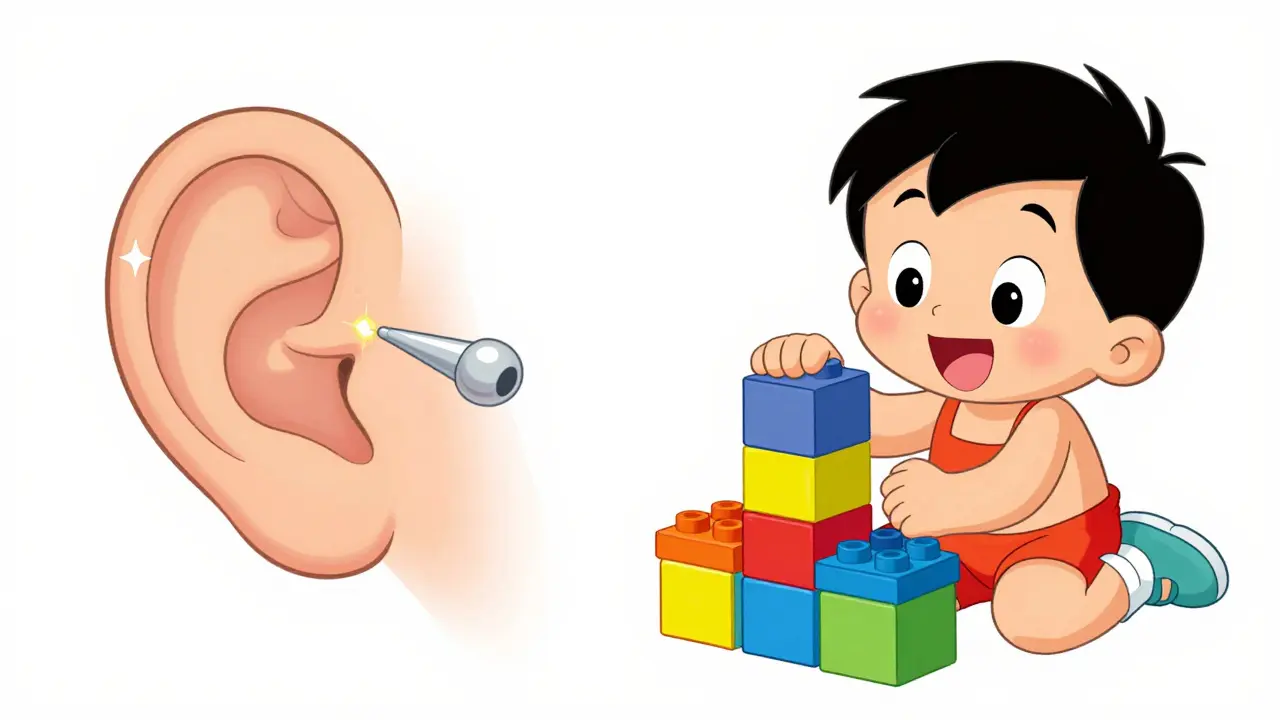
Some children are just more prone to ear infections due to the shape of their eustachian tubes. When a child has three infections in six months, or four in a year, doctors may suggest Tympanostomy Tubes is small ventilation tubes surgically inserted into the eardrum to allow air into the middle ear and drain fluid ]. This procedure, known as a myringotomy, helps prevent fluid from trapping bacteria in the middle ear.
These tubes are a game-changer for kids who struggle with persistent fluid that causes hearing loss (specifically a loss of 40 dB or more). While they significantly reduce the number of infections for the first six months, their effectiveness can dip over time. Most tubes stay in place for 6 to 18 months and then simply fall out on their own as the eardrum heals.
It's worth noting that there is a bit of a debate among experts. While many swear by tubes for recurrent cases, some specialists argue they are occasionally overused for simple infections that don't actually impair a child's hearing. Always ask your ENT if your child's hearing is truly affected before opting for surgery.
Managing the Pain at Home
Whether you are waiting for antibiotics to kick in or opting for observation, pain management is the most important part of the process. Most children experience significant pain during an infection, yet a surprisingly small percentage get the right amount of pain relief.
The gold standard is regular, scheduled doses of acetaminophen or ibuprofen. Don't wait for the child to start crying again; keeping a steady level of pain relief in their system helps them sleep and recover faster. A pro tip: avoid using over-the-counter decongestants or antihistamines. Research has shown they provide almost no benefit for ear infections and can even cause side effects in some children.
Prevention and Long-Term Outlook
The good news is that we've seen a huge drop in ear infections over the last few decades. Much of this is thanks to the Pneumococcal Conjugate Vaccine is a vaccine designed to prevent infections caused by Streptococcus pneumoniae, a common cause of otitis media ]. The PCV13 vaccine, for example, has been shown to reduce the incidence of these infections by about 12% and recurrent cases by 20%.
As your child grows, the angle of their eustachian tubes changes, making it easier for fluid to drain. This is why many children simply "outgrow" their ear infections by age 5 or 6. In the meantime, keeping them away from second-hand smoke and encouraging breastfeeding (which provides protective antibodies) are two of the best ways to lower their risk.
How do I know if my child's ear infection is "severe"?
A severe infection is usually marked by a temperature of 102.2°F (39°C) or higher, intense ear pain that lasts more than 48 hours, or a child who looks "toxic" (very ill, lethargic). If you see fluid draining from the ear, it's also treated as a priority case requiring immediate medicine.
Will "watchful waiting" make the infection worse?
For the right candidates-typically older children with mild, one-sided infections-watchful waiting is safe. About two-thirds of these cases resolve without antibiotics. Doctors usually provide a "safety-net" prescription that you can fill if the symptoms don't improve within 48 to 72 hours.
How long do ear tubes actually stay in?
Tympanostomy tubes usually stay in place for 6 to 18 months. In most cases, the body naturally pushes them out through the eardrum as it heals, and no second surgery is needed to remove them.
Can ear infections cause permanent hearing loss?
While a single infection rarely causes permanent loss, chronic fluid buildup (effusion) can lead to temporary conductive hearing loss. If fluid persists for three months or more, it can interfere with speech development, which is why doctors may recommend tubes to clear the middle ear.
Which antibiotic is best for ear infections?
High-dose Amoxicillin is the first-line choice because it's effective against the most common bacteria. If the child is allergic, doctors may use Cefdinir, Ceftriaxone, or Clindamycin depending on the severity and the child's medical history.
Next Steps for Parents
If your child is currently suffering, your first step is to track their temperature and pain levels. If they are under 6 months, call the pediatrician immediately. For older children, keep a log of how many infections they've had this year; if you hit the mark of three in six months, start a conversation with your doctor about a referral to an ENT specialist for a hearing test.
If you are in the middle of a "watchful waiting" period, set a timer for 48 hours. If the fever hasn't broken or the pain is increasing by that mark, it's time to use that safety-net prescription. Always prioritize pain relief with ibuprofen or acetaminophen every few hours to keep your child comfortable while the body does its work.
Comments (11)
Kim Hyunsoo
16 Apr, 2026The concept of a "safety-net" prescription is such a clever way to balance medical caution with parental anxiety 🎨. It's like having a backup plan in your pocket while hoping you never actually have to use it (^_^)v
Tama Weinman
17 Apr, 2026Funny how they push the PCV13 vaccine as a miracle cure for ear infections. Maybe we should look into why these pharmaceutical giants are so obsessed with "preventing" things that the body naturally handles. It's all just a loop to keep the kids on a chemical schedule from the moment they're born, creating a dependency that lasts a lifetime while they ignore the root causes of inflammation in the modern diet. Just a thought for those who still think the system is designed for their benefit
Randall Barker
17 Apr, 2026The moral failure here is the societal pressure to medicate immediately. We have traded patience for a quick fix, and in doing so, we've eroded the very foundation of biological resilience. If a parent cannot withstand 48 hours of a child's discomfort for the sake of global antibiotic resistance, then we are witnessing a collapse of parental fortitude and a descent into a hedonistic demand for instant relief at any cost. It is a philosophical tragedy that we prioritize the immediate silence of a scream over the long-term viability of our medical arsenal.
Agatha Deo
18 Apr, 2026Oh, absolutely. Let's just trust the "guidelines" written by people who probably get their funding from the companies making the Amoxicillin. It's truly precious that some of you believe
Adele Shaw
19 Apr, 2026My kid went through this and it was a nightmare! I spent three days staring at a thermometer and I felt like the doctor was just laughing at me while my baby suffered! This is exactly why our healthcare system is failing us and making us miserable! 🇺🇸
Autumn Bridwell
20 Apr, 2026I actually had tubes put in my son and the recovery was the most stressful week of my entire life! I could barely breathe! I remember checking his ears every ten minutes and practically begging the surgeon to tell me everything was perfect because I just couldn't handle the thought of any complications! It was a total emotional rollercoaster!
ira fitriani
21 Apr, 2026The pain management tip about scheduled doses is a total lifesaver! 🌟 Keeping that ibuprofen steady really does make a world of difference for their sleep and the parents' sanity too! ✨💖
Richard Moore
22 Apr, 2026I completely agree with the emphasis on avoiding decongestants. It's a common mistake parents make, but sticking to the proven pain relievers is the way to go! 👊🔥
Dana Chichirita Nicoleta
23 Apr, 2026It is truly heartening to see such a comprehensive overview of pediatric ear care, as many of us navigate these challenging waters with a mixture of trepidation and hope, and I personally believe that the patience exhibited during a watchful waiting period is a profound act of love and trust in the natural healing processes of a child's developing body, provided that the clinical safety markers are strictly adhered to by the attending physician to ensure no permanent harm befalls the little one's hearing capabilities!
Rob Schlautman
23 Apr, 2026idk why people act like tubes are some huge deal when they literally just fall out on their own eventually and the whole process is basically just a way for the hospital to bill more for a quick surgery that might not even be needed if the kid just grows a bit more and the tubes align naturally which is what happens anyway so the drama around it is just excessive
Cheryl C
25 Apr, 2026best doctors in the world are right here in the usa period 🇺🇸🇺🇸 amoxicillin works’n that’s that!!