

Statin Cognitive Side-Effect Decision Assistant
Are you experiencing potential side effects?
Select the symptoms you have experienced since starting your statin therapy.
Imagine taking a pill to save your heart, only to worry it might be costing you your memories. It’s a terrifying trade-off. For years, headlines have screamed about statins causing brain fog and memory loss. If you’ve been prescribed one of these common cholesterol-lowering drugs, you’ve probably felt that knot in your stomach. You want to prevent a stroke or heart attack, but you don’t want to lose yourself in the process.
The truth is more nuanced than the fear-mongering suggests. While some people do report cognitive changes, large-scale science tells a different story about long-term risk. In fact, for many, statins might actually protect the brain. Let’s cut through the noise and look at what the data says about statin-related cognitive side effects, why they happen to some people, and what you can do if you’re experiencing them.
The Origin of the Fear
Where did this idea come from? It didn’t start with a bang, but with whispers. Back in the early 2000s, individual patients began reporting feelings of confusion and forgetfulness after starting statin therapy. These reports trickled into the U.S. Food and Drug Administration’s (FDA) MedWatch surveillance system. By 2012, the FDA acknowledged these reports and added warnings about "cognitive impairment"-including memory loss and confusion-to statin labels.
This labeling change was based on post-marketing surveillance, which means it relied on patient complaints rather than controlled scientific studies. It was a precautionary step. However, once that warning appeared on bottle inserts, it amplified anxiety. Patients who were already worried about their health started paying closer attention to every lapse in concentration, attributing normal age-related forgetfulness to their medication. This phenomenon, known as the nocebo effect, plays a huge role in how we perceive side effects.
Lipophilic vs. Hydrophilic: The Key Difference
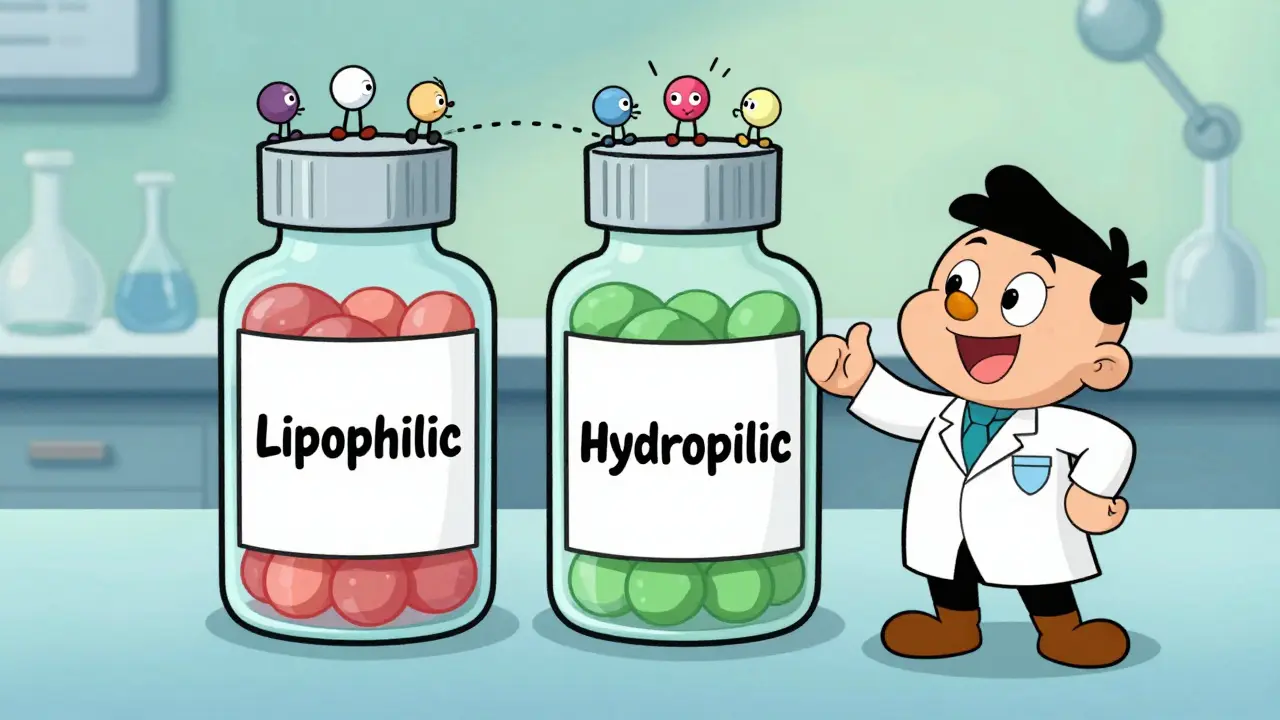
Not all statins are created equal when it comes to entering the brain. To understand why some people feel affected while others don’t, you need to look at chemistry. Statins fall into two categories based on how they interact with fat:
- Lipophilic statins: These dissolve in fat. Because the blood-brain barrier is largely made of fat, these drugs can cross it more easily. Examples include atorvastatin (Lipitor), simvastatin (Zocor), and lovastatin.
- Hydrophilic statins: These dissolve in water. They struggle to cross the blood-brain barrier. Examples include pravastatin (Pravachol) and rosuvastatin (Crestor).
A 2023 analysis in the Journal of the American College of Cardiology looked at 48,732 patients across 12 clinical trials. They found that people taking lipophilic statins reported cognitive complaints 1.42 times more often than those on hydrophilic statins. However, here is the catch: objective cognitive testing showed no significant difference between the groups. People felt worse on lipophilic drugs, but they didn’t necessarily perform worse on tests. This suggests that perception and actual cognitive decline are not always the same thing.
What Does the Big Data Say?
If anecdotal reports suggest harm, do large studies back that up? Surprisingly, no. In fact, the evidence points toward protection. A major meta-analysis published in the Journal of Clinical Lipidology in 2019 examined 24 randomized controlled trials involving over 127,000 participants. They found that while self-reported complaints were slightly higher for lipophilic statins, standardized cognitive testing revealed no significant decline.
Even more reassuring is the long-term outlook. The Alzheimer’s Society analyzed 36 studies involving over 1.2 million people in 2022. Their findings were striking: statin use was associated with a 21% reduced risk of developing dementia. The effect was even stronger for vascular dementia, showing a 33% risk reduction. Why? Because statins lower LDL cholesterol, which reduces inflammation and plaque buildup in the arteries supplying the brain. Better blood flow means a healthier brain.
| Statin Type | Examples | Crosses Blood-Brain Barrier? | Reported Cognitive Complaints |
|---|---|---|---|
| Lipophilic | Atorvastatin, Simvastatin, Lovastatin | Yes (Highly) | Higher (Self-reported) |
| Hydrophilic | Pravastatin, Rosuvastatin | No (Poorly) | Lower (Self-reported) |
Acute Effects vs. Long-Term Decline
There is a distinction between feeling "off" when you start a new drug and suffering permanent damage. A study in JAMA Internal Medicine found a spike in acute memory loss reports within the first 30 days of starting statin therapy. But crucially, they saw a similar spike with non-statin lipid-lowering drugs. This suggests detection bias: when you start any new heart medication, you become hyper-aware of your body. You notice every stumble. That doesn’t mean the drug caused it; it means you’re looking for it.
Furthermore, most reported cases are reversible. Dr. Beatrice Golomb, a researcher who has studied this extensively, noted in her analysis of case reports that 56% of patients saw improvement after stopping the statin. Some even experienced symptoms returning when they restarted the drug (rechallenge). This indicates a sensitivity in certain individuals, not a universal toxic effect. For the vast majority, however, the brain adapts, and the perceived fog lifts.

What Should You Do If You Feel Brain Fog?
If you are taking a statin and feel like your memory is slipping, don’t just stop taking it. Suddenly stopping can raise your cholesterol levels rapidly, increasing your risk of heart attack or stroke. Instead, take these steps:
- Track your symptoms: Keep a simple journal. Note when the brain fog happens, its severity, and any other factors like sleep quality or stress. This helps distinguish medication effects from lifestyle issues.
- Talk to your doctor: Share your journal. Ask if switching to a hydrophilic statin like pravastatin or rosuvastatin might help. Since these don’t cross the blood-brain barrier as easily, they may reduce subjective cognitive complaints.
- Consider a "statin holiday": Under medical supervision, some doctors recommend a 4-to-6-week break to see if symptoms resolve. A 2019 Mayo Clinic study found this approach successfully identified statin-related effects in 82% of cases where they existed. If symptoms disappear, you and your doctor can discuss alternative therapies or re-challenging with a different dose or type.
- Rule out other causes: Fatigue, thyroid issues, vitamin B12 deficiency, and depression can all mimic statin-induced brain fog. Ensure these aren’t the real culprits.
The Bottom Line on Heart and Brain Health
The debate around statins and memory is emotionally charged because it involves our identity and our future. But the scientific consensus remains firm. Organizations like the American Heart Association and the European Society of Cardiology agree: the cardiovascular benefits of statins far outweigh the potential cognitive risks for appropriate patients.
In 2024, the European Society of Cardiology updated their guidelines to state clearly that statins should not be discontinued based on subjective cognitive complaints alone. They urge evaluation for other causes of cognitive decline instead. Why? Because the risk of dying from a heart attack or stroke is statistically much higher than the risk of developing dementia from statin use. In fact, protecting your heart protects your brain. Poor circulation kills brain cells faster than any theoretical side effect of cholesterol medication.
If you are sensitive to statins, there are options. Dose adjustments, switching types, or intermittent dosing strategies can mitigate side effects without sacrificing heart protection. Open communication with your healthcare provider is key. Don’t let fear drive your decisions; let data and personalized care guide you.
Do statins cause permanent memory loss?
Current evidence suggests that statins do not cause permanent memory loss or long-term cognitive decline. While some patients report acute, temporary symptoms like brain fog or forgetfulness shortly after starting therapy, these effects are generally reversible upon discontinuation or switching medications. Large-scale studies actually show a reduced risk of dementia among long-term statin users.
Which statin is least likely to affect memory?
Hydrophilic statins, such as pravastatin and rosuvastatin, are less likely to cross the blood-brain barrier compared to lipophilic statins like atorvastatin or simvastatin. Consequently, patients often report fewer cognitive side effects with hydrophilic options, although objective testing shows minimal difference in actual cognitive performance between the two types.
Should I stop taking my statin if I feel confused?
No, you should not stop taking your statin abruptly without consulting your doctor. Stopping can lead to a rapid rise in cholesterol, increasing your risk of heart attack or stroke. Instead, track your symptoms and discuss them with your healthcare provider. They may recommend a supervised trial off the medication, a dose reduction, or a switch to a different statin type to manage side effects while maintaining heart protection.